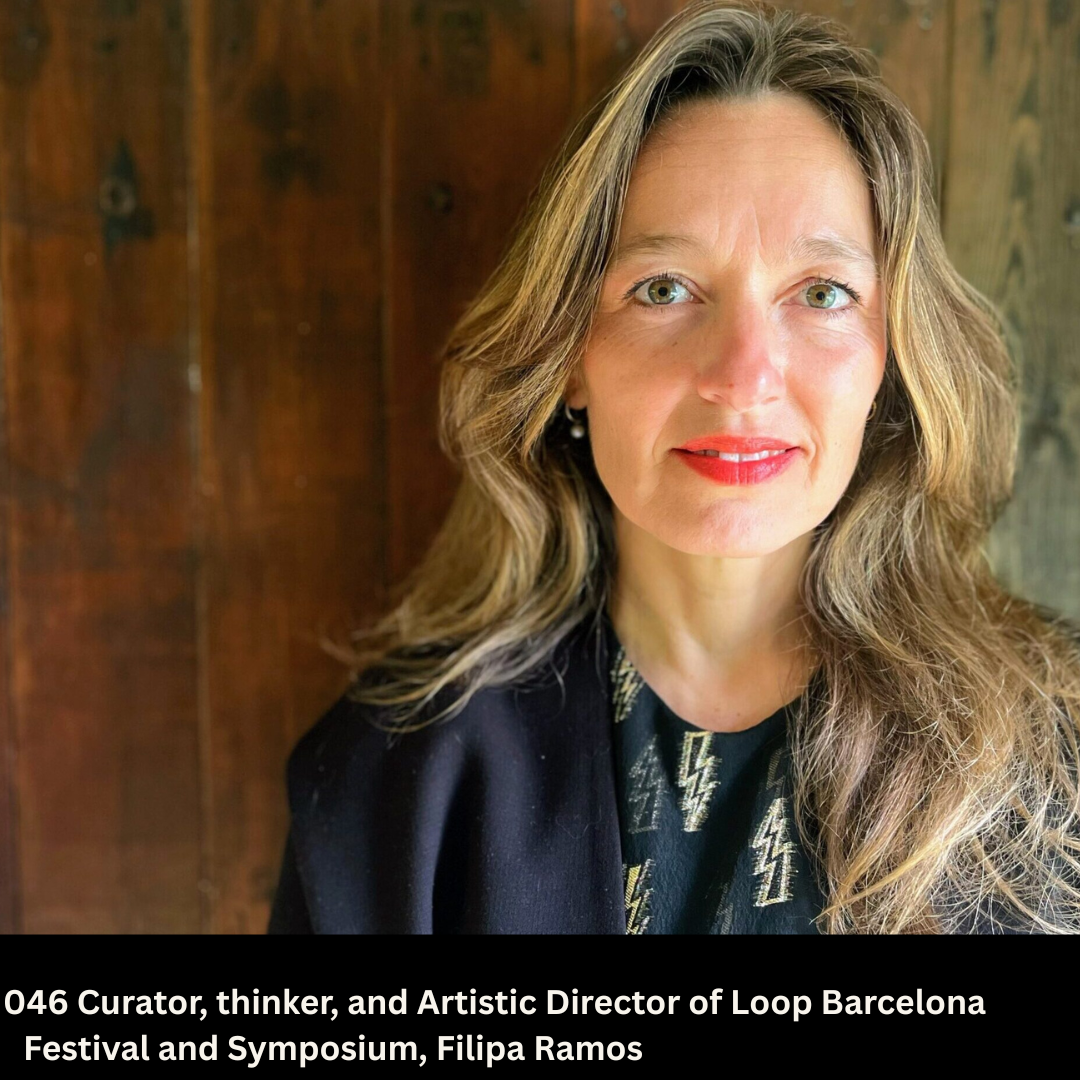
Hot Coffee Conversation with curator, thinker, and Artistic Director of Loop Barcelona Festival and Symposium, Filipa Ramos
Published Thursday, November 27, 2025
Filipa Ramos, a curator and writer closely connected with Loop Barcelona since its inception, formally joined the organization last year when she curated Images that Move Us Forward, the 2024 edition of the Loop Symposium. This event brought together distinguished voices, including Hoor Al-Qasimi of the Sharjah Art Foundation, Paolo Moretti of Fondazione Prada, Julian Ross from Eye Filmmuseum, and artist Gabriel Abrantes, among many others. This year, she was appointed as Artistic Director of the Loop Barcelona Festival and Symposium.
As a co-founder of the groundbreaking online artists’ cinema platform Vdrome, Ramos also served as Curator of the Film Sector at Art Basel, showcasing artists such as Raqs Media Collective, Simone Forti, Camille Henrot, Sky Hopinka, Joan Jonas, Kara Walker, and Apichatpong Weerasethakul. In addition, she has served as a jury member for several prominent film festivals, including CPH: Dox, Visions du Réel, and the San Sebastián International Film Festival. Filipa Ramos was born in Lisbon and holds a PhD from the School of Critical Studies at Kingston University, London. Her work — as writer, curator, lecturer — centres on how art interacts with ecology. She explores how contemporary art can foster new relationships between humans, nonhuman beings, and the environment; she advocates shifting away from strictly anthropocentric understandings of art and culture. Ramos currently teaches at the master’s program of the Fachhochschule Nordwestschweiz (FHNW), Basel — specifically within the Institute Art-Gender-Nature — where she leads the “Art & Nature” seminars. It was so meanigful to have this conversation.
Nina: Imagine you are in your favorite coffee or tea spot. Where is it? What are you drinking? What are the three things you see right now?
FR: I suffer from a troubling neurological syndrome called acephalgic migraine, commonly known as migraine aura or optical migraine (you can look at Louis Wain’s cats to have a sense of what the world looks like when you are feeling unwell: it seems fun and trippy, but it’s actually pretty horrible). In my case, these migraines are heavily triggered by alcohol and caffeine, so I cannot drink coffee, and I have to be really careful with caffeinated drinks. Maybe this is why I am so fascinated by artists’ cinema, because they create outlandish visions of the world that are parallel but much more pleasant than the ones my brain generates! I do have a cup of soft sencha in the morning, at home, in the company of Misha and Tao. This morning, Misha and I were looking at a young jay who was trying to hide from the heavy rain under a scrubby tree. Misha, the jay, and the tree are the best possible encounters with a nonhuman world that someone living in Paris could ask for.
© Loop Barcelona, 2025, All rights reserved. Photos by Nereis Ferrer.
Nina: As 2025 Artistic Director of Loop Barcelona Festival and Symposium, what are the main cultural elements or values you foregrounded in this year’s edition? What were the main artistic trajectories you wanted to emphasize?
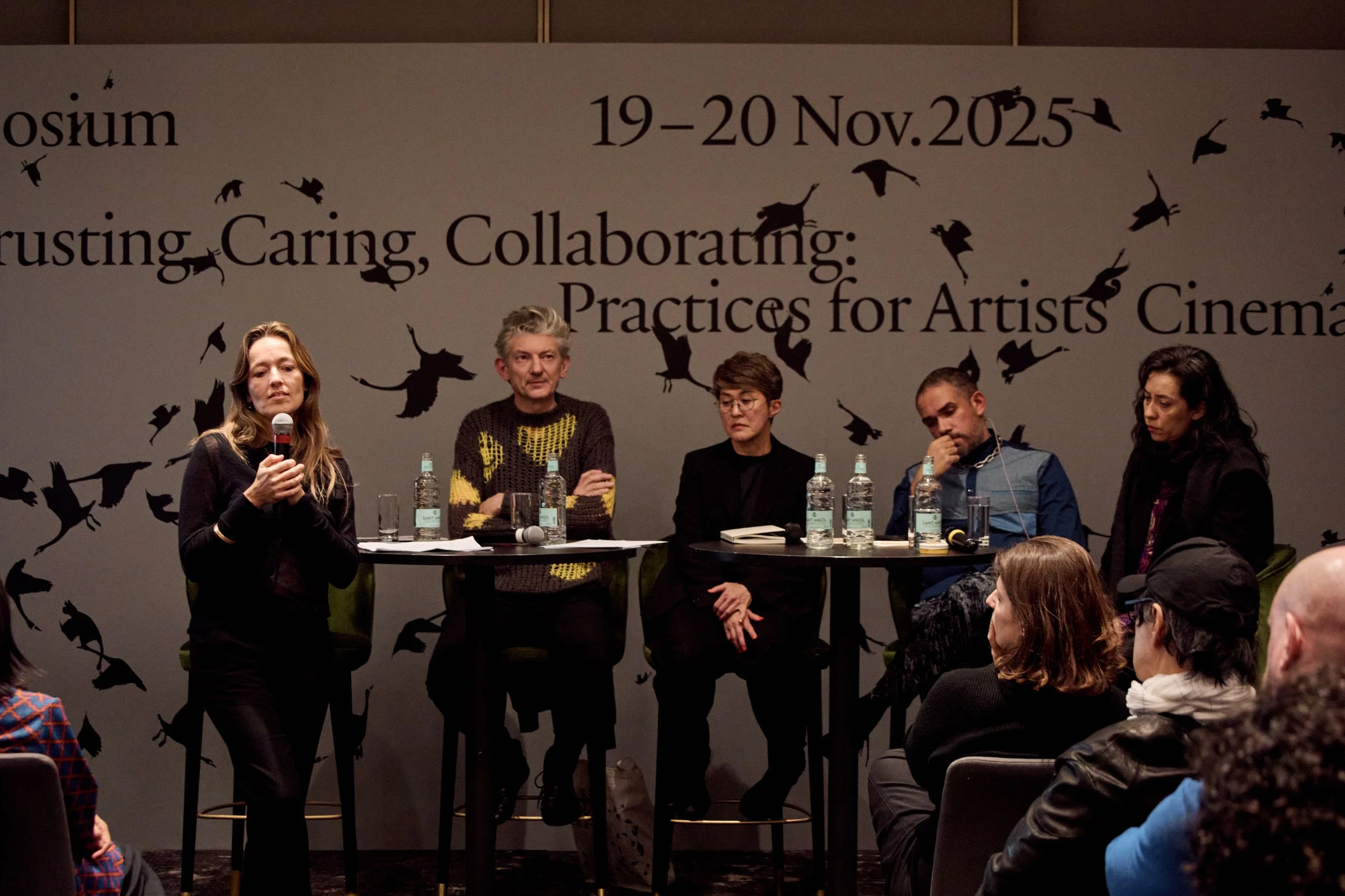
FR: This year's edition, Miratges / Mirages, is built around the instability of images—how moving images reflect, distort, reveal, and sometimes deceive our ways of perceiving the world. I wanted to underline two core values: collectivity—the way artists’ cinema creates communities across institutions, practices, and geographies while deconstructing the ghosts and evils of Modernity, such as colonialism and extractivism—and responsiveness, the ability of moving images to sense and translate with poetry and beauty the urgencies of their time.
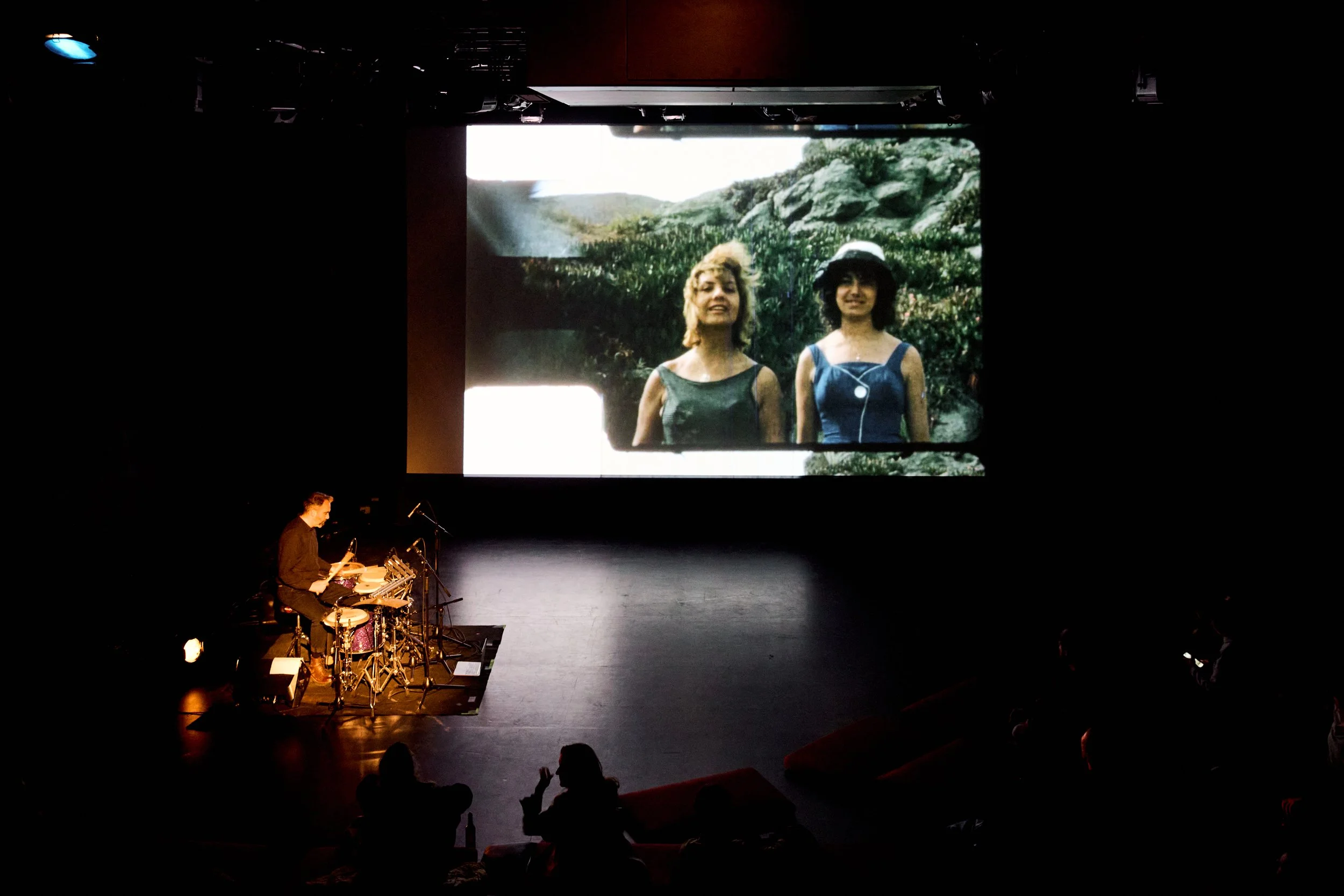
Artistically, I focused on trajectories that engage with decolonial and ecological entanglements, sensorial knowledges, and the materiality of perception. Many of the works rethink the relation between bodies, technologies, and environments—ranging from Joan Jonas’ early films, which choreograph wind, light, and human movement, to Ana Vaz’s investigations of multispecies belonging, to emerging practices from Catalonia and beyond, such as Anna Cornudella or Mar Reykjavik that expand how we understand place, memory, and representation. The goal was to create a porous festival: one that recognizes the elasticity of artists’ cinema and its potential to be tender, critical, sensorial, and political at once.
© Loop Barcelona, 2025, All rights reserved. Photos by Nereis Ferrer.
Nina: What is a work, an artist, or a collective that feels like a personal discovery to you during this year’s edition?
FR: Every edition brings discoveries, but this year I was especially moved by the encounter with Elyla, a young Nicaraguan artist who studies with me at the Institute Art Gender Nature in Basel and whose work interweaves performance, ritual, and queer diasporic imaginaries. Presenting Elyla’s installation Torita-encuetada at Fundació Miralles opened a new channel in the festival—one that speaks of care, vulnerability, and the politics of visibility in a very embodied way.
Another important discovery was seeing Chai Mi’s video, I Forgot But You Will Remember, presented by Beijing’s Gallery Where, during LOOP Fair—a young Chinese artist whose sensibility is both intimate and structurally rigorous, and whose use of traditional animation to depict the perspective of her dog was so striking. It is always a privilege to witness the emergence of new languages.
© Loop Barcelona, 2025, All rights reserved. Photos by Nereis Ferrer
Nina: Having co-founded the pioneering online artists’ cinema platform Vdrome, you have also curated the Film Sector of Art Basel, and you consistently focus your projects on the intersection of artists’ cinema, art, and ecology. Where do you see the future of such intersections? In some interviews, you highlighted the role of horizontality in understanding of contemporary art landscape— is this something you intentionally foster?
FR: The future is uncompartmentalized. Artistic practices meet environmental thinking, not as a theme but as a method. Artists’ cinema is particularly well-suited for this because it can hold complexity, duration, and relation without needing to resolve contradictions. Ecological thinking is relational thinking—and time-based media naturally operates in relations: between bodies and landscapes, between technologies and sensoria, between species and temporalities, between politics and poetics.
As for horizontality, yes, it is intentional. To work ecologically is to work without a centre or a periphery, or with multiple centres that shift depending on where attention is needed. Festivals like Loop have an enormous privilege: they can gather artists, curators, institutions, and audiences around something that is shared, not owned. This horizontal field allows for unexpected alliances and for a sense of co-responsibility between participants. For me, that is where the future of art lies.
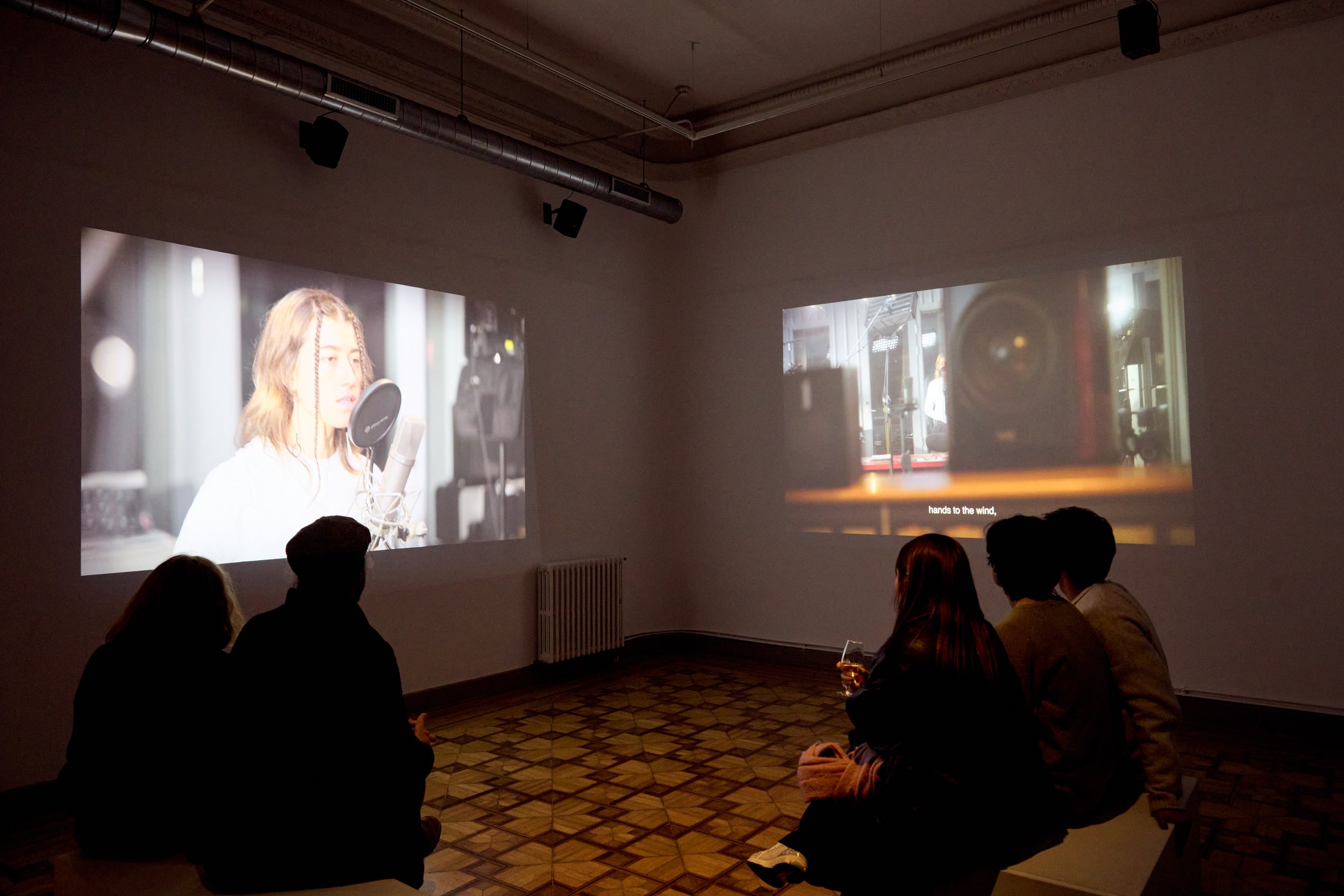
© Loop Barcelona, 2025, All rights reserved. Photos by Nereis Ferrer.
What is the single encounter with art that influenced your curatorial or intellectual path?
FR: Encountering the work of Simone Forti and Joan Jonas continues to be transformative—not only because of their contributions to dance, performance, and video, but because of their unique capacity to weave the mythic, the bodily, the animal, the elemental. Their work continues to show me that art can be rigorous without being authoritative, poetic without being obscure, and generous without being didactic. Their work accompanies everything I do.
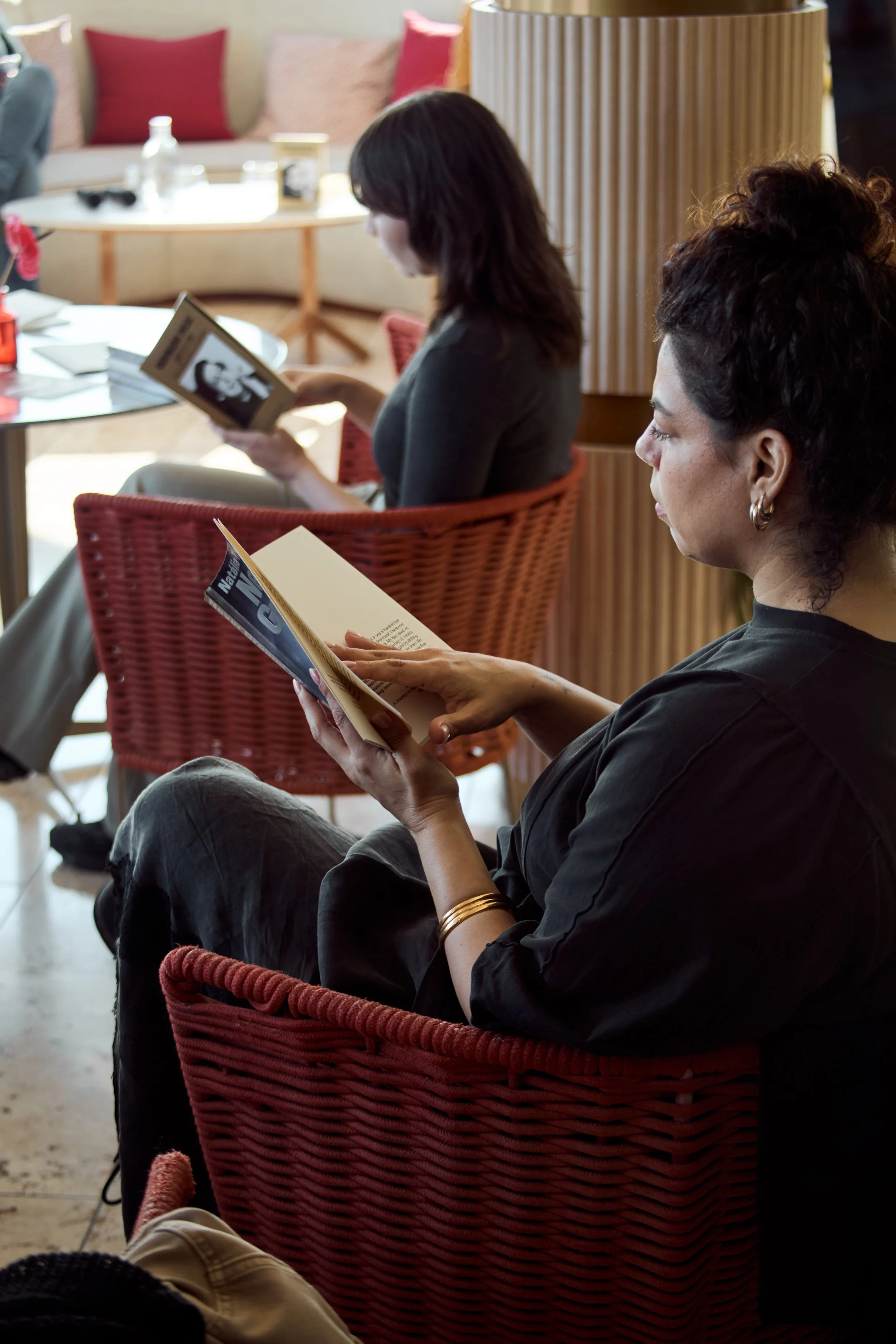
© Loop Barcelona, 2025, All rights reserved. Photos by Nereis Ferrer.
Nina: Are there any questions you find yourself coming back to?
FR: How do we inhabit the world with others, human and nonhuman? How can we think of a “we” that is at the same time collective and inclusive but also attentive to the multiplicities of lives it contains?
What forms of attention do we owe to the beings and systems that include us?
How can art help us unlearn habits of extraction and cultivate gestures of reciprocity?
How can moving images produce new relations rather than simply representing them?
And perhaps the simplest one:
What does it mean to see, truly see, in a time saturated with images?
These questions don’t ask for definitive answers—they ask for continuous practice. And festivals like Loop are, for me, one of the places where such practices can be rehearsed together.
Portrait photo by gerdastudio.