Hot Coffee Conversation with curator Tereza de Arruda
Published Thursday, February 26, 2026
Tereza de Arruda is a Brazilian-born art historian, critic, and independent curator known for her internationally oriented exhibition practice. Born in São Paulo in 1965, she has been based between Berlin and São Paulo since 1989, when she moved to Germany to study art history at the Freie Universität Berlin. She is the founder of T.A. Art Projects, a platform dedicated to organizing exhibitions, residencies, talks, and educational programs that foster cross-cultural artistic exchange. Over the course of her career, de Arruda has curated exhibitions for a wide range of internationally recognized artists and has worked with institutions across Europe, Asia, North America, and South America.
Since 2015, she has served as an adjunct curator at Kunsthalle Rostock. She has also been closely involved with major biennials worldwide: she has collaborated with the Havana Biennial since 1997, co-curated several editions of the International Biennial of Curitiba between 2009 and 2019, and co-curated the Jingdezhen International Ceramic Art Biennial in China (2023–24). In addition, she has acted as an advisor to the São Paulo Architecture Biennial and as a consultant to the Museu Oscar Niemeyer. Her curatorial practice is characterized by an emphasis on international dialogue, interdisciplinary exchange, and long-term collaboration between artists, institutions, and cultural networks. I caught up with Tereza on the occasion of the three current exhibitions she curated in Berlin.
Nina Chkareuli: Imagine you are in your favorite coffee or tea spot. Where is it? What are you drinking? What are the three things you see right now?
Tereza de Arruda: One of the most interesting coffee places for me in Berlin right now is Aera on Fasanenstrasse. I usually have their matcha tea, and they make delicious bread and pastries. The shop is hidden in a backyard, very close to the gallery KORNFELD, and I’ve been going there often while preparing the exhibitions. It’s very cozy, especially in deep winter in Berlin.
NC: What are three things you’d typically notice there?
TA: First, the smell, because everything is freshly baked. Second, the view of the backyard with lights still hanging like at Christmas. Third, usually the person I’m meeting. The environment is intimate and comfortable for conversation because it's not a big space, so we can really concentrate on our talk and our conversation. So, it's very comfortable to meet people there right now.

Installation view, Dieter Jung: Life of Colors, January 15-February 28, 2026, KORNFELD Galerie, Berlin. Photo by Andrea Katheder.
NC: Can you tell me about the three exhibitions you have curated and that are on view right now in Berlin, and whether they share a common theme?
TA: We presented three exhibitions in Berlin in partnership with the gallery KORNFELD. The project began after Freddy Kornfeld went to Brazil last year, when I introduced the gallerist to some people from the art community in Rio de Janeiro, some artists, some collectors, and some museum directors. He also went to São Paulo for the art fair, to take part in the VIP program. So then came the invitation for me to create a group exhibition about Brazilian artists at the 68Projects by KORNFLD in Berlin. One space, 68Projects, is hosting the planned group exhibition, Rhythm and Soul. In the second space 69Salon by KORNFELD presents a solo show by O Bastardo called Rhythm and Skin, an artist-in-residence who lived in Berlin for three months. The main gallery KORNFELD features a solo exhibition by Dieter Jung, an important precursor in new media who turns 85 this year. His exhibition, Life of Colors, includes works from different periods and new pieces made for this show, filled with vibrant light, color, and rhythm. Interestingly, Jung used to present his work in Brazil. He was there in the 1970s, 80s, and 90s, having solo exhibitions in main institutions such as the Museum of Art in São Paulo and the Museum of Modern Art in Rio. It's very special when you get into the gallery, you get in contact with his holograms with beautiful light, and his paintings with very warm colors, and also a certain vibration. It's a real rhythm in all those works that he produces. So, this is the context.
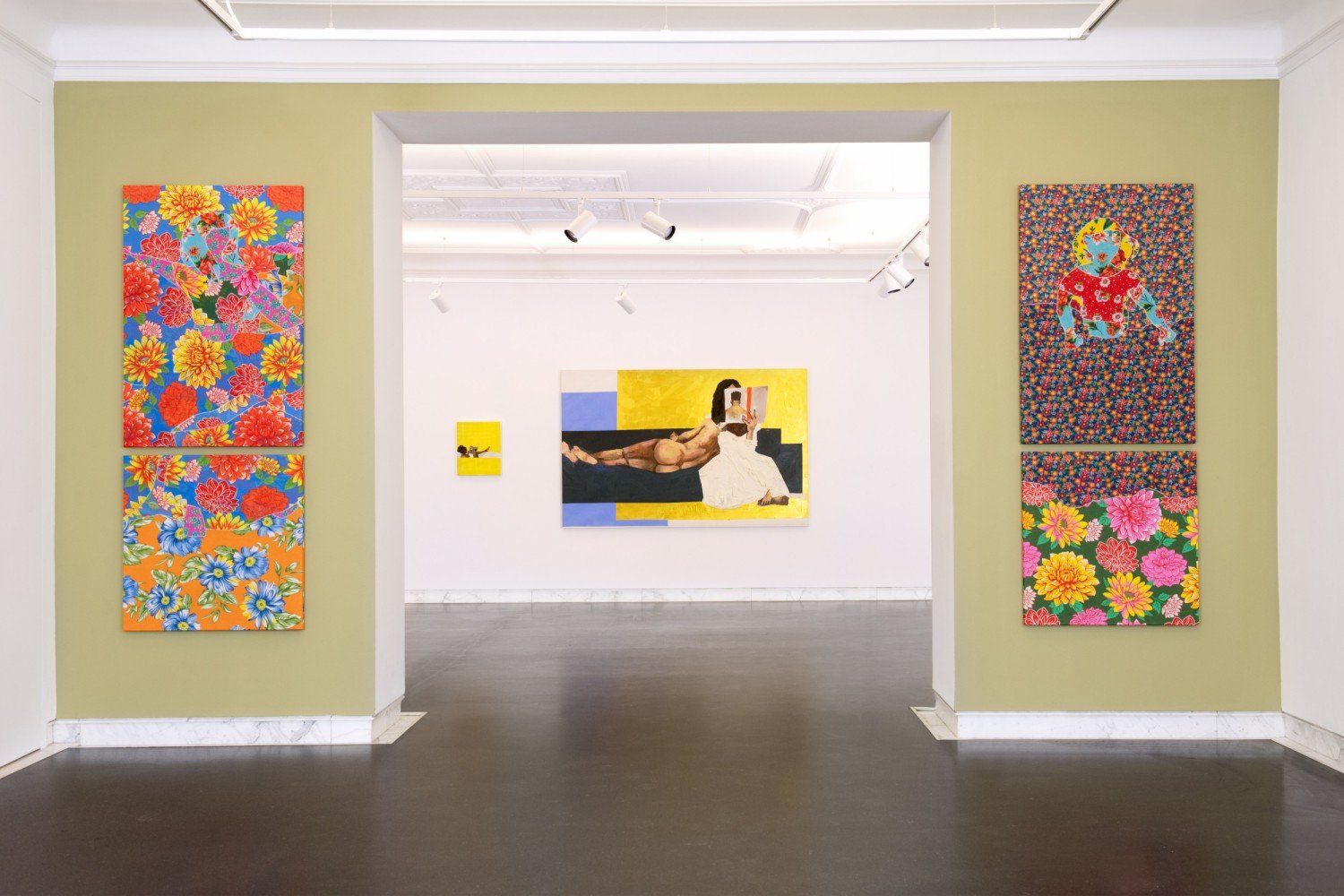
Installation view, Rhythm and Soul, January 15-February 28, 2026, 68Projects, Berlin. Photo by Andrea Katheder.
NC: What formative experience set you on your path in the arts?
TA: First, I started having an interest in different cultures through the language. I liked language very much, so I started with English very young. And then I started learning German without having any relation to the language, nothing. And then I came to Berlin in 1987 to take a language course. Berlin in the 80s was very unique as a divided city. Today, with no walls, it's such a wide, interesting, and important platform for art and culture, literature, and the contemporary context. So then, being in Berlin in 1987, it highlighted my interest in art. And then I came back to Berlin at the beginning of 1989 to prepare myself learning properly the language and start studying Art History at the Free University of Berlin.
NC: Yes, I know it has a great program in the arts.
TA: Yes, and it’s very well recognized and closely connected to the history of Berlin, because after the war, the whole city was divided, right? So, they had to develop a very strong university in the West, while one of Berlin’s main universities, Humboldt University, remained in the East. There was, therefore, a great demand, and a lot was invested in culture and education at that time.
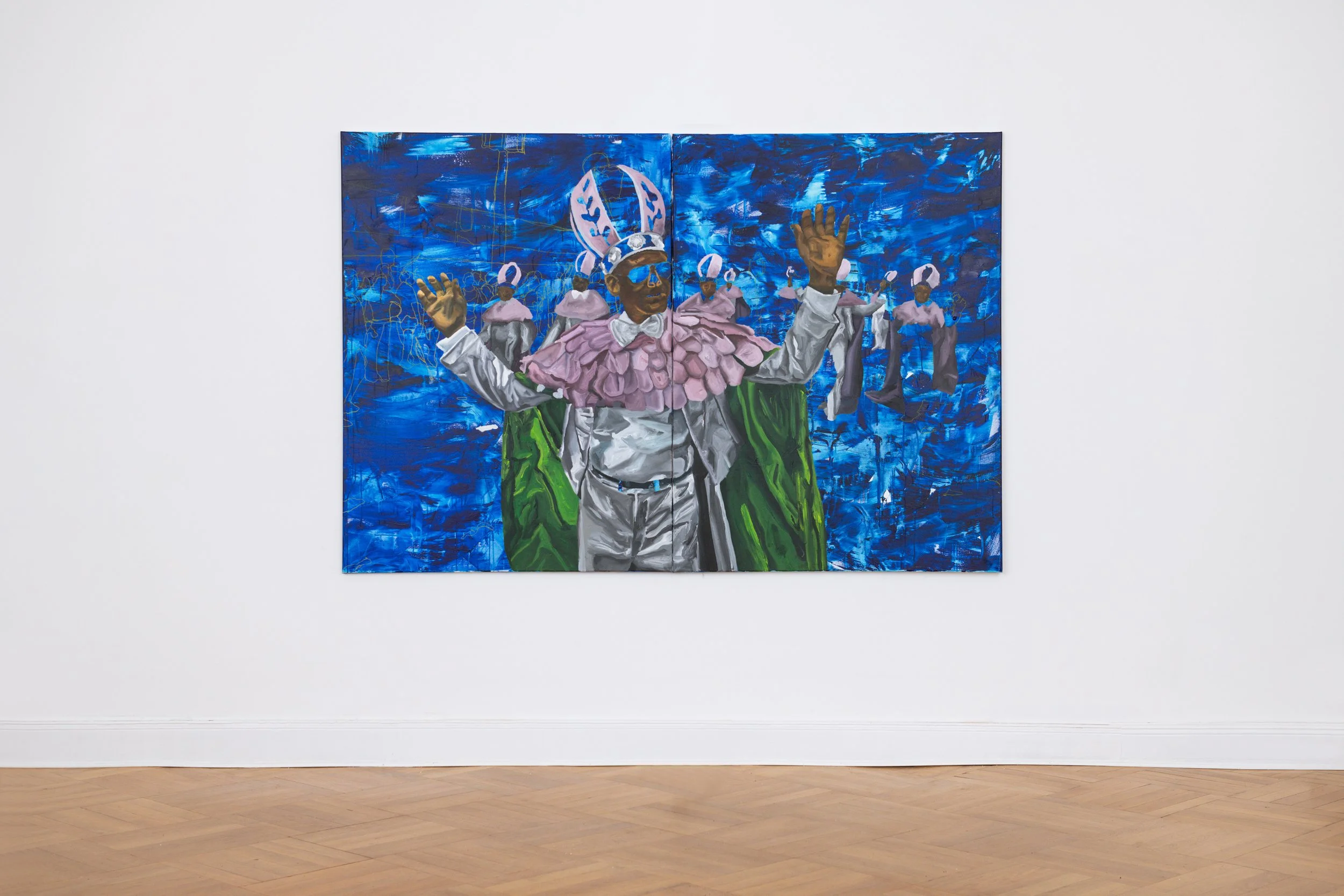
Installation view, O Basterdo Rhythm and Skin, January 15-February 28, 2026, 69Salon, Berlin.Photo by Andrea Katheder.
NC: As a curator with a long and outstanding career and all these connections to different biennials that you curated and advised, what are the main questions you find yourself returning to?
TA: It’s about creating the best context, the most compelling exhibition—one that suits the participating artists while also conveying something relevant to the audience. At the core of my research and interests are the artworks, the artists, and the audience: how to connect them, how to spark interest and dialogue, or even how to generate attention. Sometimes this involves presenting projects that are highly relevant but new to a particular context, so that at first people might think, “Oh, I don’t understand this,” and then begin to reflect on it. This is particularly interesting in transcultural activities. For example, if I bring an exhibition of Brazilian artists to China, the first step is helping the audience understand the cultural codes. Similarly, if I bring Chinese artists to Germany, Cuba, or Brazil, the audience initially asks, “What is this?” Understanding these differences is crucial—not just staying within the comfortable, familiar zone. Sometimes it’s easy: you arrive in a city with a vibrant art scene, where the context already exists on its own. But adding something new, something that provokes discussion or offers a different perspective, can challenge and engage people. This kind of provocation keeps minds open and encourages audiences to see beyond a single context, broadening their perspective.
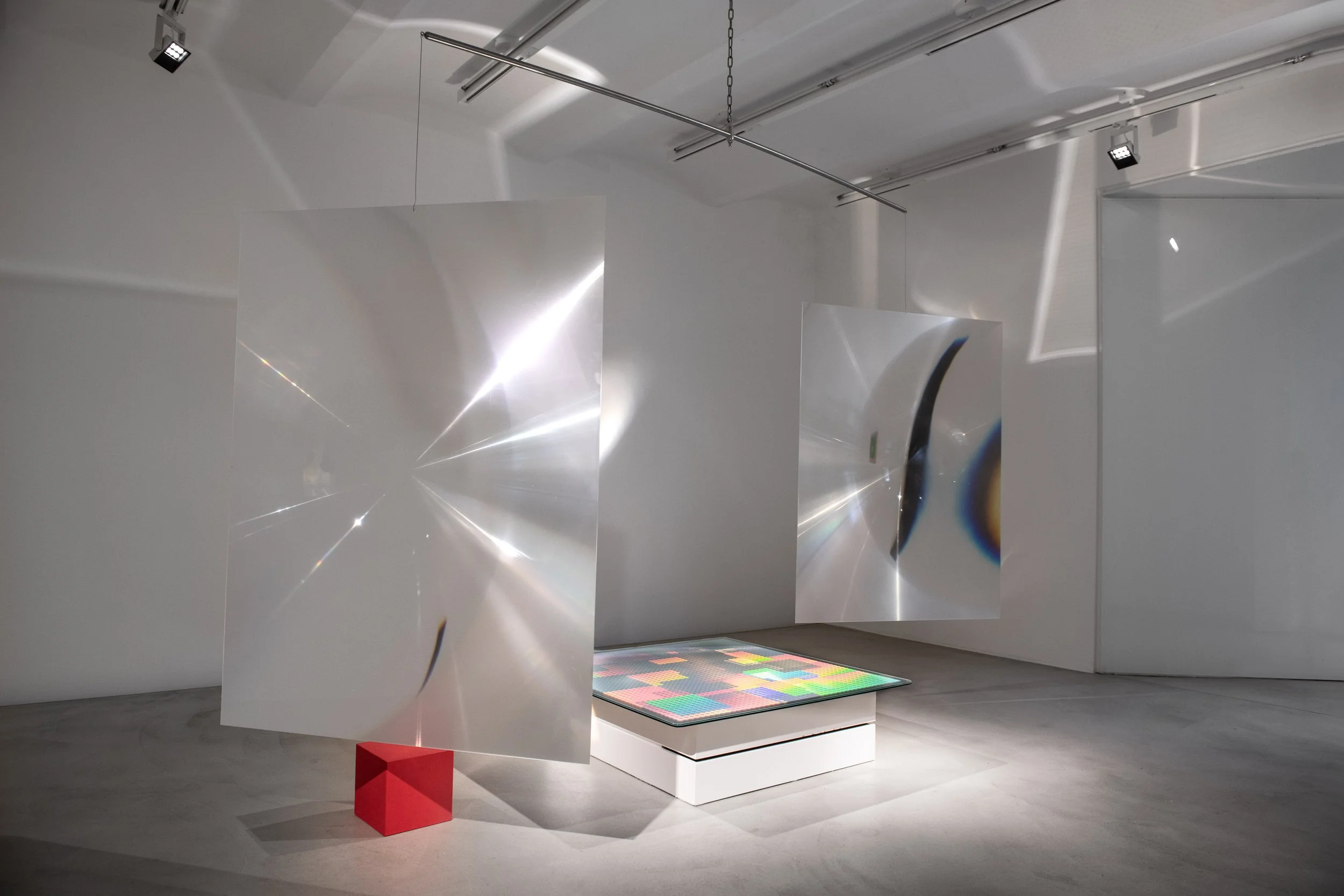
Installation view, Dieter Jung: Life of Colors, January 15-February 28, 2026, KORNFELD Galerie, Berlin. Photo by Andrea Katheder.
NC: Curators do all this cultural work, yet so much of it remains invisible. Not always, of course—but often it unfolds behind the scenes. That’s precisely why it feels essential to shed light on this profession, which, as you know well, is both demanding and complex.
TA: Yes, and also to clarify what curating actually is, in all its layers. Today, the term is everywhere: shop windows are “curated,” playlists are “curated,” and even restaurant menus are described that way. It’s not that we want the word to belong exclusively to the art world, but people need to understand what curating truly entails within this field.
NC: Exactly, and in a sense, that broad usage risks diminishing the value of curatorial work in the arts. Curating involves research, contextualization, logistics, and ultimately the shaping of an exhibition as a physical and conceptual space. It’s a composite practice. When a menu is described as “curated,” it usually refers to just one selective gesture rather than that entire process.
I want to touch on another theme. What is the recent single piece of news, either in Germany or Brazil, that has caught your attention and that you are following?
TA: Recently, I’ve been following the opening of the Berlin International Film Festival in Berlin. At the press conference on February 12th, jury president Wim Wenders was asked about the festival’s stance and the German government’s support for Israel. He responded that filmmakers should “stay out of politics” and focus on “the work of people, not politicians.” This sparked strong criticism and a media backlash, especially because observers noted a perceived institutional silence compared to clearer past responses to conflicts such as the war in Ukraine, or protests in Iran, and not mentioning the situation in the Gaza Strip. What caught my attention was precisely this tension between cultural responsibility and the idea of neutrality — and the question of how empathy is articulated publicly. We should have empathy for every kind of victim, not just the ones who are in this region or the other ones
Cultural platforms inevitably reflect perspectives shaped by history and context, yet they also have the capacity to widen perception. What is acknowledged — and what remains unspoken — becomes part of how reality is collectively understood. I believe empathy should not be selective or dependent on geography, but directed toward human vulnerability itself.
This reflection also connects to my broader curatorial perspective. Encounters with artists, studios, and exhibitions form a living archive of experience that emerges from direct observation and dialogue. In a moment when technology can produce information instantly, the responsibility to see, reflect, and interpret becomes even more important. Technology is a valuable instrument, but it cannot replace perception, critical awareness, and lived engagement. Artists, exhibitions, and encounters build a kind of living archive of experience that cannot be replaced by automated knowledge.
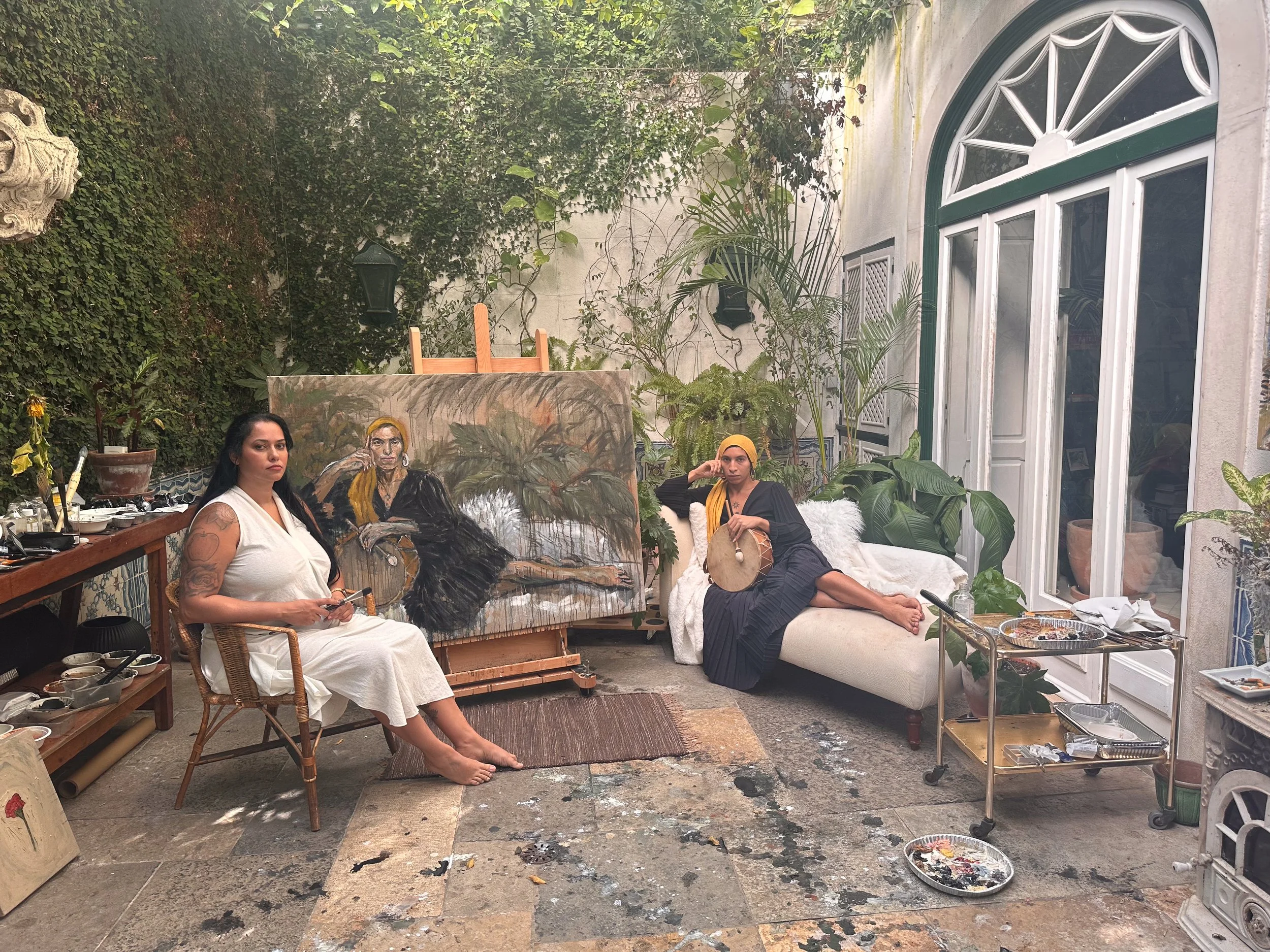
Panmela Castro, Lola Bahjan, da série Deriva Afetiva Lisboa [Affective Drift Lisbon series], 2024. Oil on canvas. Image courtesy of the artist and KORNFELD Galerie.
NC: What exciting project do you have coming up this year?
TA: We are organizing the Curitiba Biennial, which will open on the 13th of June, in Curitiba, Brazil. It takes place at the Oscar Niemeyer Museum, which has been the headquarters of the biennial for several years. So, we are very involved in this. Very soon, I will leave for China because we will have a special participation from Chinese artists as part of the cultural year between Brazil and China, and it is one of the venues.
On top of this, I’m also working with different Brazilian artists who are producing new works for the biennial. We are all very much looking forward to it, especially because the last Curitiba Biennial was in 2019, and the following edition was just virtual. So, in a way, this is a kind of comeback. We don’t yet have the final list of participants because we are still waiting for some feedback and continuing our research. But we intend to keep the biennial relatively small—around 50 to 70 artists. It’s sizable, yes, but historically it has been much larger. Our goal is to give people a chance to have a clear overview and understanding of the context.
The title is Lineares in Portuguese, which translates to Thresholds in English. We’re focused on this particular moment because it’s not a normal situation. With all the political changes and uncertainties, we feel we are in a transitional period. People may feel fragile, uncertain, or even scared about what will happen next. But at the same time, we believe this is an ideal moment to explore new ideas, perspectives, and ways of acting through art. This is essentially the idea of the biennial: to move into a certain level where you are almost floating, not fully landing, just observing, capturing information, and finding your way forward. Some works will be installations that visitors can walk through, or projects involving new media. Even the architecture of the Oscar Niemeyer Museum plays a role: one space is a large, tubular structure, and moving through it gives the sensation of entering another space entirely.
NC: You have to be born into it; it is like a birth canal, in a way,
TA: Yes, it brings all to a situation. It's observing where we are right now and what we could develop from this situation; how we could learn not to get desperate. I do not know where to go, how we end up, but just to try to see it as a very productive moment to be creative and to be effective and to find new ways, right?
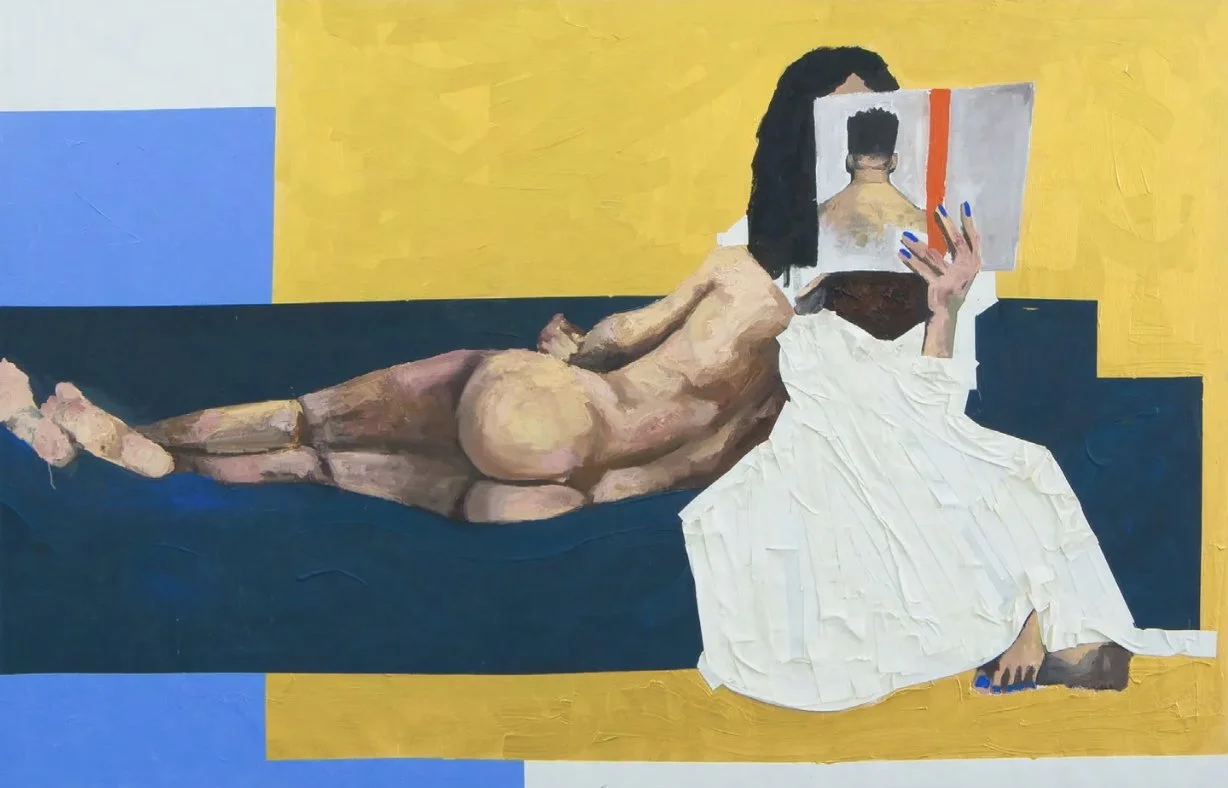
Lia D Castro, From the series Axs Nossxs Filhxs, 2021. Oil, acrylic, graphite, adhesive plaster on canvas. 180 x 260 cm | 70 7/8 x 102 3/8 inches. Image courtesy of the artist and KORNFELD Galerie.
NC: I really love your very optimistic and upbeat attitude about it, and the energy that you put into this bind. One last question I had for you: what role does writing play for you in your curatorial practice? Is it a tool for you to kind of solidify your ideas? How do you look at it, and how do you approach it?
TA: It is very important. That’s actually one of the reasons I studied art history—I was really interested in context and connections, for instance, linking the historical background or past significance to what we are doing in the present. And when we write about these things, we are also leaving a record for the future, acting as a kind of mediator of the current context. Even when I organize large exhibitions for a general audience, it’s always important to provide some guidance. Not too much, not text everywhere, because if the exhibition is meant for the general public, visitors are sometimes unprepared and really just want an introduction. In the middle of an exhibition, they can easily get lost, so they need a kind of map, a short text or satellite guide to orient them. That’s why I like to write—for catalogs, books, and also wall texts in exhibitions. I think it’s always very important to provide guidance.
Sometimes visitors see a work and think, “Oh my God, I don’t understand this,” or “I don’t like it.” Reading a bit of text helps them open their minds. It’s not about imposing a meaning, but about giving them a starting point to think: “Oh, okay, so they are talking about this. I thought it was that, but now…” Then they can create a fusion between their own thoughts and what is written by the artist or curator—a kind of connection, a guide.
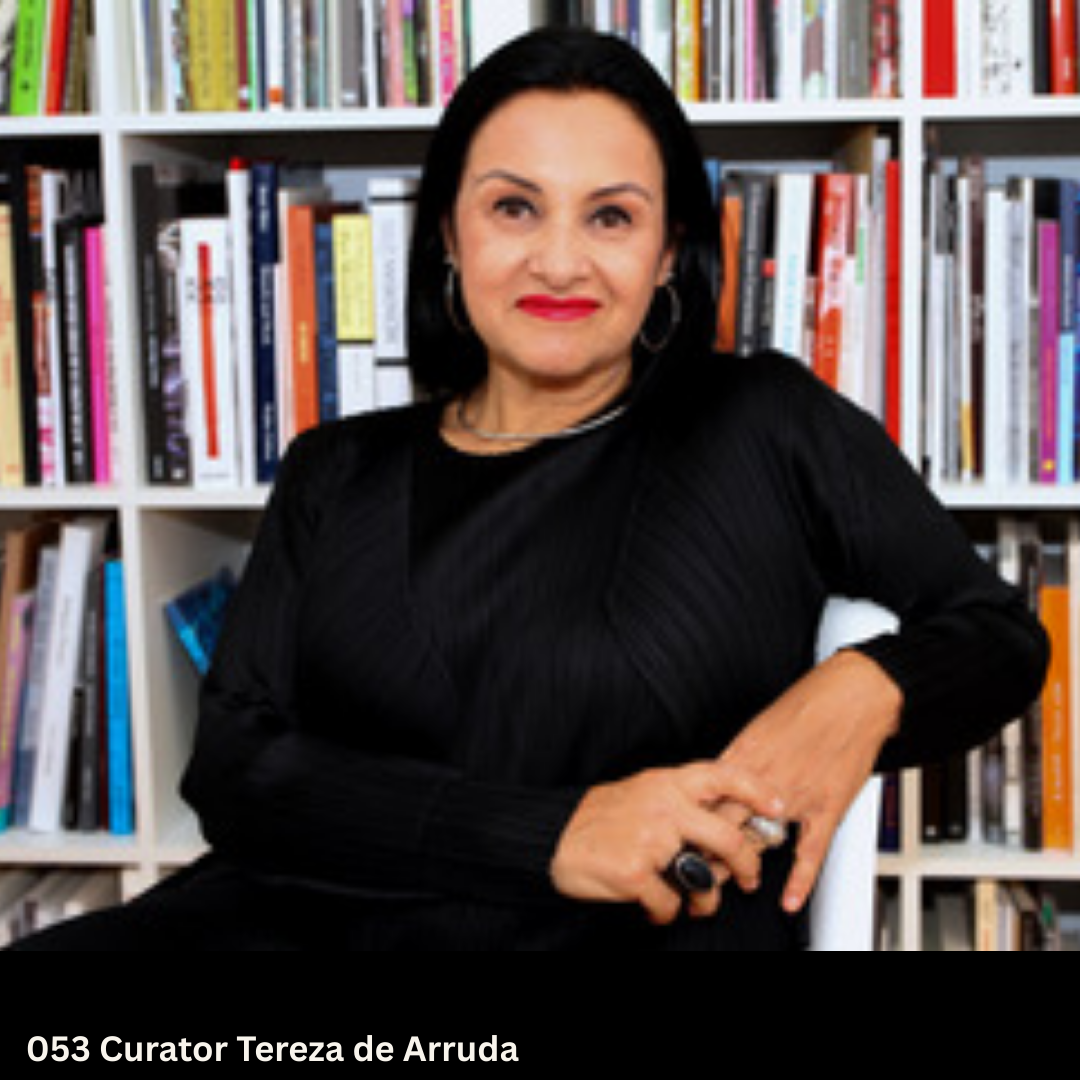
(Portrait of Tereza de Arruda by Pedro Fredo.)
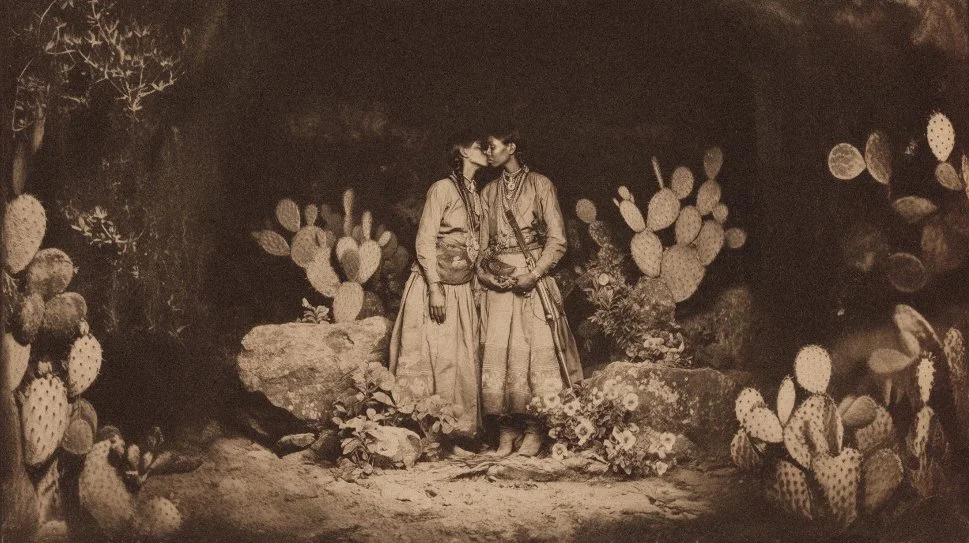
Mayara Ferrão, Untitled, 2025.Inkjet print on Hahnemühle Photo Rag.25 x 44.61 cm | 9 7/8 x 17 5/8 inches. Image courtesy of the artist and KORNFELD Galerie.