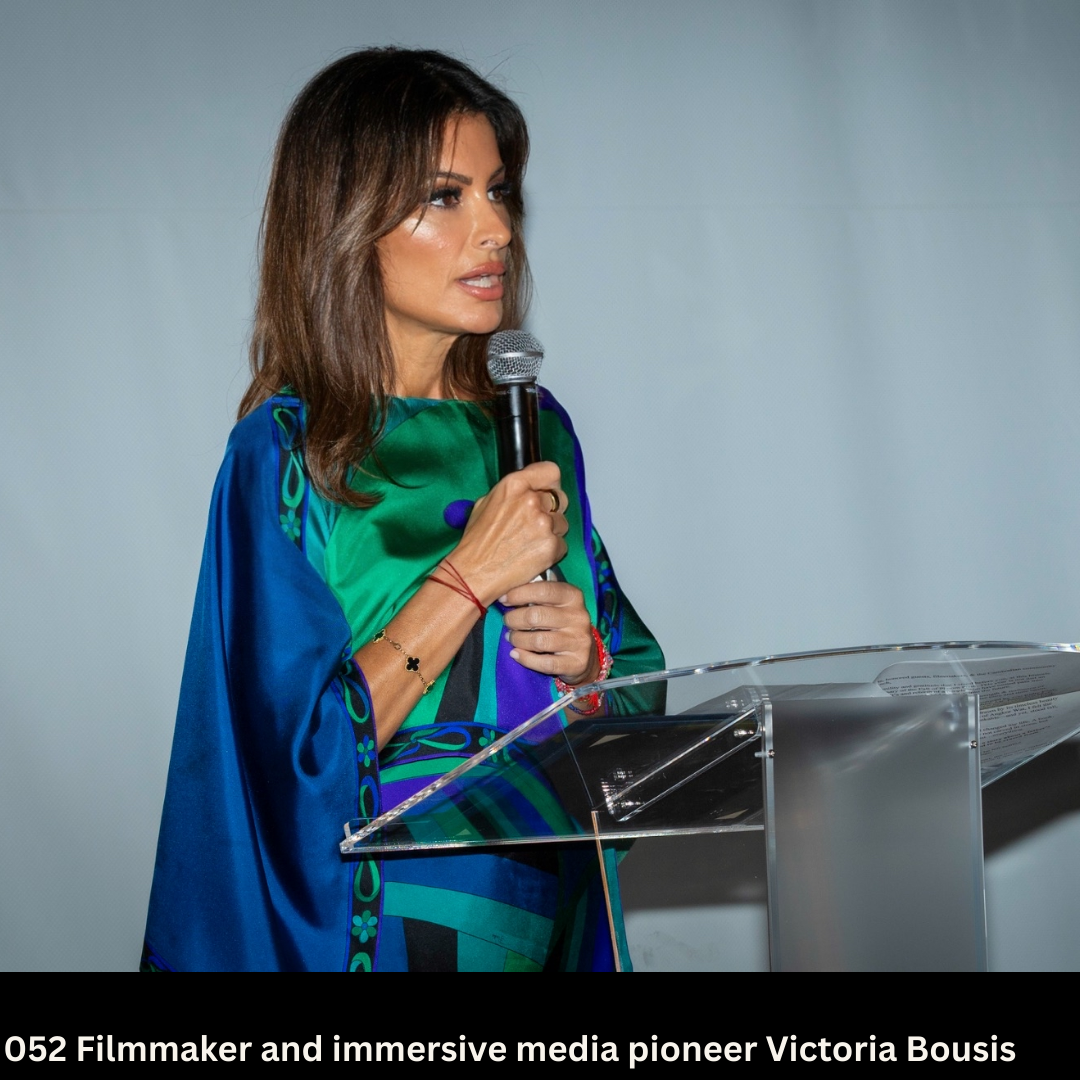
Hot Coffee Conversation with filmmaker and immersive media pioneer Victoria Bousis
Published Thursday, February 19, 2026
Victoria Bousis is a Greek-American filmmaker, creative technologist, and immersive media pioneer, recognized for her work at the intersection of storytelling, emerging technologies (i.e., virtual reality (VR), extended reality (XR), and Artificial Intelligence (AI). She is the founder of UME Studios, a creative and technology studio dedicated to immersive storytelling for impact, leveraging technology. Bousis holds a master’s degree in Media, Technology, and Innovation from MIT (Massachusetts Institute of Technology). Early in her career, she served as a prosecutor for the Attorney General of Illinois, focusing on justice for underserved communities. She later transitioned into media, producing character-driven films about the human condition, showcased at major festivals including Venice, TIFF, and Sundance. Her acclaimed immersive VR film, Stay Alive, My Son: A True Story About A Father’s Search For His Son (Stay Alive My Son, SAMS), is based on the true story of a Cambodian genocide survivor. The film premiered at festivals such as Venice and SXSW, won the Producers Guild of America (PGA) Innovation Award, and was used in collaboration with the United Nations High Commission for Refugees to support global family reunification and promote refugee dignity. Bousis’ most recent project, Darkness to Light: When Technology Heals Generations, is a short documentary that has officially qualified for consideration at the 2025 Academy Awards in the Documentary Short Subject category. I was fortunate to see this moving film and wanted to interview Victoria Bousis to learn more about her perspective on AI, technology, and her life’s trajectory.
Nina Chkareuli: Imagine you are in your favorite coffee or tea spot. Where is it? What are you drinking? What are the three things you see right now?
Victoria Bousis: It would be a small street café in the ancient area called Plaka in Athens, Greece, tucked in a small café beneath the gaze of the Acropolis. I’d be sipping either an iced coffee or a traditional Greek coffee – history and modernity colliding and alive. Worn marble slabs underfoot, people passing by as if time itself were layered—antiquity and the present moving together—and the soft sound of street musicians playing traditional Greek melodies, woven into the hum of many tourist languages. When I look up at the ruins, it’s never just history. There’s an energy there—a quiet presence of greatness that has endured for centuries. It grounds me. It connects me to my roots, to my ancestors, to everyone who came before. That feeling of continuity—of belonging to something far larger than yourself—is deeply inspiring. That’s where I’d be. That’s my coffee spot.
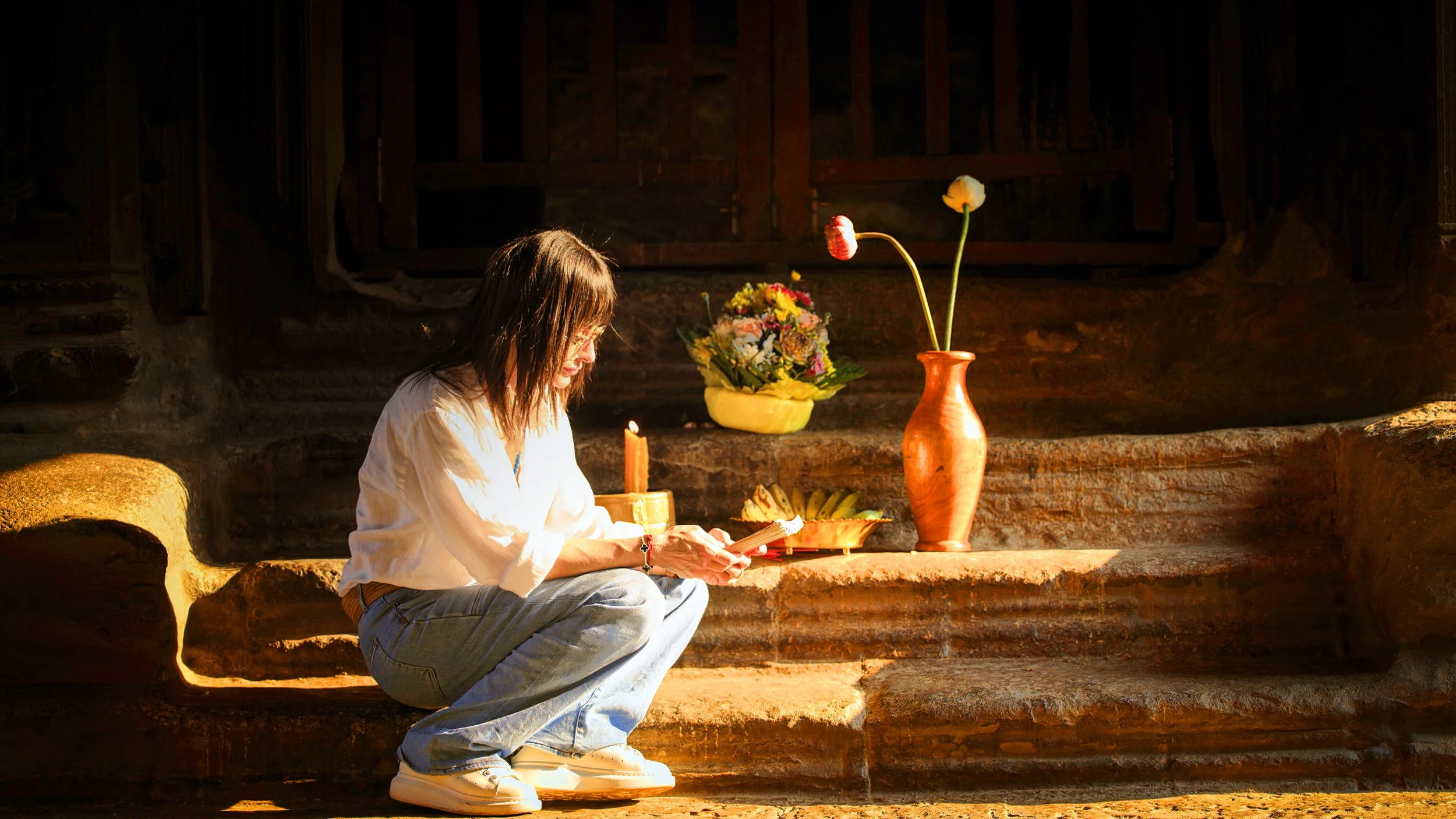
Image courtesy of Victoria Bousis.
NC: Are you from Greece?
VB: I was born in America, but my parents were born in southern Greece and immigrated to America. But I’ve always had a strong connection to Greece. My soul is Greek - emotional and creative - but my mind is American – logical and execution based.
NC: I do understand exactly. How one’s origins and the current ecosystem shape how you organize and process things.
As a professional working across XR, AI, and filmmaking, is there a central line of inquiry you’ve followed over time?
VB: When I was interviewed for my candidacy at MIT, the counselor asked why my résumé appeared so nonlinear—why law, filmmaking, technology. What I realized in answering was that there was a clear throughline, even if the path wasn’t traditional. Each chapter was tied through one thread, one mission: to serve people and help change the world through story. In law, I told human stories in courtrooms—stories that demanded justice and empathy. Filmmaking allowed those stories to travel beyond borders, unbound by politics, reaching global audiences through character-driven narratives with meaning. Technology, particularly XR, gave me a way to engage younger generations—not as passive viewers, but as active participants in the story and in change itself. And AI has become an amplifier, expanding what storytellers can imagine and execute, removing limitations that once belonged only to those with big budgets or access to A-list talent.
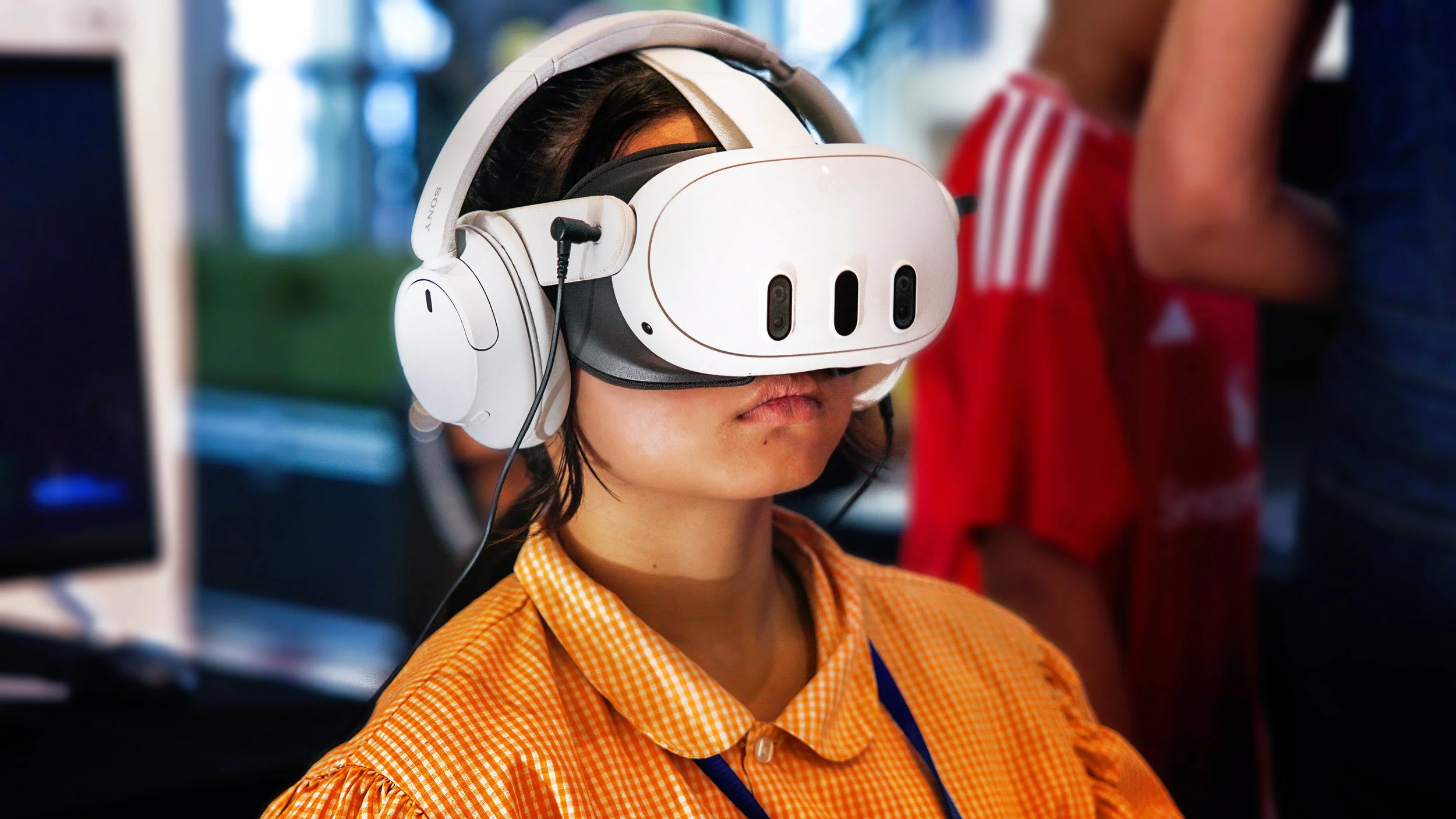
Image courtesy of Victoria Bousis.
NC: What foundational experiences shaped your path?
VB: My mother was a profound influence on me from an early age—through her philanthropy, watching her sit with children fighting cancer, comforting the elderly, showing up quietly with grace and compassion to those in need. From her, I learned gratitude and a sense of purpose rooted in service. Later, as a prosecutor, I came face-to-face with systemic failures and ordinary people most often left behind. That experience made it clear to me that while the legal system could create impact through justice, it was bound by borders, bureaucracy, and politics. I began searching for a way to act globally, beyond those constraints.
That search ended when I found Stay Alive, My Son by Pin Yathay while traveling in Cambodia and then revisiting it during the Syrian refugee crisis in Greece. The memoir—centered on a father forced to make the impossible choice to abandon his son so he could live during the Cambodian genocide—deeply moved me. It led me to explore virtual reality as a medium, one capable of allowing people not just to witness a story, but to embody it, live it. VR allows you to embody another person and experience their emotions firsthand—anxiety, guilt, longing, love, loss—in ways traditional media simply cannot measure.
When we shared the experience with refugees and policy makers at various global policy summits, and later with Cambodian youth and survivors on the 50th anniversary of the genocide, I witnessed something extraordinary. Technology opened a space for dialogue, empathy, and connection across generations, replacing silence, shame, and guilt. After the experience, one 14-year-old girl told me, I feel proud that her ancestors survived the Khmer Rouge. That moment solidified the transformative power of storytelling when it’s ethically designed to be lived, not just observed onscreen. This little girl inspired me to write the Rolling Stone article and then make the documentary, Darkness to Light: When Technology Heals Generations.
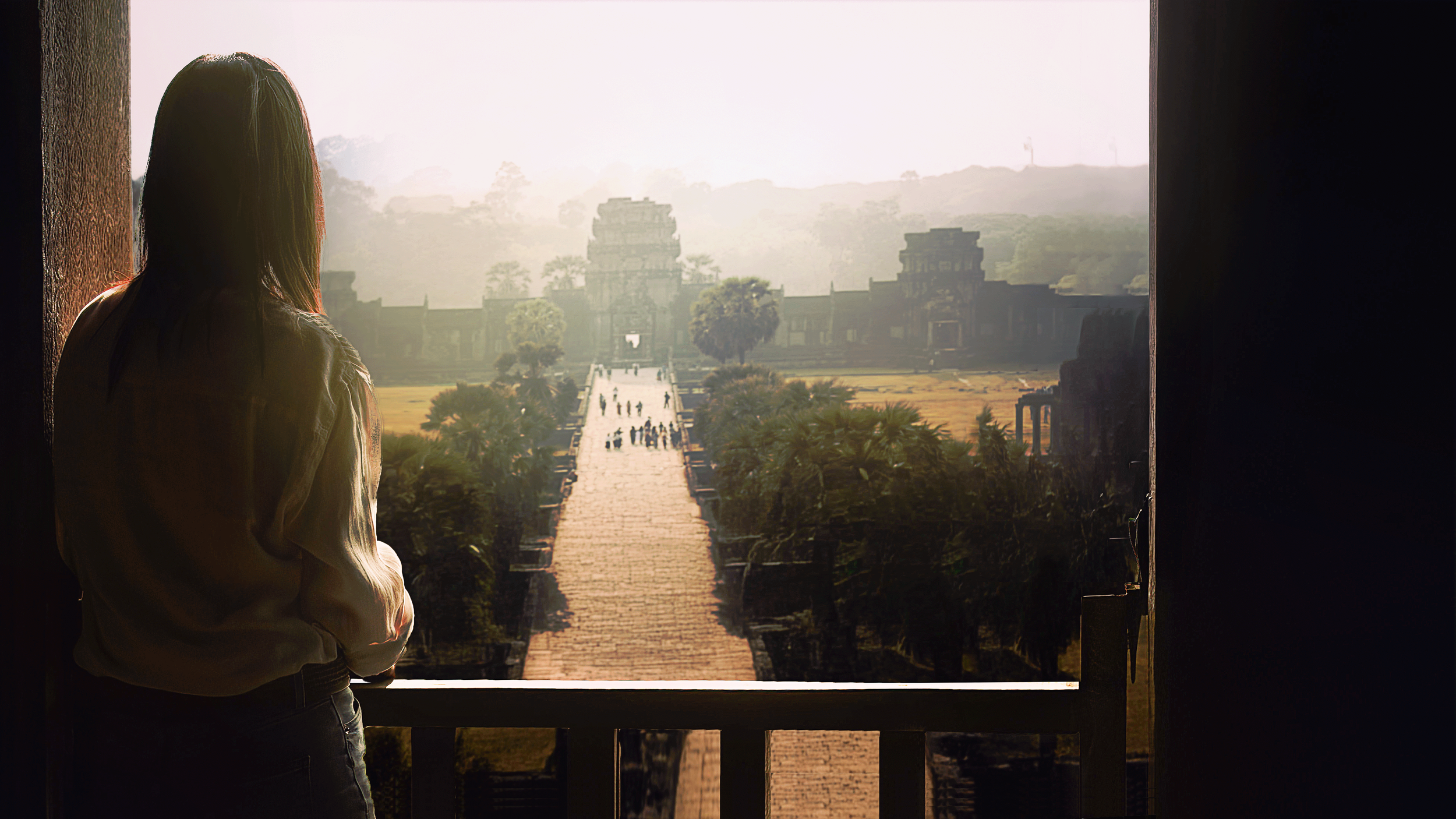
Image courtesy of Victoria Bousis.
NC: Do you feel that this film made an impact?
VB: Absolutely. Globally, across various policy summits, from the affirmations from policy leaders and the love I received from refugees, honoring their journey with dignity. In the last screening we had in London, Vicky Tennent, the Head of UNHCR of the Office of the United Kingdom, who joined the panel discussion, alongside a refugee, Sandra Alloush, whom I’ve come to know well, who was also part of the documentary, not only praised the work but also understood its impact. She thanked me for creating this virtual reality experience—and now this film—to humanize policy beyond the intellect and the numbers and drive change through emotions and the human experience.
She added something that shocked me: most policymakers making policies for refugees have never met a refugee. Hearing it out loud—and realizing it was true—was staggering. I was sitting next to Sandra, who hadn’t seen her family in 25 years because of ineffective policies that prevented her from uniting with her family. And yet, many of the people writing these policies have no firsthand understanding of refugee experiences. I felt a mix of frustration and disbelief. I believe this must change. Lawmakers, politicians, and policymakers who draft and enact laws that impact real people should truly understand the human cost of their decisions because there are real lives at stake, and heartbreaking consequences to their decisions. It’s their responsibility to protect the lives they represent. I respect her courage and bravery in calling out the system’s failures, but it also left me wondering: what now? I believe it starts by admitting the imperfections so that there is a clear path for improvement, and this begins, in this case, by involving refugee voices in the process. For me, she set an example for meaningful change where change is needed while also honoring the many exemplary people in the United Nations that are not detached but have actually worked for years in active war zones and in life threatening around the world from Somalia, Afghanistan, Syria, Congo, and Ukraine—but moments like that remind you how urgently empathy and firsthand experience are needed in policymaking.
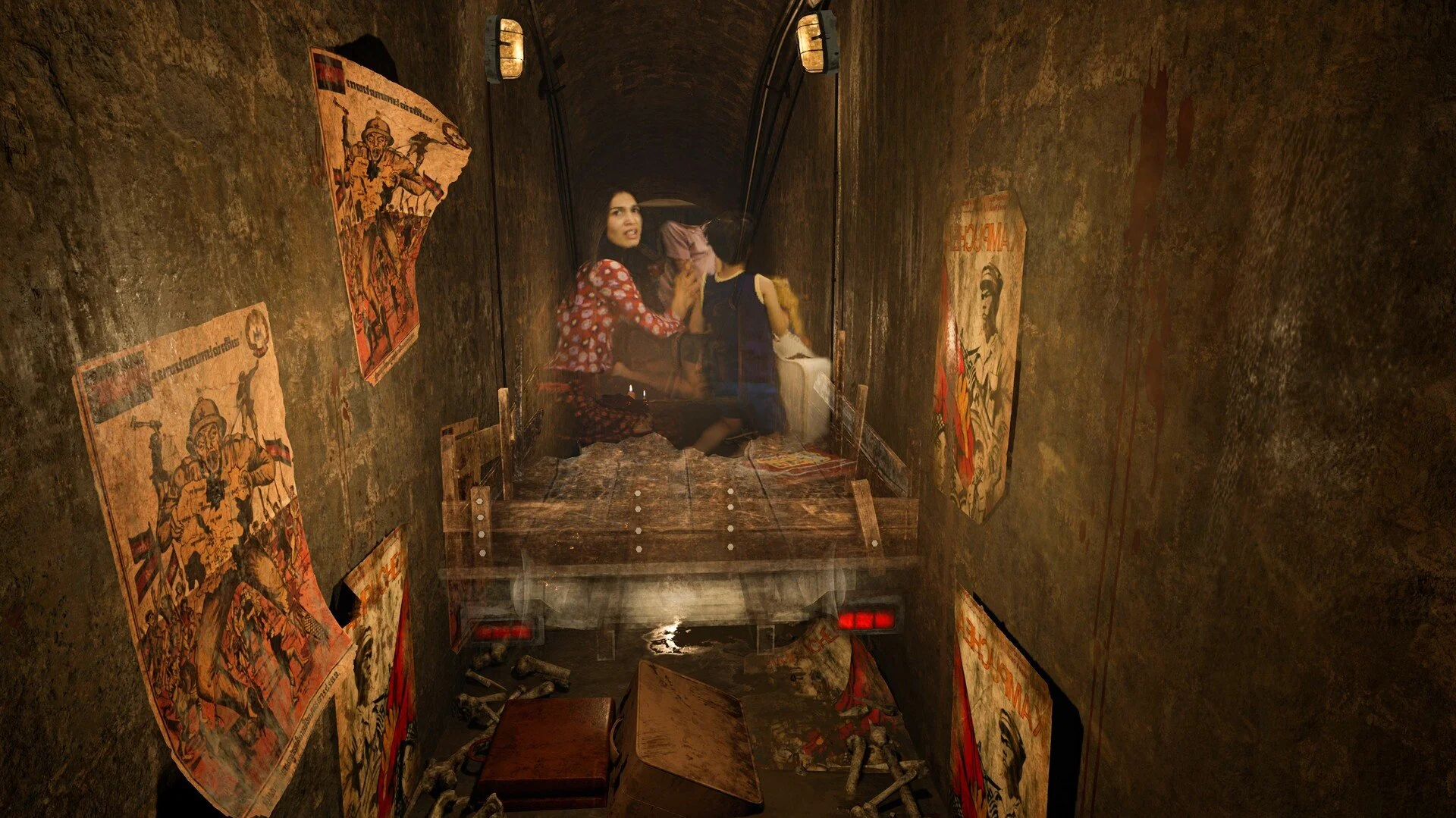
Still from immersive VR experience, Stay Alive, My Son (SAMS),2022.
NC: These cornerstones might not feel significant initially, but over time, their impact is profound.
VB: Exactly. Even short-term interactions, screenings of 40 to 80 or 1000 people, can create awareness because of the power of social media and word of mouth. Today, due to streamers and YouTube, a film can reach the corners of the world through a mobile phone and change lives. That’s the power of film and technology. This year, I’m beyond thrilled that Darkness to Light will be screened at the World Economic Forum in Davos—where global leaders, policymakers, and innovators converge—placing the film and its themes on a world stage designed not just for conversation, but for tangible, cross-sector impact. And, this is the power of collaboration.
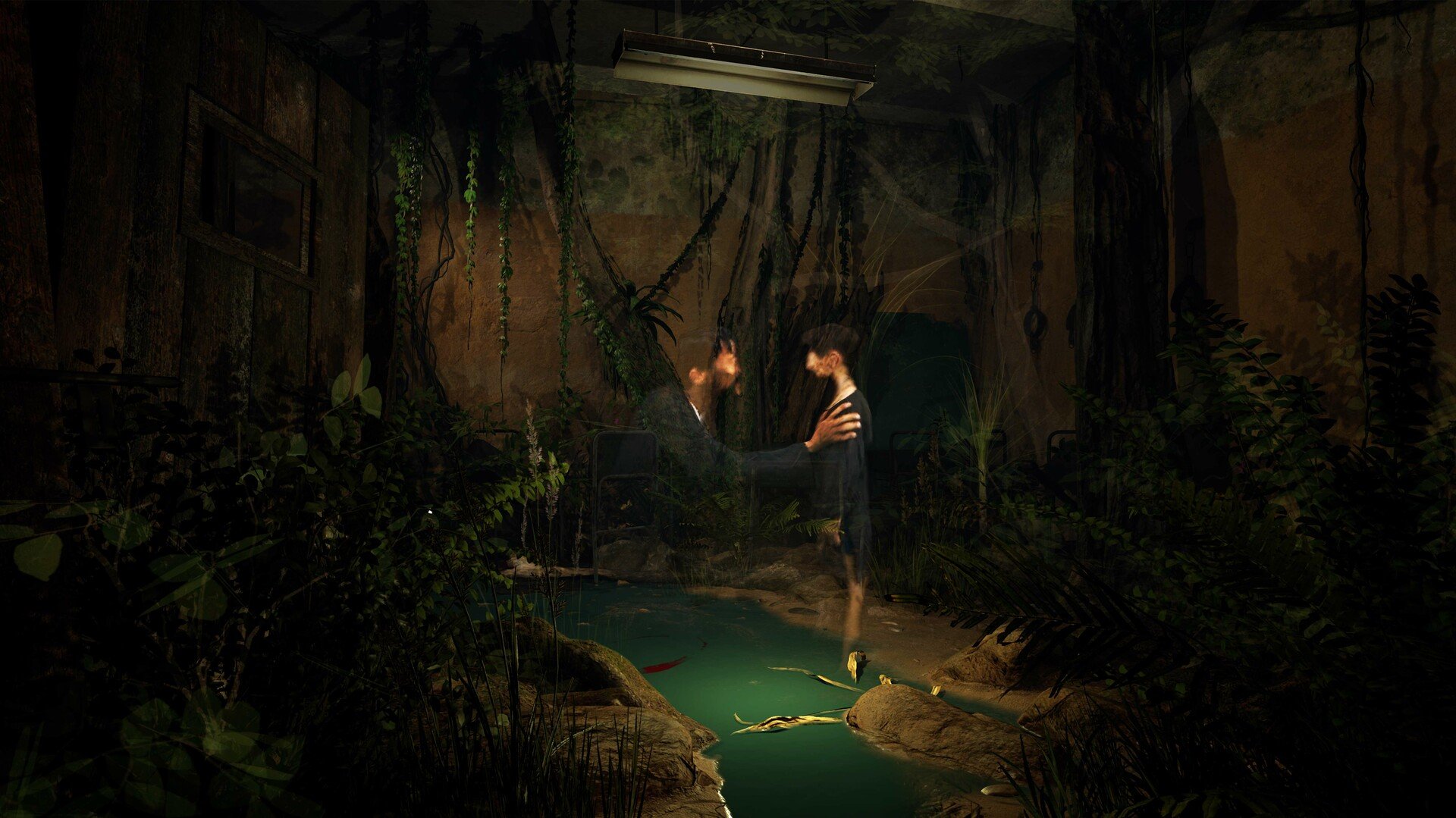
Still from immersive VR experience, Stay Alive, My Son (SAMS),2022.
NC: As someone working closely with digital media, what are its main advantages and disadvantages?
VB: Traditional film is, by nature, a one-way experience. You see what the director wants you to see; there’s no real exchange between viewer and director. You’re simply a viewer of another’s point of view. Immersive digital media—especially virtual reality—changes that relationship entirely. Participation becomes central, allowing you to live a story rather than simply watch it. Using controllers, when participants digitally walk through a space, use a flashlight, and actively engage with their environment, they’re not just watching a story unfold—they’re learning through discovery, at their own pace, at their own free will.
Furthermore, unlike film, research shows memory retention can be 40 to 70 percent higher than traditional media, and the emotional impact is deeper because of the immersion inside a digital world and with spatialized audio that reacts to your presence in the space. You’re not observing a character’s journey from afar; you are the character experiencing the story, standing next to a family fighting to live together.
That power, however, comes with serious responsibility to represent the stories we tell ethically and to protect our human rights. One of the greatest challenges is the speed at which technology and AI are evolving—far faster than human evolution, lawmaking, or existing ethical frameworks. In VR, some game experiences center on extreme violence: picking up weapons, reenacting brutality. The brain encodes memory through experience, and these are not abstract images; they are embodied actions. I don’t believe such content should be universally accessible, particularly to young people whose cognitive and emotional understanding, in discerning what is real from unreal, are still forming.
With AI, the stakes may be even higher. Unlike traditional digital tools—where you design an outcome in advance—AI operates through the use of massive amounts of data in an iterative trial and error. You write an algorithm, press enter, and only then discover what it produces. Often, you don’t fully understand what you’ve released until it’s already interacting with millions of users – here is where you hear disturbing stories about AI suggesting suicide to a teenager, an AI agent going AWOL and deleting files, then lying about it, and the stories continue. In a global AI race to build the most powerful AI models is the new arms race, development is accelerating faster than reflection. We haven’t adequately asked: What are the social consequences? What is the human cost?
This is where governance becomes essential—not to stifle innovation, but to guide it responsibly alongside technology companies where the human being is at the center, and governments serve to protect their citizens while ensuring they will remain competitive in the future. Every major technological leap—from the printing press to the World Wide Web, to the personal computer and smartphone—reshaped and advanced society, caused job loss while also creating new opportunities, accelerated productivity, democratized learning, but each required new guardrails. But as I mentioned, AI systems are still nascent. They can still generate harmful outputs, infringe on our creative rights, and violate our privacy through oversharing and the use of our data, including responses that have encouraged vulnerable teenagers toward self-harm. That should be a wake-up call. If we are building tools that shape human behavior, ethical responsibility cannot be optional, but mandatory.
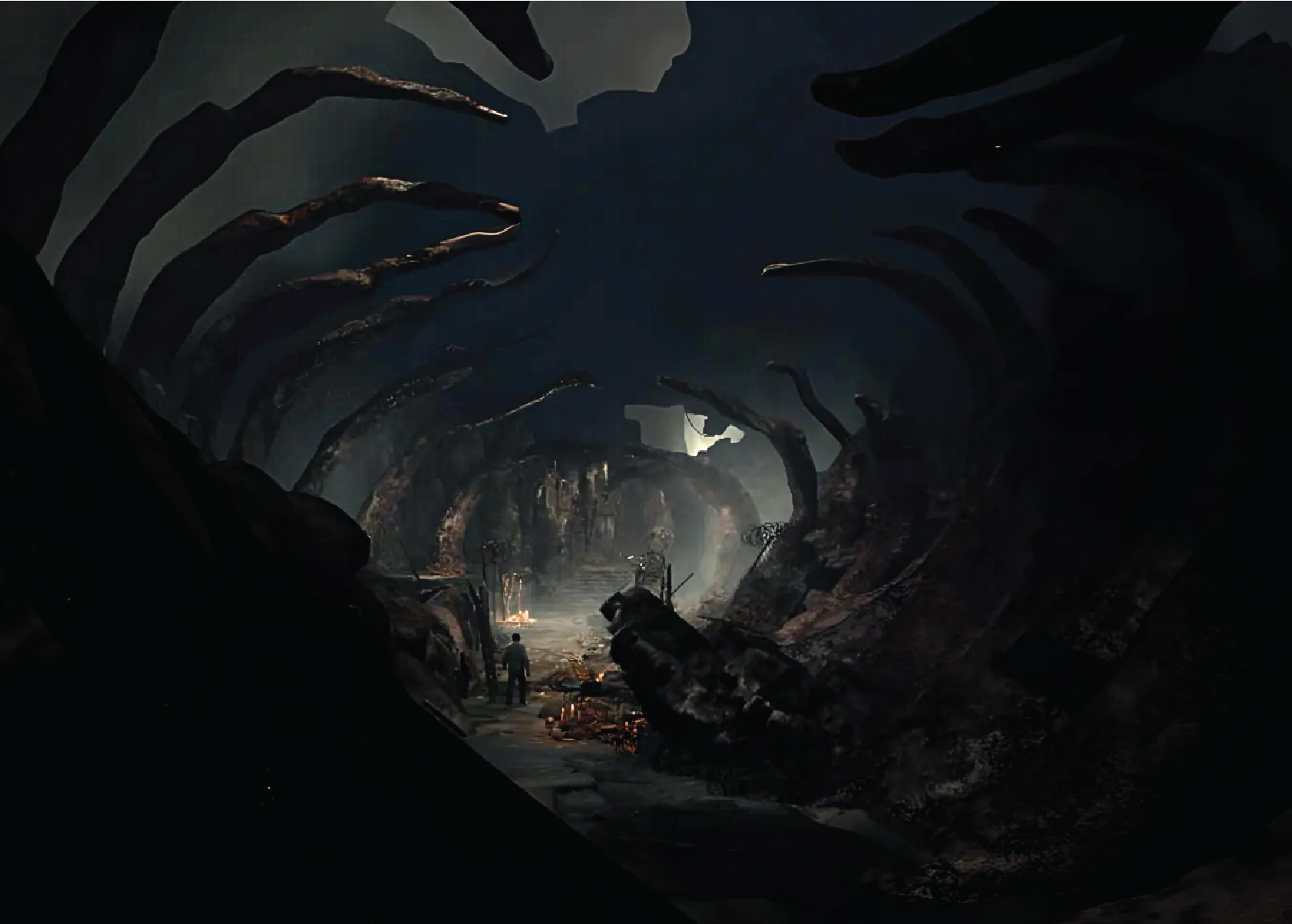
Still from immersive VR experience, Stay Alive, My Son (SAMS),2022.
NC: As a parent, I see that firsthand. If left unchecked, tools like AI can atrophy the creative and analytical muscles necessary for higher-level learning.
VB: Exactly. Quick solutions like using ChatGPT to answer questions for you undermine the fundamental skills of writing, reading, and critical thinking. It propels laziness, mental atrophy, and, sadly, will eventually make these people replaceable through automation. People must sharpen fundamental skills and co-create with AI while maintaining their human value, or as I call it, their “human signature”—creativity, judgment, and empathy. That’s what makes the human being irreplaceable and distinguishes us from the machine in the age of AI.
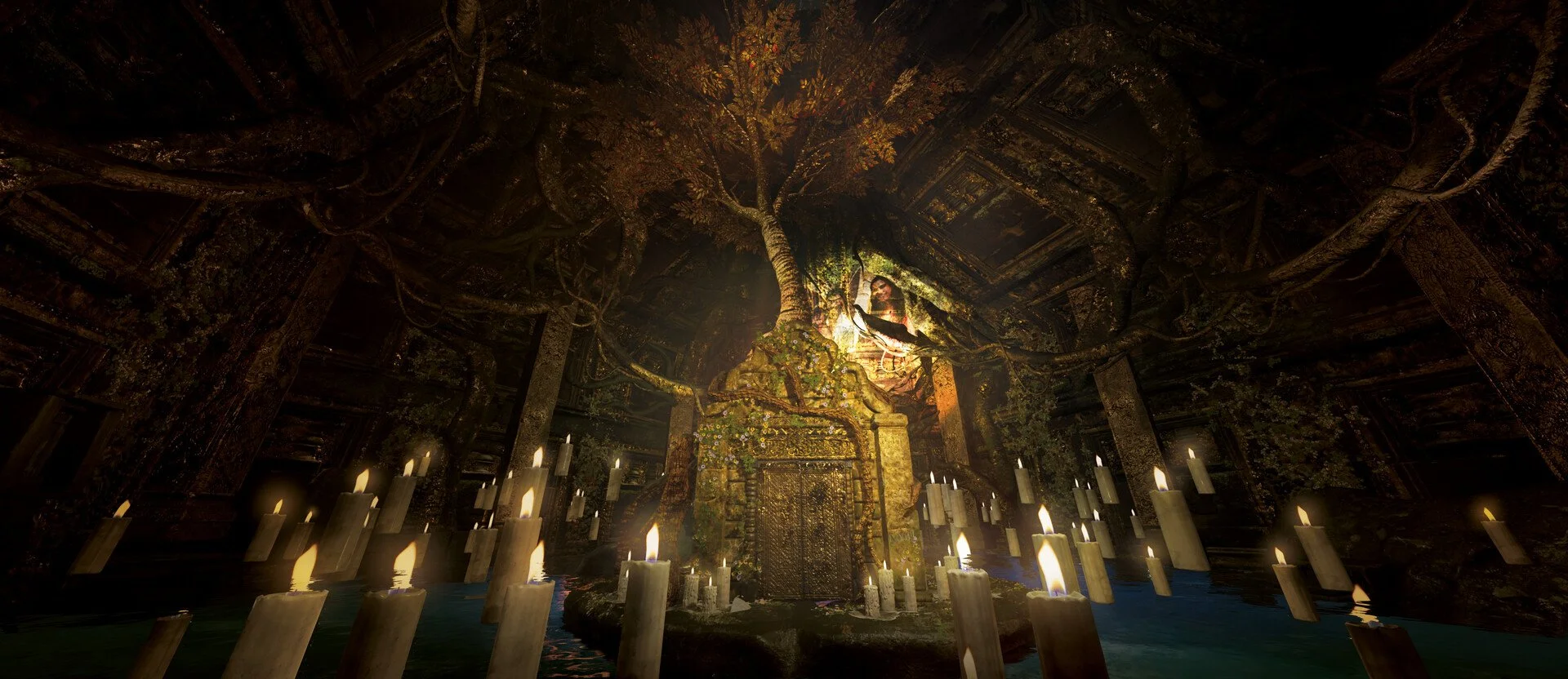
Still from immersive VR experience, Stay Alive, My Son (SAMS),2022.
NC: What recent book has had a significant impact on you?
VB: I read several books simultaneously, but The Prophet is one that profoundly shaped me.