Alchemy and the Painter at Christopher Bishop Fine Art, New York
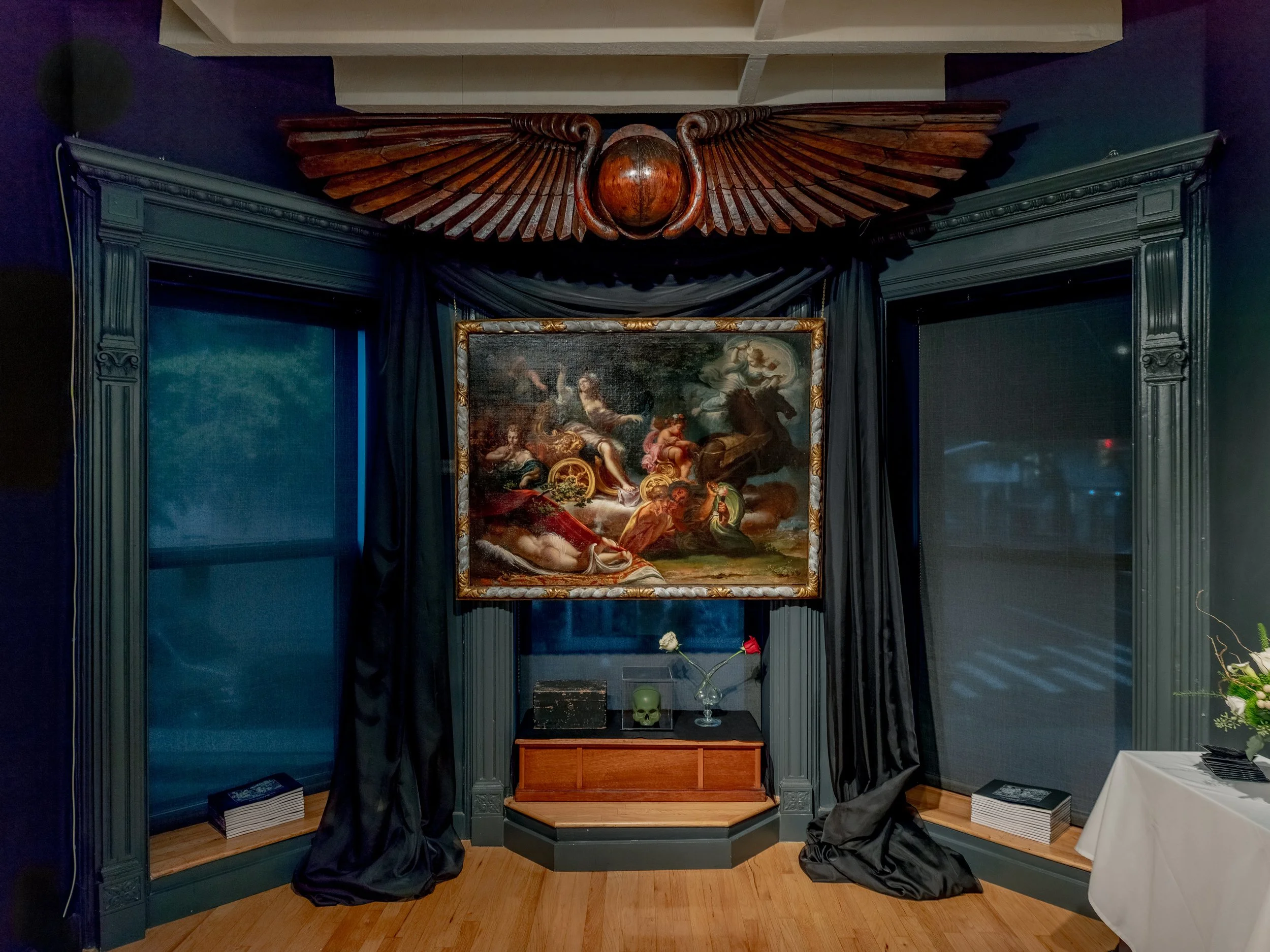
Installation view: Alchemy and the Painter. Fedele Fischetti at Christopher Bishop Fine Art, New York. Image courtesy of Christopher Bishop Fine Art. Photography by Charles Roussel.
Author: Nina Chkareuli
What could be a more intimate method of encountering and connecting to a historical painting than considering one single work methodically contextualized by surrounding artefacts? Christopher Bishop Fine Art, located at a secluded Upper East Side location at Madison Avenue and 80th Street, does just that by the first-ever exhibition of The Triumph of Night (ca. 1765), a newly rediscovered masterwork by Neapolitan painter Fedele Fischetti (1732–1792).
According to Bishop, this intriguing and luminous painting, discovered by him at an auction and previously hidden from scholarship, suggests a close connection between Fischetti and Raimondo di Sangro (1710-1771), a practicing alchemist and Prince of Sansevero from Naples. Bishop hypothesizes that the multifaceted canvas is a nuanced and coded roadmap to the shared dedication of di Sangro and Fischetti to the occult and alchemy. The painting presents a meticulously rendered scene of rebirth to light from the darkness as symbolically presented by the multiplicity of allegorical figures. The figure of the Night arrives at the scene on a chariot driven by a sleeping Somnus (Sleep), while his brother Mors (Death) is holding the veil of the Night. Right under her veil, we see blind and lonesome men representing Fear, Fury, and Jealousy. The Night covers them and their misguided impulses. Luminous lunar goddess Diana, at the upper right corner, lights up the rest of the painting with her celestial crown, creating an atmosphere of transition from the negative to the positive, from sacred to the bodily, from falsehood to verity. A lying figure in the bottom left corner is of Hermaphroditus or Phanes, the Greek deity of light and goodness, yet in possession of a snake-like tail. Figures of Prometheus and Adam emerge holding a torch of truth and attesting to the new reality of the day. Their torch is lit up amidst the night. The title of the work is slightly ambiguous as well; while it references the triumph of nighttime, it actually illuminates the path of the light.
Ambiguity here is noteworthy as this canvas by Fedele Fischetti helps us to understand that a person or a mystery cannot be reduced to a single associated color or symbolism, because by doing so, we are limiting ourselves in our capacity to understand, and only through direct communication between viewers can a precise appraisal of the truths be achieved and ambiguities cleared. We do see Jungian archetypes here, drawing heavily on Roman, Greek, Hebrew, and Egyptian sources with the goal of showing a route to the fabled Philosopher’s Stone and eternal life. A philosopher, Freemason, and necromancer, later excommunicated by the church, di Sangro surrounded himself by a circle of intellectuals who all believed alchemy to be the ultimate attainable amalgamation of spiritual pursuit that could potentially result in godlike powers. In the era of Elon Musk and real-life Frankenstein, we yearn for a similar dedication to the pursuit of higher truths. The alchemical construct of the world that included fixed and controllable substances gave it a measure of predictability and control. A measure somehow lost today amidst the narcissistic leaders of thought and politics. Victor Frankensteins abound today too, yet, as the leaders of technology, they refuse to see the value of communal goods. Figures such as Raimondo di Sangro are largely missing, people in power who went to greater lengths in their visions to achieve intellectual or spiritual goals. Yet, his legacy lives on in this intricate, possibly encrypted map.
Accompanying the theatrically displayed selection of objects and ephemera—including a Roman gnostic gem, a Victorian Masonic gold orb pendant, and an Egyptian gold amulet of the eye of Horus (Wedjat), old and new pigments create a heightened field where some of the mysteries could be revealed or at least contemplated.
About the author: Nina Chkareuli is a Tbilisi-born, New York-based writer and curator.
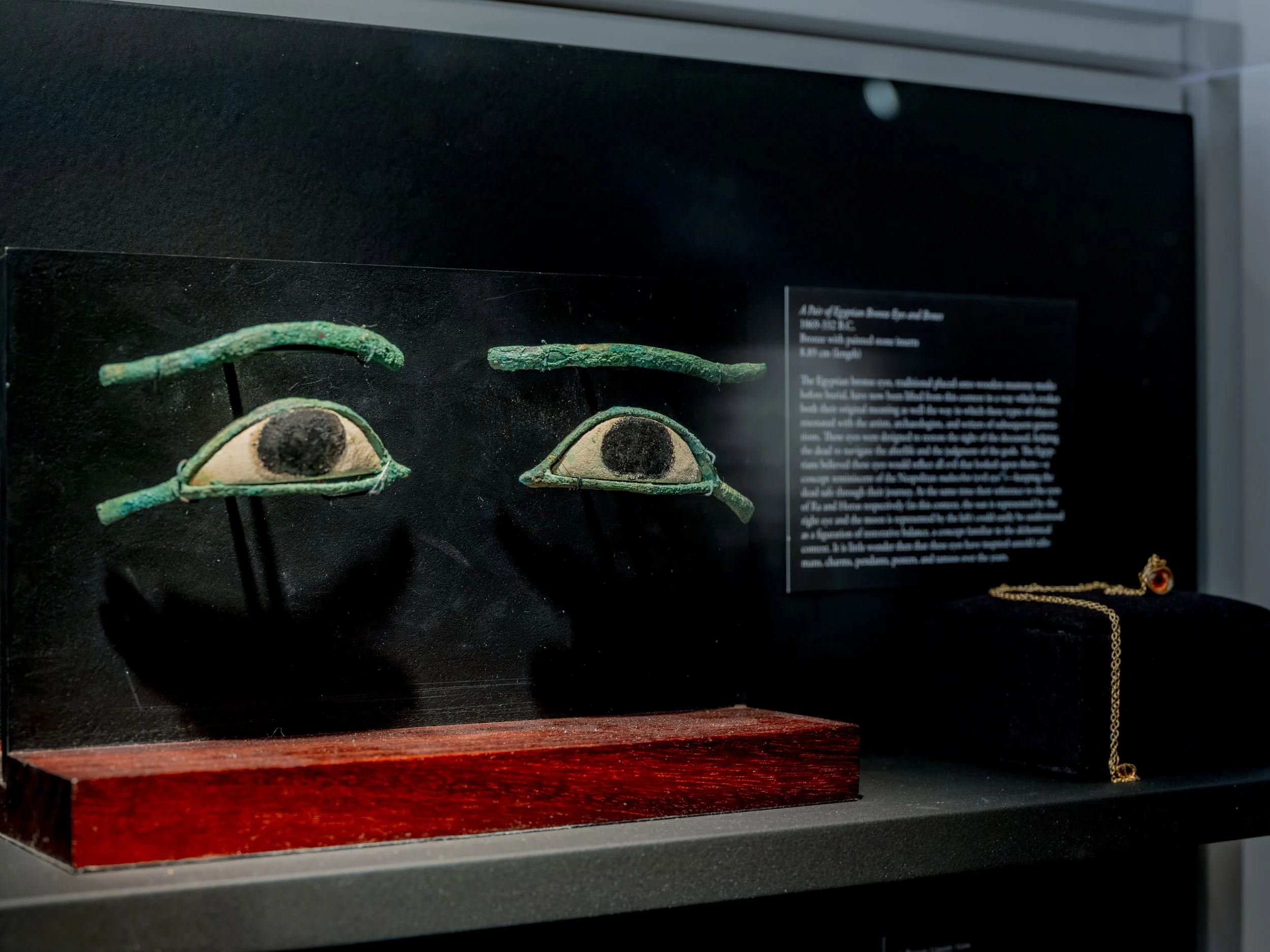
Installation view: Alchemy and the Painter. Fedele Fischetti at Christopher Bishop Fine Art, New York.Image courtesy of Christopher Bishop Fine Art. Photography by Charles Roussel.