Threads of Farewell “Your Empty Chair“ by Julie Legouez at Flutgraben e.V., Berlin
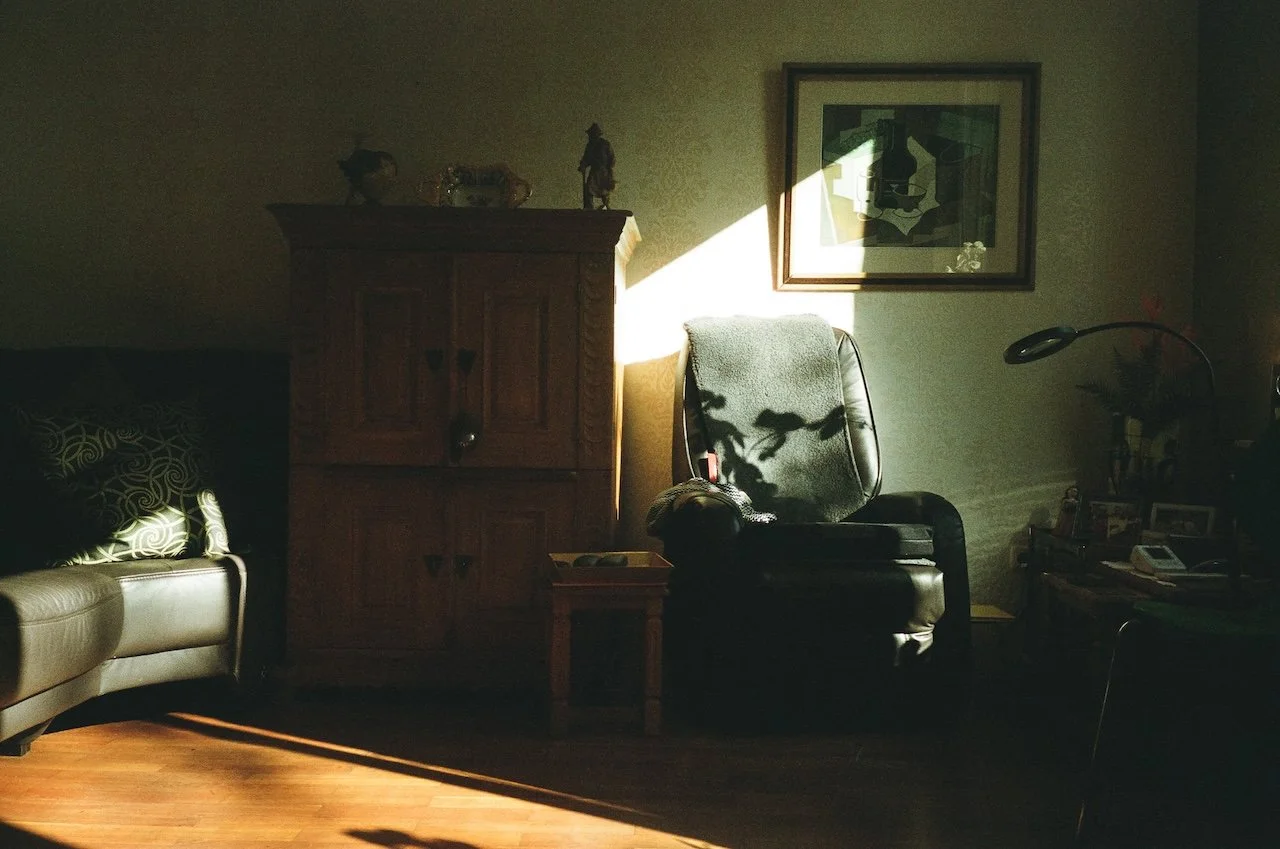
Julie Legouez, Your Empty Chair, analogue photography, 2025.
Author: Carolin Kralapp
Published Sunday, February 8, 2026
Losing a loved one leaves a deep void and a wealth of memories. In the exhibition “Your Empty Chair“ at Flutgraben e.V., Berlin, curated by Pola van den Hövel, artist Julie Legouez accompanies her grandmother Fine through her final days, documenting her and her surroundings with a keen eye for detail. Using an analogue camera, she captures moments in the hospital, such as medication, machines, empty corridors, and also photographs the vacant flat bathed in gentle sunlight. From her family’s experience, the artist unfolds wider social contexts and invites political interpretation.
In this exhibition, Legouez brings together photographs, personal artefacts, handicrafts, video, and sound within her documentary-conceptual practice. On one wall hangs a series of cloth handkerchiefs titled “Your Last Words“ from her grandparents’ collection. In her grandmother’s final days, Legouez noted her last words and hand-embroidered them onto the fabric. Some phrases, like “I could never show you how much I love you” or “I pray for you that you too may find happiness,” move you to tears, while others, like “If I had known this was death, I would not have been afraid,” or “They all praised me for my potato salad,” hold gentle humour. The words reveal both emotional warmth and the confusion of a mind already drifting away, causing the grandmother to believe that she had already died. The work captures the tender mix of pain and laughter that shaped those final days.
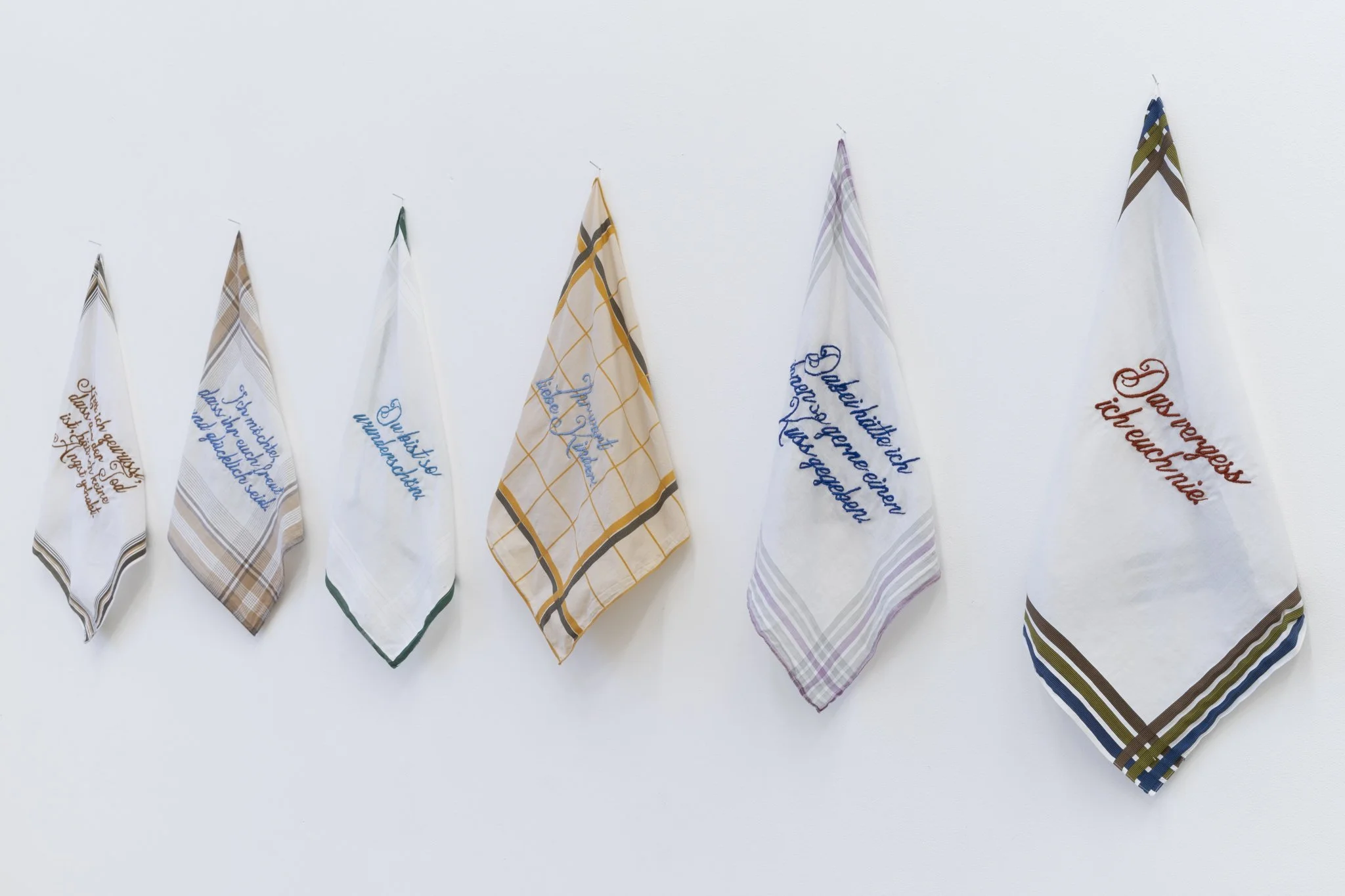
Julie Legouez, Your Last Words, embroidered handkerchiefs, 2025/2026
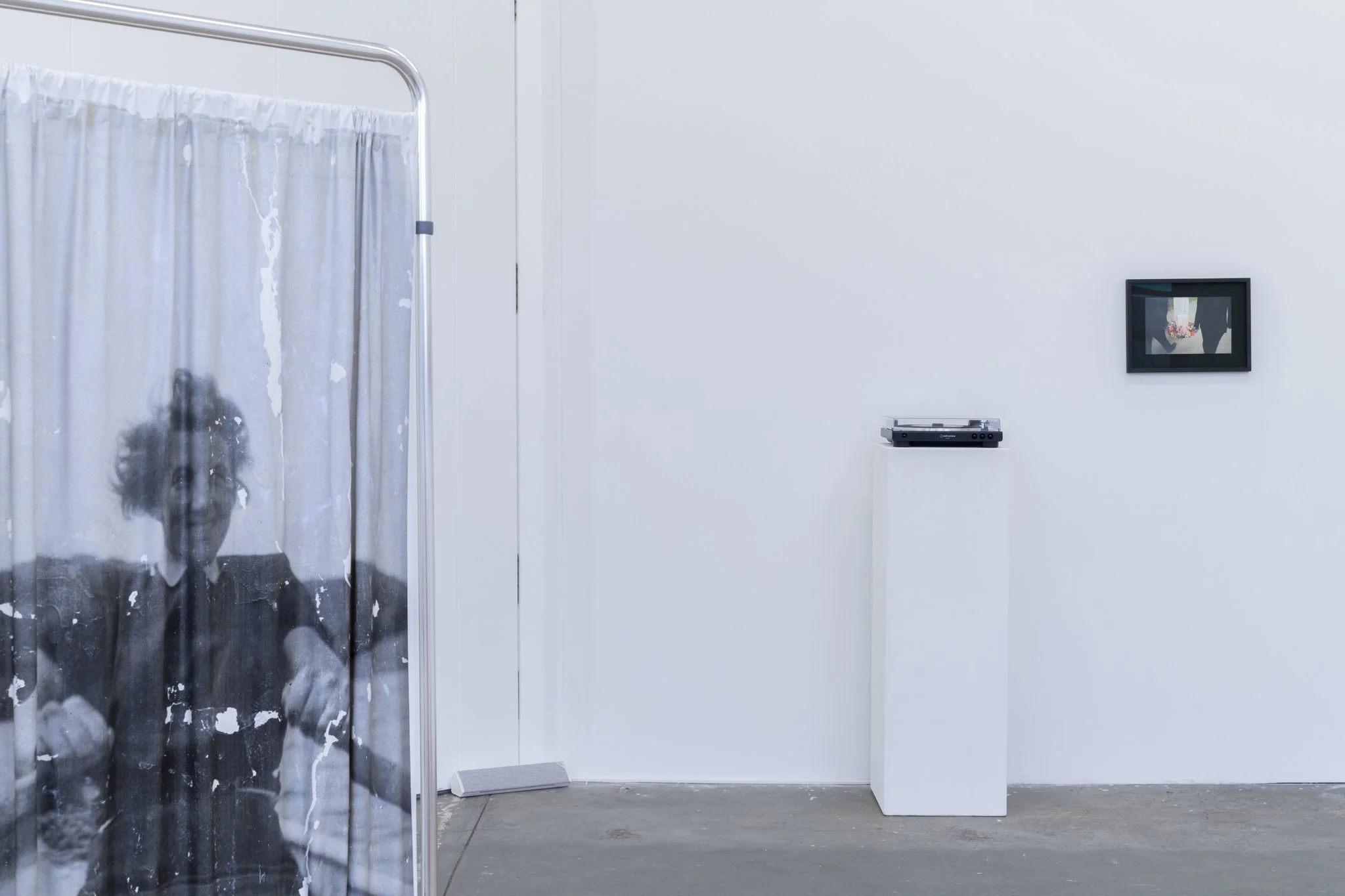
The exhibition invites visitors into Grandma Fine’s world, where they can explore her hospital room, her home, and even the day of her funeral, which she had carefully planned herself. A photograph of the urn surrounded by flowers is accompanied by a cheerful German folk song by Bata Ilić playing on a record player. This moment captures a powerful sense of simultaneity: even in grief, the funeral becomes a celebration of life and the person who has passed away.
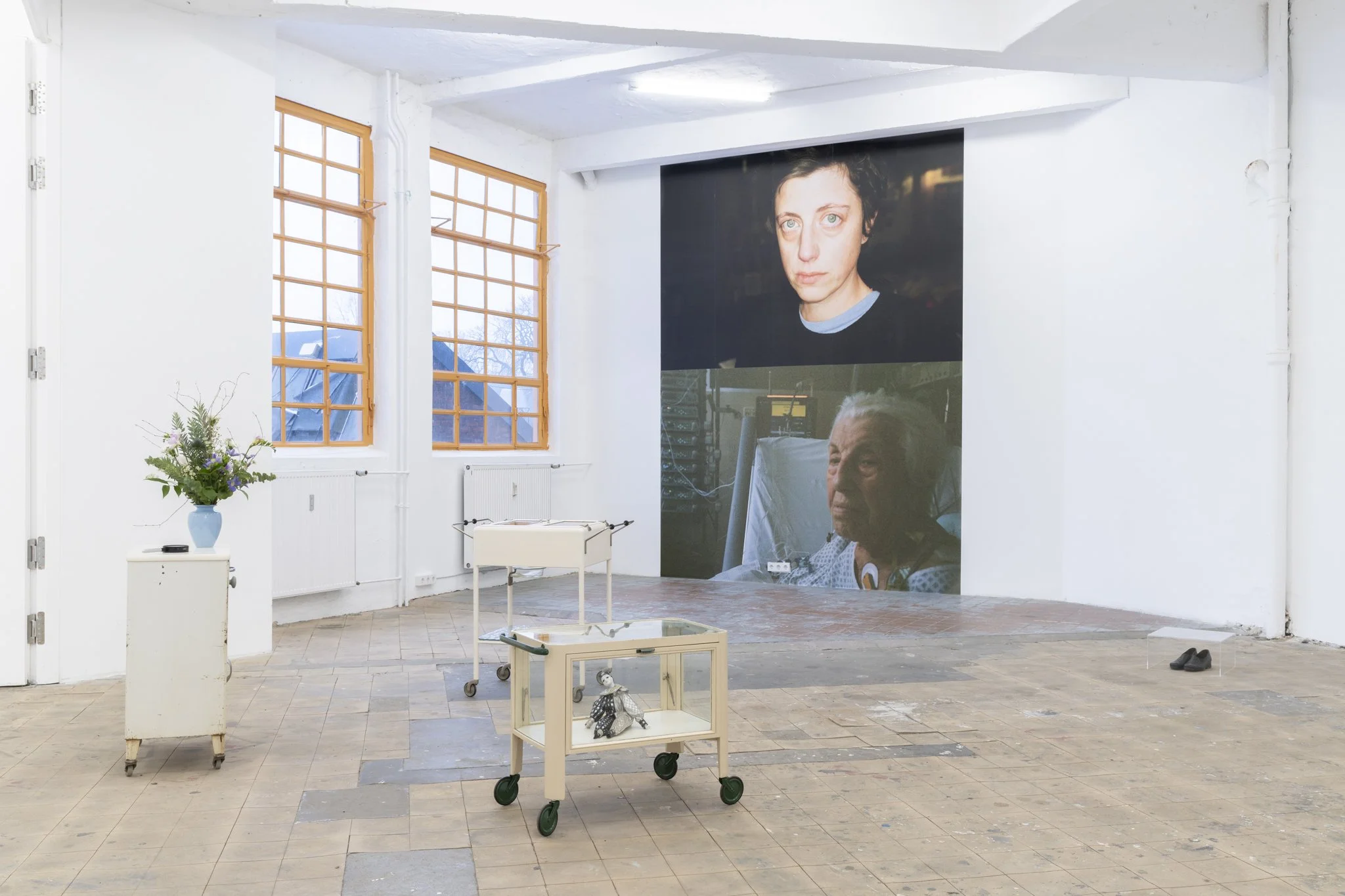
One wall is adorned with a large photo wallpaper featuring a self-portrait of the artist, gazing directly at the viewer. She appears tired and sad, marked by the weight of her recent loss. Below her, a photograph of her grandmother shortly before her death shows her gazing thoughtfully into the room. In front of this, hospital furniture, personal photos, fresh flowers, and other belongings form an installation. On the wall hangs a framed, empty crossword puzzle that once waited for her grandmother on the steps of her staircase on the day she died, but remained unfilled.
Julie Legouez, exhibition view at Flutgraben e.V., Berlin 2026.
A wide range of emotions runs through the exhibition. Engaging with the works can be deeply moving, especially when they evoke memories of one’s own grandmother or loved ones. Yet a gentle warmth resonates throughout, emerging from the loving presentation and small moments of connection. This is evident in the photo series YOUR EMPTY CHAIR, which captures the grandmother’s furnishings in small-format images. By selecting tiny details, Legouez creates a universal visual language that feels intimate and relatable to all visitors.
In 'Your Empty Chair', the artist builds on her previous exhibitions in Berlin. Drawing on her personal experiences, she explores broader social issues. Past projects have seen her deal with the trauma of domestic violence, draw attention to the steadily rising number of victims, and address ideals of beauty and misogyny. 'Your Empty Chair' once again explores her experiences in a politically tense and patriarchal society where the welfare state is under increasing pressure.
In Germany, long-term care insurance supports individuals who. assistance with daily activities due to illness, old age, or disability. Since 2017, there have been five care grades, ranging from Care Grade 1 (minor limitations) to Care Grade 5 (most severe impairments). The higher the care grade, the greater the benefits, which can include care allowance, professional care services, and assistive devices. The abolition of Care Grade 1, a cost-cutting measure currently under discussion in Germany, would affect approximately 860,000 people. This figure is continually rising, which dramatically illustrates how people in need of care are being viewed as a cost to the system. The artist draws on Joan Tronto's care theory, which views care work as the foundation of society and an area where inequalities are particularly evident.
Julie Legouez, exhibition view at Flutgraben e.V., Berlin 2026
Julie Legouez’s work is clear and approachable, emotional yet not overwhelming. Subtle humour lightens the tone, while her personal story transforms into a universal language of loss and remembrance. Viewers are reminded of their own farewells and the quiet moments spent in empty rooms filled with memory. “Your Empty Chair“ is a tender reflection on death and remembrance, inviting the audience to join the artist’s search for meaning and to consider how our society and politics will care for those in need in the future.
“Your Empty Chair“ by Julie Legouez is on view at Flutgraben e.V., Berlin, 5 - 8 February 2026
About the author: Carolin Kralapp is a Berlin-based art historian and writer. She writes for magazines and online platforms, creating accessible and contemporary text formats that communicate complex ideas from the worlds of art and culture. Her work has appeared in publications such as Berlin Art Link and gallertalk.net, among others. Her particular interest lies in photography and conceptual art, focusing on themes of human relationships, social and societal issues, and personal experiences.