Atonal poem about toxicity: Mimosa Echard’s solo exhibition Facial at Amant, Brooklyn
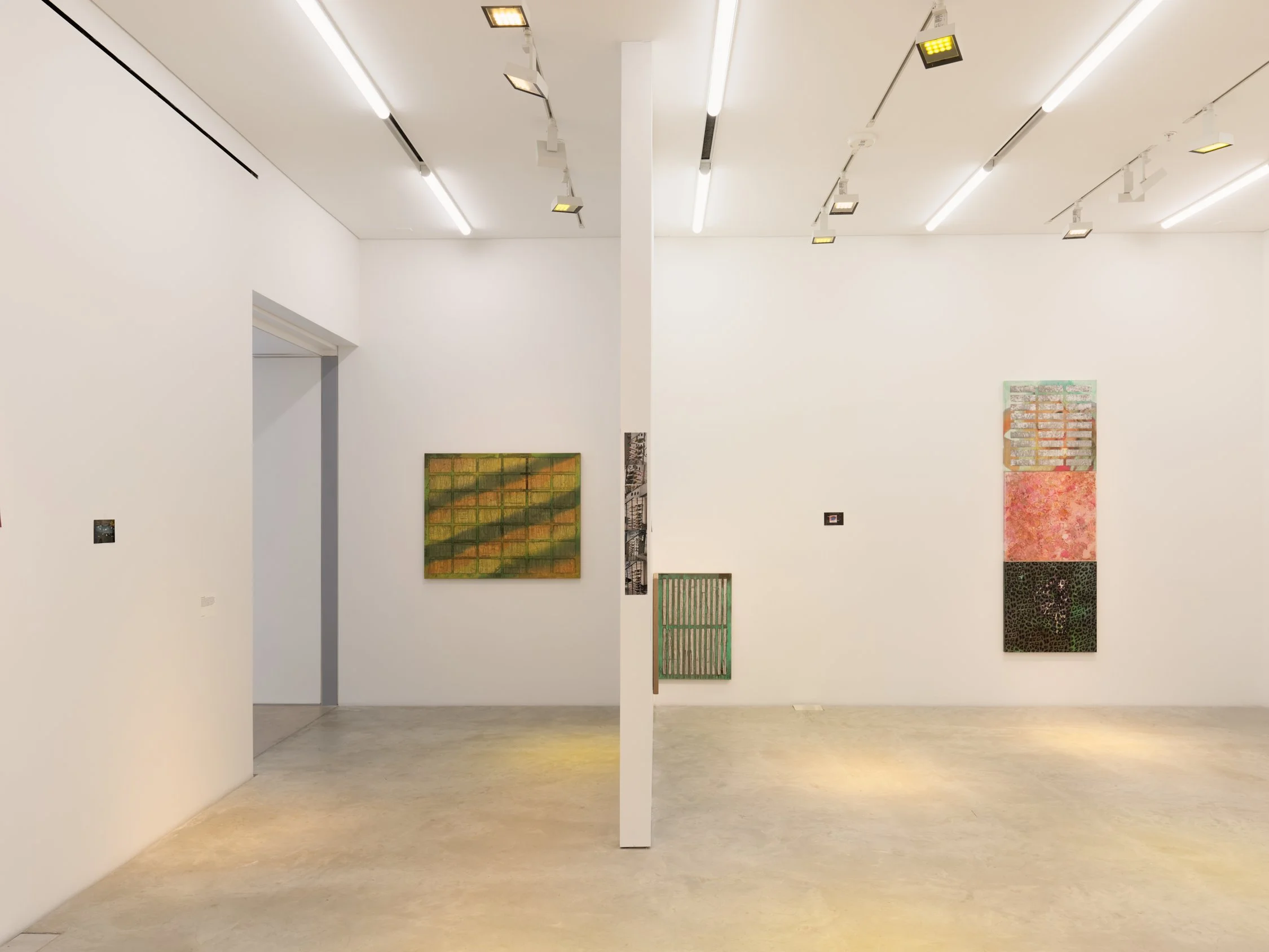
Mimosa Echard. Installation view from Facial. Courtesy the artist and Amant, Brooklyn, NY. Photo by New Document.
Author: Nina Chkareuli
Published Friday, February 6, 2026
Fragmentary and poetic, fluid spirit permeates Mimosa Echard’s solo exhibition Facial, spanning several differently sized and shaped galleries of Amant in Brooklyn, where intentional photography merges with the detritus of the city. Mimosa Echard (b. 1986 in Alès, France) is a French visual artist working across painting, sculpture, installation, video, and digital media, whose practice explores the boundaries between nature and pop culture through hybrid assemblages of natural and manufactured materials; drawing on influences from biological research, experimental cinema, and her upbringing in a hippie community, she creates immersive worlds that challenge conventional perceptions of objects and ecosystems, and has earned international recognition, including the prestigious 2022 Prix Marcel Duchamp. Visiting it in the dead middle of New York winter feels like looking at a rainbow turned upside down; the fragments Echard presents promises-in-reverse of the fragrant smell of earth, cities that are no longer toxic and discombobulating, and solitudes that could be transcended. By showing us what is currently there, we can imagine different ecosystems. Fragmentation that is on view reminds one of atonal music of Shoenberg, it is evocative and yet, devoid of any specificity, devoid of signifiers.
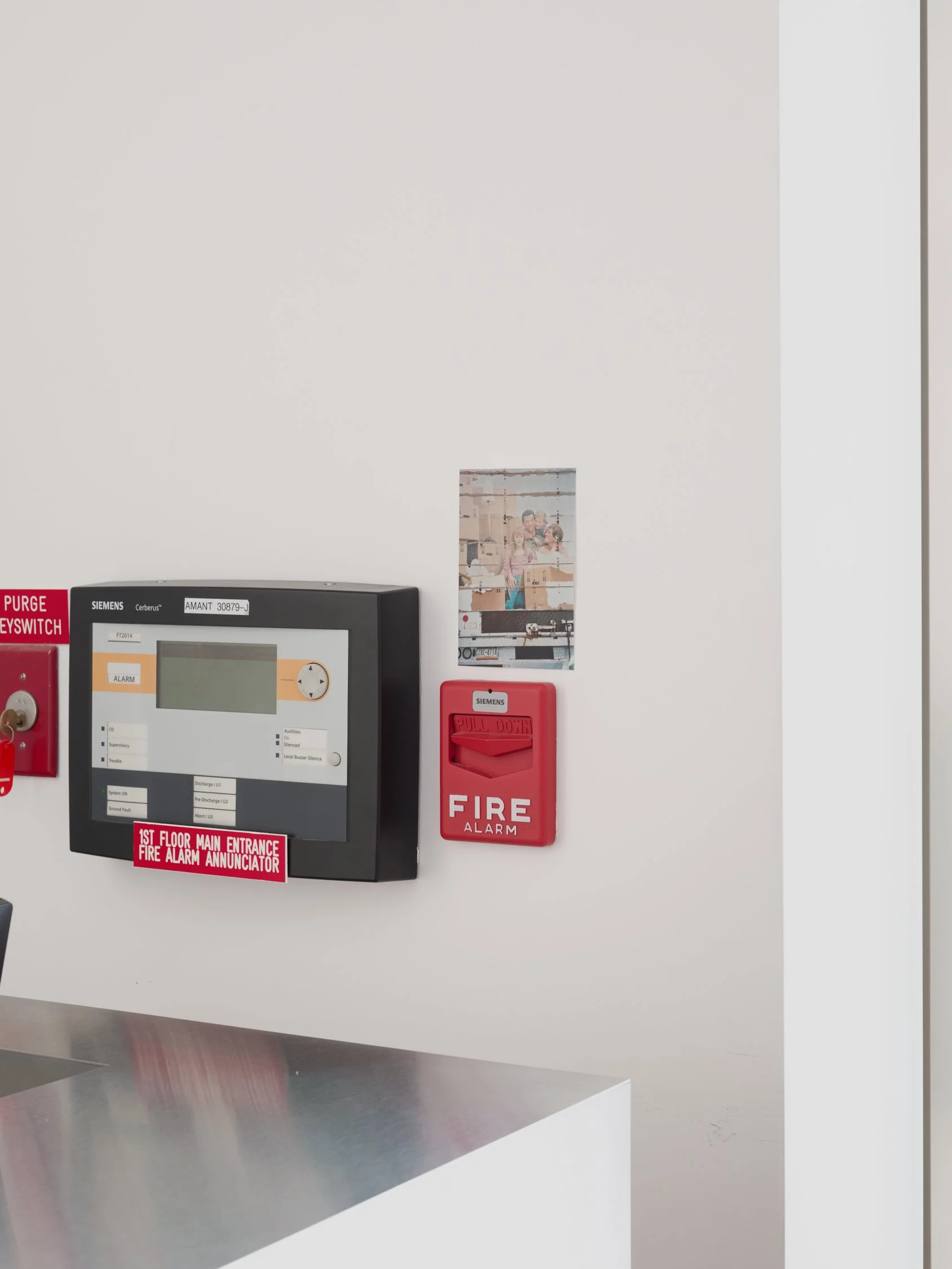
Mimosa Echard. Installation view from Facial. Courtesy the artist and Amant, Brooklyn, NY. Photo by New Document.
Moving fluidly across media and formal vocabularies that include:
a site specific installation, photographs, stills from videos, alongside light, industry sodium gel filters, canvas, aluminum stretchers, aluminum foil, cast aluminum, metal chain, Lambda color prints, Plexiglas, powder-coated steel drain grate, sponge, gingko eggs, depilatory wax, silk scarf, synthetic fabric, oxidized anti-radiation fabric, organza, shower curtains, epoxy resin, urine, reflective glass beads, faux brick wallpaper stickers, novelty straws, hair pin, crystals, banknotes, coins, bra strap, lock, earrings, lily pistils, lemon pips, book pages, packaging, wrapping paper, glitter, acrylic adhesive, acrylic paint, acrylic varnish and mp4 files
Facial creates a simulacrum. It opens onto a constellation of references, ranging from rituals of self-care and pornography to facial-recognition systems and screen-based surveillance. The exhibition’s slippery title reflects the artist’s fascination with surfaces, where images emerge and erode through materials like hair-removal wax, bodily fluids, anti-radiation fabric, aluminum foil, Plexiglas, and transparent acrylic varnish. Questions of erasure, surface modification, gendered grooming, and biometric legibility come to mind when one looks at the works. In addition to being preoccupied with the surface, Echard is also preoccupied with the present and its slippery nature.

Mimosa Echard, photograph taken on Grand Street, Brooklyn, 2025. Image courtesy of the artist.
In his nuanced 1967 essay titled “New Analogy: Poetry and Technology” published as part of his book “Corriente alterna,” Mexican poet and philosopher Octavio Paz writes that every civilization has had its own particular view of time: some conceived of it as eternal recurrence, others as frozen infinity, still others as a void without dates, or as a straight line, or as a spiral. The nineteenth century viewed time as eternal, uninterrupted progress. Looking at Mimosa Echard’s works, it is hard to escape thinking that indeed time is illusory, and we are all reincarnations. We are repeating cults of beauty and estrangement, yet we do not know how to get back to our previous existence. The previous model of the world has been shattered.
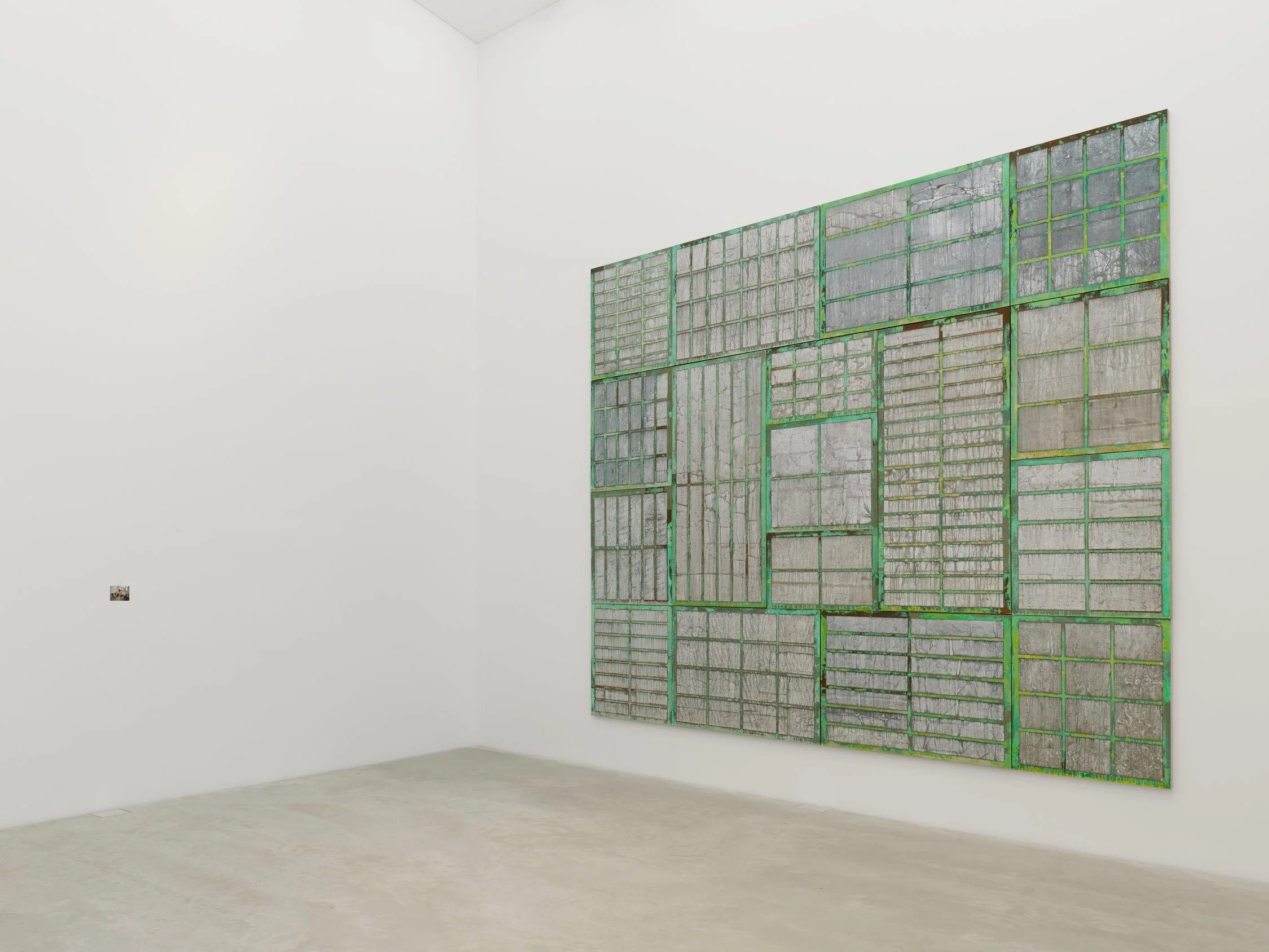
Mimosa Echard. Installation view from Facial. Courtesy the artist and Amant, Brooklyn, NY. Photo by New Document.
The photographs we see, particularly of the gently sexual Gingko biloba tree and status in New York, with its heaps of yellow leaves, unavoidably reference the fragility of human desires and also their resilience, as the tree was one of the few organisms that survived the 1945 atomic bombing of Hiroshima. Widespread in New York and notorious for the acrid odor of the “eggs” (botanically distinct from seeds) produced by female trees, the Ginkgo operates as both reference and atmosphere, with Echard saturating the environment of Facial in the yellow. The exhibition highlights what we read every day in the news – how, as a human race, we are happily destroying each other, a deconstruction in progress, yet how we simultaneously strive for a different dynamic.
Mimosa Echard, Facial, is on view at Amant through February 15, 2026.
About the author: Nina Chkareuli is a New York-based writer and curator.
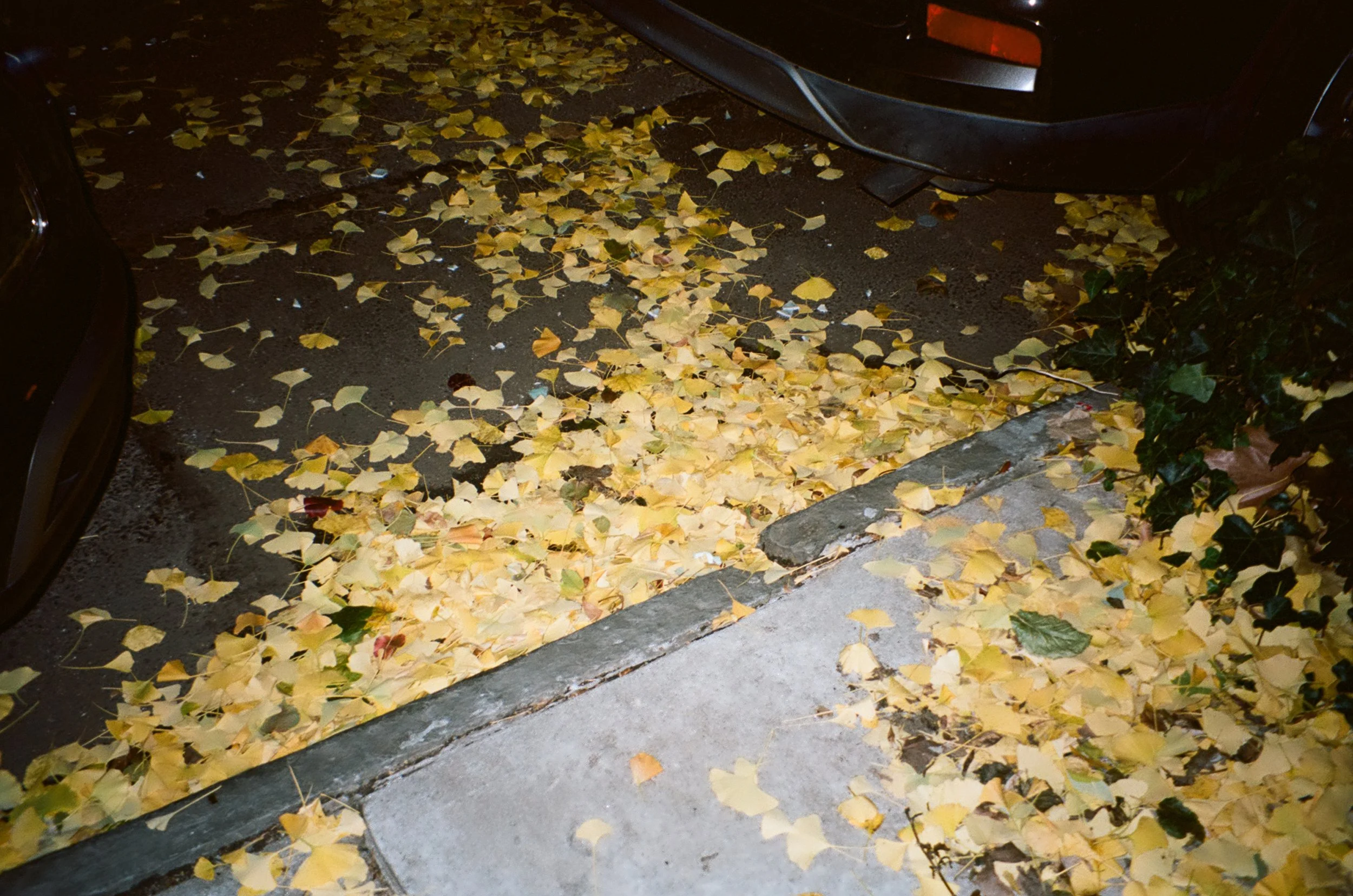
Mimosa Echard, untitled (2025), courtesy the artist and Amant, Brooklyn, NY.