Ocean Vuong: SỐNG at CPW, Kingston, New York
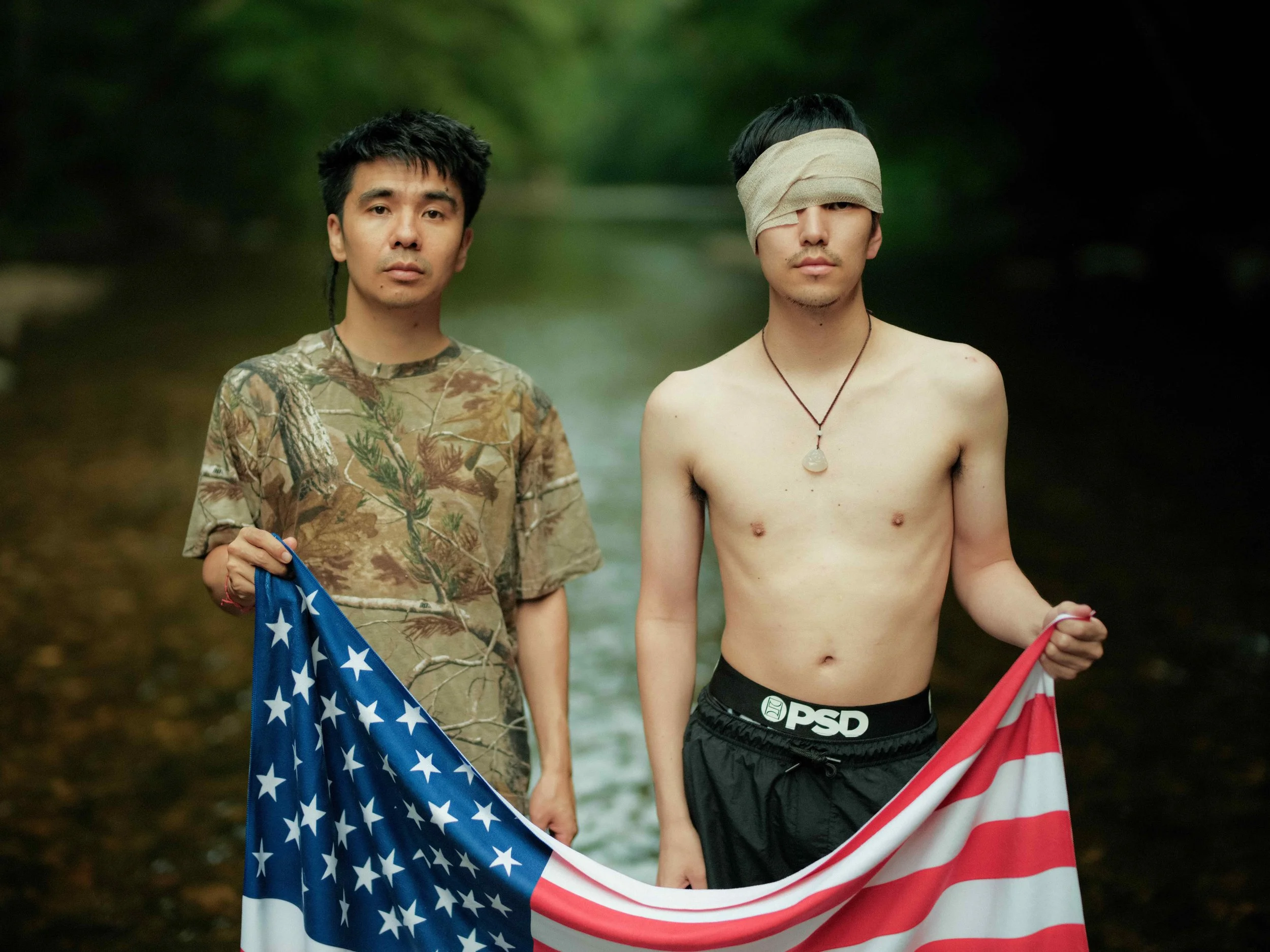
Ocean Vuong, American brothers (2024); courtesy the artist and CPW; © Ocean Vuong.
Author: Natasha Chuk
Published Sunday, February 15, 2026
Ocean Vuong’s first-ever photography exhibition SỐNG arrives as a profound yet subtle revelation of what has been lingering all along beneath the soul-stirring use of language by an award-winning novelist, poet, and essayist. Born in Ho Chi Minh City in 1988 and raised in a working-class Vietnamese American family in Hartford, Connecticut, Vuong situates these images within a broader intergenerational familial story shaped by diaspora. While framed as an extension of his literary practice, the photographs suggest something more reciprocal and longstanding. Vuong has been a photographer for longer than he has been known to the world as a writer, a fact that subtly rearranges how we might understand both bodies of work. Rather than photography following literature, this image-based work appears as a parallel language that has been shaping his way of seeing and engaging with the world all along.
Among the images on view is an intimate body of photographs of Vuong’s younger brother, made during a period when the two were navigating grief and renewal in the wake of their mother’s death. These images carry a particular weight as they contemplate what grief does to a sense of time, proximity, and presence. Here, photography becomes a means of staying with another person rather than fixing them in place. It is perhaps through this unvarnished emotional transparency that Vuong’s images operate with such restraint and tenderness, guided by an acute sensitivity to what cannot be fully articulated. Another distinct group of images stands apart for their vivid, almost incandescent color: photographs of the nail salon Vuong’s mother once ran, rendered in saturated pinks and sharp fluorescents that pulse against the exhibition’s otherwise hushed tonal range. These images carry an added gravity in their backstory. Vuong photographed the salon over the course of a single day. Shortly thereafter, as a result of the 2008 recession, his mother was forced to close the business. The images are both a record of a place and a compressed visual archive of labor and aspiration. In this way, the salon becomes more than a place of employment to represent a fragile threshold where survival and familial devotion briefly converge before giving way to loss.
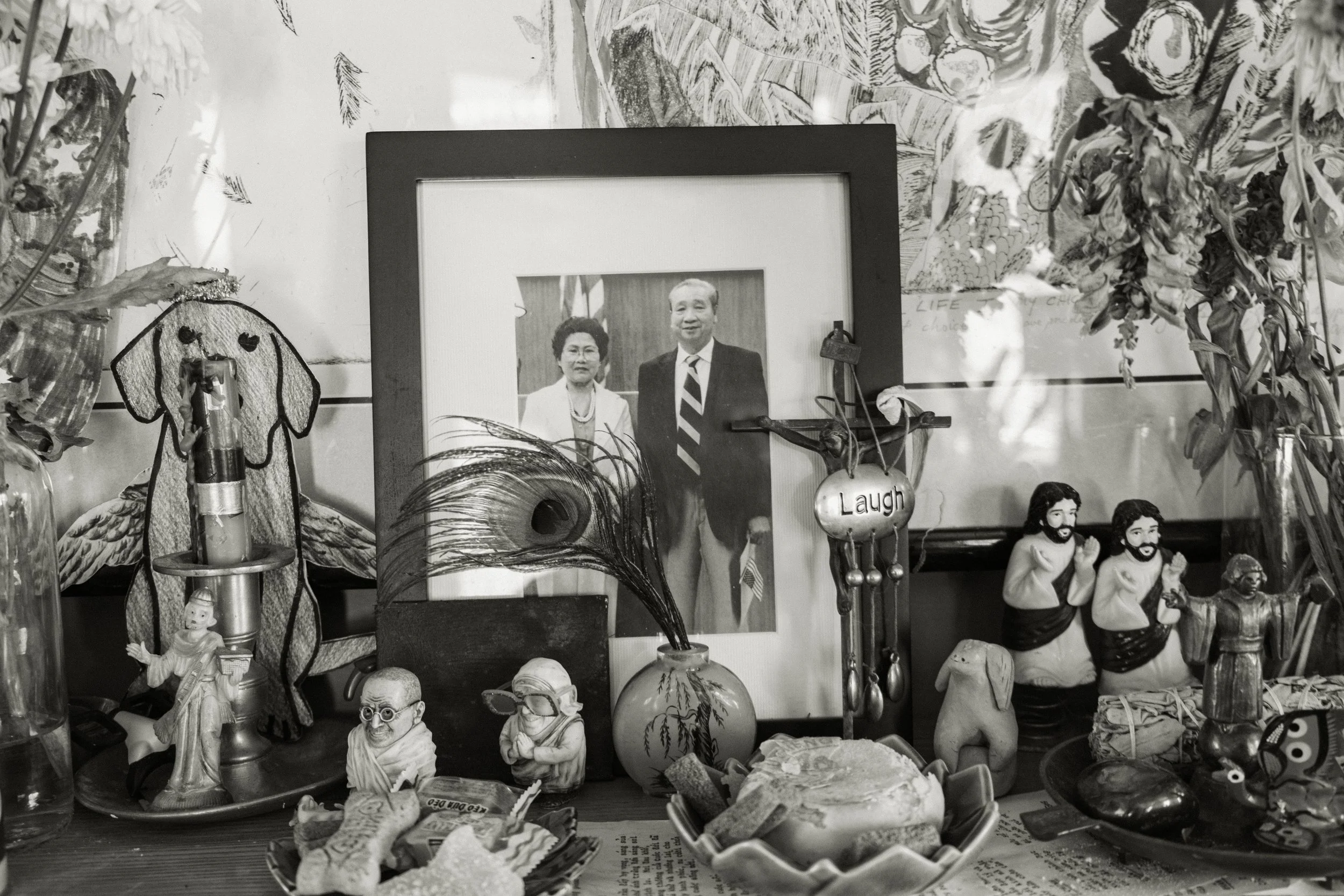
Ocean Vuong, Thuy’s altar (2020); courtesy the artist and CPW; © Ocean Vuong.
Vuong first picked up a camera at the age of 17, while immersed in skate culture and the friendships that surrounded it. The figure of the self-taught photographer is often romanticized, but the term itself is curious. To be self-taught simply means encountering a tool meant for common use and learning how to wield it attentively, and discovering, through practice and intuition, how life might be translated through it. In Vuong’s case, that translation is unmistakably lyrical. His photographs move beyond documentation and give form to states of feeling. Much like his writing, they shape lived experience into something tender, suspended, and deeply luminous.
We understand that writing builds meaning through syntax and rhythm, and photography composes through light, framing, and stillness, but in an interview with Ginger Radio Hour, Vuong revealed that photography is an affirmative act resulting in something much bigger than the photographer. “If I’m brave enough to press the shutter,” he said, “the camera says yes, even when I say maybe. That’s not true with writing.” With this in mind, the intricacies of language are interlaced in the double meaning of the exhibition’s title and in a sound component accompanying the works on view. In Vietnamese, sống means living, echoing the English notion of a tune’s liveliness, suggesting that to live is, in some essential way, to sing. This is underlined by the inclusion of a recording of Vuong’s father singing, which lends the exhibition a quality of human presence. These modes of inscription operate as contemplative acts of self-expression and, just as importantly, as self-preservation.
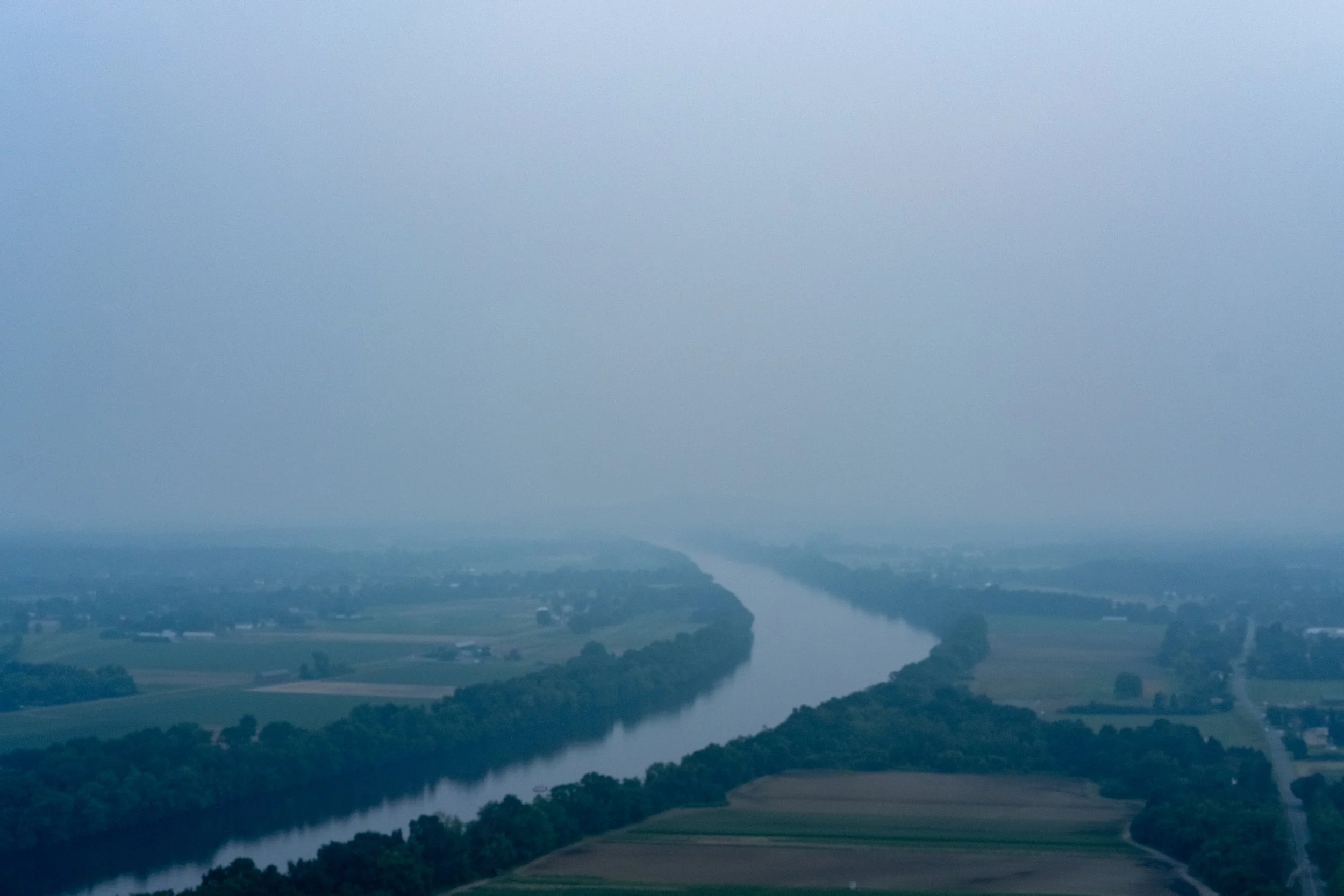
Ocean Vuong, Connecticut River during wildfire (2022); courtesy the artist and CPW; © Ocean Vuong.
This emerges across Vuong’s photographs as attention to the spaces between people, between objects, and between moments that might otherwise be dismissed. Looking at these images, nothing stands out as monumental, yet everything feels charged by what has been felt before and may never return. The work lingers in nuance, around the edges of affection, grief, and memory that settle into an atmosphere that gently pulls us into it. We are invited to sit inside these moments and the emotions they hold and experience love and loss as ongoing conditions of being. They remind us how the camera collects what one intends to photograph, and how it also gathers what was not anticipated, all that slips into the frame. We recognize how photography affirms desire as well as contingency, and feel the way meaning emerges through this gesture of submission. Vuong’s literary work embraces this sensibility too, as a force that makes room for vulnerability and allows it to become a source of strength.
Altogether, Vuong’s photographs build a quiet trust, carefully drawing viewers into the uneasy spaces where love and grief coexist, and where looking moves beyond the role of witnessing to become a part of feeling and existing. This unvarnished emotional transparency is what enables Vuong’s images to operate with such precision and care. Despite the camera’s inclination to say yes, these images remain restrained yet deeply affective, cultivating a sensitivity to what can and cannot be fully articulated.
Ocean Vuong: SỐNG is on view at CPW, Kingston, New York, through May 10, 2026.
About the author: Natasha Chuk is a media theorist, writer, and curator based in New York.
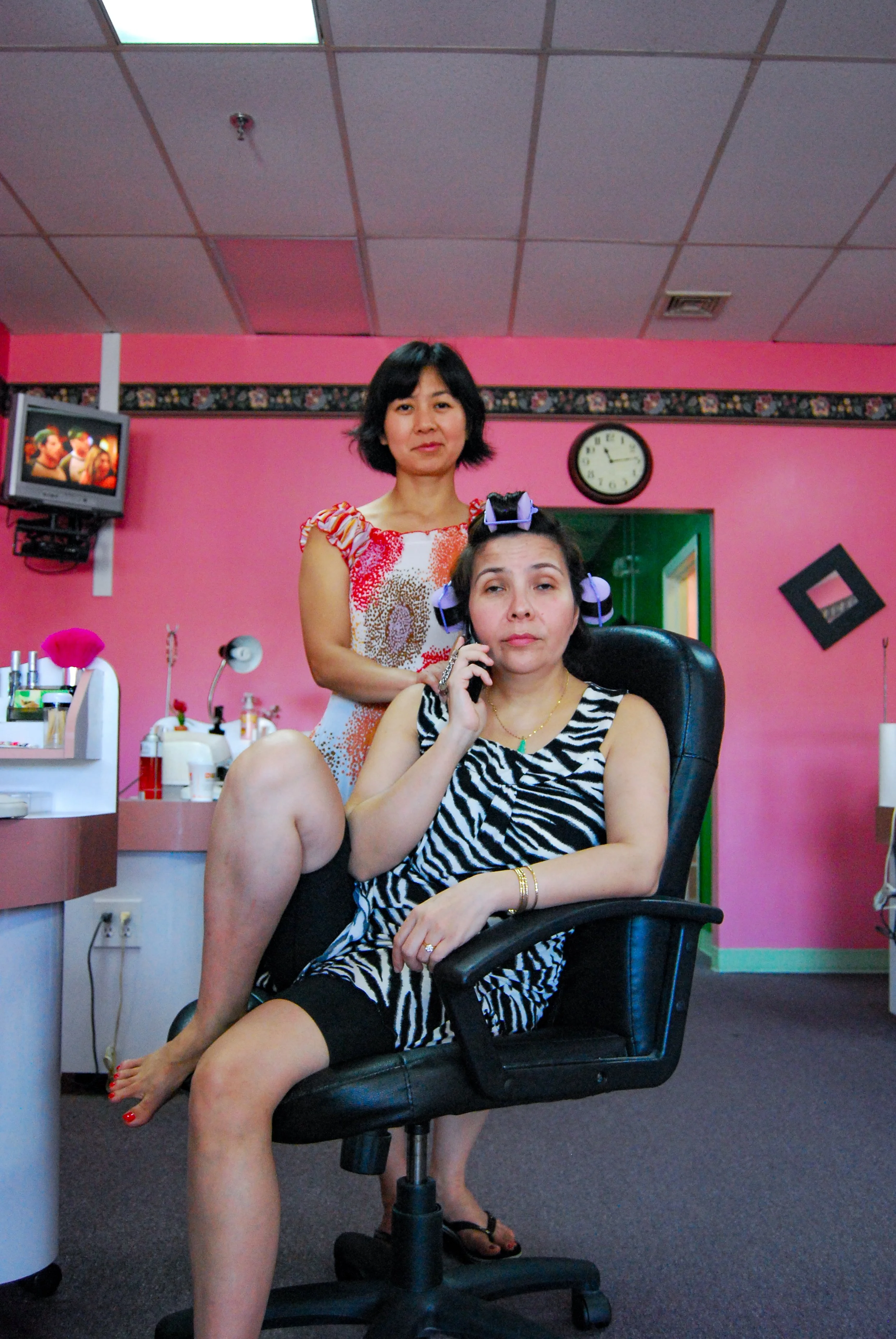
Ocean Vuong, Phuong and Mom (2009); courtesy the artist and CPW; © Ocean Vuong.