GUEST Hot Coffee: Freya Xu with curator Jun Dong
Published Tuesday, August 4, 2026
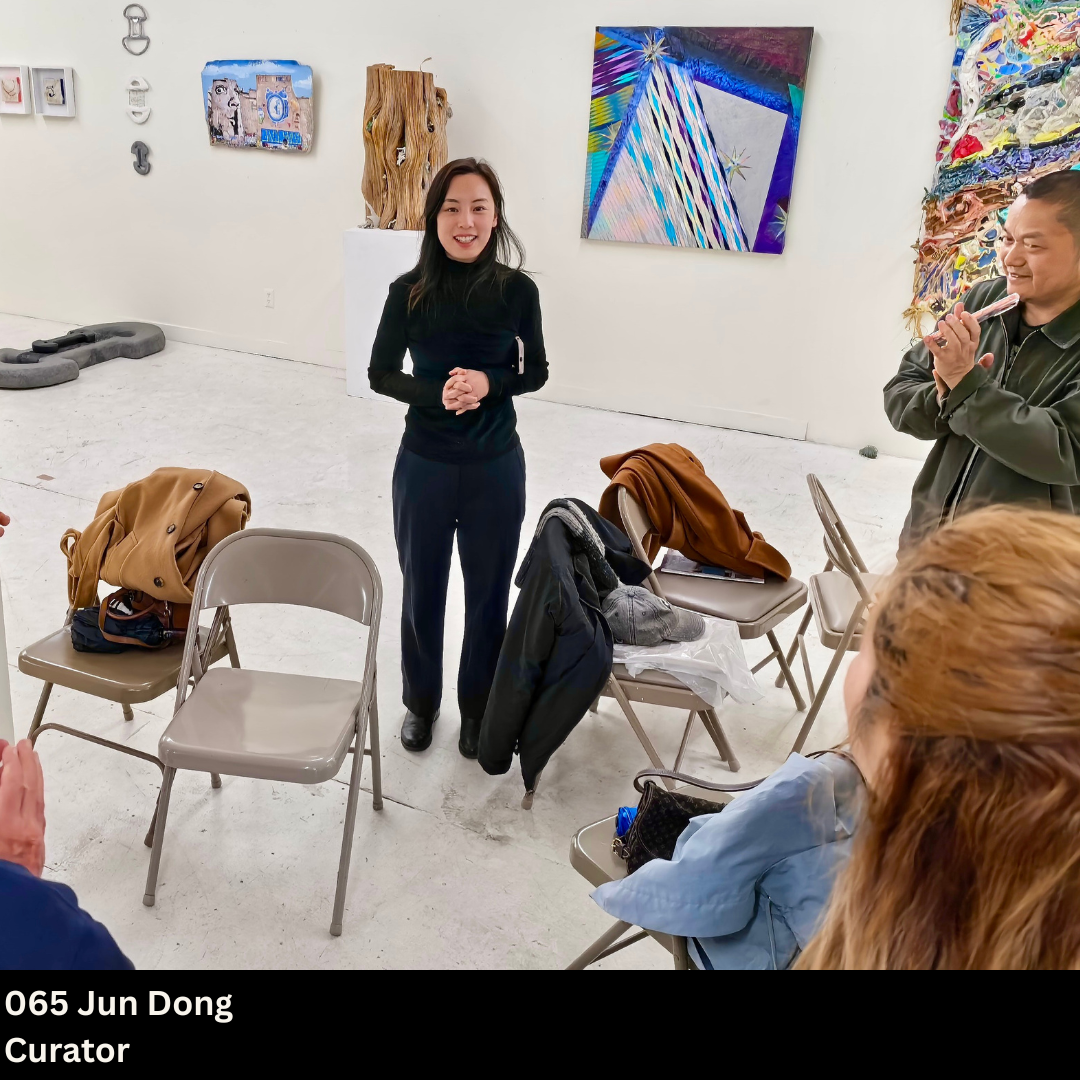
New York-based independent curator Jun Dong has emerged as part of a younger generation of curators navigating between institutional structures, independent initiatives, and cross-cultural dialogue. Her research investigates how, in today’s rapidly developing society, humans can better relate to themselves and establish sustainable relationships with others and the environment; believing that art can encourage people to actively explore and build these profound connections while exerting a positive cultural influence. She pays particular attention to the materiality and perceptual dimensions of different materials in artistic creation and explores the fusion, transformation, and extension of Eastern visual aesthetics and traditional symbols within the context of Western contemporary art.
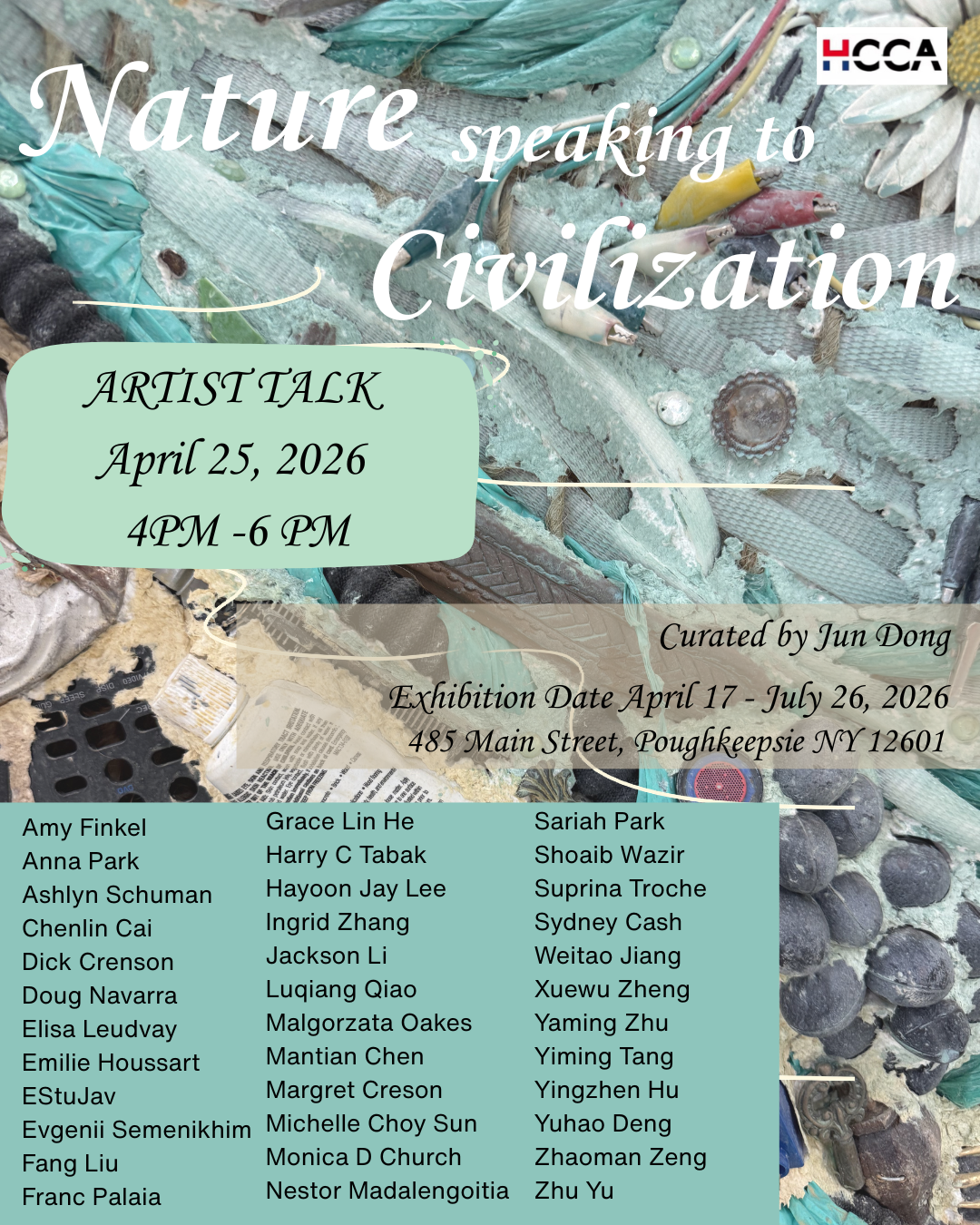
Her curatorial practice centers on the relationships among humans themselves, the natural environment, and social civilization. She explores how art can facilitate the establishment of these sustainable connections and the interactions between cultural traditions and contemporary artistic expressions. Her recent exhibition Nature Speaking to Civilization at the Hudson Center for Contemporary Arts is a vivid embodiment of this vision.
In conversation, Dong speaks with a calm precision that mirrors the spatial rhythm of her exhibition. She approaches curating as a process of deep listening — to artists, to materials, and to the emotional and perceptual traces embedded within objects and images.
I first met Jun Dong at Nature Speaking to Civilization, the exhibition she curated at the Hudson Center for Contemporary Arts. Jun personally guided me through the exhibition, introducing its spatial arrangement and explaining how the artists’ varied uses of material contributed to its dialogue between nature and civilization. I was especially drawn to the exhibition’s attention to materiality, perception, and the shifting boundaries between the natural and human-made worlds. Our conversation began during this walkthrough and gradually expanded into a broader discussion of her curatorial research, the role of materials in shaping our experience of art, and how exhibitions can foster more sustainable relationships between individuals, society, and the environment. That is how the conversation that follows began.
Freya Xu: Imagine that you are in your favorite coffee or tea spot. Where is it? What are you drinking? And what are the three things you see right now in that place?
Jun Dong: My favorite coffee spot is MarieBelle. Their hot chocolate is amazing, so that’s what I’m drinking. It’s a beautiful French-style café with a warm and elegant atmosphere. Right now, I see the beautifully decorated interior, delicate tableware, and delicious handmade chocolates. I love this place because everything is carefully designed, and it’s the perfect spot to relax and enjoy a special treat.
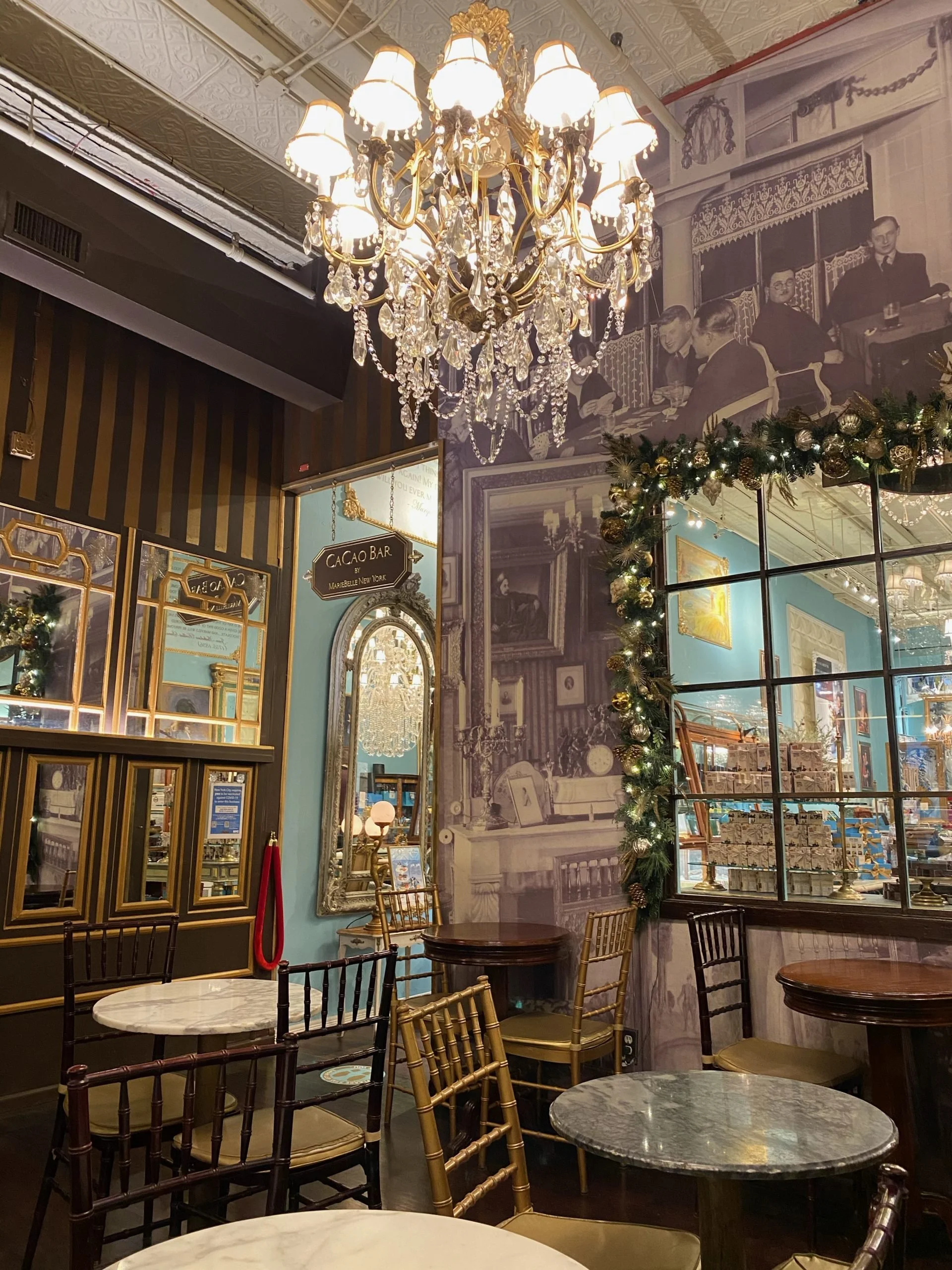
MarieBelle, New York. Courtesy of the coffee shop.
FX: Can you tell me about your recent exhibition Nature Speaking to Civilization?
JD: Nature Speaking to Civilization focuses on materials and how they hold stories of use, change, and contact between humans and nature. The exhibition tried to soften the usual separation we make between the natural and the man-made world, treating nature as an inclusive, almost maternal field that embraces both organic life and human activity. It emphasized that all materials we use — even those that appear artificial — ultimately originate from nature, inviting viewers to listen to the voices of nature within civilization and to approach the environment with greater respect and reverence.
FX: Could you share more about how specific artists’ works contribute to the exhibition’s dialogue between nature and civilization?
JD: The 33 artists brought very different perspectives and artistic languages to the theme. They came from highly diverse backgrounds — international, senior, academic, and those with strong regional characteristics. For example, Monica D Church’s Celestial Navigation uses vibrant acrylic, spray paint, and collage on sail material to evoke guidance and exploration. Suprina Troche’s Empathy Buried incorporates detritus and paper mache to explore buried emotions and resilience. Through careful placement, these diverse practices create rich conversations, allowing viewers to see how materials shape daily life, how civilization inherits from the past, how we coexist with the environment, and what impact our actions have on the world.
FX: The exhibition pays close attention to materials and surfaces. Why does that matter to you?
JD: Life today often feels distant and digital. Art offers something physical and present. A painting surface holds the marks of time, pressure, and the flow of thought and feeling. Sculpture carries weight and resistance. I like when exhibitions make people notice their own body in the room, the space between things, the rhythm, and the quiet parts. It makes the experience stronger.
FX: How does this exhibition connect to your broader research interests?
JD: This exhibition is closely aligned with my research on human relationships and sustainable connections. It examines how we relate to the natural environment and to civilization itself, encouraging reflection on coexistence, respect for nature, and how art can help us build more harmonious bonds with ourselves, the environment around us, and the larger world.
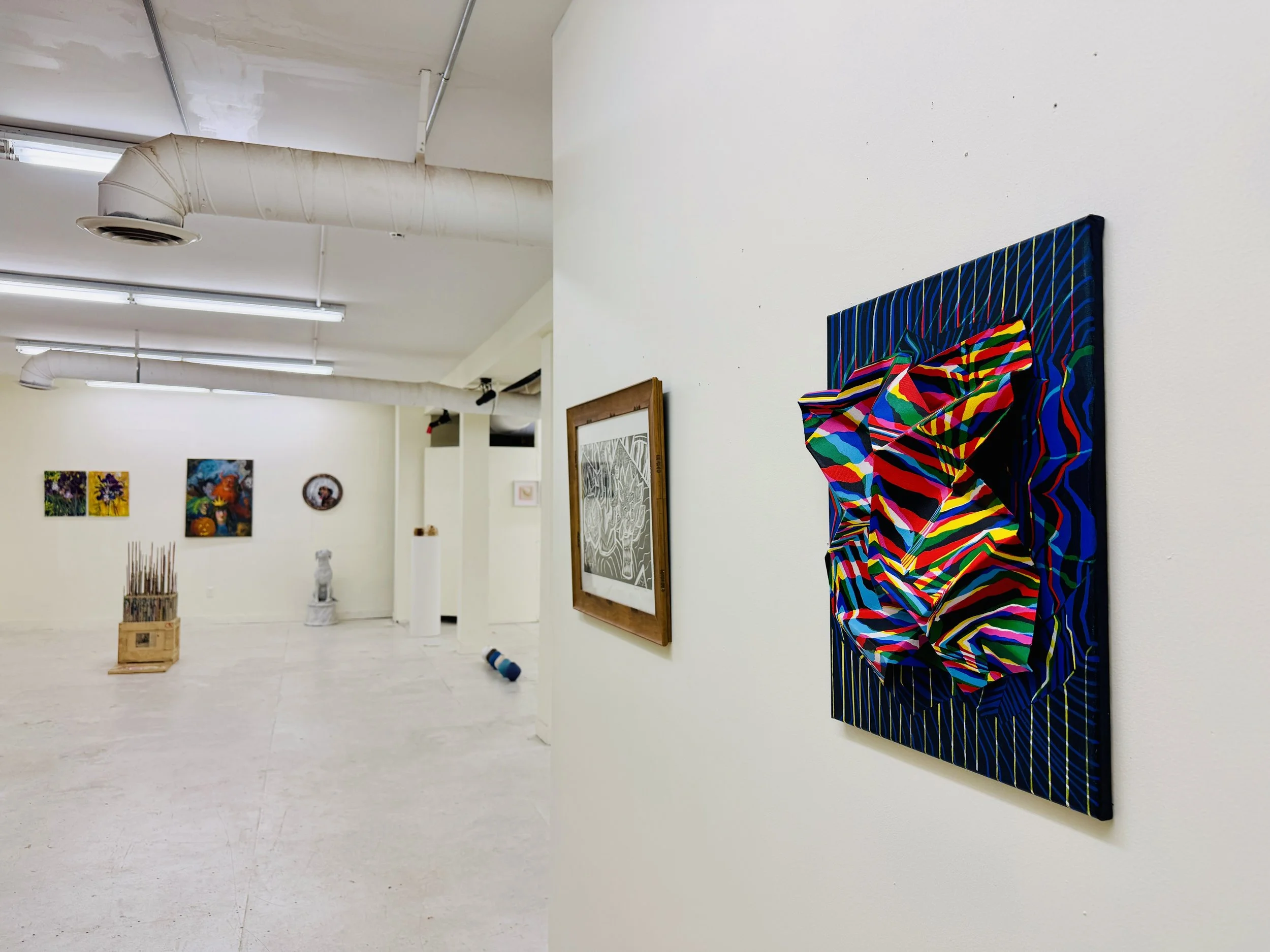
Installation view, Nature Speaking to Civilization?, image courtesy of the curator.
FX: As an independent curator based in New York, what does curating mean for you these days?
JD: It needs both flexibility and a clear sense of purpose. New York is competitive, but it also brings together so many different people and ideas. Curating is about building temporary communities where people can share thoughts and feelings, while conveying artistic value and cultural meaning.
FX: What do you hope people experience when they visit your exhibitions?
JD: I do not look for one single reaction. I hope the shows help people slow down and notice small things they might usually overlook, like material details or emotional tones in the space. Even a small change in how they see things can stay with them and encourage deeper reflection on how we build sustainable relationships with ourselves, others, and the environment.
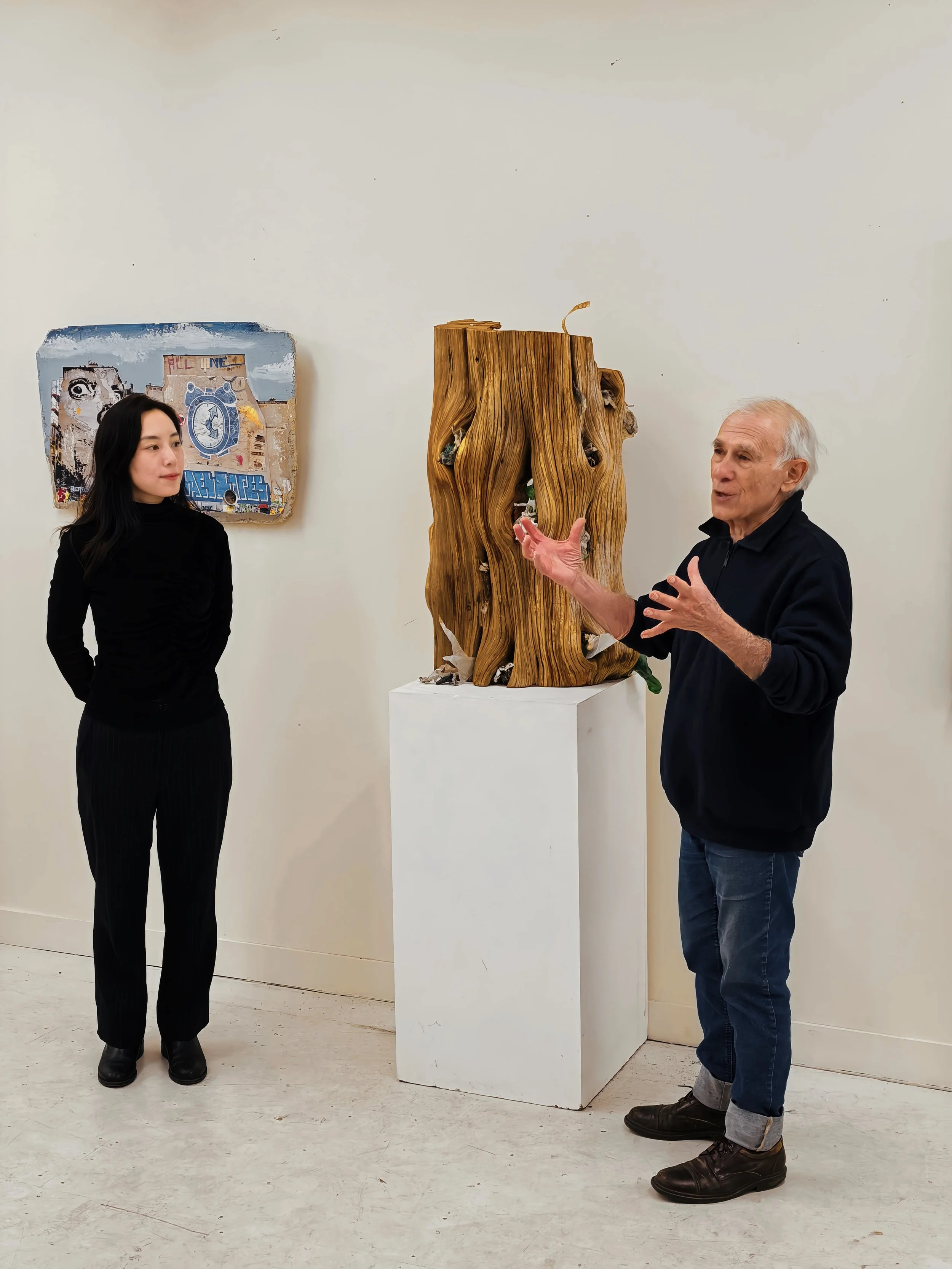
Installation view, Nature Speaking to Civilization?, image courtesy of the curator.
Exhibition Information Nature Speaking to Civilization Curated by Jun Dong, Hudson Center for Contemporary Arts, April 17 – July 26, 2026, 485 Main Street, Poughkeepsie, NY 12601.
Freya Xu is a New York–based writer covering contemporary art and the global art market. Through interviews, essays, and critical writing, she explores artists’ practices, curatorial perspectives, and the cultural forces shaping today’s art world.
This interview was edited by Nathan Naval.