Hot Coffee with curator Martina Yordanova
Published Tuesday, July 21, 2026
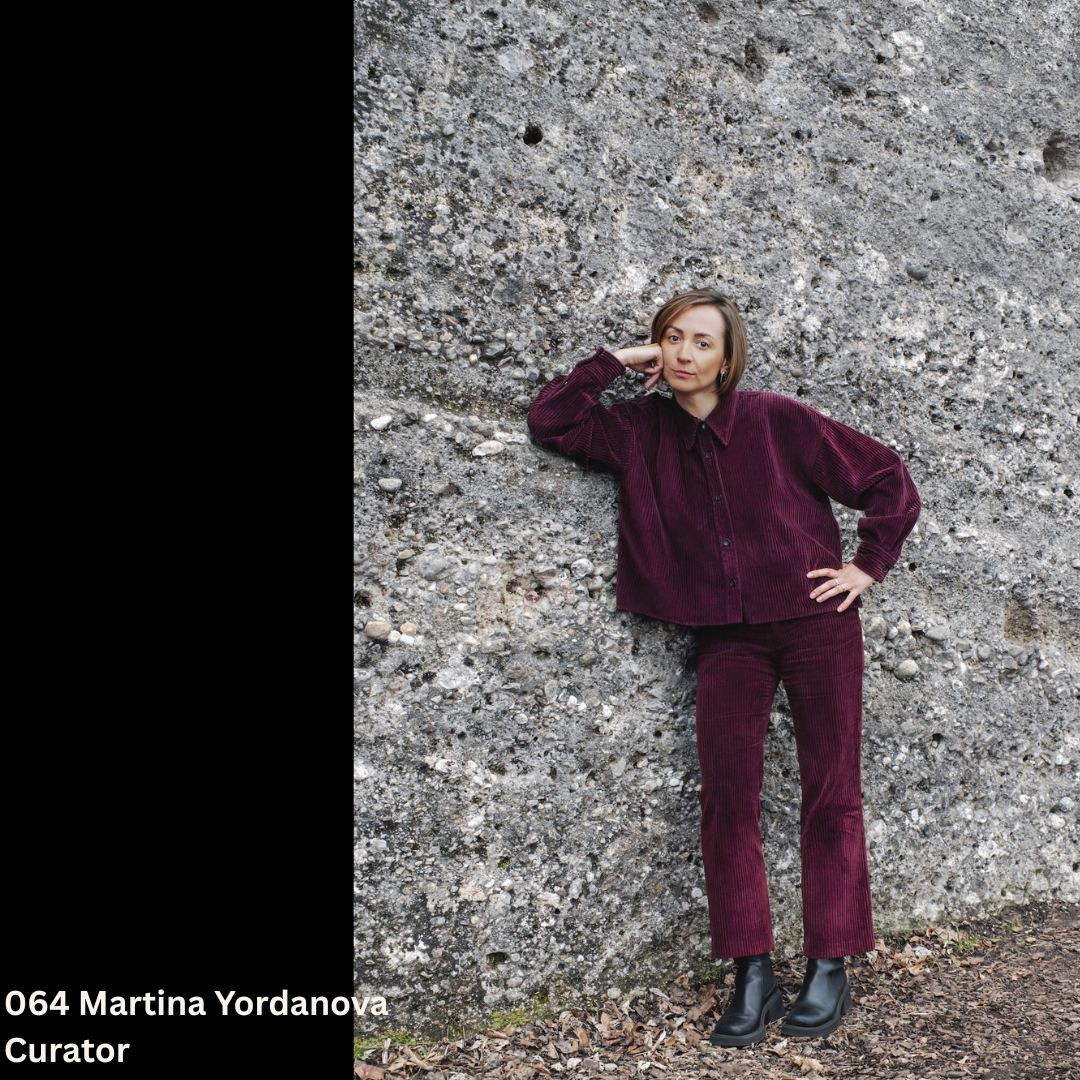
Martina Yordanova is a Bulgarian curator and cultural producer whose practice bridges museum work, independent initiatives, and international contemporary art. She currently serves as Curator of Contemporary Art at the National Gallery of Bulgaria, where she develops exhibitions, institutional partnerships, and public programs, and supports new artistic commissions. In 2026, Yordanova curated the Bulgarian Pavilion at the 61st Venice Biennale, The Federation of Minor Practices, a speculative exhibition bringing together artists Gery Georgieva, Maria Nalbantova, Rayna Teneva, and Veneta Androva to explore care, labor, ecology, digital infrastructures, and post-sovereign political imaginaries through film and an immersive installation. Alongside her institutional work, she is the founder and artistic director of the IATRUS Residency Program in Veliko Tarnovo and a founding member of the Eastern Balkans Institute for Art and Architecture. Her curatorial approach is characterized by cross-disciplinary research, international collaboration, and a sustained commitment to situating contemporary Bulgarian art within broader global and regional discourses.
Nina Chkareuli: Imagine that you are in your favorite coffee or tea spot. Where is it? What are you drinking? And what are the three things you see right now in that place?
Martina Yordanova: I imagine myself at Coffee Syndicate in Sofia. It is one of my favorite places to have coffee, especially in the afternoon, although I also enjoy being there in the morning. I would probably be drinking ice latte with oat milk. What makes this place so special is its view. Right in front of me is Vitosha Mountain, whose silhouette from this particular angle is incredibly beautiful and seems to dominate everything around it.
To the right, I can see the Bulgarian Parliament. I often watch politicians arriving, leaving, or taking a short break. I find it fascinating because it is a place where political power is exercised, and I am deeply interested in following what is happening in Bulgaria, as well as in the wider political landscape.
To the left is the National Gallery, where I work as a curator. So, from a single table, I can see three worlds coming together: nature, politics, and art. Vitosha sits at the center, with the Parliament on one side and the National Gallery on the other. It is a perspective that always reminds me how closely these different spheres of life are connected.
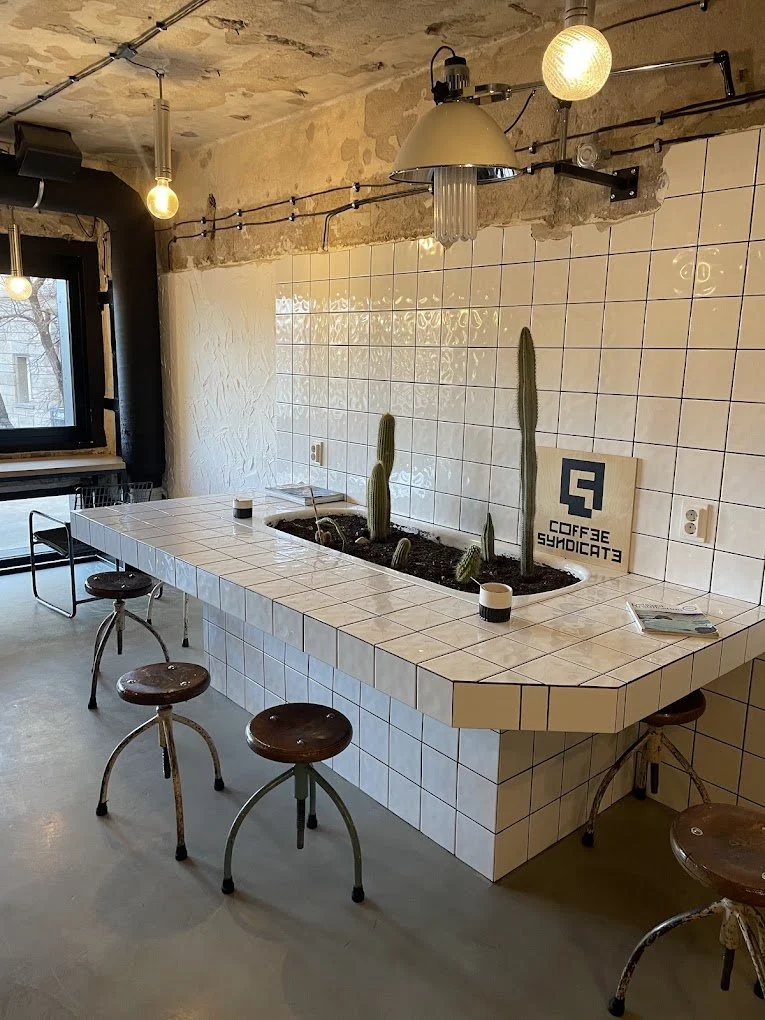
Coffee Syndicate in Sofia, courtesy of the coffee shop.
NC: The title The Federation of Minor Practices echoes Koyo Kouoh's broader Biennale theme, In Minor Keys. How do you understand the political and cultural potential of "minor" practices today, and what distinguishes them from more conventional forms of resistance or institutional critique?
MY: The title The Federation of Minor Practices resonates deeply with Koyo Kouoh's theme, In Minor Keys. For me, "minor" does not mean small or insignificant. It refers to forms of action that often remain invisible because they operate through care, attention, maintenance, and long-term commitment rather than through spectacle or direct confrontation.
Today, I believe the political potential of minor practices lies precisely in their ability to transform everyday relationships. They do not necessarily seek to overthrow existing structures. Instead, they create other ways of being together, of producing knowledge, and of imagining the future. They work through accumulation rather than rupture.
This is what distinguishes them from more conventional forms of institutional critique. Institutional critique has often focused on exposing systems of power from within. Minor practices certainly acknowledge those systems, but they are equally interested in building alternatives. They ask what kinds of social, ecological, and cultural infrastructures we can nurture, even within imperfect conditions.
In our pavilion, the Federation is imagined as a fictional political entity sustained through many small acts of collaboration and shared responsibility. The artists work with local histories, ecological processes, digital cultures, and forms of collective memory. None of these gestures claims to provide a definitive solution. Together, however, they demonstrate that lasting political imagination often emerges through sustained, patient, and collective practices rather than singular heroic acts.
I find that particularly relevant today, when many of our global challenges cannot be addressed through individual action alone but require new forms of interdependence and mutual care.
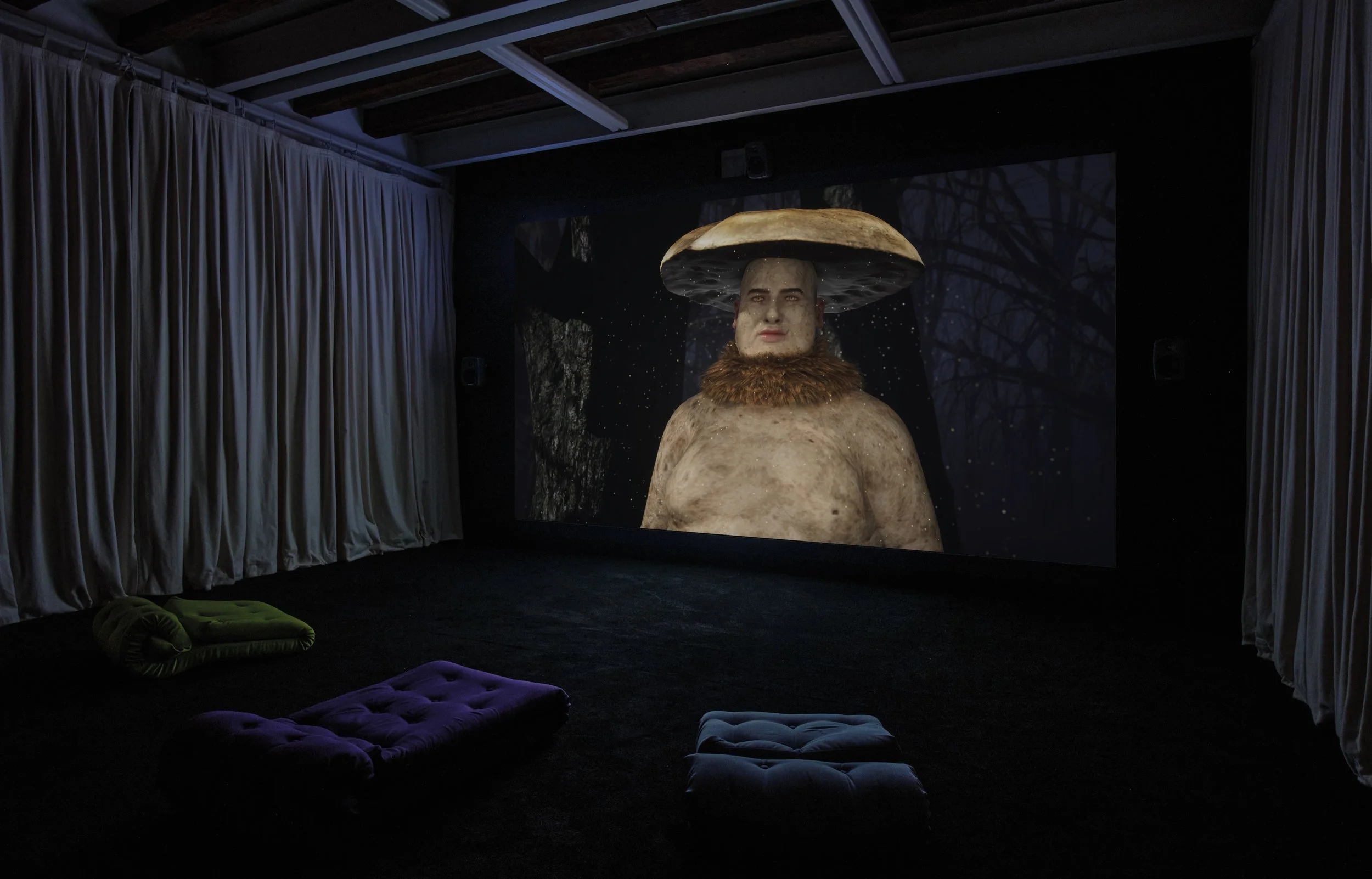
Installation view, Bulgarian Pavilion at the 61st Venice Biennale, The Federation of Minor Practices, 2026. Photo courtesy of Martina Yordanova.
NC: The pavilion constructs a fictional research laboratory and speculative political entity. Why was fiction necessary as a curatorial tool, and what can speculative narratives reveal that documentary or historical approaches cannot?
MY: For me, fiction is a way of engaging with reality that allows us to imagine possibilities that do not yet exist. That is why fiction became such an important curatorial tool for this project. The Federation of Minor Practices is a fictional political entity, but the questions it raises are very real. How do we organize ourselves differently? What forms of care, responsibility, and solidarity might emerge beyond the political structures we know today? Fiction creates enough distance from the present to ask these questions without being constrained by existing models.
Documentary and historical approaches are essential because they help us understand where we come from and how current conditions have been shaped. In fact, the four films in the pavilion are deeply rooted in documentary research, local histories, lived experiences, and existing infrastructures. They examine ecological transformation, digital cultures, labor, memory, and the politics of place.
The speculative layer begins where those works intersect.
Speculation is about expanding what we can imagine. At a moment when many political and ecological crises seem overwhelming, I believe imagination is not a luxury. It is a necessary condition for thinking and acting differently.
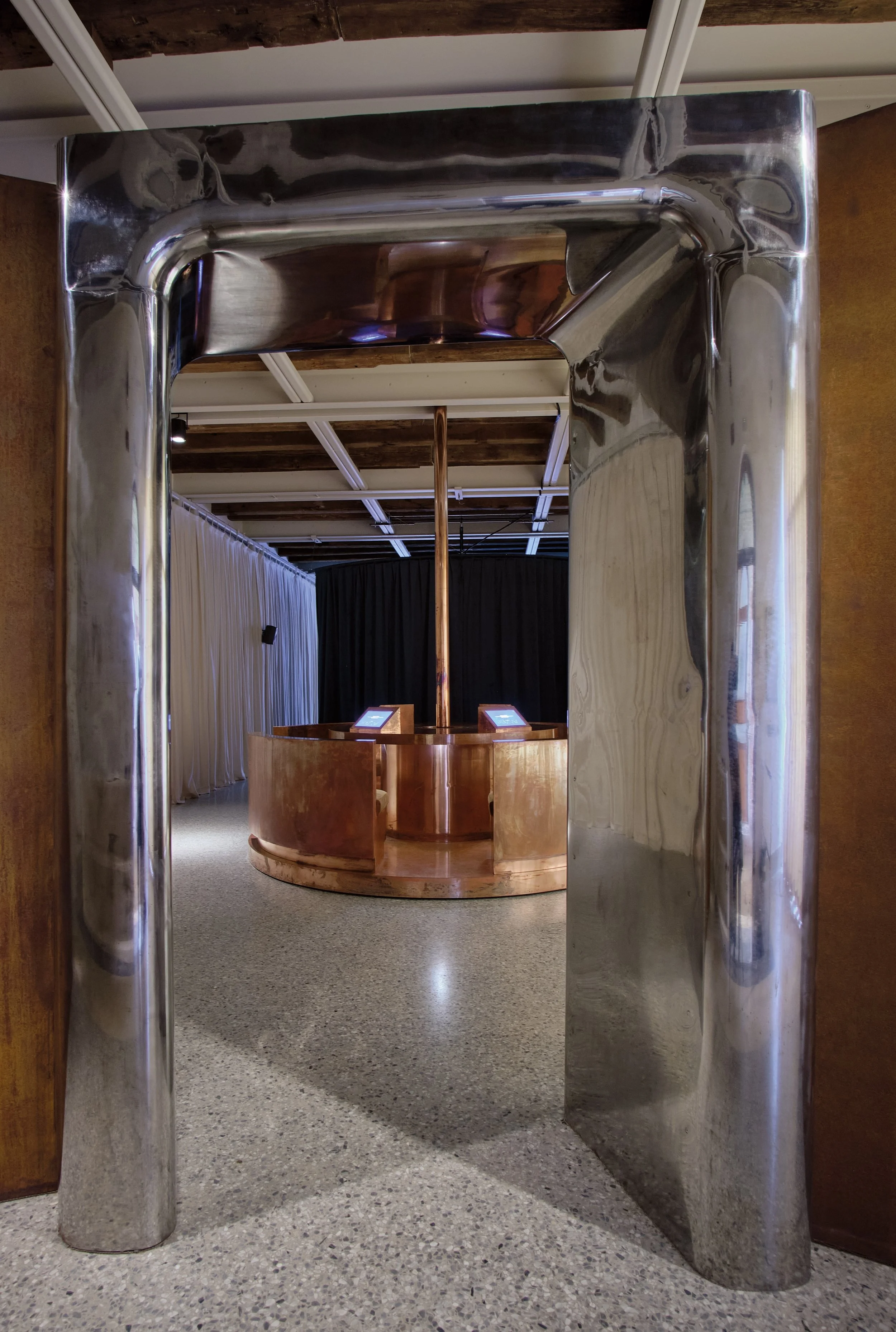
Installation view, Bulgarian Pavilion at the 61st Venice Biennale, The Federation of Minor Practices, 2026. Photo courtesy of Martina Yordanova.
NC: The project brings together four artists whose practices engage with digital culture, labor, ecology, and social relations. How did you develop a framework that allows these distinct voices to operate collectively without collapsing their difference?
MY: From the very beginning, it was important to me that the exhibition would not speak with a single voice. The strength of the project comes precisely from the fact that each artist brings a distinct methodology, vocabulary, and way of engaging with the world. Together we developed a framework that could accommodate difference. The Federation of Minor Practices functions as a shared speculative space where multiple perspectives can coexist without being resolved into a single narrative.
Each work approaches a different terrain. Veneta Androva examines the infrastructures of digital information and algorithmic systems. Gery Georgieva explores performativity, language, and online mythologies. Maria Nalbantova's practice emerges from long-term ecological engagement and relationships of care. Rayna Teneva investigates the entanglement of labor, industry, and local histories. These practices remain autonomous, but together they begin to reveal unexpected connections between technology, ecology, politics, and everyday life.
The exhibition is built around dialogue. The fictional Federation is not a model of uniformity, but of coexistence. It suggests that collective forms of political imagination do not require everyone to think or work in the same way. They emerge through negotiation, mutual attention, and the recognition that different forms of knowledge can exist alongside one another.
I think this is also what curating can do at its best. It does not erase difference. It creates the conditions in which different practices can encounter one another, generate new meanings, and invite audiences to participate in that conversation.
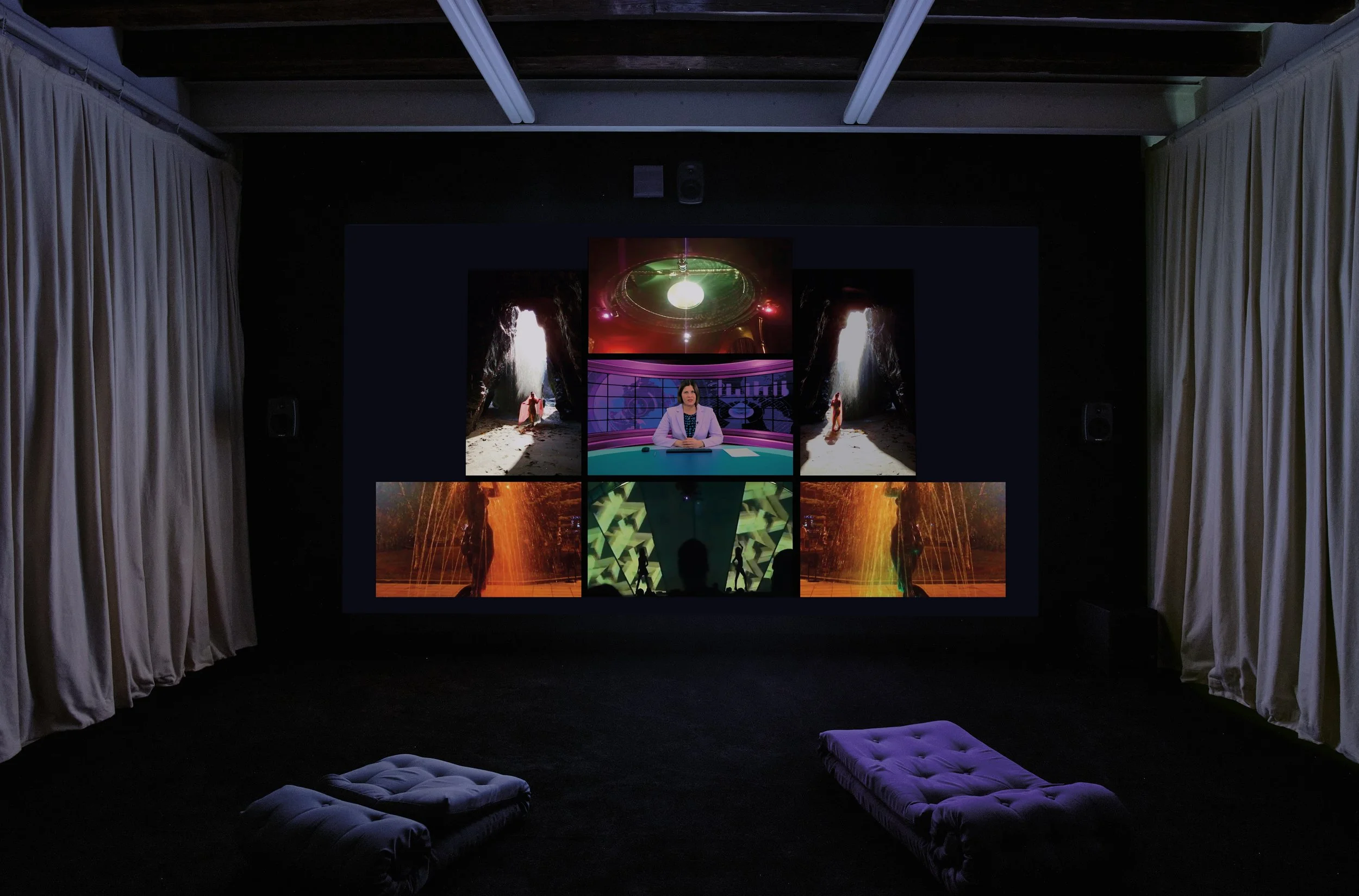
Installation view, Bulgarian Pavilion at the 61st Venice Biennale, The Federation of Minor Practices, 2026. Photo courtesy of Martina Yordanova.
NC: Many national pavilions still reinforce ideas of cultural identity and representation. Does the Bulgarian Pavilion seek to challenge the very notion of the nation-state as an exhibition format, and if so, what alternative forms of belonging or collectivity does it propose?
MY: The national pavilion is a fascinating format because it carries a historical model of representation that no longer fully reflects the complexity of our contemporary world. Rather than rejecting that framework, I was interested in asking what it can become today.
The Bulgarian Pavilion proposes a speculative political imagination through The Federation of Minor Practices. The Federation is not defined by territory, ethnicity, or borders. It is held together through shared practices of commitment, responsibility, collaboration, and collective imagination. This fictional entity allows us to think about belonging as something that is continuously produced through relationships rather than inherited through geography or nationality. It asks whether communities can be formed around common values and shared commitments instead of sovereign power.
At the same time, the project remains deeply connected to Bulgaria. The four artistic practices emerge from specific local contexts, histories, landscapes, and social realities. Their works are rooted in places, communities, and lived experiences. Rather than representing Bulgaria as a unified national narrative, they reveal its internal complexity and the ways in which local stories resonate with global questions.
For me, this is where the project becomes productive within the context of the Biennale. It works from inside the format of the national pavilion while gently expanding its possibilities. It proposes a more open understanding of collectivity, one that is shaped through interdependence, dialogue, and the ongoing practice of imagining different ways of living together.
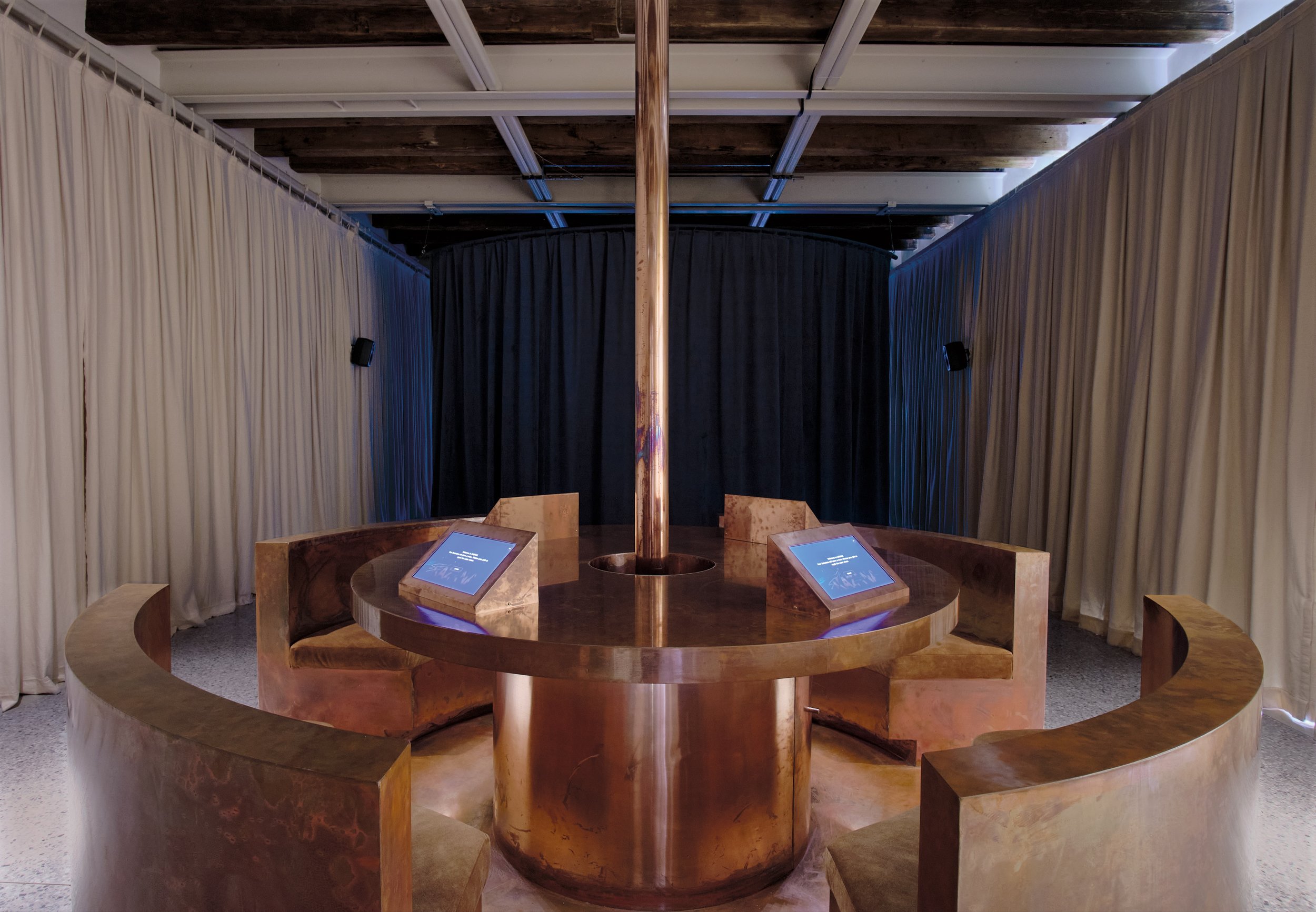
Installation view, Bulgarian Pavilion at the 61st Venice Biennale, The Federation of Minor Practices, 2026. Photo courtesy of Martina Yordanova.
NC: What is one single formative experience that prompted you on the curatorial path?
MY: It is difficult to point to a single moment, but if I had to choose one formative experience, it would be visiting the 55th International Art Exhibition of the Venice Biennale in 2013, curated by Massimiliano Gioni. That was the first time I truly understood the power of curating. I realized that an exhibition could do much more than present individual artworks. It could tell a complex story, create meaningful relationships between works, and invite visitors to make their own connections. I remember being deeply moved by the way the exhibition unfolded, allowing different narratives, emotions, and perspectives to coexist without reducing them to a single interpretation.
That experience completely changed the way I thought about exhibitions. I left Venice with the feeling that curating could be a form of thinking through space, one that could shape not only how we see artworks but also how we understand the world around us. It was after that Biennale that I decided I wanted to become a curator myself. Looking back now, it feels particularly meaningful that, years later, I had the opportunity to curate the Bulgarian Pavilion at the Venice Biennale. In many ways, it brought that journey full circle.
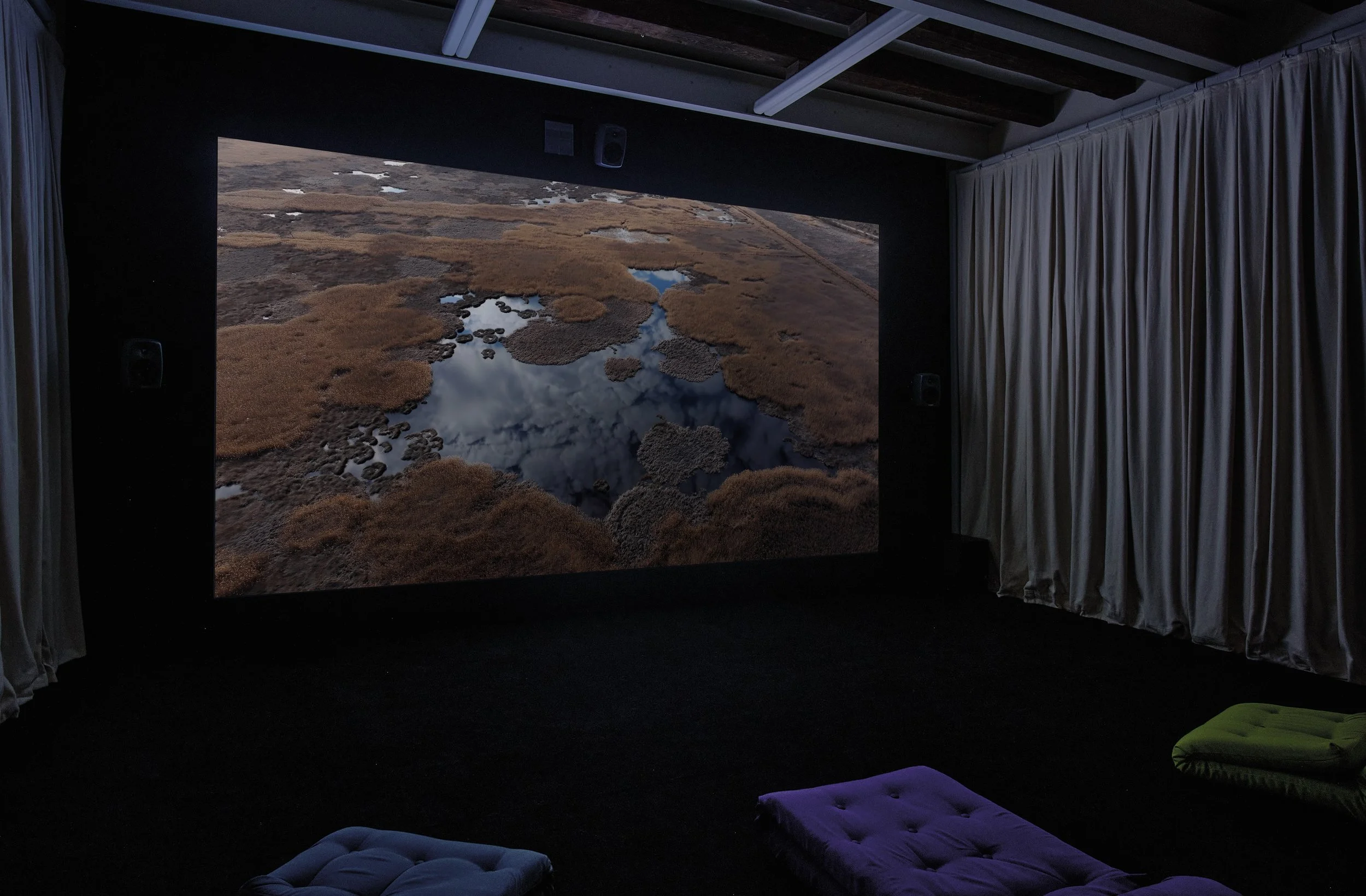
Installation view, Bulgarian Pavilion at the 61st Venice Biennale, The Federation of Minor Practices, 2026. Photo courtesy of Martina Yordanova.
NC: What do you think is the role of the curator today?
MY: I think the role of the curator today is something we should constantly question rather than define once and for all. It is a role that is continuously changing, and I believe that is a healthy development.
In the Bulgarian Pavilion, I deliberately wanted to challenge the traditional hierarchy of curating. Rather than positioning the curator as the central authorial voice, I tried to create a more horizontal framework in which the artists, the exhibition design, the game, and the curatorial concept all operate in dialogue with one another. Every element has its own agency, and the exhibition emerges through their interaction rather than through a single dominant perspective.
At the same time, I think the role of the curator has become increasingly influential. Curators shape not only exhibitions but also public discourse, institutional priorities, and the stories that are told through art. That makes the role both powerful and deeply responsible. It requires constant self-reflection, openness, and a willingness to question one's own position.
For me, curating is not about speaking on behalf of others. It is about creating the conditions in which different voices, ideas, and experiences can meet and generate new meanings together.
Despite all these questions, I feel incredibly fortunate to be a curator. It is a profession that allows me to keep learning, to collaborate with inspiring people, and to think through art every day. I honestly cannot imagine a better way to spend my life.
Portrait of Martina Yordanova by Maximilian Pramatarov @