Greater New York 2026 at MoMA PS 1
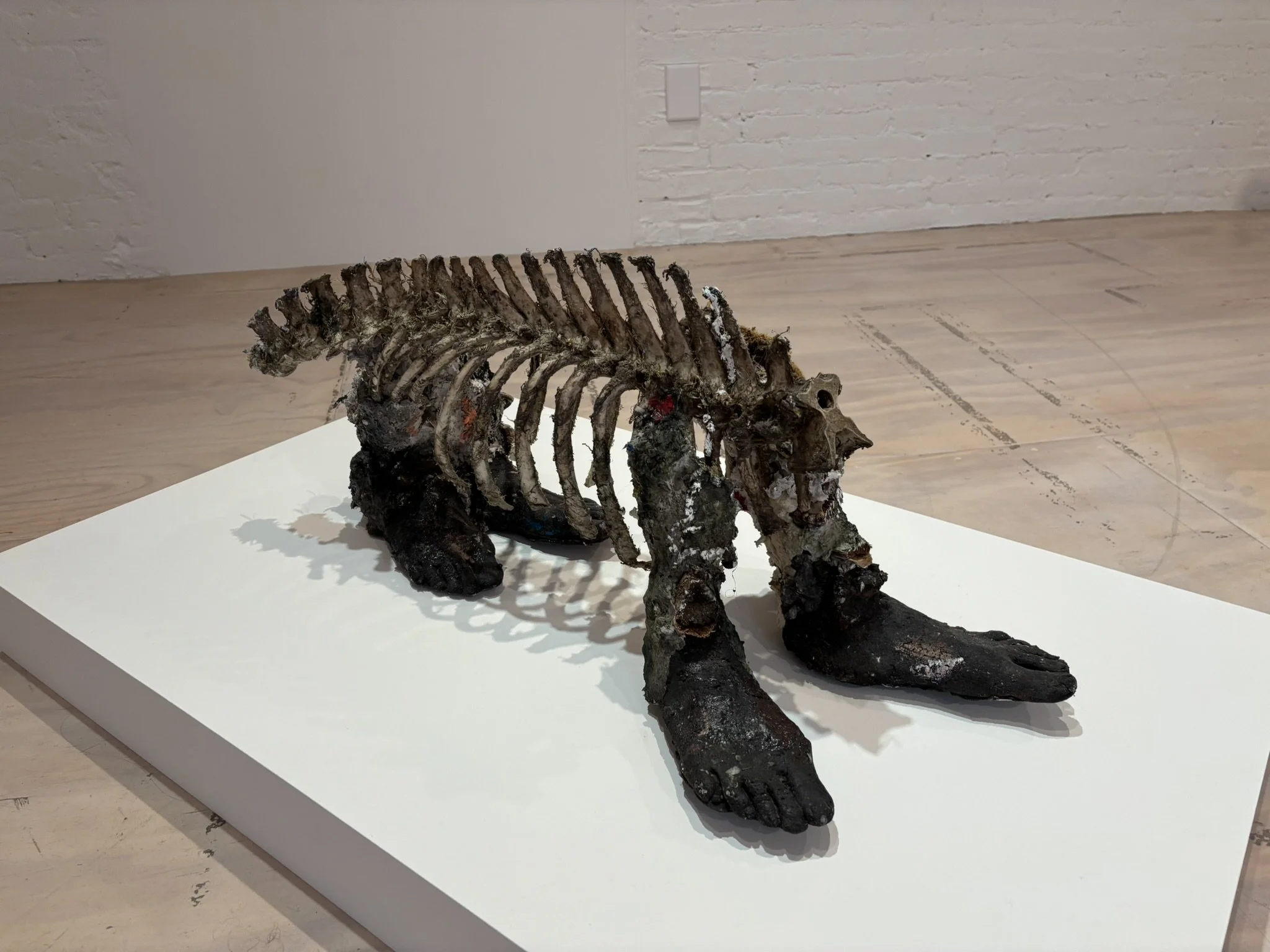
Nickola Pottinger, Guh Live Long, 2026. Photo by William Corwin.
Author: William Corwin
Published Thursday, July 16, 2026
What emerged most forcefully from the 2026 iteration of PS 1’s Greater New York exhibition was the whimsy and chaotic wit of artists working in New York City. This unpredictable energy was expressed not only in the images and objects themselves, but in their fabrication. Methods ranged from meticulously crafted pristine surfaces and complicated production processes to ephemeral materials and spontaneous off-the-cuff site-specific work; the works that stood out resonated with the viewer and each other. Taina Cruz’s wall painting If and When They Come She’ll Be Ready (2026), a towering goblin girl in flowing skirts and unkempt hair, raucously rounded the corner of the gallery; a simple black line drawing which complemented Louis Osmosis’ eight multimedia combines/readymades, Variations on Public Affairs & Their Subsequent Invigilators (2026), sitting in the center of the room. Assemblages which play with the notion of sculpture versus pedestal by stacking random objects—payphone sheds, cash registers, and Mannequin legs, among other odds and ends, on top of each other; whose hierarchy is demarcated solely by a simple square of plywood. Is that where presentation ends, and sculpture begins? In the next room, Kristin Walsh’s impassive Engine No. 14 (2026), a gorgeous chromed ode to mechanization, rejects the idea of readymade, but still confounds us as to the purpose of the object. Walsh’s composition of tubes and liquid silver geometries (she has an even bigger piece, Indicator No. 9, also 2026, downstairs) is itself contradicted by the spidery and delicate bio-mechanical diagrams/fantasies of Vijay Masherani’s Dog on a Highway and Opening Salvo (for Vatroclav Mimica) (both 2026) in the same gallery. The odd machines and goblins are complemented by Masherani’s delightful video O-----K (2026), in which he sits next to his father as they drive through various tunnels in the Bay Area. Masherani wears a bizarre contraption on his face (a thermoplastic radiation therapy mask according to the wall text), and his bewildered expression and his father’s calm demeanor reinterpret a habitual commuter voyage as a humorous exploration of the unknown.
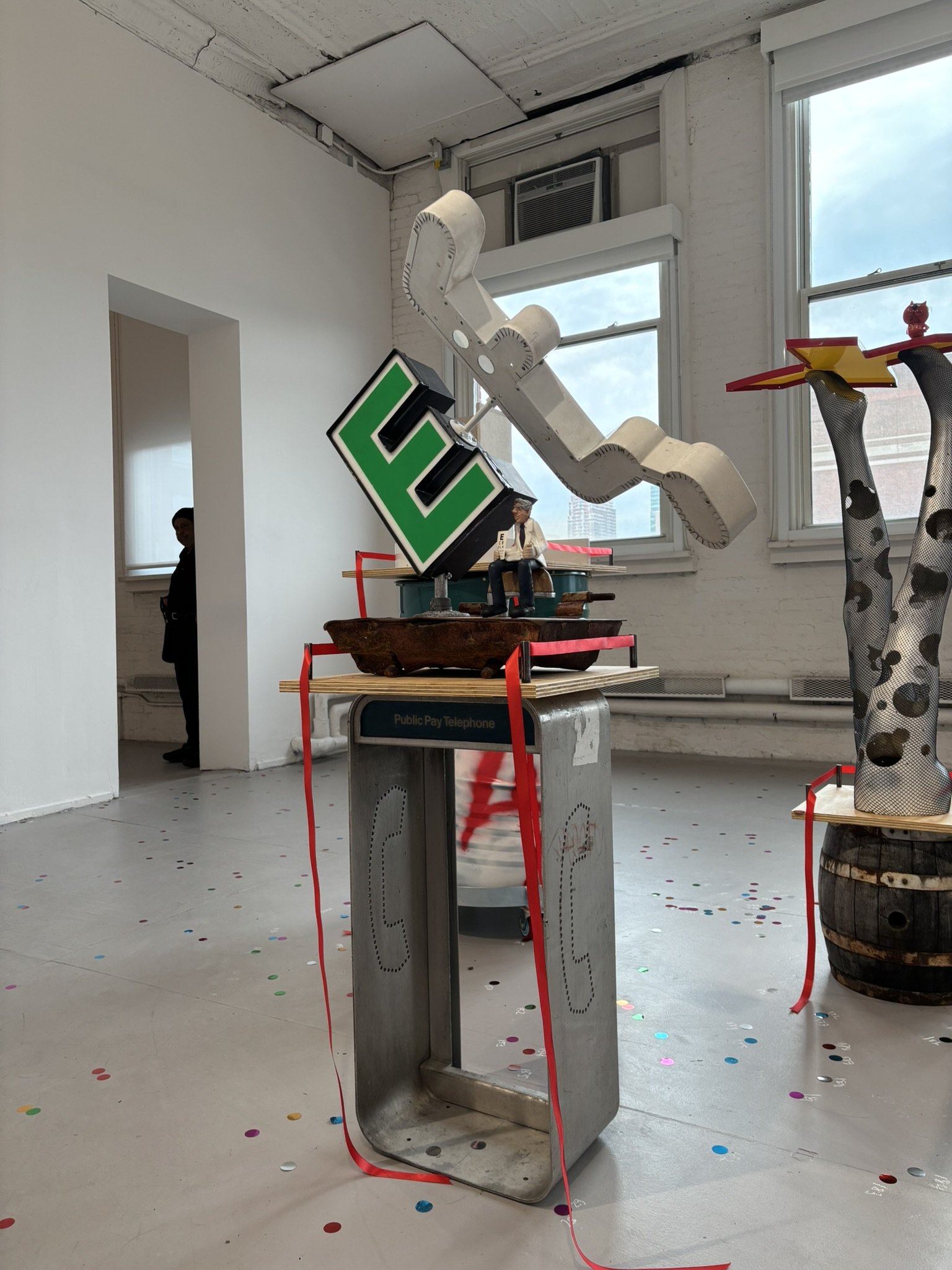
Louis Osmosis, Variations on Public Affairs & Their Subsequent Invigilators, Hitchhiker with Perec's E, (2026). Photo by William Corwin.
The idea of bewilderment with contemporary technologically progressive culture emerges in several of the works, either in their odd uses of material, or their repurposing of sleek or ubiquitous media for alternative purposes. Mary Helena Clark’s Decoy 1 and Decoy 2 (2025) reposition two motocycle gas tanks as hunting decoys, and the two sleek tanks with their luscious curves coming to a sharp point are very duck-like, and removed from their mechanical context become docile as opposed to symbols of toxic masculine angst. Similarly, Win McCarthy’s Angelus Novus (2026) has a bittersweet techno-orphan quality—a pair of camera lenses have been grafted onto analog telephone handsets as if in a direct but misguided attempt at FaceTime. Decidedly anti-technology are Nickola Pottinger’s series of Caribbean protective spirits called “Dupples” in Guh Live Long (2026). They too reference biomorphic forms, both animal and human: a fish skeleton with four oversized plodding feet, and various squatting forms—some with faces, others without. They are constructed of hair and paper pulp and other organic materials. Like the Decoys and Angelus Novus (or even Osmosis’ combines), these Dupples have a spirit life beyond their obvious materiality, but they stay far away from illusionism. Dean Millien’s The Cats and the Rats (2026) comes full circle back to Walsh’s pure metal aesthetic, except that Millien has created a rowdy crowd of felines and vermin—imagining a Battle Royale between two of the city’s most notorious populations—feral cats and ubiquitous rats. Millien uses aluminum foil to craft his feisty beings, and the crinkly second-hand surfaces serve well to mimic the matted fur of the squealing and hissing adversaries.
Another strain running through the artworks presented in Greater New York was an aesthetic poetry that cased the viewer to pause and meditate purely on surface or details of texture, and perhaps unexpected intersections: Kenneth Tam’s I’M STAYING HOPEFUL AND STRONG (For Bilal and Salah) (2026) presents a moody video describing the plight of taxi drivers in NYC, but in the twighlit space in front of the projection, wooden beaded seat covers typically used by taxi drivers in New York are combined with glowing fairy lights and luminous forms to create a shimmering map of the city at night, creating a stunning installation. Farah Al Qasimi’s installation of photographs, framed and laminated on the wall, and video, are surreal and melancholy serendipitous assemblages: in Swimming Pool (Michigan) (2024), a silken shawl of orange blooms on a blue background floats in in the crisp chlorine blue of a swimming pool, and in Snake on Horse (UAE) 2025, a kitschy pairing becomes a study of reflective surfaces—snake flash, gilding and mirror. Another series of photographs, Down the Barrel (of a Lens) (2023), assembled by Cameron Neal, also plays with pairings—Neal has culled moments from black-and-white NYPD surveillance footage from the 60s to the 80s, capturing people looking on one wall, and people being looked at on the opposite. We are stuck in the crossfire of perspectives. Kite’s works, in black deer leather, mirror, crystals, and beads, rereading the constellations to fit my desires (2025), A Quilling for Time-Laying (2026), Handdreamer’s Role in the Re-Forming of the Mouth Eyes (2026), create a darkly iridescent contemporary aesthetic for Lakhota sculpture and musical scores. Perhaps reflection keeps resurfacing in Greater New York because it is such a necessary metaphor for this time, but Rachel Handlin’s series of photographs, all Untitled (from either 2025 or 2018), capture side-view mirrors from motorcycles. The mirrors are sometimes circular, sometimes irregular geometries, and when stationary, they become poignant registers of the context of the object: we see raindrops, vegetation, and even the artist looking back at us, which, on the 50th anniversary of the founding of PS 1 by the inimitable Alanna Heiss, has always been the point of the institution.
Greater New York 2026 is on view at MoMA PS1 through August 17,2026.
About the author: About the author: William Corwin is a sculptor and writer based in New York. He writes for The Brooklyn Rail and ArtPapers and previously for Frieze, Canvas, Art & Antiques, and ArtCritical.

Kenneth Tam, I'M STAYING HOPEFUL AND STRONG (for Bilal and Salah), 2026. Photo by William Corwin.
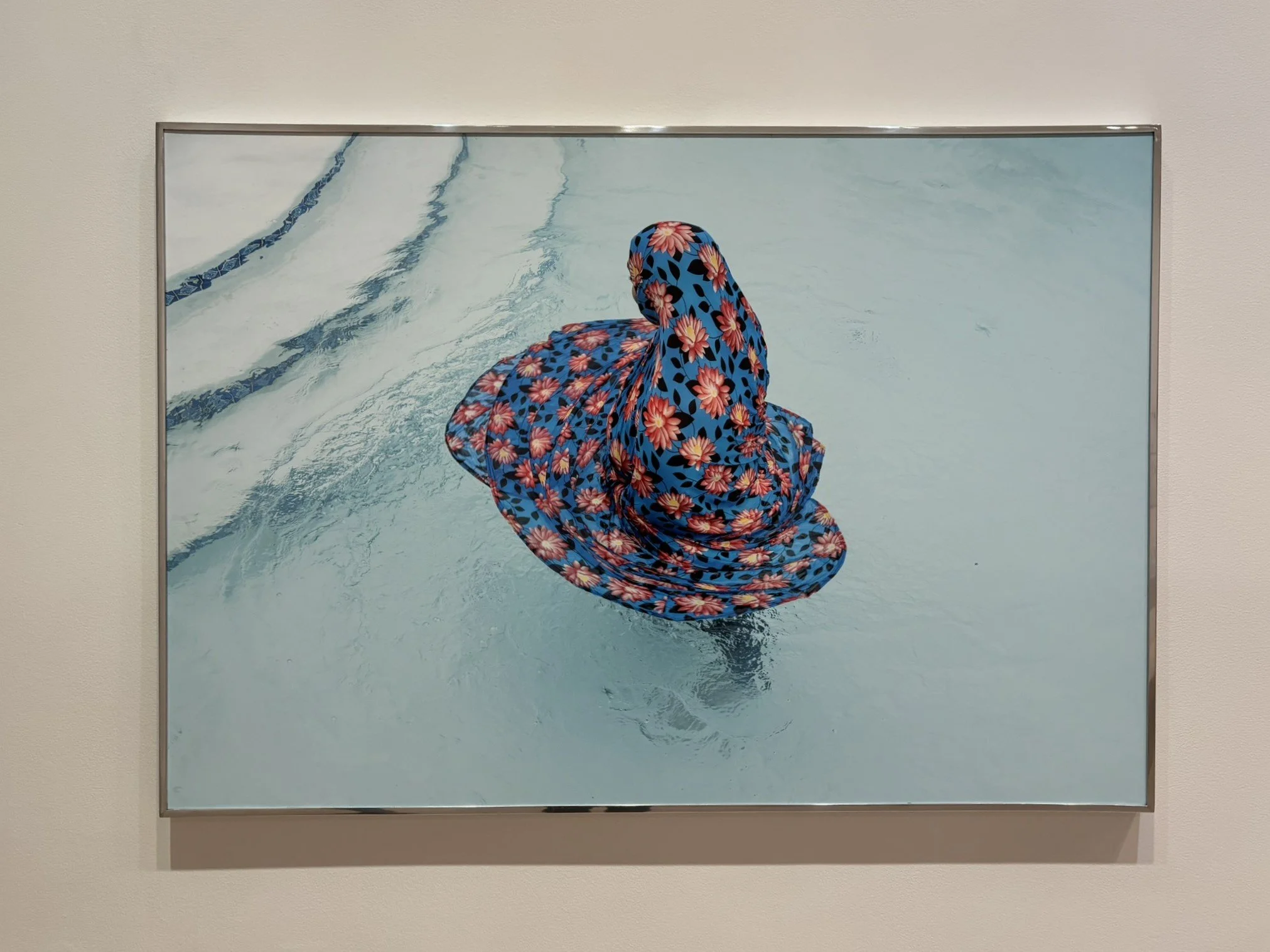
Farah Al Qasimi, Swimming Pool (Michigan) (2024). Photo by William Corwin.
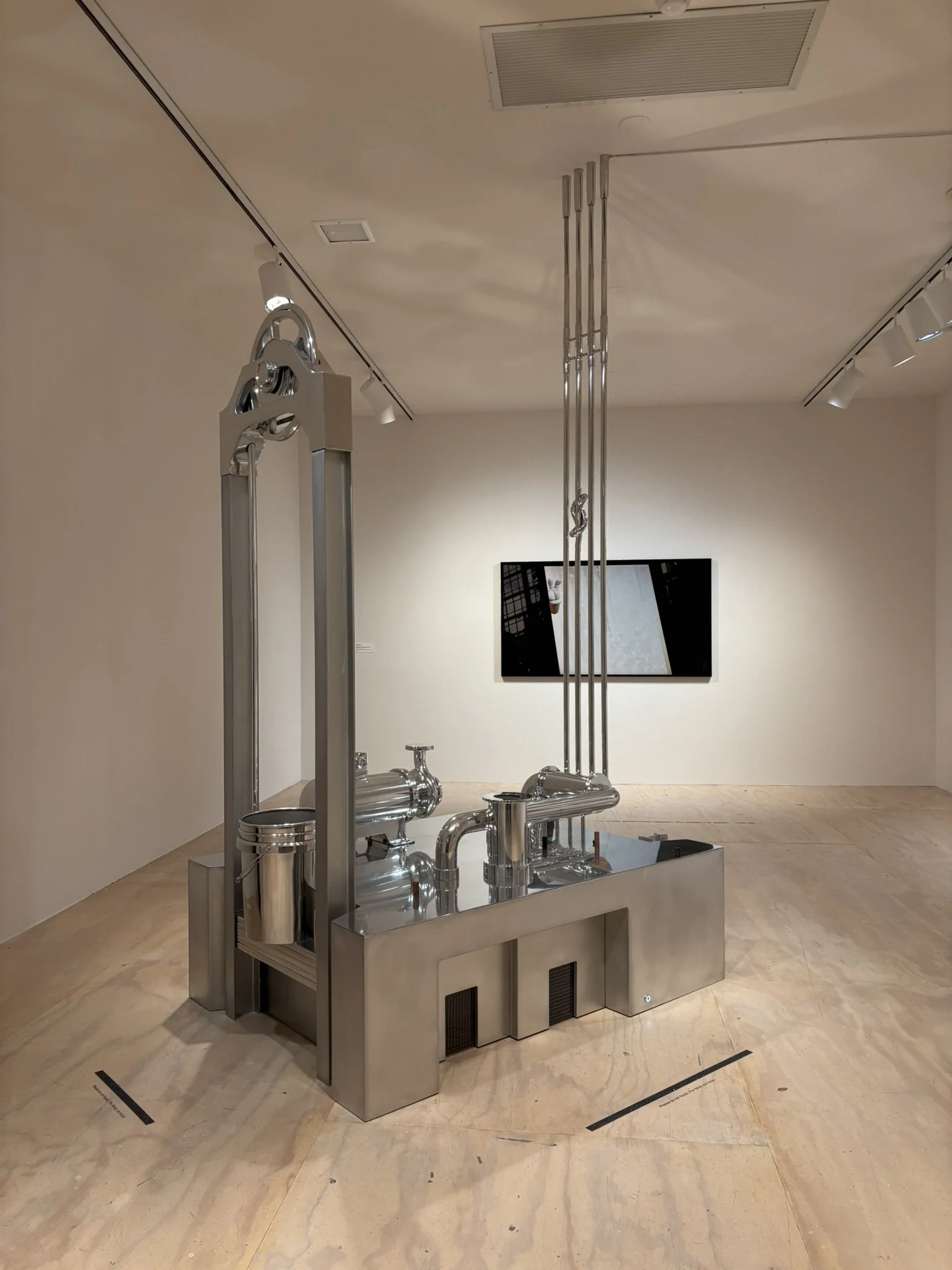
Kerstin Warsh, Indicator No. 9,2026. Photo by William Corwin.
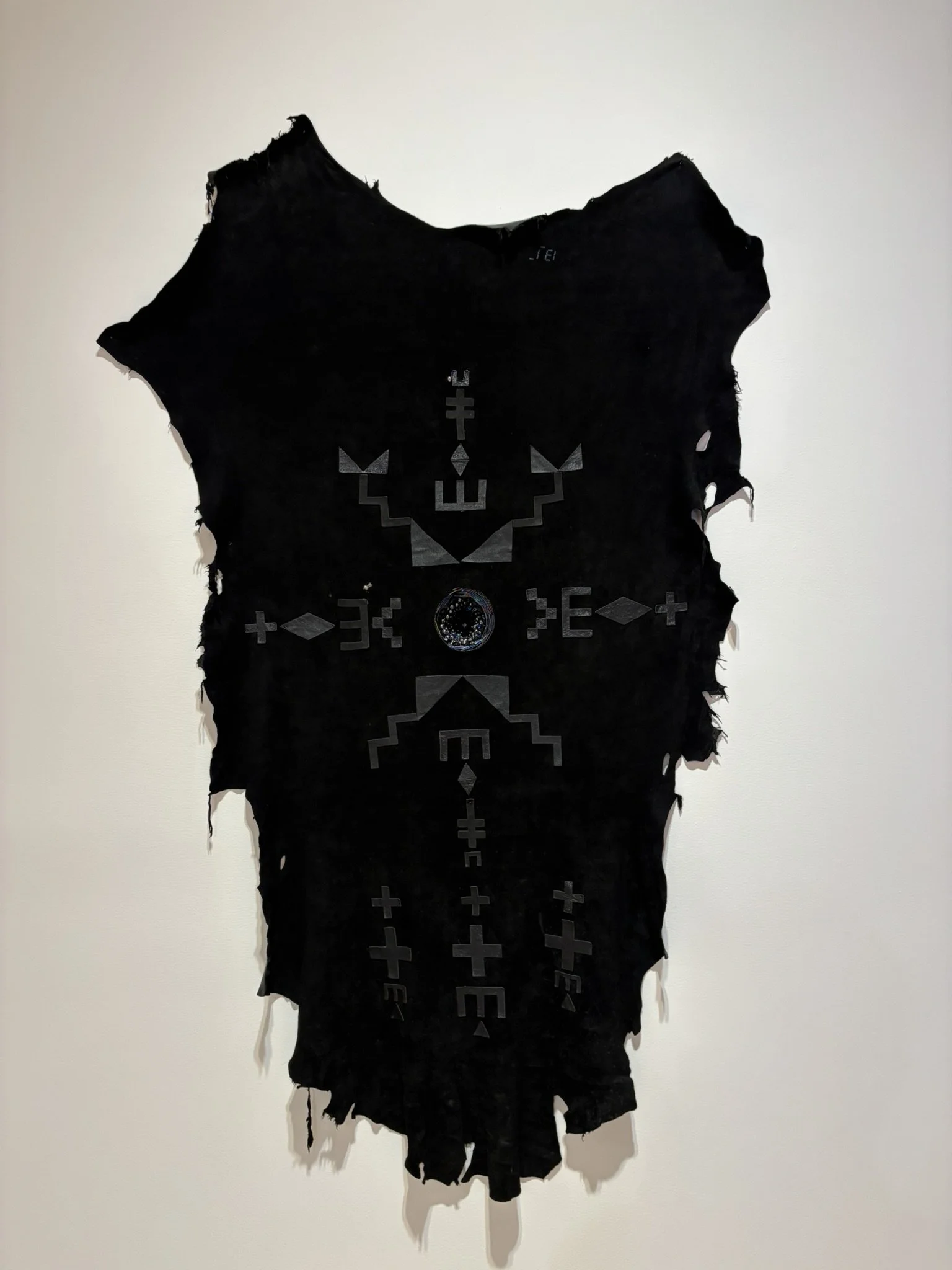
Kite, Handdreamer's Role in the Re-Forming of the Mouth Eyes (2026). Photo by William Corwin.