In need of critical voices „Hot Potato“ by Candice Breitz at KOW, Berlin
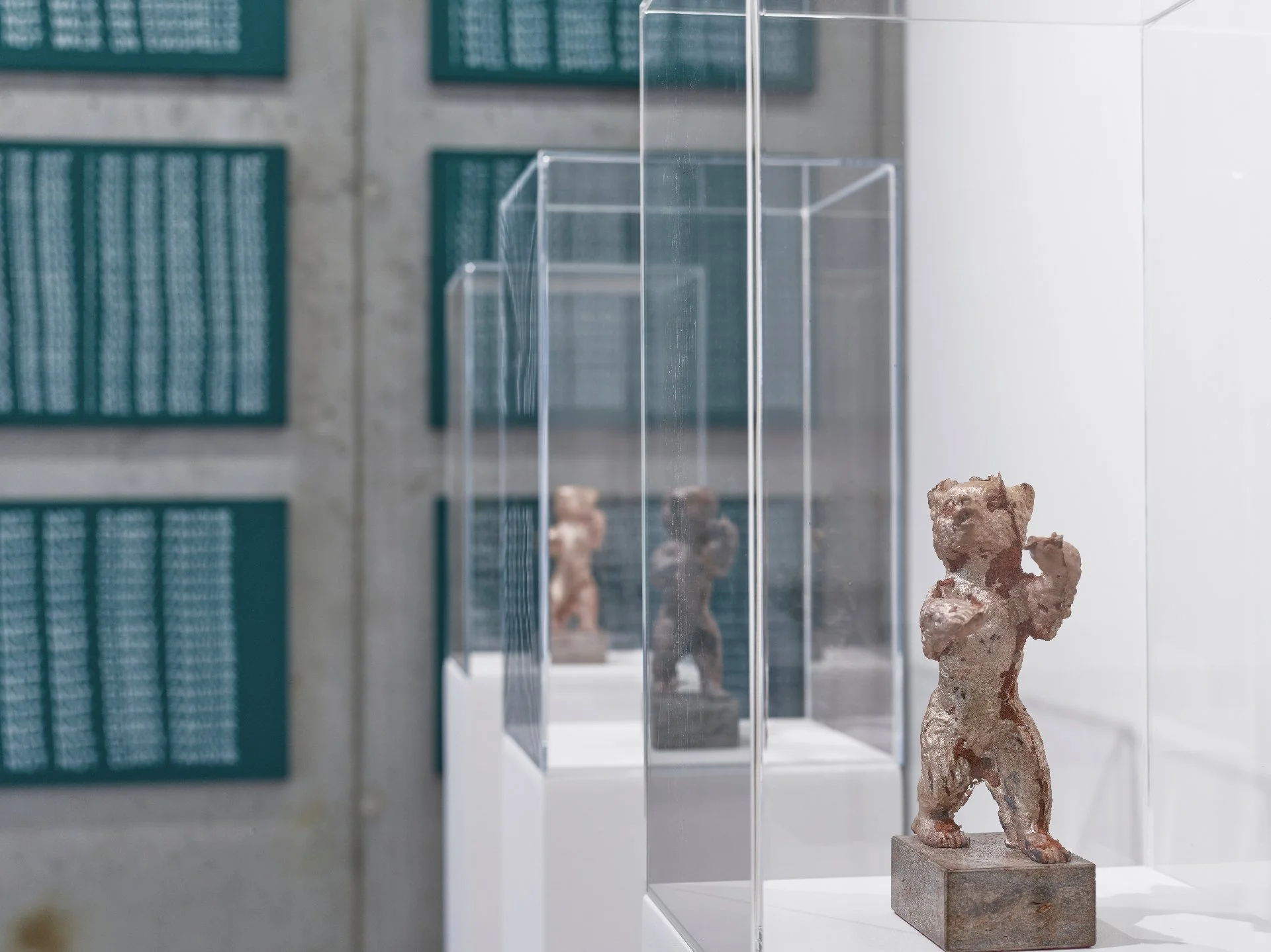
Candice Breitz, Traumatised Readymades, from the series Miscast, 1956–2026, Hot Potato installation view at KOW, courtesy of the artist and KOW, Berlin. Photo by Ladislav Zajac.
Author: Carolin Kralapp
Published Saturday, May 16, 2026
From 1 to 3 May, Gallery Weekend – a key highlight of the art calendar in Germany since 2005 – once again brought art professionals from all over the world together in Berlin. Galleries with a permanent base in Berlin gear their programming towards this event in Spring at the initiative’s invitation, showcasing what their artists have to offer. For a whole weekend, art lovers flock to the exhibitions, moving from gallery to gallery, shaking hands and sipping champagne. To be honest, I came away from this year's event feeling rather disillusioned, with a few exceptions. The programme was dominated by painting, which is a great medium but also a very marketable one, and was largely decorative. Overall, I felt it lacked depth and political dimension. However, I have fond memories of the works by Berni Searle at PSM, Adam Lupton at Galerie Judin’s Tankstelle, and Celeste Rapone at Esther Schipper. One exhibition clearly stood out for me, though: “Hot Potato” by Candice Breitz at KOW Berlin. KOW Berlin is a contemporary art gallery that represents international artists whose work engages with social realities and political questions through a strong aesthetic approach. It opened in 2009 and has since become a well-known part of Berlin’s contemporary art scene.
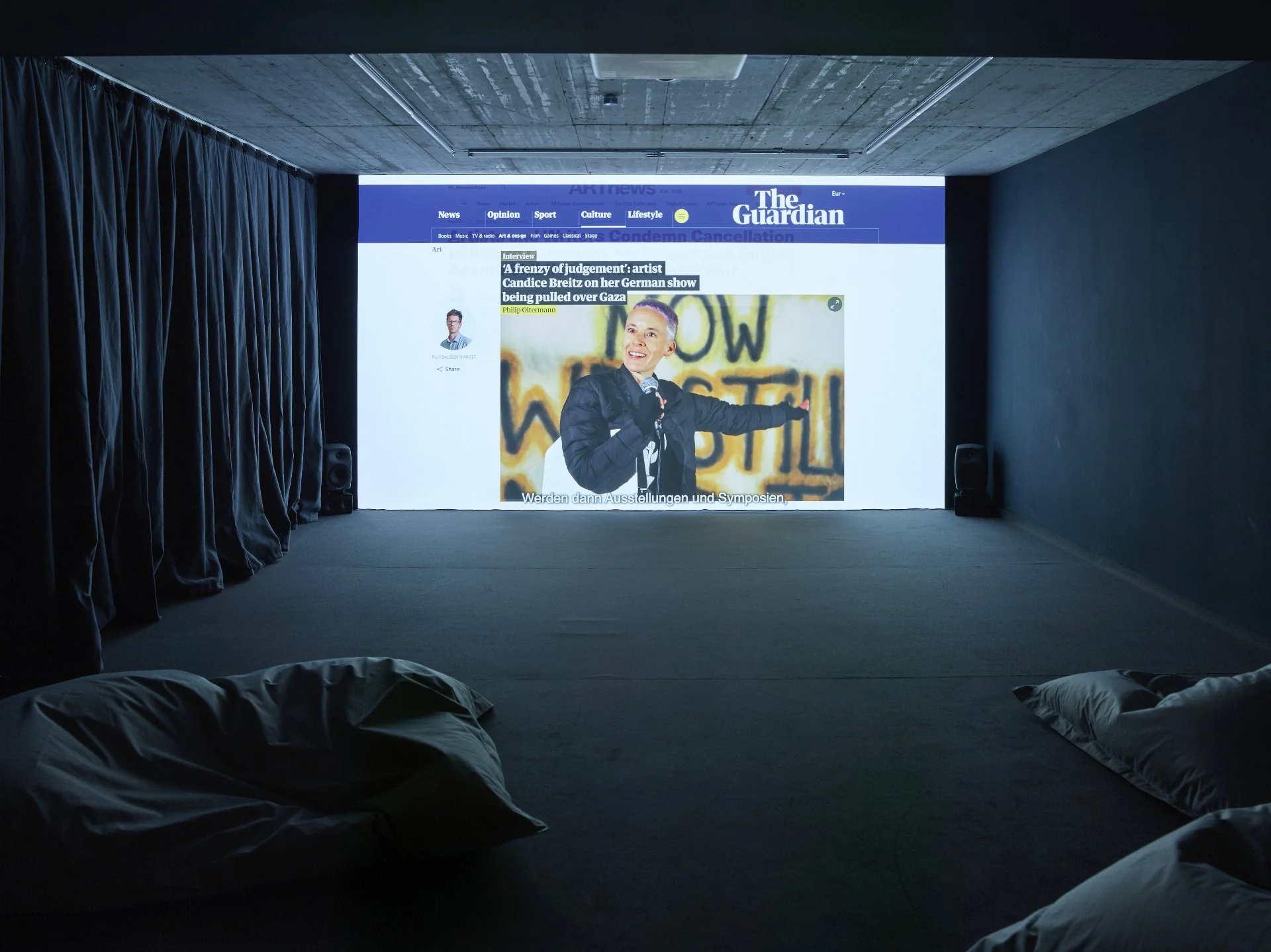
Candice Breitz, Dear Esther, 2025, commissioned by steirischer herbst 2025, installation view at KOW, 2026, courtesy of the artist and KOW, Berlin. Photos: Ladislav Zajac.
Candice Breitz has been the subject of intense debate in Germany since 7 October 2023, when the war in the Middle East began, due to her public and strong criticism of both Israel’s actions in Gaza and the German response to them. Consequently, she has become a symbolic figure in broader discussions about freedom of expression, anti-Semitism, the culture of remembrance, and the extent to which criticism of Israel is permitted in the German cultural sector. The cancellation of planned events and projects involving her has further inflamed this conflict. Her supporters view this as indicative of an increasingly repressive climate of debate, while her critics accuse her of crossing political and moral boundaries. This background is of central importance to any engagement with her new Berlin exhibition, as Breitz is now perceived not merely as an artist, but also as a figure onto whom a highly charged conflict concerning Israel, Palestine, and Germany’s historical responsibility is projected.
In her exhibition, Breitz examines this very cultural and political situation in Berlin. “Hot Potato” is a direct allusion not only to Germany and its increasingly uncertain and contradictory self-image, but also to the angry yet passionate response of Breitz and many other artists to their experiences in recent years. The exhibition title refers to a social and political climate in which responsibility is passed on, conflicts are suppressed, and cultural spaces are becoming increasingly regimented. At the same time, however, the exhibition can also be interpreted as a critical love letter to a city that once stood for openness, dissent, and artistic freedom, but which is now squandering this cultural capital. During Gallery Weekend, Breitz’s “Private Dancer” revisited Mark Wallinger’s 2004 performance “Sleeper” by shifting it from the monumental space of the Neue Nationalgalerie to the modest setting of a private gallery storefront, with the artist herself appearing in the guise of a bear. In doing so, the work became a pointed image of a changed Berlin, where art no longer moved freely through public space, but appeared visibly contained within the logic of display and labour.
This exhibition takes a clear counter-stance by examining the historically fraught relationship between artists and the institutions or authorities that frame, restrict, or sanction their work. To this end, Breitz draws on a series of appropriative homages, deliberately building on artistic positions that open up spaces for political and ethical reflection. Key figures from art and music history are referenced throughout, including Renée Sintenis, Esther Bejarano, John Baldessari, Félix González-Torres, Mark Wallinger, and Christoph Schlingensief. Breitz quotes, varies, and reactivates their works and performances as a means of questioning the present and highlighting the political dimension of artistic practice. The exhibition thus situates itself within a tradition in which art is not presented as a self-contained aesthetic realm, but as a platform for public, moral, and social discourse.
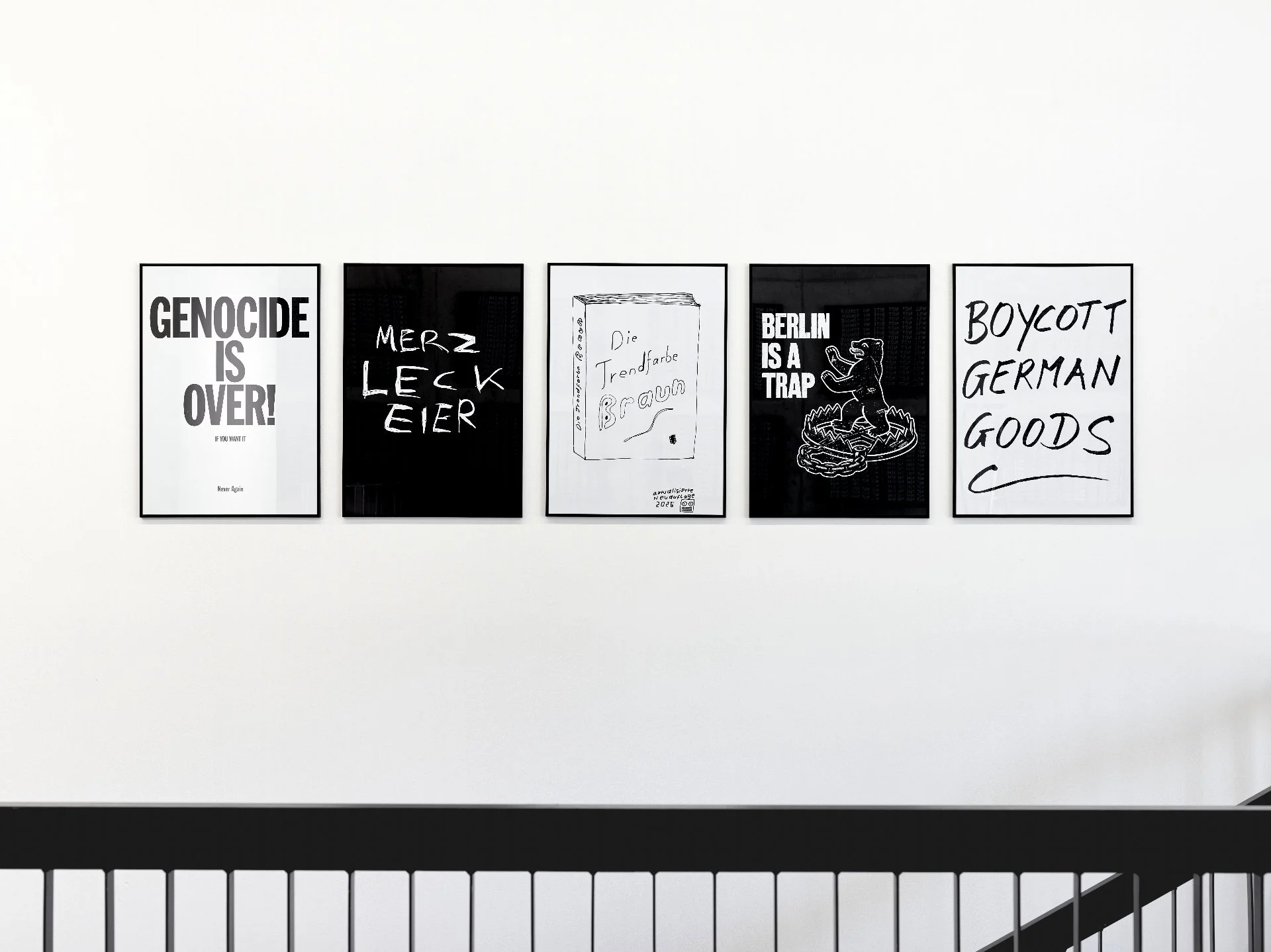
Candice Breitz, Appropriated Posters, 2026, Hot Potato installation view at KOW, courtesy of the artist and KOW, Berlin. Photos: Ladislav Zajac.
Berlin’s heraldic animal, the bear, is a particularly prominent feature of the exhibition, appearing as a recurring motif throughout. In various works, it is depicted as wounded, domesticated, or disciplined, thus becoming a symbol of power, conformity, and cultural control. In “Codes of Conduct”, Breitz promises “not to provoke the bear”, which encapsulates the theme of anticipatory obedience running through the entire exhibition.
Breitz translates her diagnosis of the present into striking visual images through the use of colour. With “Reason of State Brown”, a shade of brown created by blending black, red, and gold, she has developed a new symbolic colour for the exhibition. This colour appears in works such as Implicated Colours and the Anagram Paintings, linking national symbolism with the clouded political present. Posters are also being sold at affordable prices during the exhibition, with the proceeds going to Medico International’s emergency aid fund for Gaza and the West Bank. This ultimately extends the exhibition space into concrete political action.
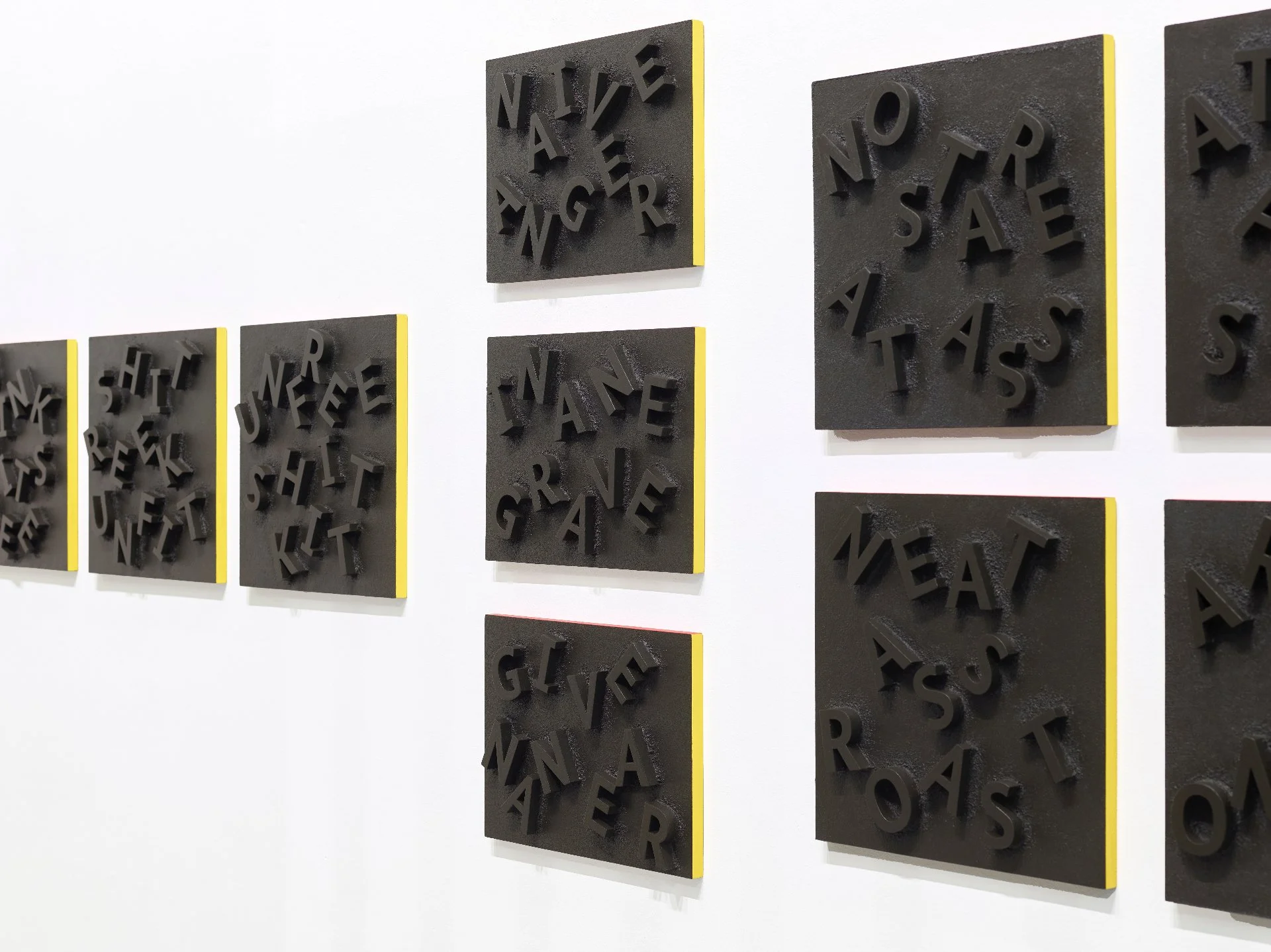
Candice Breitz, Anagrams, 2026, Hot Potato installation view at KOW, courtesy of the artist and KOW, Berlin. Photos: Ladislav Zajac.
“Dear Esther” in the basement is a video work by Candice Breitz, conceived as a cinematic exchange of letters addressed to the late anti-fascist activist and musician Esther Bejarano. Drawing on Bejarano’s experience of surviving Auschwitz, where she played in the girls’ orchestra, and the antisemitism she later faced because of her criticism of Israel’s human rights violations, Breitz combines a precise analysis of contemporary Germany’s political and cultural landscape with dreamlike imagery and anecdotal research. In doing so, the work draws a line between the fascisms of the past and present-day processes of fascistisation. In the second film, this culminates in a deliberately tentative act of homage, as Breitz awkwardly attempts to learn “Bel Ami”, the song that was crucial to Bejarano’s survival and that she later performed again as a “gesture of revenge”.
Against this backdrop, Breitz’s new exhibition breathes new life into the broader debate around the relationship between art and politics. She is an artist whose political stance is unmistakably embedded in her work, confronting viewers directly with its clarity and explicitness. In recent years, politics has entered the exhibition space with full force, resulting in exhibitions being cancelled, funding being withdrawn, and institutional boundaries being redrawn according to ideological pressure. In this context, the demand that art remain separate from political conflict is unrealistic and disingenuous. ”Hot Potato“ makes clear, in a manner that is both symbolically charged and unambiguous, that art is not separate from the social world, but is bound up with its fractures, antagonisms, and struggles over visibility. It reflects society to itself, creating a space in which contradictions, power relations, and historical continuities become palpable and contestable. Overall, ”Hot Potato“ emerges not merely as an exhibition, but as an intervention – an assertion that artistic practice cannot be neutralised without impoverishing public discourse. If democracy is to persist as something more than the administration of consensus, it must be capable of withstanding art and artists that do not mirror one's own political convictions. Such work is no less valuable for being difficult, dissonant, or confrontational; its importance may in fact lie in its refusal to flatter the viewer, instead offering the friction without which democratic culture risks collapsing into self-confirming silence.
Hot Potato by Candice Breitz is still on view at KOW until 27 June 2026.
About the author: Carolin Kralapp is a Berlin-based art historian and writer. She writes for magazines and online platforms, creating accessible and contemporary text formats that communicate complex ideas from the worlds of art and culture. Her work has appeared in publications such as Berlin Art Link and gallertalk.net, among others. Her particular interest lies in photography and conceptual art, focusing on themes of human relationships, social and societal issues, and personal experiences.