Performing Time at Foreign & Domestic, New York
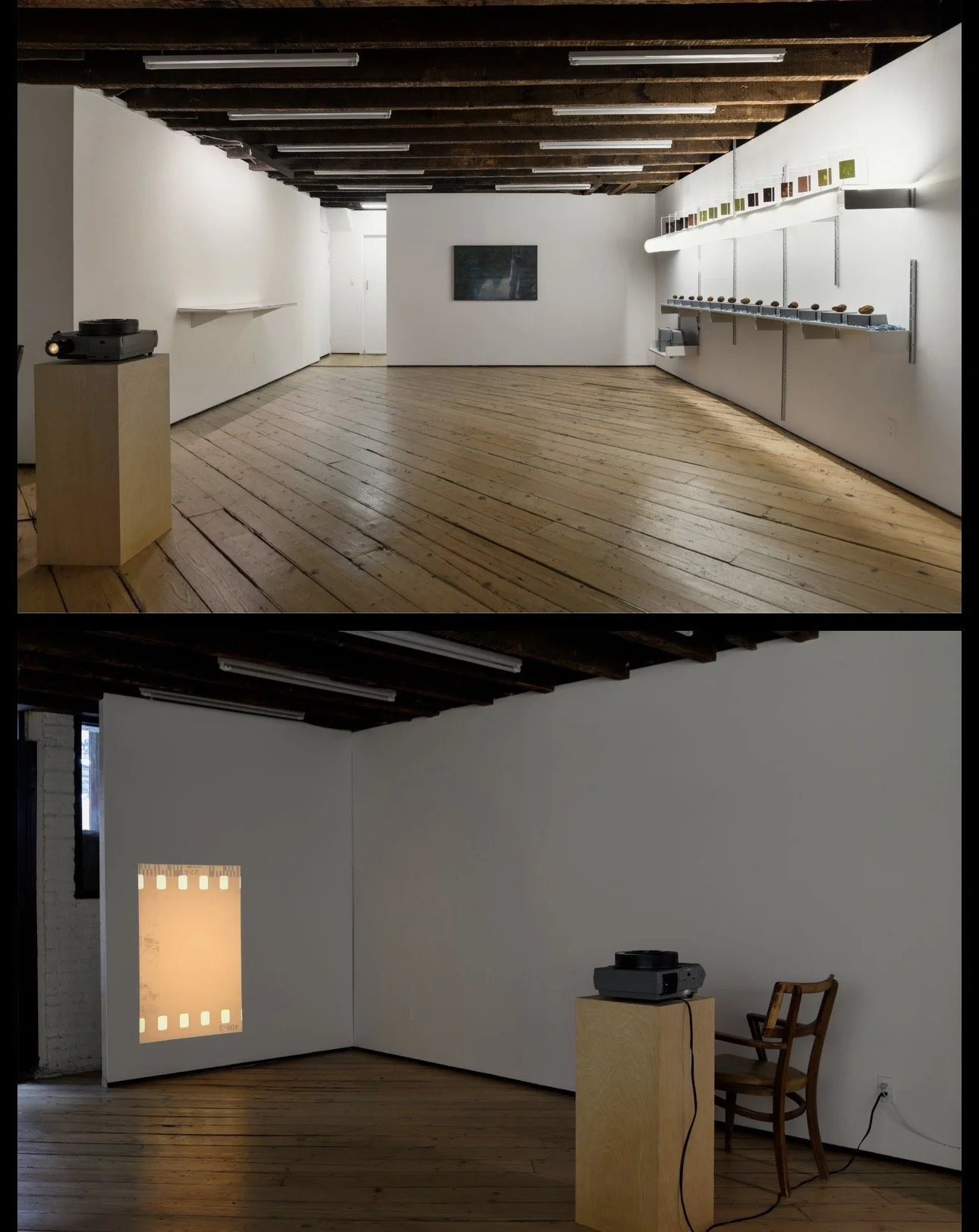
Installation view, May 9, José Castillo-Pazos, Eloise Hess, On Kawara, April 3-May 17.Foreign & Domestic, New York. Image courtesy of Foreign & Domestic.
Author: Irini Goudas
Published Saturday, May 9, 2026
April 03 2025, was a particularly intriguing art exhibition, which I attended during its opening night at Foreign & Domestic, in New York’s Lower East Side, curated by Selena Parnon and Megan Yuan. The past tense in the previous sentence was used even though the show is still up. However, the mentioned title could only be applied for one day, shifting daily to reflect the current date. The title will be archived, as will be the final date of the exhibition, which is May 17th, 2026. The exhibition features works by José Castillo-Pazos, Eloise Hess, and On Kawara and deals with questions pertaining to time.
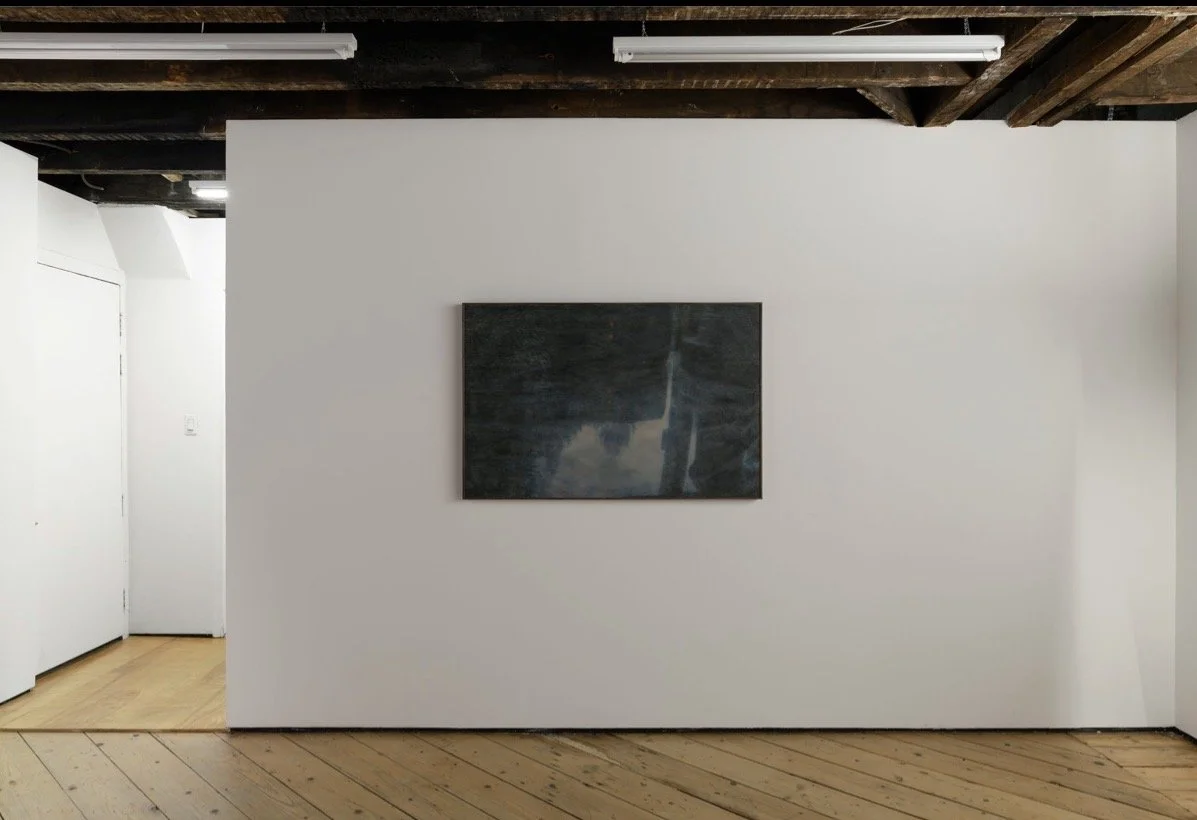
Installation view, May 9, José Castillo-Pazos, Eloise Hess, On Kawara, April 3-May 17.Foreign & Domestic, New York. Image courtesy of Foreign & Domestic.
Time is conceptualized by the participating artists as both a social construct and a lived experience. The subject, having sparked the curiosity of physicists, philosophers, sociologists, writers, and artists alike, is a fruitful ground for contemplation and introspection. The exhibition itself can be understood as a time-sensitive performance piece, as implied by its shifting title; each day it takes place, different visitors existing within their subjective temporality attend it, collectively reflecting on their experience of the concept.
Themes of decay, the passage of time, and loss are central to Seven Years (2012–2019) by José Castillo-Pazos, an installation that incorporates avocados, photosensitive film, and archival documents. The work originated from a chance moment when the artist left an avocado on film and observed its gradual spoilage, revealing the material traces of time. This interest became more profound following a home invasion in which Castillo-Pazos lost his photographic equipment and archive, confronting him directly with impermanence. As a result, the installation reflects a sustained engagement with absence, transformation, and how time both records and erases lived experience.
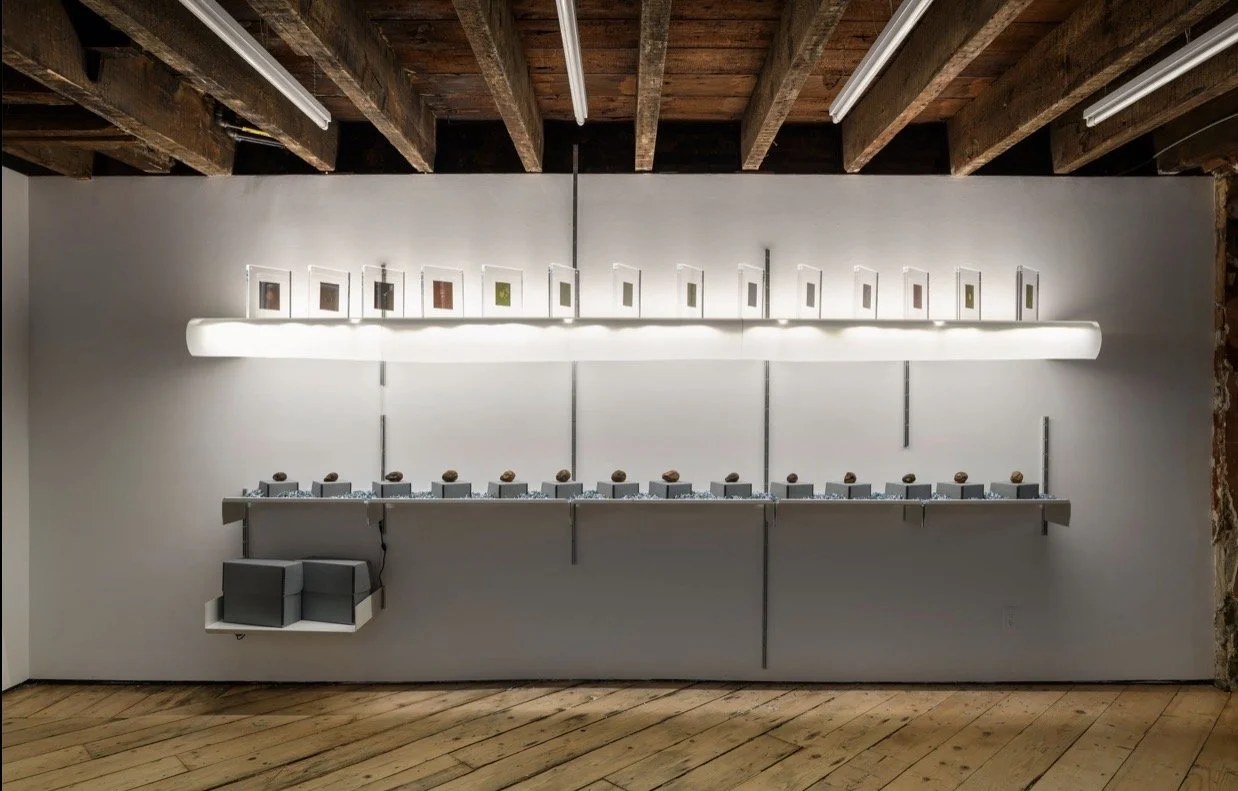
Installation view, May 9, José Castillo-Pazos, Eloise Hess, On Kawara, April 3-May 17.Foreign & Domestic, New York. Image courtesy of Foreign & Domestic.
Awake Without Exception (2026) by Eloise Hess is a painting composed of layered monotype prints embedded in encaustic, producing a fluid, almost liquid-like surface in which each print traces an original photograph. The work meditates on the fragile and subtly distorting nature of memory, emphasizing emotional perception over factual clarity. As time slips forward, what remains are not precise images but softened impressions; fragments of the past that persist in altered form. Through this process, Hess captures the tension between stillness and change, suggesting that even the most seemingly fixed moments are subject to gradual transformation.
Eloise Hess’s projection boldly adds a sense of temporality to the exhibition, functioning almost as a surrogate for a ticking clock. Water Falls Once (2026), a sequence of 80 slides derived from 35mm negatives, captures a waterfall in fragmented intervals. The work foregrounds the tension between motion and stillness, as well as between mechanical time (the camera’s operation) and natural time (the falling water). Each projected image is incomplete, emphasizing the power of the moment, while implying the impossibility of fully grasping time as a continuous flow.
On Kawara’s contribution situates the exhibition within a broader conceptual framework of time recorded. His telegram works, sent between 1969 and 1981 and bearing the message “I am still alive,” reduce personal existence to a minimal declaration, in comparison to the dominance of time as a broader societal truth. These works also introduce the idea of temporal delay, the gap between sending and receiving, highlighting uncertainty and the fragility of presence.
Collectively, the exhibition operates as a meditation on time not only as a fixed and universal dimension, but also as something subjective and unstable. Castillo-Pazos explores time through decay and material loss, Hess through perception and fragmentation, and Kawara through duration and existence itself. The daily transformation of the exhibition’s title reinforces this instability, turning the show into a living structure that evolves alongside its viewers. In this sense, the exhibition does not just raise questions pertaining to time, but performs it.
About the author: Irini Goudas is graduating from a Master’s program in Art Business at Sotheby’s Institute of Art, where she wrote her thesis on the cultural phenomenon of Japonisme in Paris, with a particular focus on the work of Kitagawa Utamaro and his influence on late nineteenth-century art. Her professional experience spans gallery administration, curatorial practice, and art advisory.