Imperfect Loops: Maya Man’s StarPower at bitforms gallery, New York
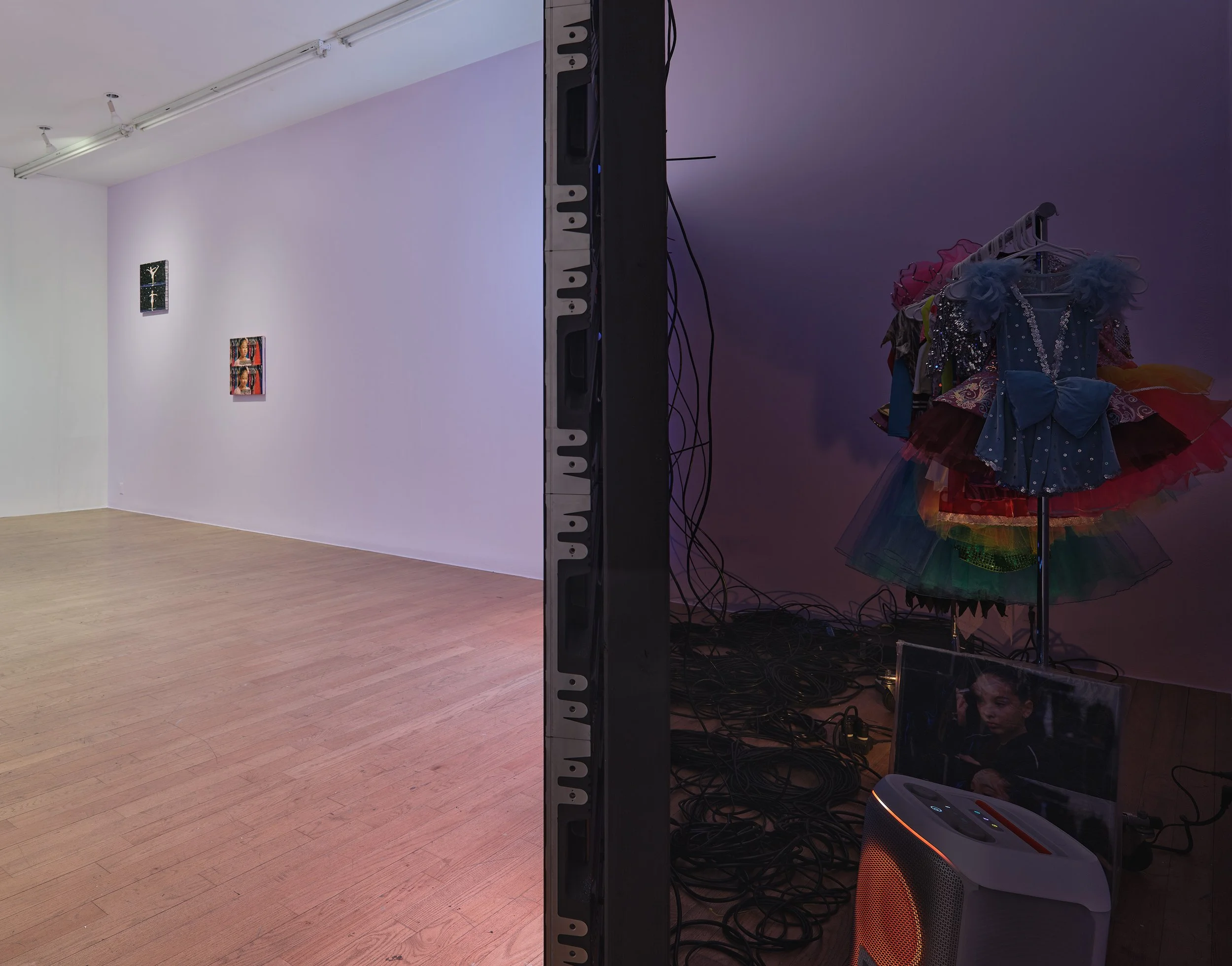
Installation view Maya Man StarPower, bitforms gallery, New York, March 19- May 2, 2026. Image courtesy of the artist and the gallery. Photo by Max C Lee.
Author: Jess Vanam
Published Thursday, April 30, 2026
At bitforms gallery, Maya Man's solo exhibition StarPower presents a meditation on competitive dance culture and the construction of girlhood using algorithmic image production to illustrate the harsh realities of both constructs and their shared performative nature. The exhibition space is sparsely populated, anchored by a large LED screen in the corner of the main room playing StarQuest.
StarQuest, a generative software work, is the focal point of the exhibition. It restages the visual and emotional vocabulary of Dance Moms, a Lifetime reality TV show on prepubescent ambition and maternal anxiety. Dance Moms debuted in 2011 and follows the young members of the Abby Lee Dance Company in Pittsburgh and their mothers as they navigate the world of competitive dance. StarQuest is composed of 111 8-second scenes created using Veo, Google’s text-to-video and text-to-music AI model. The clips are arranged non-linearly, sequenced endlessly in varying orders by custom software created by Man. Surrounding the LED screen are textiles, fan edits displayed on mounted iPhones, motivational posters, a rack of dance competition outfits, and a warm-up jacket adorned with pins from the real-life StarPower competition in which Man herself competed as a child. The result is world-building that is at once nostalgic and unnerving, but ultimately frustratingly mimetic and unresolved.
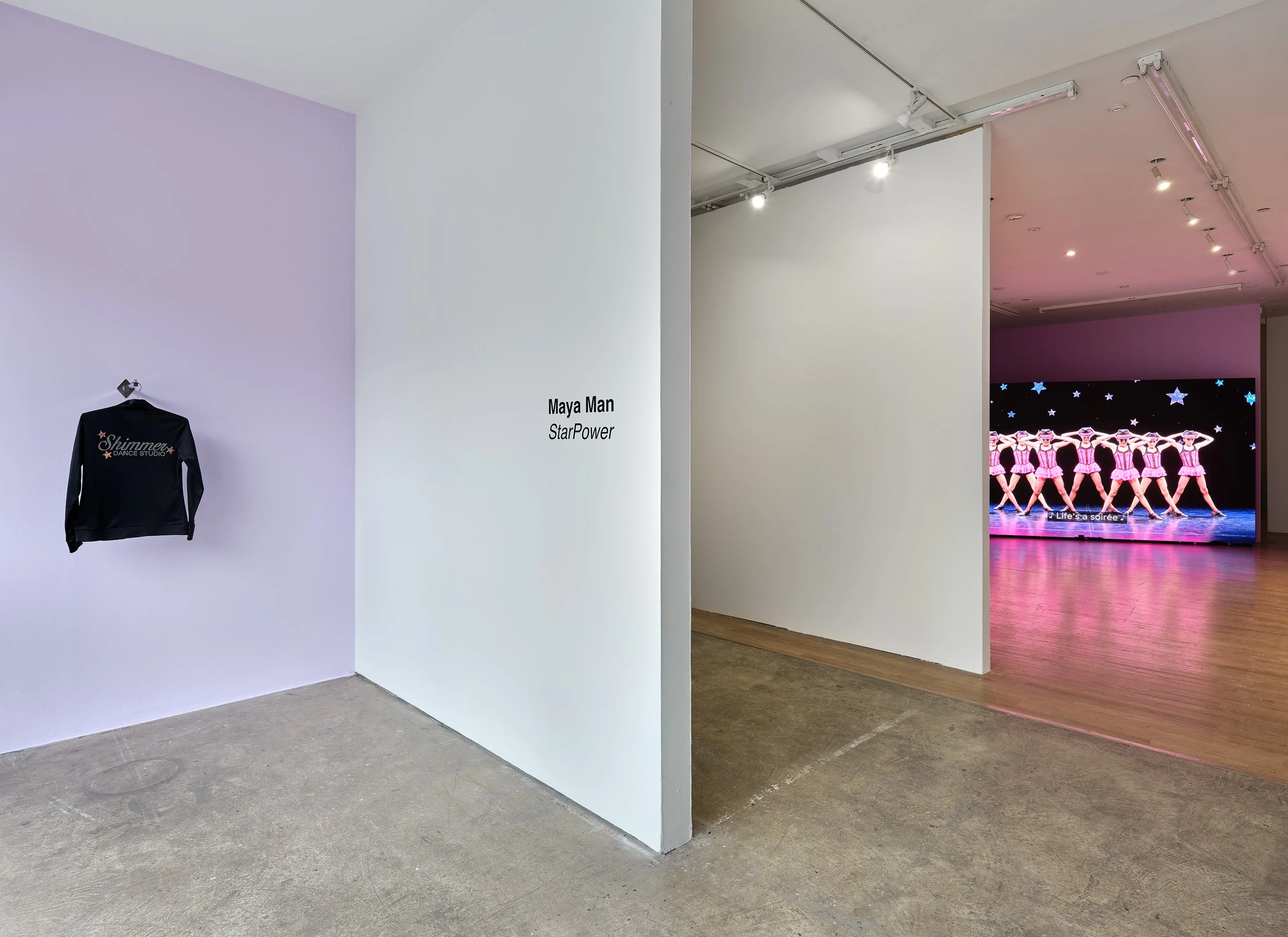
Installation view Maya Man StarPower, bitforms gallery, New York, March 19- May 2, 2026. Image courtesy of the artist and the gallery. Photo by Max C Lee.
StarQuest features distorted AI-generated bodies: legs bending impossibly, two dancers merging into one. The figure of the “AI default girl,” as curator Nora O'Murchú names her, is “optimized for beauty, obedience, and perfection.” These distortions are positioned as a critical intervention that destabilizes the optimized performing body through the logic of artificial intelligence.
However, the underlying logic of these transformations is unclear. In 2026, morphing limbs and melting faces are among the most recognizable artifacts of generative AI: vernacular enough to be constantly meme-ified, already subsumed into the background texture of an internet saturated with synthetic images. To center these artifacts as though they constitute meaningful commentary on bodily discipline is to lean heavily on the medium's most legible and readily available effect. One is left wondering whether AI was chosen because of its potential to generate new insight, or whether its already familiar uncanniness simply offered a convenient justification for reproducing the affect of Dance Moms in a gallery context.
What does the AI refabrication add that the source material does not already provide? Dance Moms is not a naïve document: it is meticulously produced reality TV, engineered to generate precisely the unsettling spectacle of ambition and gendered anxiety that Man's work explores. The exhibition justifies the AI translation by drawing a parallel between the training of young dancers and the training of AI models–both subject to “repetition, refinement, and optimization.”
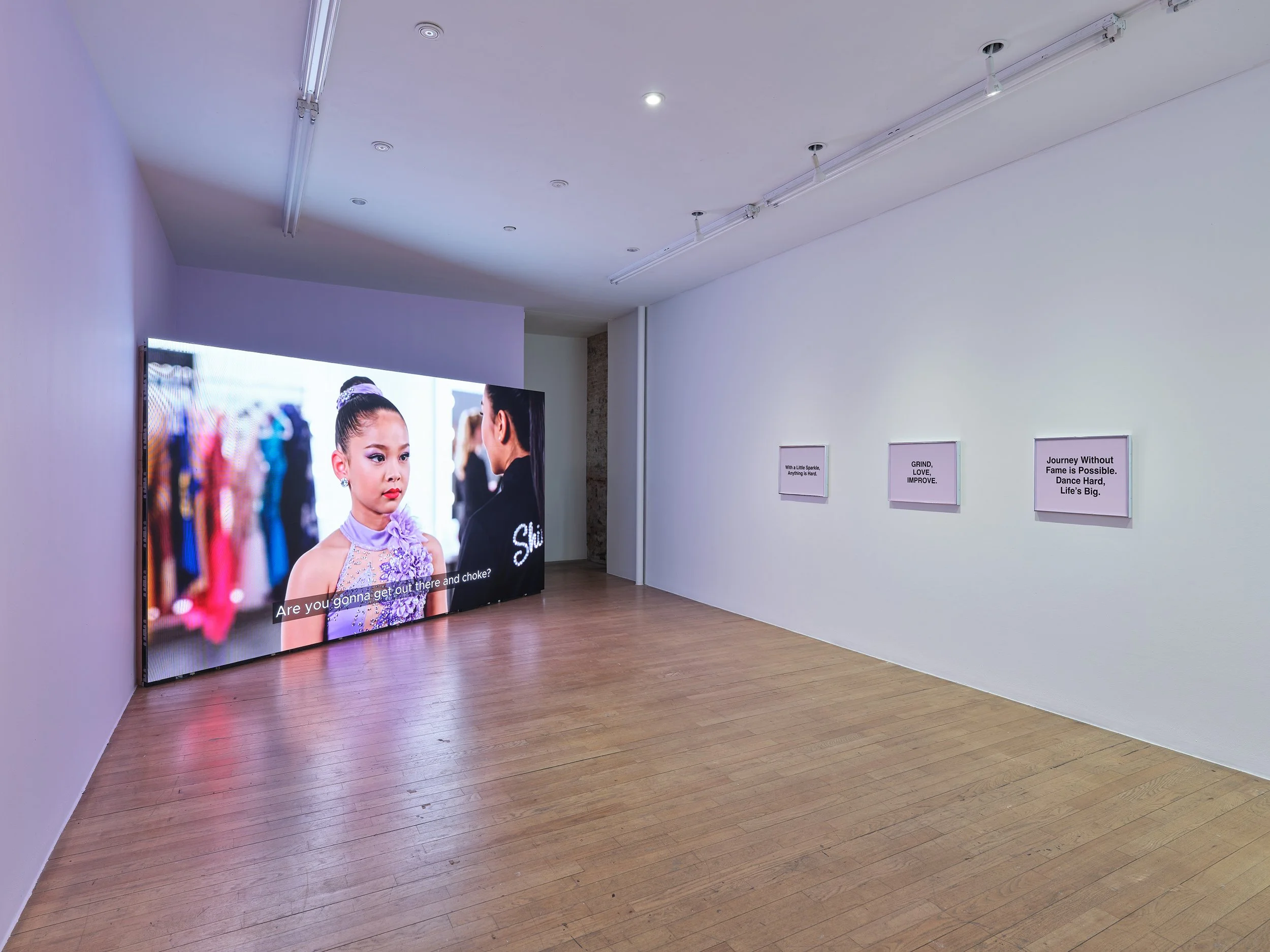
Installation view Maya Man StarPower, bitforms gallery, New York, March 19- May 2, 2026. Image courtesy of the artist and the gallery. Photo by Max C Lee.
This analogy deserves more resistance (or investigation) than the work provides. The training of a machine learning model is a computational process with varying degrees of human input; the training of a child dancer is the labor of a human body and a vulnerable psyche. Man describes her experience of creating StarQuest as “shifting roles from dancer to coach.” The distortions are subtle, and one can appreciate that including precisely the right amount of distortion requires considerable attention to detail and repetition. While this may be an impressive feat at the level of prompt engineering, the “AI training” process does not produce enough meaning in its effects to justify the conceptual weight the exhibition places on it. By presenting the work through this parallel, StarQuest flattens what could have been a deeper exploration into the exploitation of child performers and the labor involved in systemic AI usage into a rhetorical convenience.
The StarQuest Edits are presented on iPhones mounted to metal wall tiles etched with stars and hearts. Intended to mirror the consumption logics of TikTok and Instagram Reels, each phone scrolls through “fan edits” of the StarQuest scenes using CapCut templates, successfully reproducing the ambiance of a social media feed. The StarQuest Edits are intended to “point towards the circulation of young women’s bodies online as content and algorithmically mediated spectacle”; however, they reproduce the formal language of their subject - fan culture - with such fidelity that they are virtually indistinguishable from it. The iPhone as a display device is a curatorial choice so literal that it collapses into tautology: social media content on the device on which one views social media content. The work enacts the conditions it describes so frictionlessly that it cannot escape or add new meaning to them.
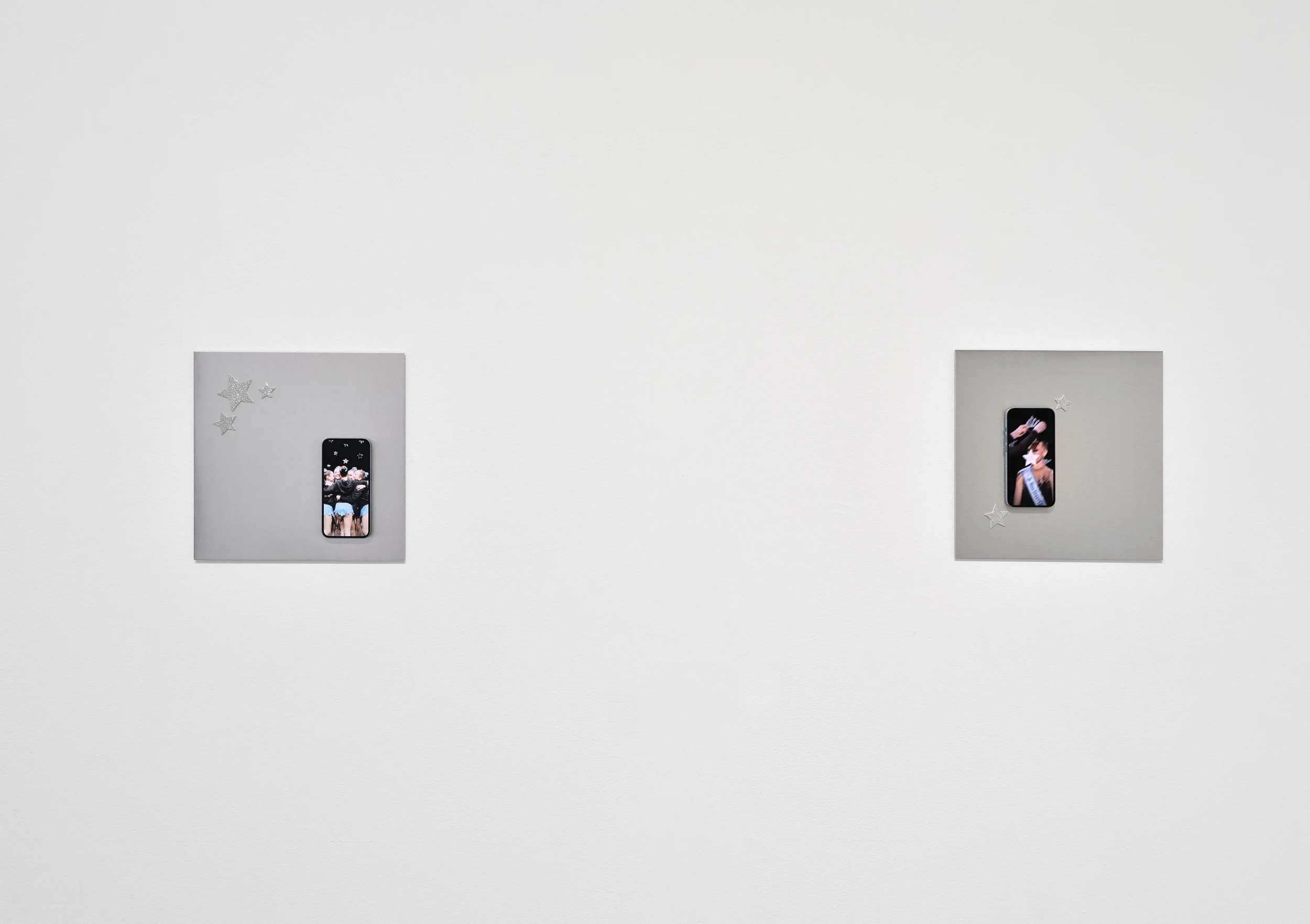
Installation view Maya Man StarPower, bitforms gallery, New York, March 19- May 2, 2026. Image courtesy of the artist and the gallery. Photo by Max C Lee.
A rack of dance costumes is tucked behind the large screen playing StarQuest - a poignant detail. Backstage, we can see how small the outfits are and are reminded of the actual children who wore them (perhaps even Man during her competition years). The backstage area has a few other items strewn across the ground, a space reserved for mess and imperfections.
The quilts on the wall contain pieces of dance costumes in their batting and are printed with stills from StarQuest. They are visually incongruous from the rest of the work in the exhibition. Perhaps they draw from Man's previous work with quilts, exploring the connection between digital feeds and quilted textiles as collages of content from different sources. However, they diverge from her previous approach of quilting together fabric from different sources, and the reasoning behind printing StarQuest stills on them is unclear.
Much of the exhibition’s framing presents StarPower as a series of manipulated readymades, recontextualizing the source material of the internet and television to produce an uncanny register. However, the work is perhaps more legible as pop art: it identifies and reproduces the commercial spectacle of its subject rather than truly estranging or examining it. Man is a gifted technologist and an astute reader of internet culture, but StarPower consistently mistakes identification for analysis by pointing at phenomena already widely experienced and recognized as alienating and repackaging that recognition as revelation. The work speaks the language of cultural critique without producing cultural discomfort or insight. What it lacks is not “perfection” but risk: the willingness to confront the ethical implications of its own image-making and to produce an experience that does more than confirm what its audience already knows.
Maya Man StarPower is on view at bitoforms gallery, New York, through May 2, 2026.
About the author: Jess Vanam is a New York-based web developer, designer, and writer.