New Humans: Memories of the Future and the Question of What Comes Next at New Museum, New York
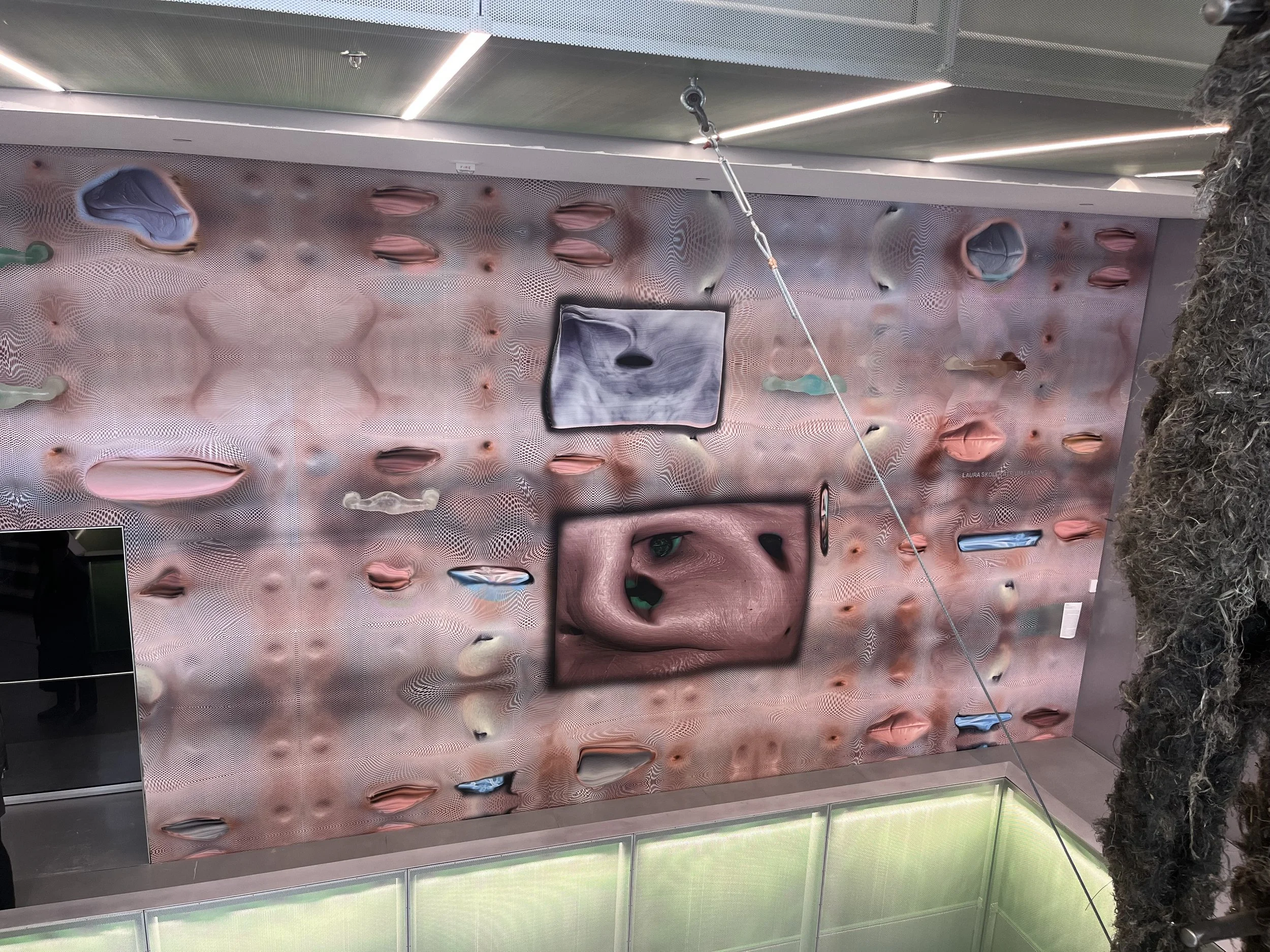
Installation view of Tishan Hsu, ears-screen-skin: New York (2025).
Author: Natasha Chuk
Published Wednesday, April 1, 2026.
Founded in 1977 as a one-room gallery on Hudson Street, the New Museum has long positioned itself as a site for presenting and cultivating new ideas rather than as a repository of objects. Nearly five decades later, that ethos persists in its newly configured space at its present Bowery location and with an inaugural exhibition of staggering scope. The museum’s re-opening in March marks both a return and a promise. It remains committed to its origins as a space for experimentation and critical reflection, while seeking to chart how art can continue to metabolize the conditions of technological life and imagine possible futures. This vision takes shape in New Humans: Memories of the Future, the museum’s massive opening exhibition exploring the intersections of materials, technology, and human experience.
New Humans: Memories of the Future occupies the entire museum. Bringing together more than 200 artists, writers, scientists, and filmmakers, and representing 56 countries and over 700 objects, the exhibition comes together as a transhistorical and transdisciplinary meditation on how technology shapes and continuously reshapes what it means to be human. But rather than confining this examination exclusively to the domain of new or emerging technologies, it establishes a broader conception of the technological. It insists on a more elaborate, more entangled genealogy, where painting, sculpture, collage, photography, moving image, and early avant-garde experiments inform the conceptual foundation for contemporary practices and artworks concerned with technology’s influence. At times, this density risks becoming diffuse, but more often, it produces flashes of clarity as unexpected alignments between early 20th-century experiments and contemporary computational aesthetics, between analog and digital, and between the tactile and the virtual. It was refreshing to see this play out in disparate works exploring how the psychology and multiplicity of the self is externalized and made palpable, whether through Francis Bacon’s visceral figuration in paint on canvas, as Lynn Hershman Leeson’s sound sculpture Self-Portrait as Another Person (1965), or in the unexpected exploration of desire in Frieda Toranzo Jaeger’s modular sculptural paintings To Imagine Is to Absent Oneself (2025). In another comparison, Hannah Höch’s iconic fractured photomontages resonate with the contemporary exploration of digital embodiment and mediated perception found in Vitória Cribb’s haunting 3D animation short films and within Sidsel Meineche Hansen’s paranoid zombie stop motion film Love Doll Resurrect (2019).
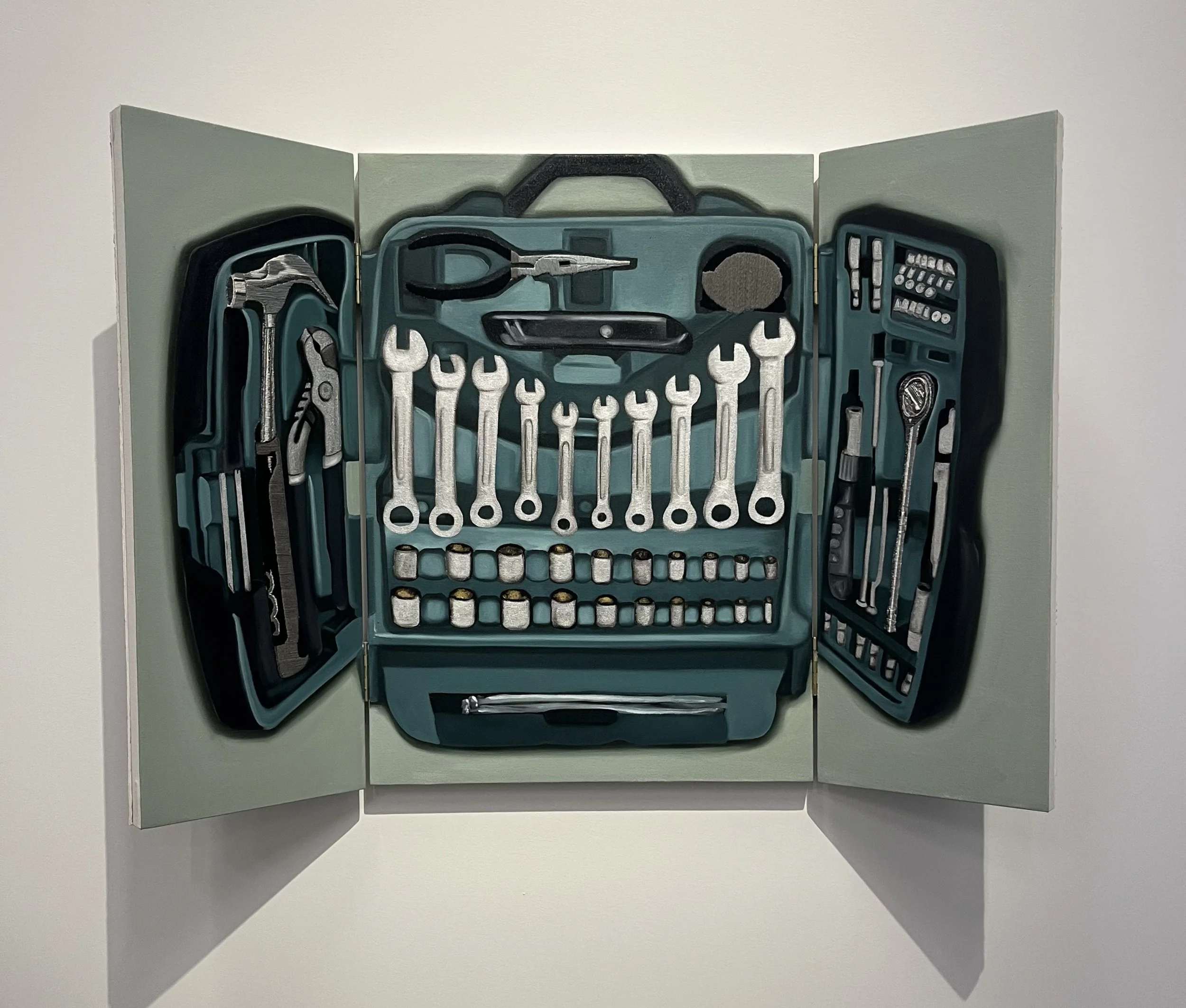
Installation view of Frieda Toranzo Jaeger, To Imagine Is to Absent Oneself (2025).
To avoid the constraints of a linear timeline and offer sharper definition to its broad scope, the exhibition is organized into ten themes that read like sci-fi titles: Reproductive Futures, Mechanical Ballets, Prosthetic Gods, Leviathans, Dream Machines, Automatic Women, New Images of Man, Postapocalyptic Creatures, Human Animal, Homunculus, Animacies, Hall of Robots, and The City. Within this expansive framework, some of the works emerge as particularly resonant. The inclusion of Tishan Hsu’s work, ears-screen-skin: New York (2025), mounted as wallpaper in one of the museum’s atria, adds a nightmarish meditation on the body’s reconfiguration through material encounter. It employs the artist’s characteristic irregular surface and textures that simulate the body as a kind of viscous, sensorial wetware caught in an entanglement of overlapping technical systems. Anicka Yi’s artificial life simulation work In Love with the World (2021) occupies parts of the fourth-floor gallery with hovering, biomorphic devices called aerobes that drift around like speculative organisms. Modeled after ocean life and fungal networks, these delicate, translucent entities appear as a whimsical take on the surveillance balloon, but their presence is non-threatening. Their design proposes an alternative vision of intelligence, prompting viewers to imagine technologies that coexist with, rather than dominate, their environments. In Mechanical Kurds (2025), Hito Steyerl brings together a single-channel video with a foregrounding sculptural component. The work’s title invokes the layered history of the “Mechanical Turk,” which first appeared as an 18th-century illusion of automation in a chess-playing figure that seemed self-operating but was secretly guided by a concealed human; and later the name was revived as Amazon’s digital labor platform, where low-paid distributed workers complete outsourced, often repetitive tasks. By drawing on these interconnected references, the video installation probes and offers a critique of the persistent dependence of human labor and the appearance of machine autonomy.
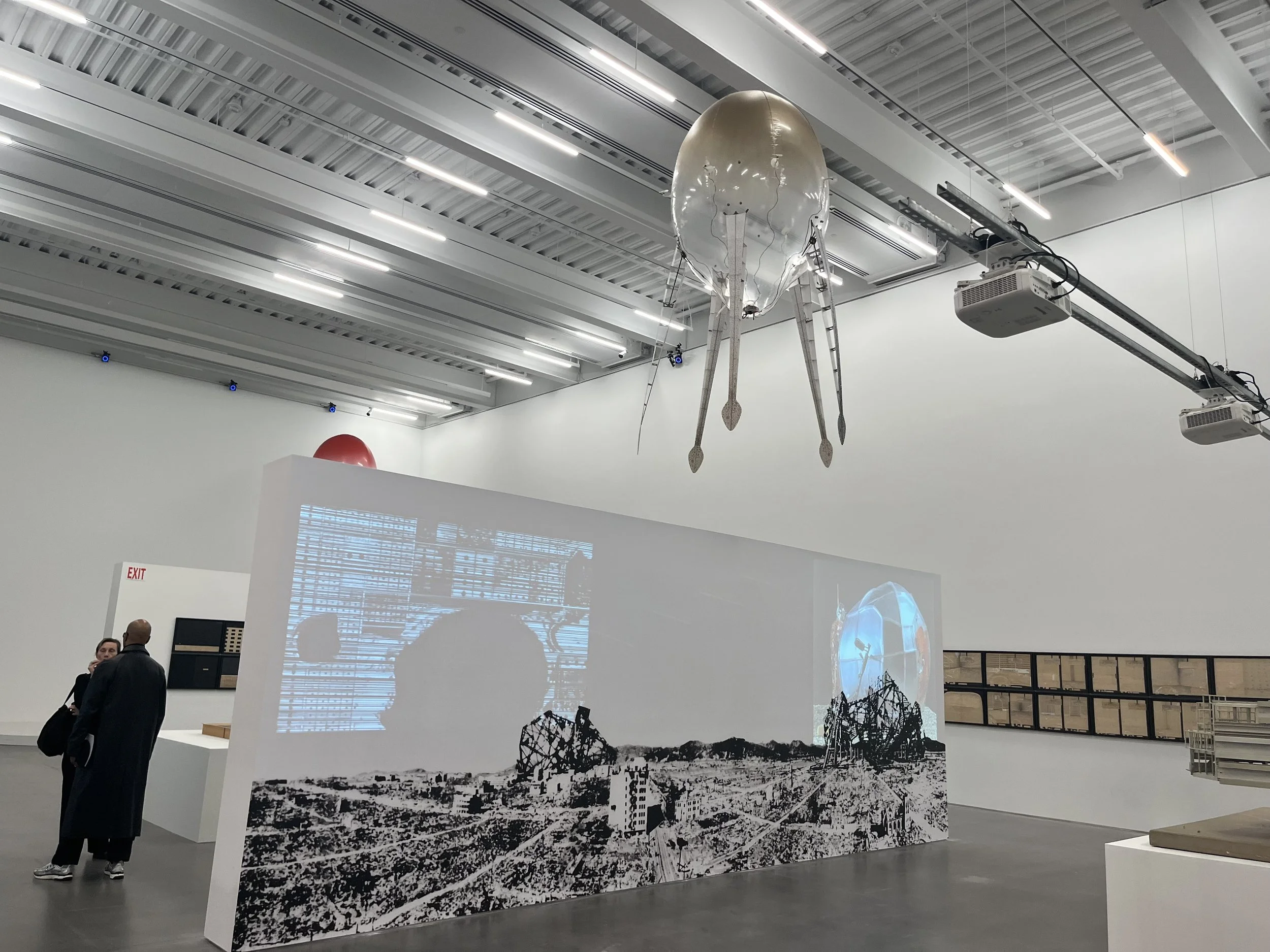
Installation view of Anicka Yi, In Love with the World (2021).
The exhibition may grapple with our layered and ever-shifting relationship with technology, but the building itself suggests a parallel inquiry. Designed as a seamless integration of two distinct yet connected structures, the new museum layout proposes something like an “unfixed” architecture. Movement through the building is primarily horizontal, encouraging zigzagging navigation across floors rather than a hierarchical ascent. Interstitial zones and a central public space create moments of (sometimes awkward) pause and transition, mediating between galleries, elevators, terraces, and communal areas. These spaces are meant to be both functional and conceptual, but they can also prove to be tricky as display sites. I found myself moving through Precious Okoyomon’s When the Lambs Rise Up Against the Bird of Prey (2024) more quickly than I would have liked, rushed by its placement in a narrow, transitional corridor between galleries. This installation consists of a seated animatronic, anthropomorphic lamb that responds to the viewer’s presence by silently locking its gaze with theirs. Yet this provocation feels diminished by its placement. This feeling is compounded by the fact that the work appears here in a markedly reduced, seemingly incomplete, form. Not only is it stuck in a shaft most visitors would not notice or care to pass through, but it is also encased in a box filled with fiberglass, as if it had only just arrived. In other iterations, the animatronic work has been presented as part of an artificial forest saturated by scent and live sound in a more elaborate and interactive setting. Here, the opportunity for a more sensational experience and the work’s deep references to poet Anne Boyer’s riposte to Friedrich Nietzsche’s On the Genealogy of Morals are completely lost.
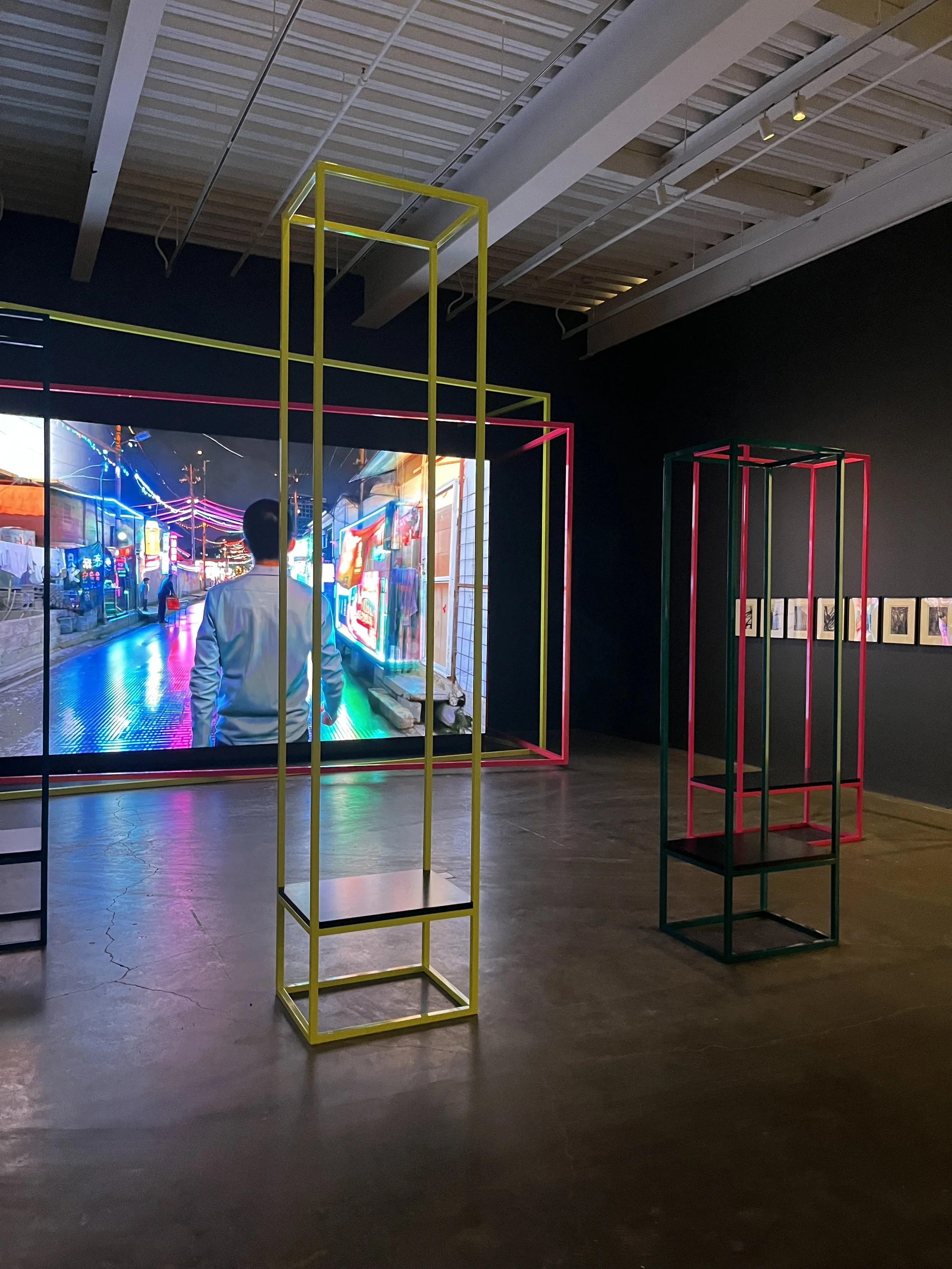
Installation view of Hito Steyerl, Mechanical Kurds (2025).
It is also worth noting that otherwise the architecture manages to recede into the background of experiencing the artwork. In a moment defined by a near-obsessive focus on innovation and spectacle, the building forsakes demanding attention, and in most cases, it frames it without overwhelming it. In select areas, there is a strong emphasis on public engagement where commissions by artists activate the façade, atrium, and eventually the plaza. Tschabalala Self’s Art Lovers (2025) is a site-specific work marking the “kiss point” between the museum’s two adjoining buildings; Klára Hosnedlová’s massive sandstone, glass, and fiber sculpture Shelter (2026) takes over the atrium stairwell; and VENUS VICTORIA by Sarah Lucas will be on view for a two-year period in the museum’s new outdoor plaza, extending the museum’s reach beyond its interior. These works signal an understanding of the museum as part of a broader urban and social ecology, extending the internal space to the public realm of passersby and residents of the neighborhood.
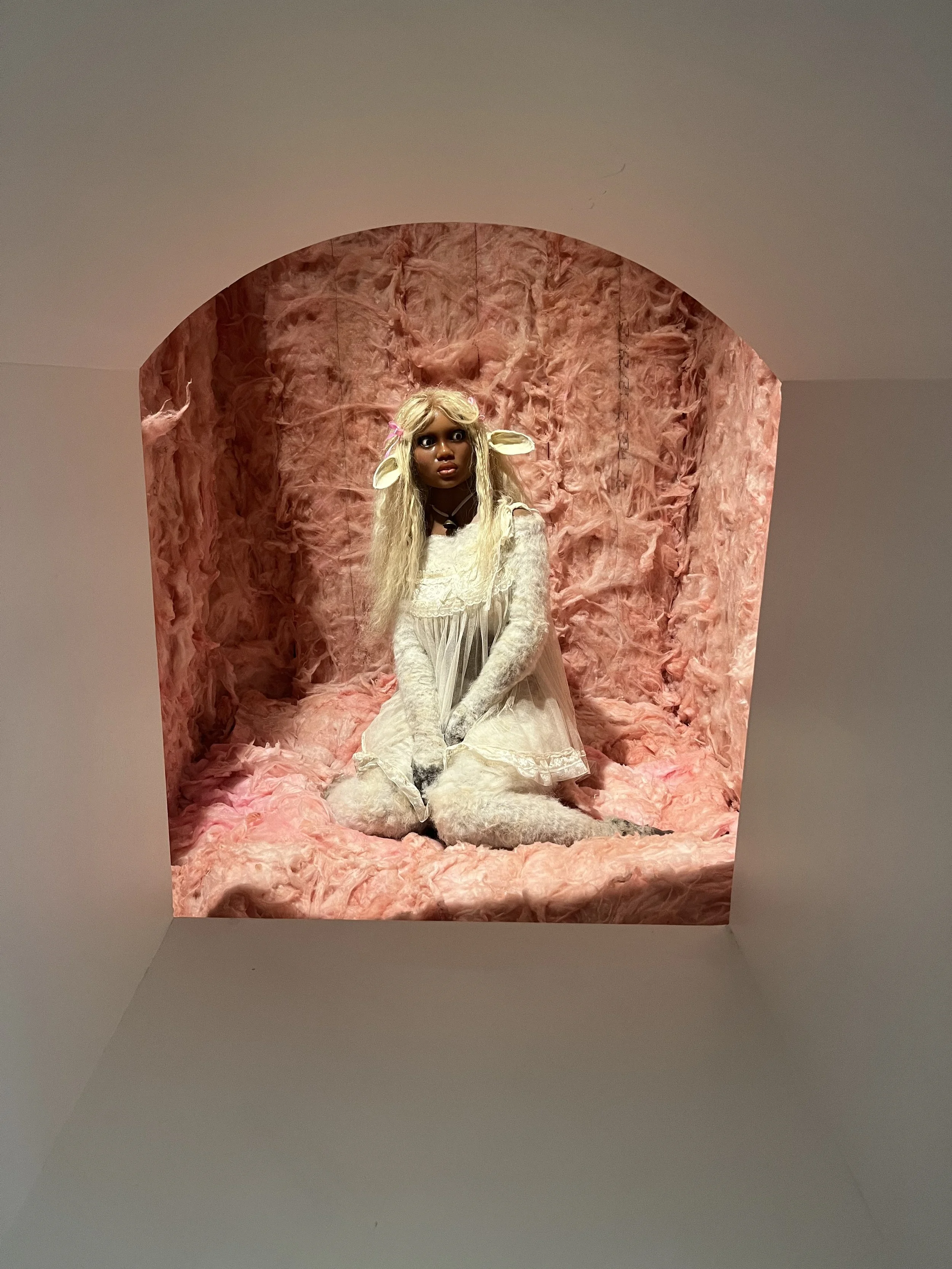
Installation view of Precious Okoyomon, When the Lambs Rise Up Against the Bird of Prey (2024).
Taken together, the building and its inaugural exhibition offer a compelling, if ambitious, statement. They suggest that the future of art lies in the ability to hold multiple temporalities and modalities in meaningful tension. If there is a risk, it is in the scale of the endeavor. The exhibition’s breadth can at times feel unwieldy, its thematic threads difficult to fully grasp in a single visit. But perhaps that is the point. In this framework, technology is approached both historically and aesthetically as a condition that imperfectly shapes and is shaped by human experience, rather than as a clear, unidirectional, and relentless force. This approach is honest about the inherently complex, unstable, and at times clumsy relationships between human and non-human agents. In that sense, the re-opening of the New Museum feels like an apt return to the project that it has been engaged in since its founding. Nearly fifty years on, existing as a space where art can be created, responded to, reflected on, and reimagine the conditions of our time remains as urgent and as experimental as ever.
New Humans: Memories of the Future opened on March 21, 2026, and is ongoing at the New Museum.
About the author: Natasha Chuk is a media theorist, writer, and curator based in New York.
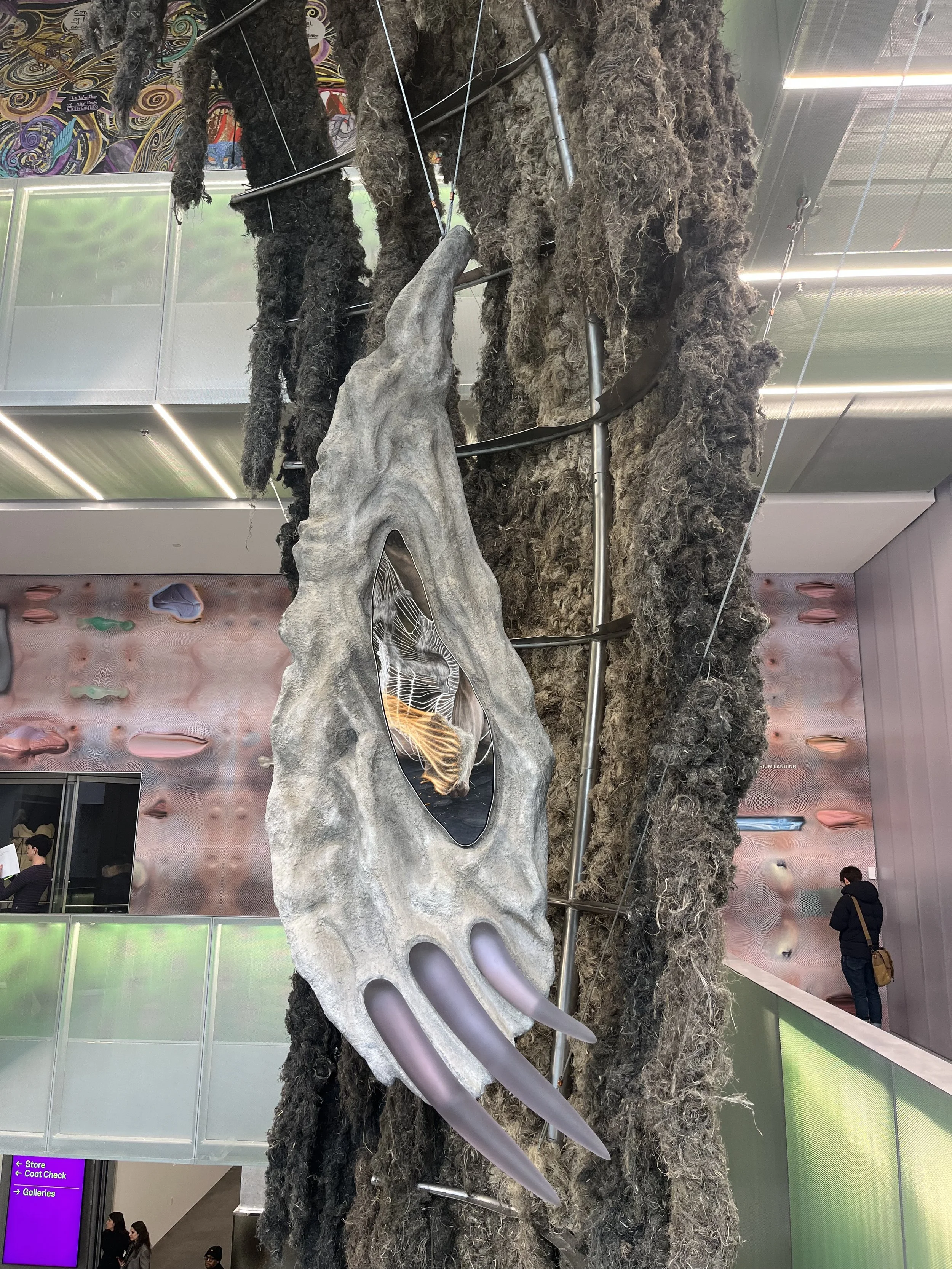
Installation view of Klára Hosnedlová, Shelter (2026).