Tatiana Trouvé. The Strange Life of Things at Palazzo Grassi, Venice
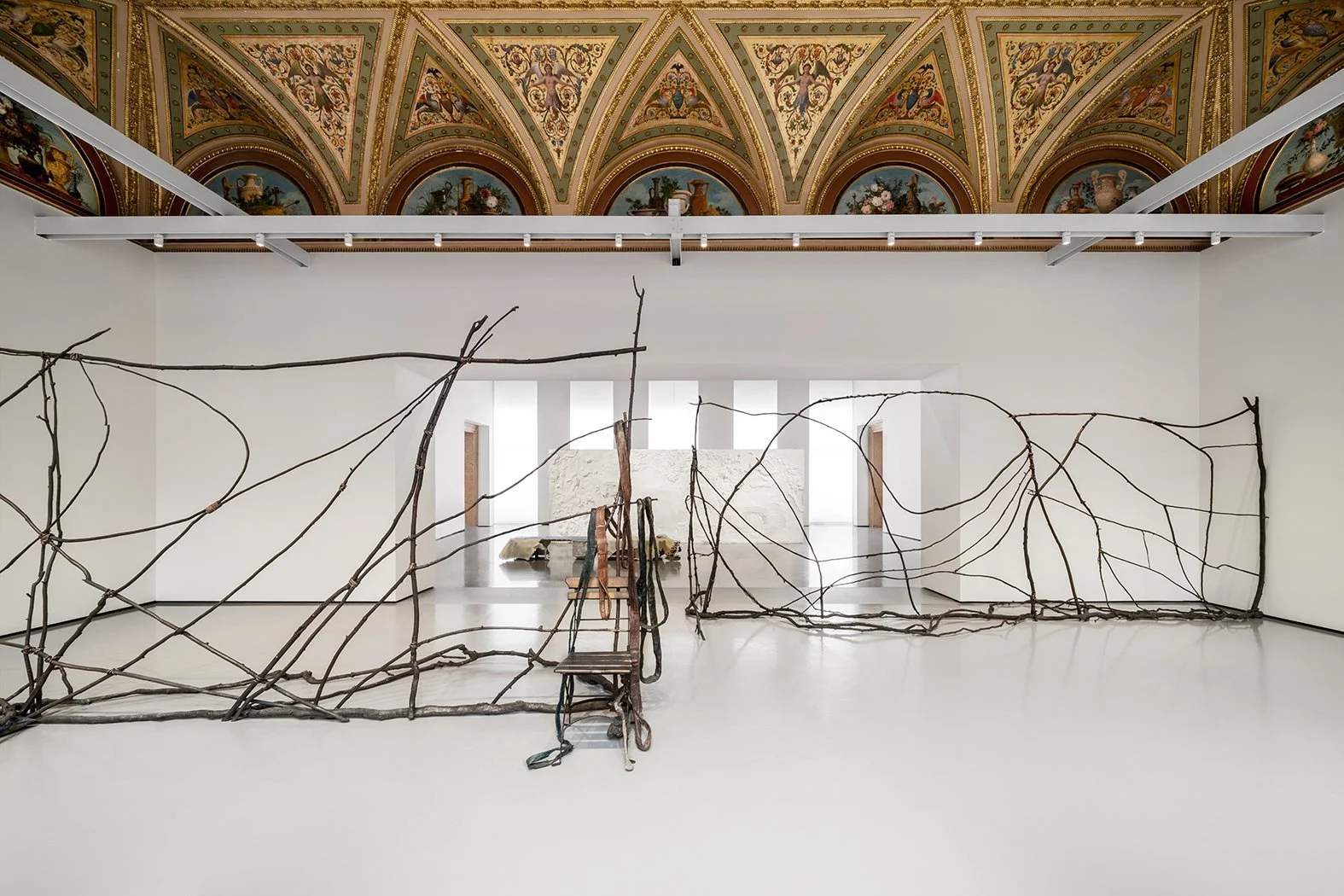
Tatiana Trouvé, Navigation Gate, 2024, Collection of the artist; Sitting Sculpture, 2024, Collection of the artist, courtesy Gagosian; Storia Notturna, 30 giugno 2023, 2024, Collection of the artist © Tatiana Trouvé, by SIAE 2025. Installation view, “Tatiana Trouvé. The strange Life of Things”, 2025, Palazzo Grassi, Venezia. Ph. Marco Cappelletti and Giuseppe Miotto / Marco Cappelletti Studio © Palazzo Grassi, Pinault Collection
Author: Michela Ceruti
At Palazzo Grassi in Venice, Tatiana Trouvé’s “The Strange Life of Things” unfolds like a slow inhalation, occupying not only the three floors of the palazzo but seeping into its atrium, thresholds, and intervening into its stillness. The exhibition does not announce itself so much as it listens, tuning the building into an instrument of memory and duration. Trouvé works in a language that refuses singularity: sculptures bleed into drawings, drawings dissolve into installations, and each medium behaves as a human consciousness halfway between waking and sleep. Her practice is resolutely interdisciplinary, yet intimate, porous, and attentive to the way inner and outer worlds comingle with one another.
Chairs, ropes, architectural fragments –– objects of use, habit, and proximity to the body –– are reinvented here as mnemonic devices, bearing the tremor of time lived rather than time measured. In Trouvé’s hands, space becomes psychological, memory becomes spatial, and imagination is granted the dignity of truth. Interiors open outward; exteriors seem to fold back into one’s mind. What is real is never entirely disentangled from what is remembered or dreamed of. Moving through “The Strange Life of Things” is less an act of viewing than of inhabiting a suspended temporality, where the human experience of time –its stretching, its sedimentation, its sudden collapses–takes a material form. The palazzo itself appears altered, as though it were cogitating alongside us, lending its floors and stairwells to an inquiry that is ultimately not about objects, but about how we live among them, and how they, in turn, live quietly among us.
Trouvé’s intervention throughout Palazzo Grassi takes the form of a labyrinth –one that is neither purely architectural nor entirely imaginary, but suspended between the two. One thinks, inevitably, of Borges, for whom time was never linear but resembled a maze, endlessly bifurcating, folding back upon itself, producing corridors of thought leading astray rather than to concrete destinations. In “The Strange Life of Things,” time behaves precisely in this way. The artist constructs a physical labyrinth that mirrors an interior one: passageways of perception and rooms that feel remembered before they are seen. Movement through the palazzo becomes a form of thinking, and thinking itself becomes spatial. The exhibition does not guide so much as it entangles, asking the visitor to relinquish orientation in favor of attentiveness.
Much of the work has been conceived in direct response to Palazzo Grassi –its proportions, its historical gravity, its constant dialogue with the shifting waters of the Grand Canal just beyond its walls. Trouvé approaches the building not as a neutral container but as a collaborator, allowing its architecture to determine the rhythm and logic for her interventions. Yet interwoven with these newly produced works are pieces from the past decade, relocated, reactivated, and set into conversation with the present moment. The result is not a retrospective, but an ecosystem: multiple temporalities coexisting, older works shedding their former contexts and acquiring new lives within this Venetian topography. Each object seems aware of the others, as if the exhibition were a self-regulating world rather than a linear display.
The atrium, where the encounter beings, offers a kind of threshold-image. Trouvé covers the marble floor with a newly realized sculptural intervention that immediately destabilizes expectations. Materials associated with contemporary urban construction –– metal elements, industrial fragments –– are embedded within a mantle of asphalt, spreading across the ground like a dark cartography. The work, titled Hor-sol (2025), reads at once as a cosmological map and as the exposed mechanism of a clock: gear without hands, time without numbers. It is a surface meant to be crossed, yet it resists transparency, allowing us to sense opacity, density, and weight. Standing above it, one feels suspended between scales –the cosmic and the infrastructural, the immeasurable and the engineered. This opening gesture established the exhibition’s governing tension: between systems that seek to organize time and the lived experience that continually escapes them.
Elsewhere, time seeps through the walls themselves. Fine fissures appear in the architecture, subtle yet deliberate, as though the building were cracking under the pressure of accumulated memories.
Throughout the exhibition, time appears to press outward, even against the architecture cuts. Fine fissures punctuate the walls, subtle yet deliberate, as though the building were registering the pressure of accumulated memories. These openings function like wounds or apertures, suggesting that space, too, is vulnerable to duration. Scattered across this temporal terrain are ongoing series such as “Notes on Sculpture,” which introduce a more intimate register. Each work is a three-dimensional still life, cast in bronze from accidental studio compositions and titled with a name and a precise date–December 20th, “Charles” (2025); April 27th, “Maresa” (2021); January 28th, “Marcello” (2025). These sculptures arrest fleeting moments of thought, granting permanence to what was once casual and provisional. Similarly dispersed throughout the palazzo, “The Guardians” appears discreetly rather than trying to become a focal point: charts or benches paired with personal objects (a bag, a cape, a trace of a life) suggest figures who are protective, yet absent, watchful, yet withdrawn, embedded within the rhythms of the show itself.
In this way, “The Strange Life of Things” resists closure. It offers no final image, no stable synthesis, only a series of encounters that remain in motion. Time, here, is neither linear nor fixed, but dispersed – lodged in materials, gestures, and absences. The exhibition ends only in the practical sense; conceptually, it continues to unfold, asking us to reconsider not what objects are, but how long they have been waiting, and what they might still remember.
About the author: Michela Ceruti is a writer based in Milan. She is the managing editor of Flash Art Magazine.
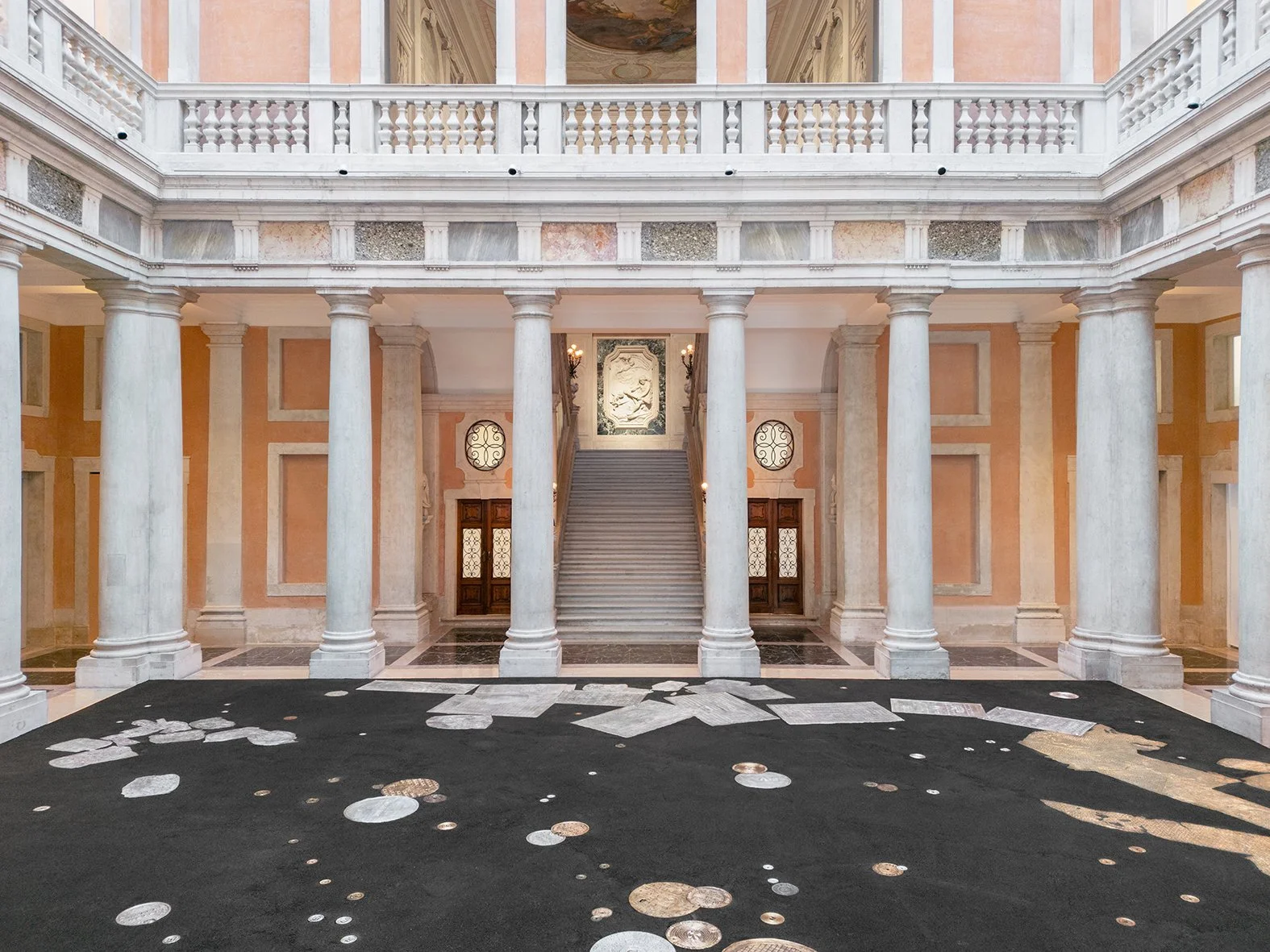
Tatiana Trouvé, Hors-sol, 2025, Collection of the artist © Tatiana Trouvé, by SIAE 2025. Installation view, “Tatiana Trouvé. The Strange Life of Things”, 2025, Palazzo Grassi, Venezia. Ph. Marco Cappelletti and Giuseppe Miotto / Marco Cappelletti Studio © Palazzo Grassi, Pinault Collection.
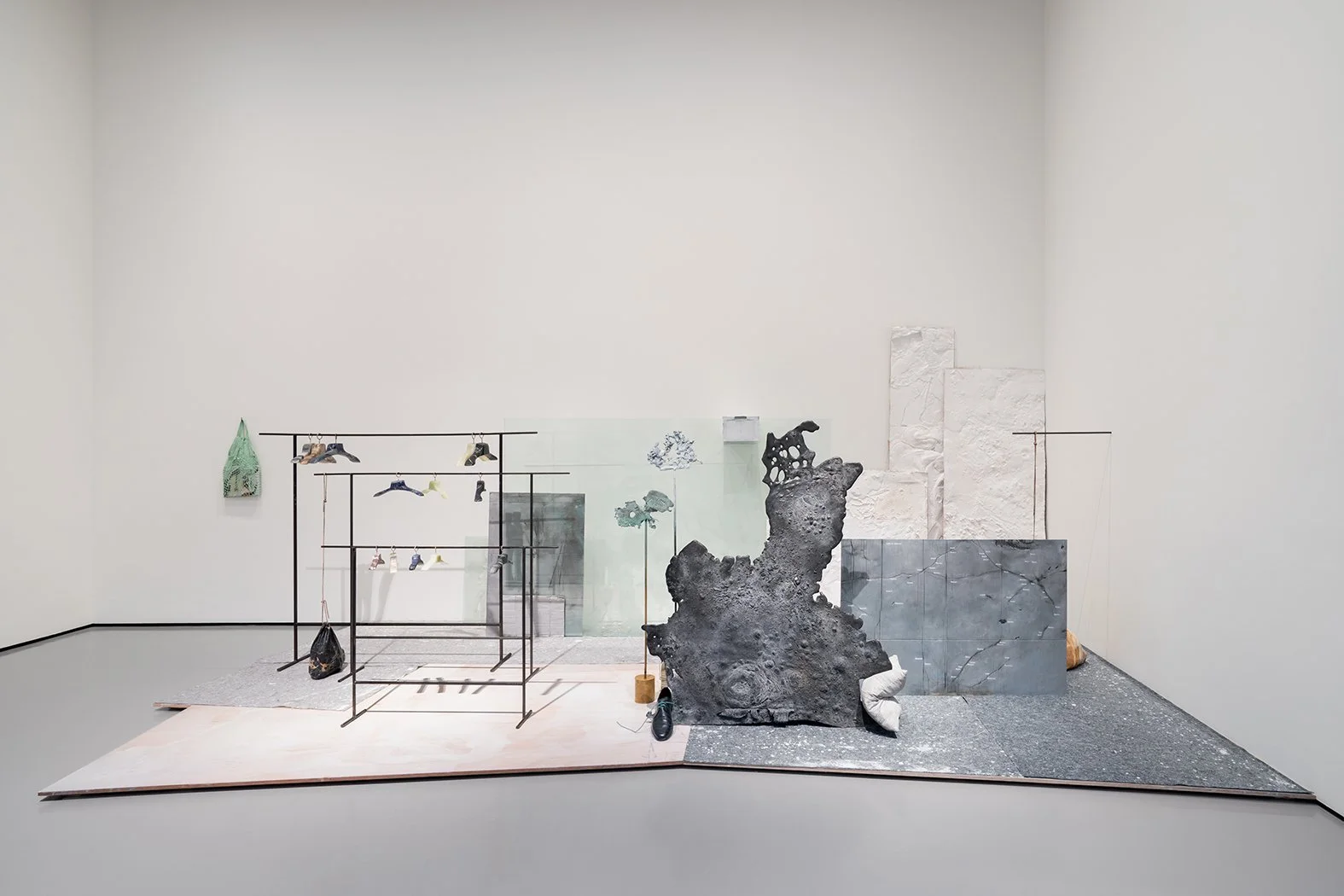
Tatiana Trouvé, Nelson, 2021, Private Collection; Notes on Sculpture, March 22nd, Water City, 2025, Collection of the artist, courtesy Gagosian © Tatiana Trouvé, by SIAE 2025. Installation view, “Tatiana Trouvé. The strange Life of Things”, 2025, Palazzo Grassi, Venezia. Ph. Marco Cappelletti and Giuseppe Miotto / Marco Cappelletti Studio © Palazzo Grassi, Pinault Collection.
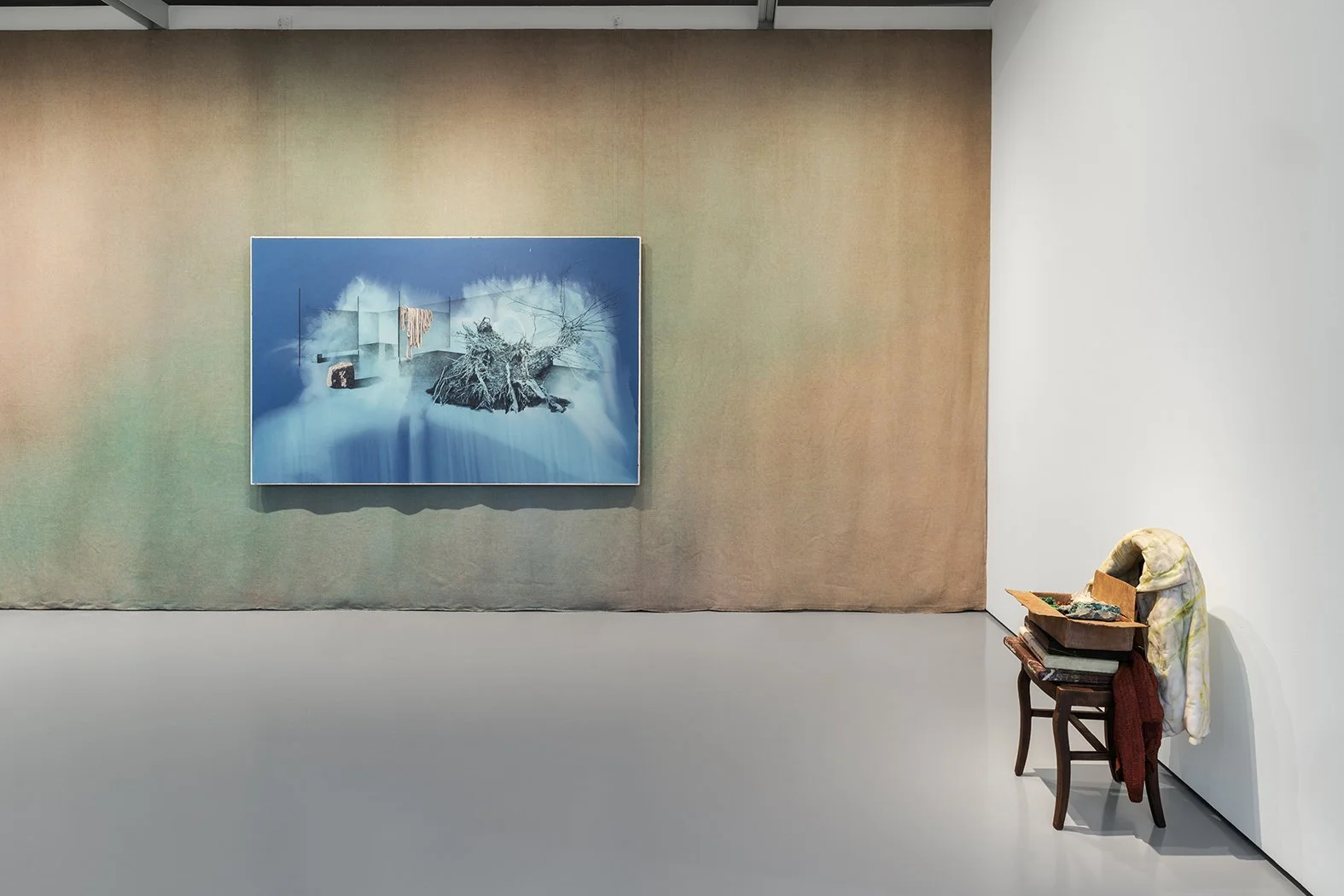
Tatiana Trouvé, Untitled, from the series Les dessouvenus, 2017, Pinault Collection; The Guardian, 2024, Collection of the artist, courtesy Gagosian © Tatiana Trouvé, by SIAE 2025. Installation view, “Tatiana Trouvé. The strange Life of Things”, 2025, Palazzo Grassi, Venezia. Ph. Marco Cappelletti and Giuseppe Miotto / Marco Cappelletti Studio © Palazzo Grassi, Pinault Collection.
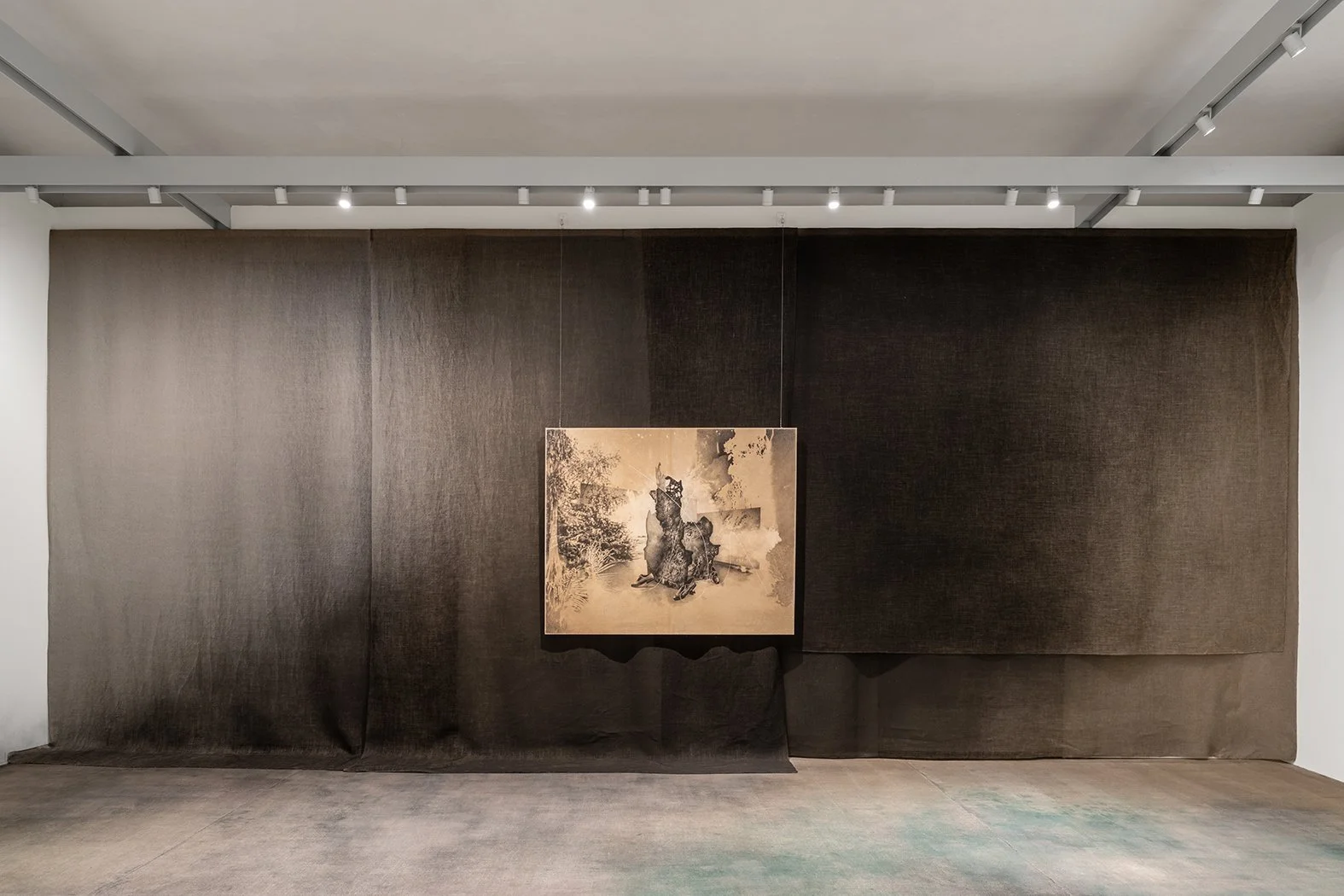
Installation view, “Tatiana Trouvé. The strange Life of Things”, 2025, Palazzo Grassi, Venezia. Ph. Marco Cappelletti and Giuseppe Miotto / Marco Cappelletti Studio © Palazzo Grassi, Pinault Collection.