Hot Coffee Conversation with artist C.Finley, Founder, and Molly M. Caldwell, Executive Director of Every Woman Biennial, New York
Published Thursday, April 9, 2026
C. Finley and Molly Caldwell operate less as separate figures than as a tightly interwoven curatorial organizational force behind the Every Woman Biennial (EWB), a project that deliberately collapses distinctions between artwork, exhibition, and social practice.
C. Finley—artist, activist, and founder of the biennial—is the conceptual engine of the initiative. Known for her vivid paintings, murals, and public interventions, Finley launched the project in 2014 (originally as the Whitney Houston Biennial) as a direct, tongue-in-cheek response to the structural exclusion of women from major institutional exhibitions. Her approach reframes the biennial format itself: rather than a selective, market-driven exhibition, EWB operates through an open-call, salon-style model that prioritizes inclusion over hierarchy. In this sense, Finley’s authorship extends beyond objects to the production of conditions—what can be understood as a large-scale social practice artwork that foregrounds collectivity, visibility, and what she frames as a “utopian” artistic community.
Molly Caldwell, Executive Director, producer, and co-curator, translates this ethos into infrastructure. Joining the project at its inception, she has been central to scaling EWB from a one-day grassroots event into a multi-city, international platform spanning New York, Los Angeles, and London. With a background that bridges real estate, event production, and creative industries, Caldwell’s role is not merely administrative but constitutive: she builds the logistical, financial, and relational systems that allow Finley’s radically inclusive vision to function at scale. Her emphasis on accessibility, partnership-building, and artist support reinforces the biennial’s core principle—“building it if it doesn’t exist”—while ensuring its sustainability beyond a single artistic gesture.
Together, Finley and Caldwell position the Every Woman Biennial (formerly known as The Whitney Houston Biennial) as both critique and alternative: a decentralized, celebratory exhibition model that resists exclusionary norms of the art world while amplifying hundreds of women and non-binary artists across generations and geographies. Their collaboration blurs authorship into collective production, making the biennial itself the primary artwork—an evolving, participatory structure grounded in access, scale, and community. It was a true pleasure to meet and talk to them about the current edition of Every Woman Biennial, still happening at Pen & Brush through April 11.
Nina Chkareuli: Imagine you are in your favorite coffee or tea spot. Where is it? What are you drinking? What do you see?
C.Finley: 404 Bar on the quiet side of Trastevere in Rome. I am drinking a cappuccino and sparkling water while writing in my journal and watching friends and neighbors warmly greet each other and start their days.
Molly M.Caldwell: I've travelled a lot and have had many fine cups of tea and coffee worldwide (especially with Finley in Rome). Yet a cup of Earl Grey tea in my favorite black-and-gold mug with my initial M on it, in my garden surrounded by my two colony cats, Casper and Brando, vivid blue hydrangeas, and electric orange lilies, and the humming background noise of a busy Brooklyn neighborhood is a perfect cup!
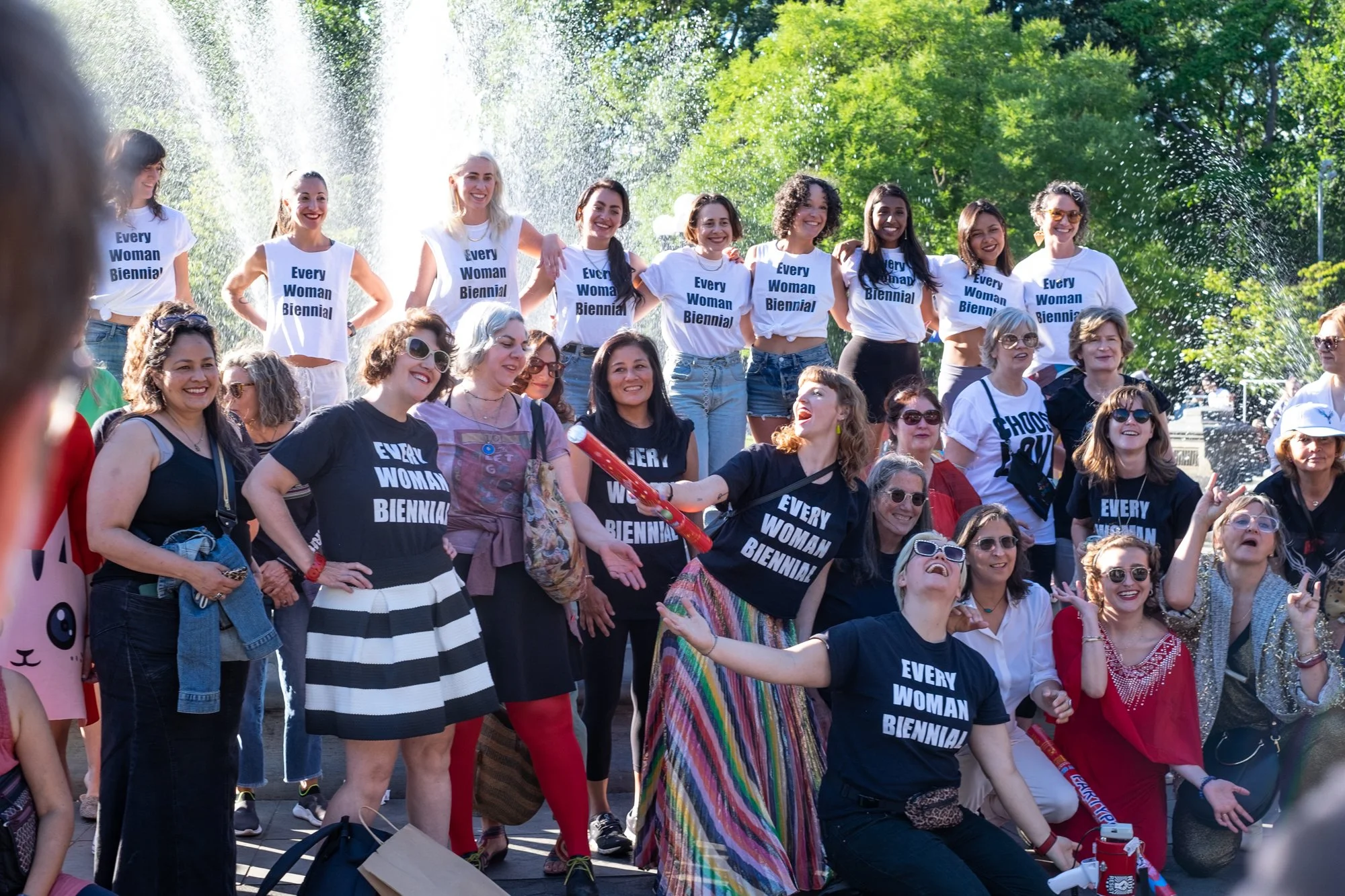
Every Woman Biennial 2021, Flash Mob Dance in Washington Square Park.
NC: The Every Woman Biennial is built on radical openness—but at scale, openness still requires filtering. What does your selection process actually look like behind the scenes, and where do you draw the line?
MC: Things looked a little different for the 2026 edition because we had a more specific theme and a collaboration with Pen+Brush. Inspired by artists’ historical responses to political madness from which Dada, cabaret, and Surrealism emerged, we took that as the framework for our invitation to artists to create this year’s exhibition. With the world so dystopian, we sought to offer and focus on works that embody a punk-rock spirit, an alternative, the carnivalesque, absurdity, spectacle, and strange and delightful quiet resistance.
Using this criterion, and the filter of joy as resistance, the curatorial team - Ash Edes, Erin Ko, and I - tackled the initial 700 submissions (1400 pieces of art). I conducted several additional rounds, and I spent time diving into artists’websites and social media to look at alternate pieces that better fit the theme. Erin Ko, new media curator, reviewed media submissions, creating a special focus in this year’s Biennial on artists pushing the boundaries of technology and how to keep humanity directing it. As always, works are personal and political; we eschew images of violence against women. In this edition, we wanted to specifically see weird, wild, and wondrous creations from the artists. In total, we have 274 pieces and close to 400 participants with Visual, New Media, and Performance Art.
NC: The open-call, “everyone is included” model challenges traditional curatorial gatekeeping—but what do you think is lost when selection disappears?
CF: Deeper scholarship.
By including so many artists, our team and audiences don’t have the time to take a deeper dive into each artist. But that’s never been the goal of this Biennial - it’s about giving as many women and gender expansive artists opportunities and creating an uplifting community. It’s about discovery and introductions that are often further developed.
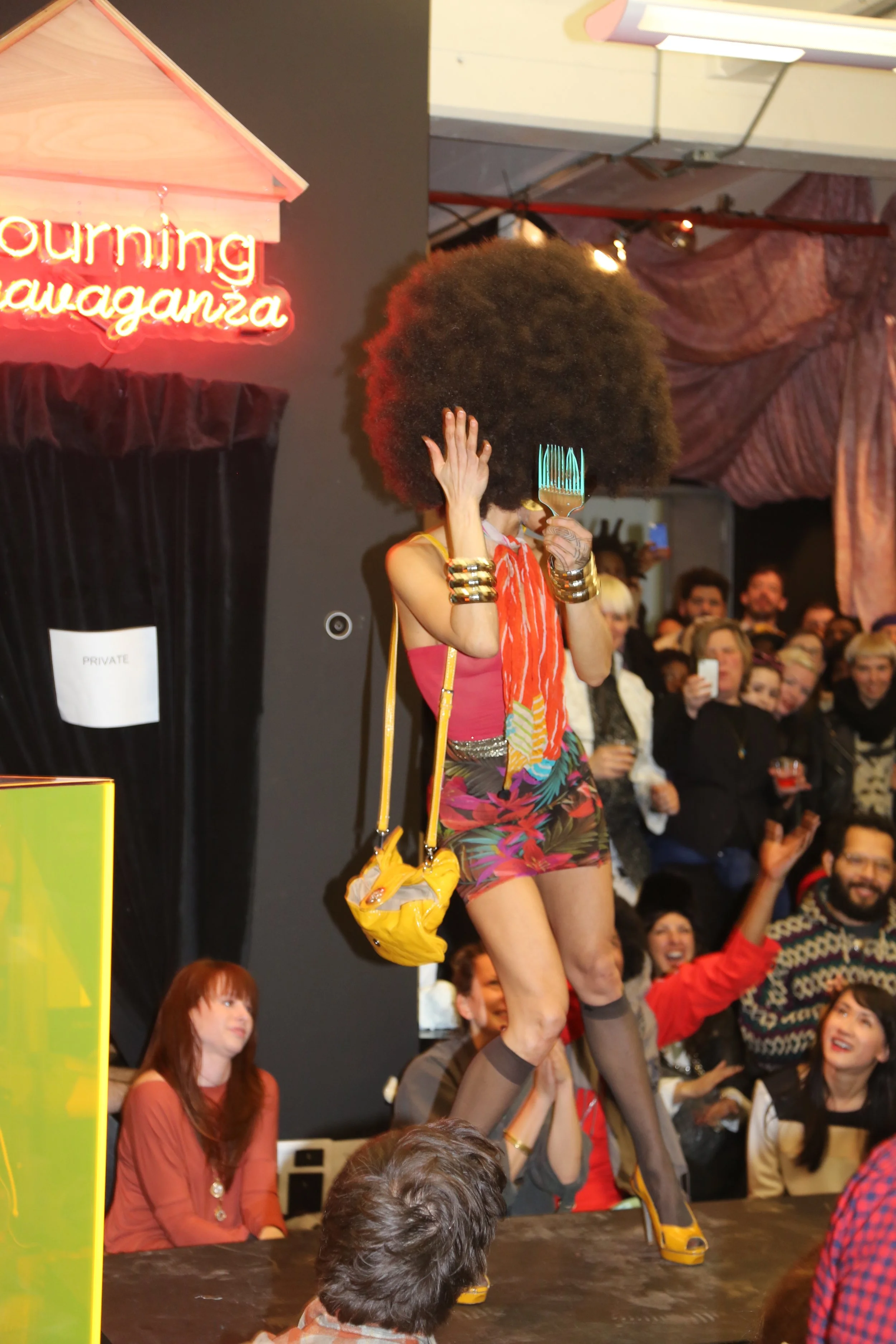
2014 The Launch of The Whitney Houston Biennial - a wild night of art and performance by Narsissister.
NC: You’ve helped grow the Biennial from a DIY project into an international platform. What has become harder as it’s scaled?
MC: Once we became a non-profit, and Finley stepped up into her Founder and Board President role, and I took on Executive Director and Producer, the infrastructure needs vastly changed. Finley and I work well together and complement each other's skill sets, so in the past, we were able to accomplish a great deal with the two of us managing without compensation. We’ve always had a dedicated crew and volunteers who contributed every year, installing, getting the word out, helping with production, and more. We're now working on passing the many hats we wear on to others and expanding the team. Being good stewards and ensuring the future of the institution is a big responsibility. Consistent funding has been an issue. The pandemic, funding cuts by the current administration, and rising costs have hit most institutions, including us.
NC: Do you see the Every Woman Biennial as an artwork, an institution, or a protest—or is it important that it resists those categories?
CF: It started as a social practice artwork but has become a consciousness.
NC: Absolutely, to follow up on this, your paintings are highly controlled and aestheticized, while projects like Wallpapered Dumpsters operate in contingent public space. How do you understand the relationship between beauty and disruption in your work?
CF: The disruption is about raising consciousness and bringing attention to things overlooked, and harnessing the power to change the way we see and create changes - large and small.
The simple twist of wallpapering a dumpster turns it into a work of art. It creates something positive out of something discarded and meant to be ignored. I feel that if this can happen, anything is possible. I often describe my work as stylistically promiscuous. I recognize the beauty and power to express creativity in everyday things - costume jewelry, wallpaper, dumpsters, color, and even traditional patchwork quilts have that in common. I would like to keep learning.
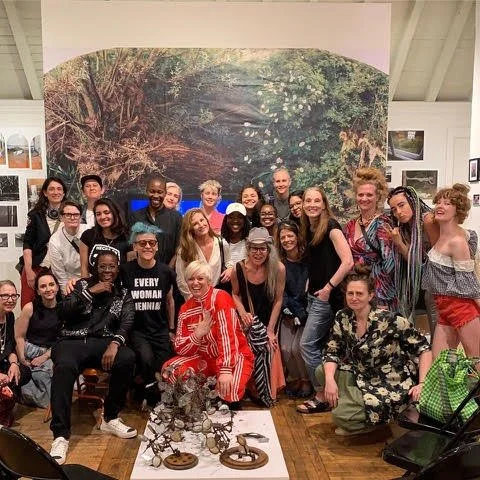
Every Woman Biennial, 2019, some of the artists and team, La MaMa Galleria, NY.
NC: The salon-style density and large number of artists create a powerful collective statement—but how do you ensure individual artists aren’t lost within that abundance?
MC: This is a great question! I think the answer is two-fold. First, each piece has to stand on its own, whether it is a quiet place for eyes to rest, a color explosion, or stands out in scale, medium, or texture. We try to create a balance of ideas and media, as well as create dynamic and thoughtful conversations between the artists’ work. Finley then brings the works to life, installing the walls through themes, color, shapes, and scale; in essence, creating harmony versus dissonance. The result is planned cacophony! I think people naturally look at what is attractive to them, so one person might see something that catches their eye while another sees something completely different. That is the beauty of the show; there is something for everyone.
NC: How do you reconcile authorship in your studio practice with the radical decentralization of authorship in the Every Woman Biennial?
CF: With so much artwork to display, it’s quite challenging. I begin by looking for connections and conversations, and I create installations through color, content, and material. A large part of my personal work is about color relationships, and I am starting to understand that everything in my life is about relationships.
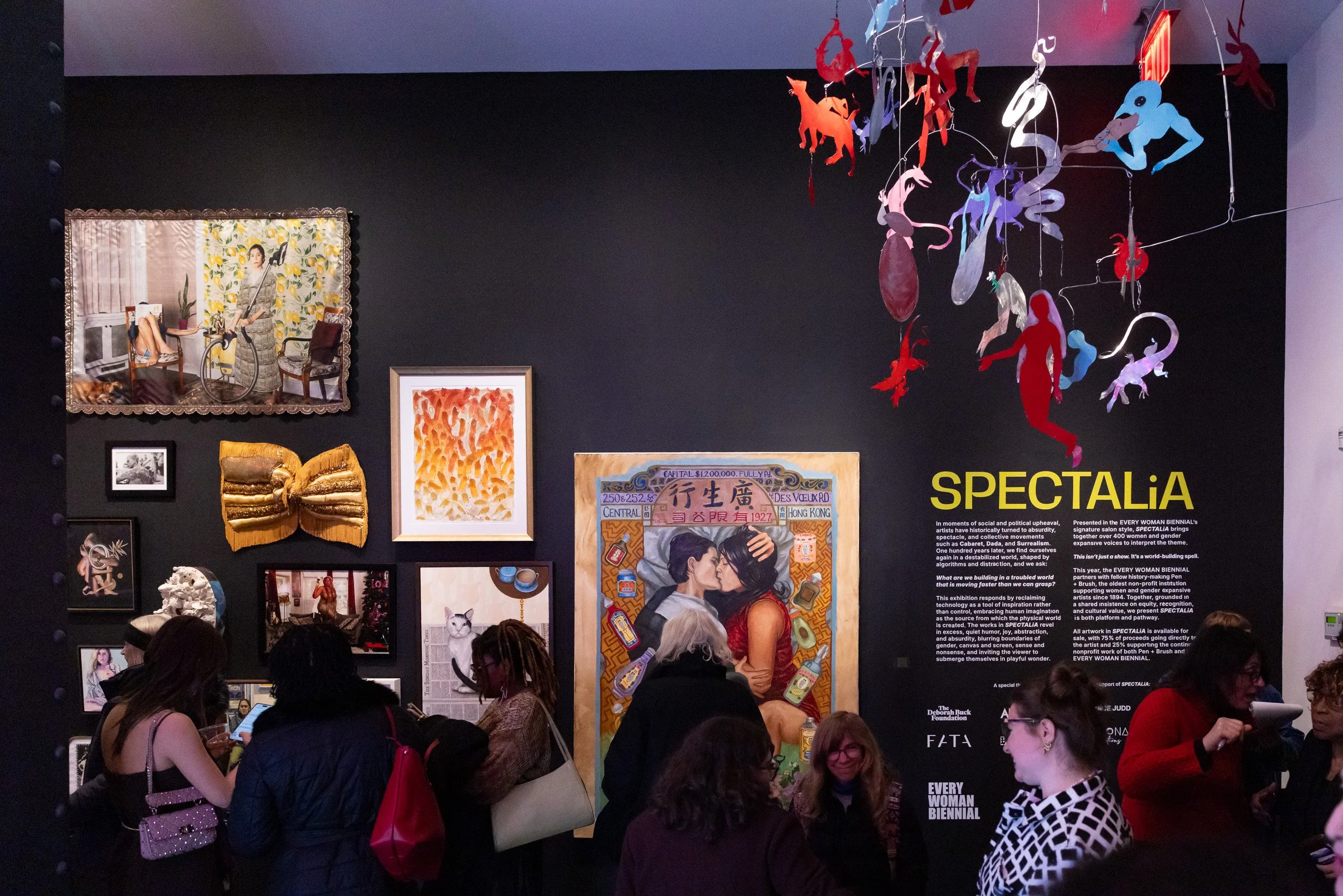
Every Woman Biennial, 2026 edition at Pen and Brush.Photo by Laurie Rhodes.
NC: If major institutions adopt the language and surface structure of your model, what would they likely get wrong?
MC: The spirit. We built this show on the premise of a paradigm shift in the art world, bound by joy, community, talent, and celebration of the Divine Feminine. We wanted to create a world for women and gender expansive artists outside of the realm of major institutions and galleries. Working with Pen + Brush has given us insight into how our model might work in a larger institution. Our shared ethos and mission, and the ways we mutually support artists beyond the exhibitions - through connections and ongoing community - have made it a joy to work together. These are components that would need to be present and built into the institution's infrastructure. Perhaps our matriarchal leadership was a bonus, too!
NC: Many large institutions are now adopting the language of inclusivity—how do you prevent your model from being absorbed and neutralized by the very systems it critiques?
CF: Interestingly, I thought we were seeing the world and art world become more egalitarian, and I questioned in 2021 if we really needed the Every Woman Biennial. It was clear to me, after the Dobbs decision in 2022, that we need it now more than ever. Now in 2026, women's rights are being attacked aggressively again. It is unfortunate to be regressing, but I believe ultimately this Biennial and many community-driven actions help galvanize our spirits to keep fighting the fight. While representation of women in galleries has greatly increased, there are still the same gatekeepers, and many artists who are working on the fringes of the system truly appreciate this opportunity to show their work alongside their feminist icons.
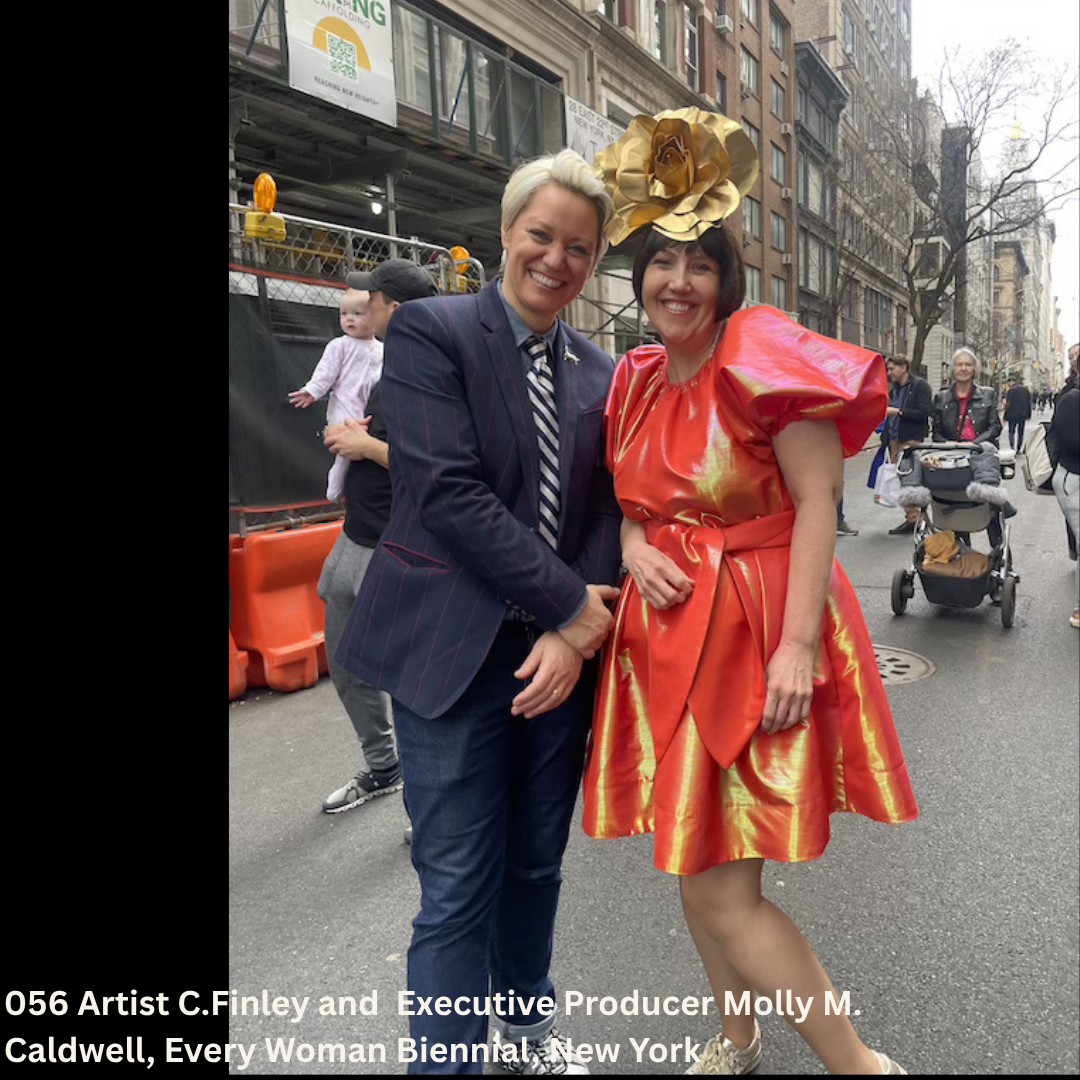
Photo of C.Finley and Molly Caldwell by Maureen Sullivan.
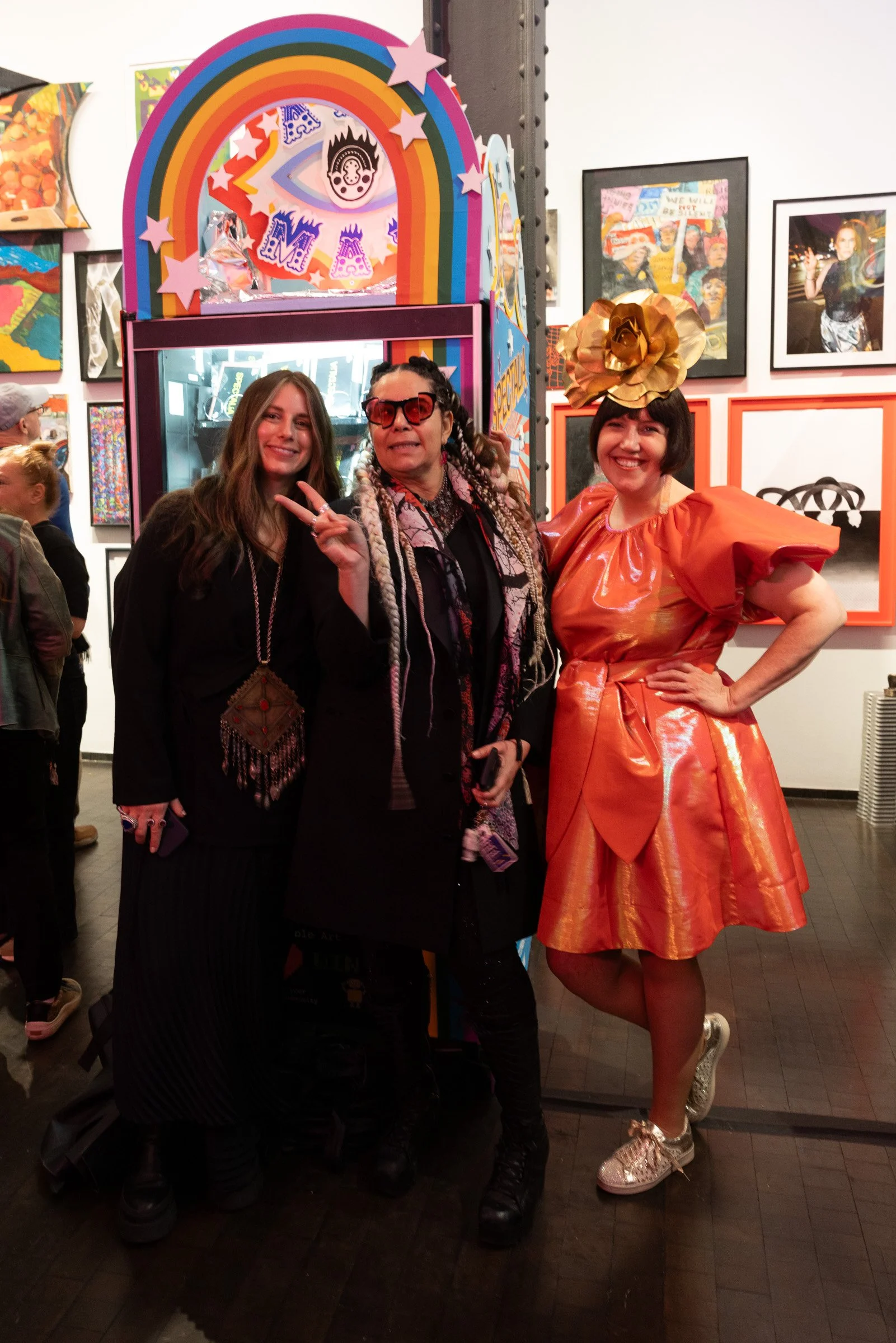
Every Woman Biennial 2026 curators Ash Edes, Erin Ko, Molly Caldwell. Photo by Laurie Rhodes.