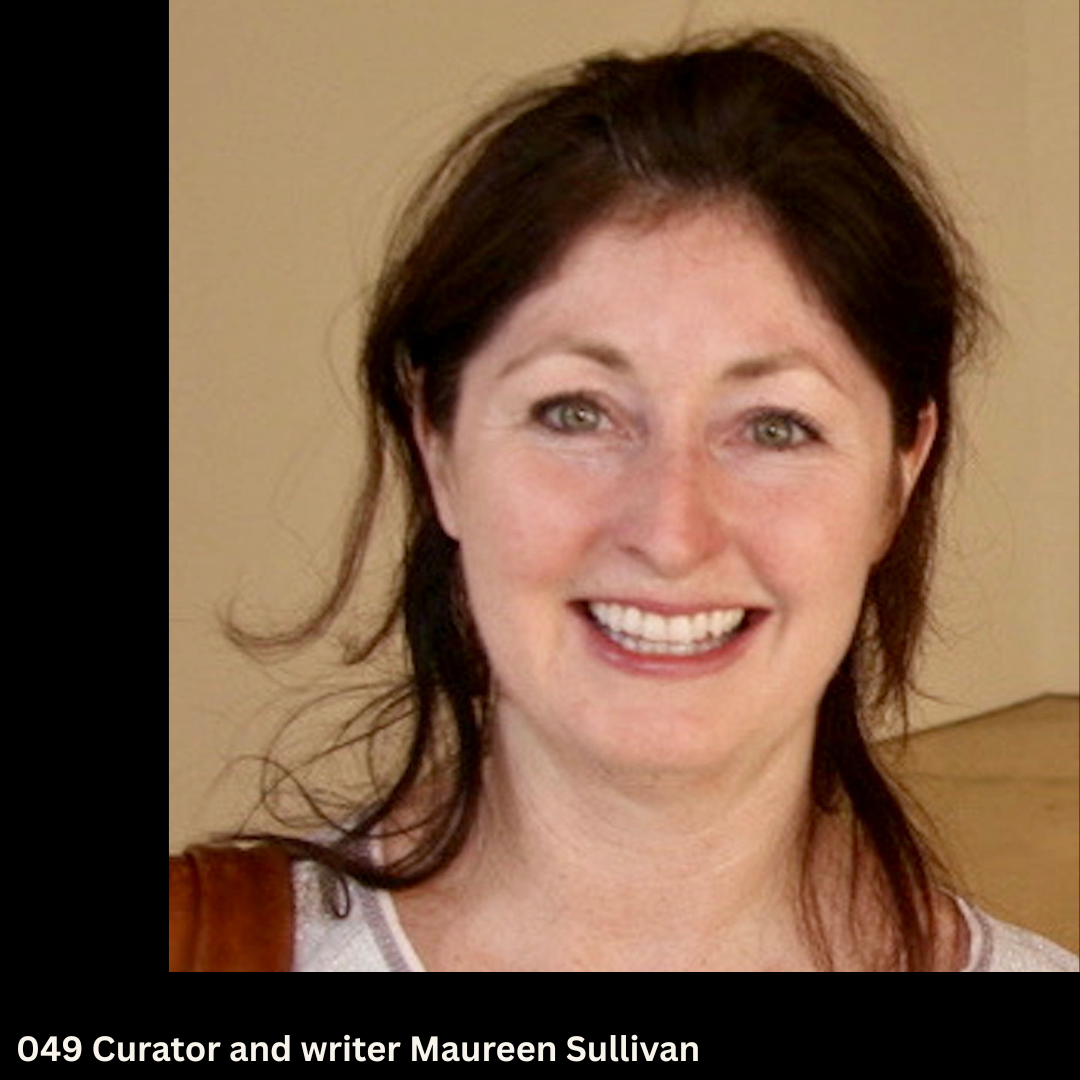
Hot Coffee Conversation with curator and writer Maureen Sullivan
Published Tuesday, January 20, 2025
Maureen Sullivan is a New York–based arts consultant with 25 years of national and international experience working with artists and art organizations. Her practice encompasses strategic planning, marketing and communications, as well as limited-edition and event production. In June 2008, she founded Red Art Projects, an independent consultancy through which she collaborates directly with artists, galleries, and institutions on a wide range of major art initiatives.
Sullivan previously served as Marketing and Communications Director at Creative Time for four years and spent five years at The New Museum of Contemporary Art. At both organizations, she played a central role in institutional rebranding efforts. Her additional consulting projects include the SculptureCenter, New York; Yerba Buena Center for the Arts, San Francisco; La Colección Jumex, Mexico City; The FLAG Art Foundation, New York; and the Every Woman Biennial (New York/Los Angeles/London), among many others. She has promoted significant projects with artists such as Doug Aitken, David Byrne, Paul Chan, John Gerrard, Cai Guo-Qiang, Jenny Holzer, Jim Hodges, Jennifer Wen Ma, Marilyn Manson, Melissa McGill, Marilyn Minter, Mike Nelson, Ugo Rondinone, Eve Sussman, Gelatin, Steve Powers, as well as numerous other artists. In addition to her consulting work, Sullivan curates independent exhibitions and projects featuring artists including Christian Jankowski, Eve Sussman and Simon Lee, Antonia Wright, and Jeremy Blake. With a particular focus on public art and the production of limited-edition projects, she has collaborated with a range of fabrication studios to support artists’ experimentation with new materials and processes, including sculptural works by Jim Hodges, Maya Lin, Jack Pierson, William Kentridge, and Mona Hatoum. I met Maureen at the opening of the show, May We Dance in the Face of Our Fears she curated for The Sylvia Wald & Po Kim Art Foundation in New York and is on view through January 28.
Nina: Imagine you are in your favorite coffee or tea spot. Where is it? What are you drinking? What are the three things you see right now?
Maureen Sullivan: Since I’m imagining it, I’m at Café Gitane in Nolita. It closed recently—likely a victim of the city’s outrageous rents—and our neighborhood is heartbroken. I’m drinking a latte, eyeing the wrapped chocolate square they include on the saucer, and wondering if I’ll have the willpower to slip it into my pocket for later. I’m looking out the window at the casually chic neighbors walking by and at the red brick wall surrounding St. Patrick’s Church across the street. It’s showing its age, beginning to curve inward, and it beautifully captures the shifting light throughout the day.
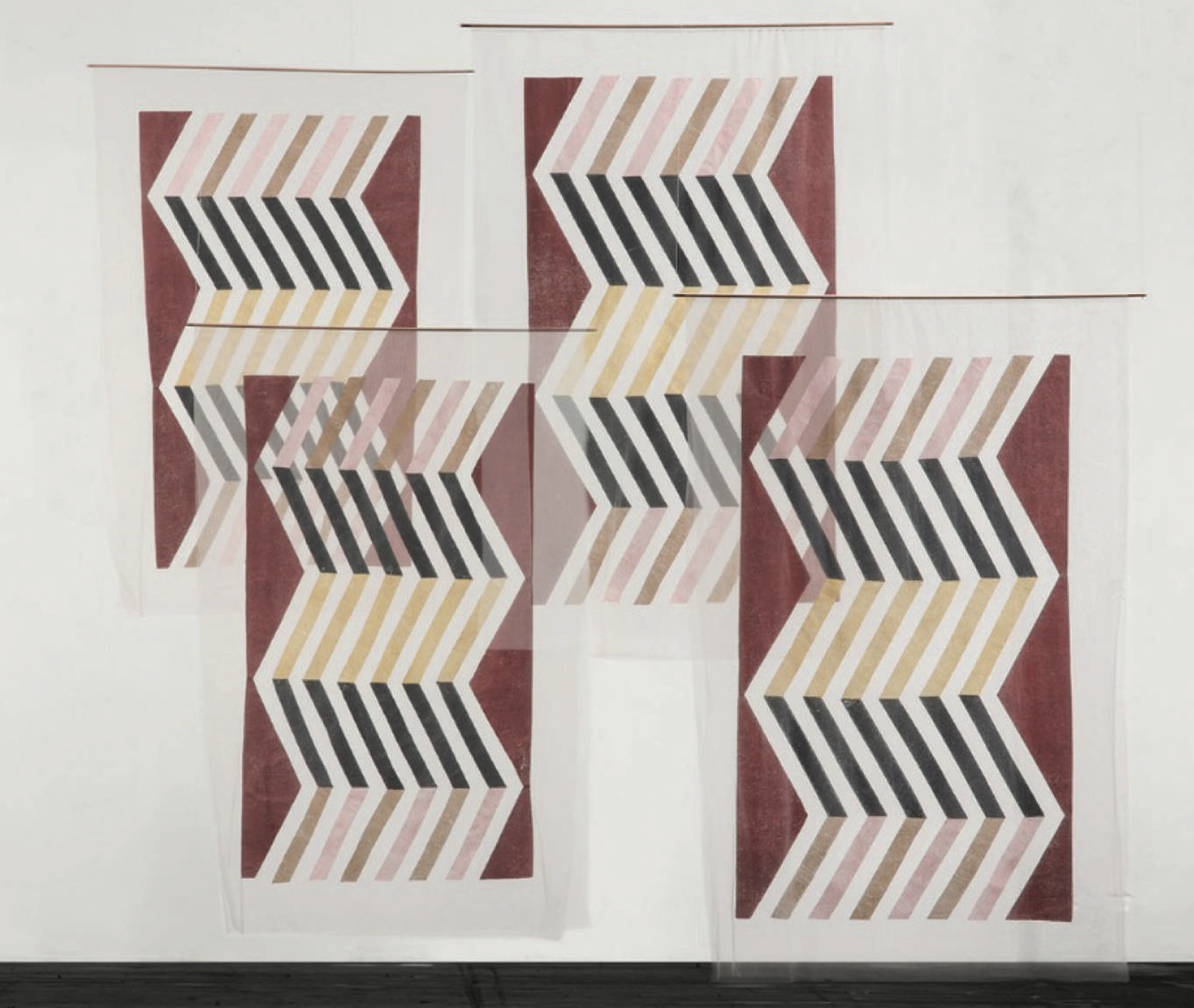
José Carlos Martinat, Purificador #11, 12, 13, 14, 2024, Medical cotton gauze, dyed with ayahuasca, crushed quartz, sangre de grado, tul, bronze, and colored powders used by healers for cleansing and recovery rituals, 6 x 4 ft. Image courtesy of the artist.
NC: Please tell us more about your current show, "May We Dance in the Face of Our Fears"? Where did the premise come from? Why did you select 18 artists who are in the show?
MS: May We Dance in the Face of Our Fears has been germinating for several years, emerging from a growing body of work rooted in spirituality, the occult, and transformation. After the 2024 election, I felt an urgency to fast-track the project. We were numb, disenchanted, and in a state of disbelief and fear, and I saw the exhibition as a way to bring people together—to reflect our search for balance and hope amid chaos and violence.
The works in the exhibition conceptually address ideas of healing, identity, and resilience, while also looking to nature, the cosmos, and ancestral knowledge for wisdom and power. I’ve known and followed the practices of most of the artists for over a decade, and I’ve worked with many of them in a range of capacities. There are only two artists I haven’t yet met in person. Sara Siestreem (Hanis Coos), lives in Oregon, and came to my attention through a stunning solo exhibition at Cristin Tierney Gallery. José Carlos Martinat, from Peru and currently based in Spain, was a star of The Armory Show a few years ago. A collector friend from Peru put us in touch and we’ve been having an amazing correspondence.
To be practical, I focused mainly on New York-based artists, and I’m deeply grateful that they all contributed such extraordinary works - some from their own collections. Jen DeNike debuted a brand new crystal work, Jennifer Wen Ma spent two days on site building out a stunning suspended installation of glass orbs and cut paper, and Thomas Beale revived a sculpture that survived the Red Hook warehouse fire this past fall in the spirit of Kintsugi, the Japanese art form of repairing. While it’s often difficult to fully grasp an artist’s practice in a group exhibition, each piece in the show powerfully represents both the artist and larger personal and universal ideas. As the exhibition came together, it was rewarding to see meaningful conversations naturally emerge between the works, creating a sense of flow and cohesion.
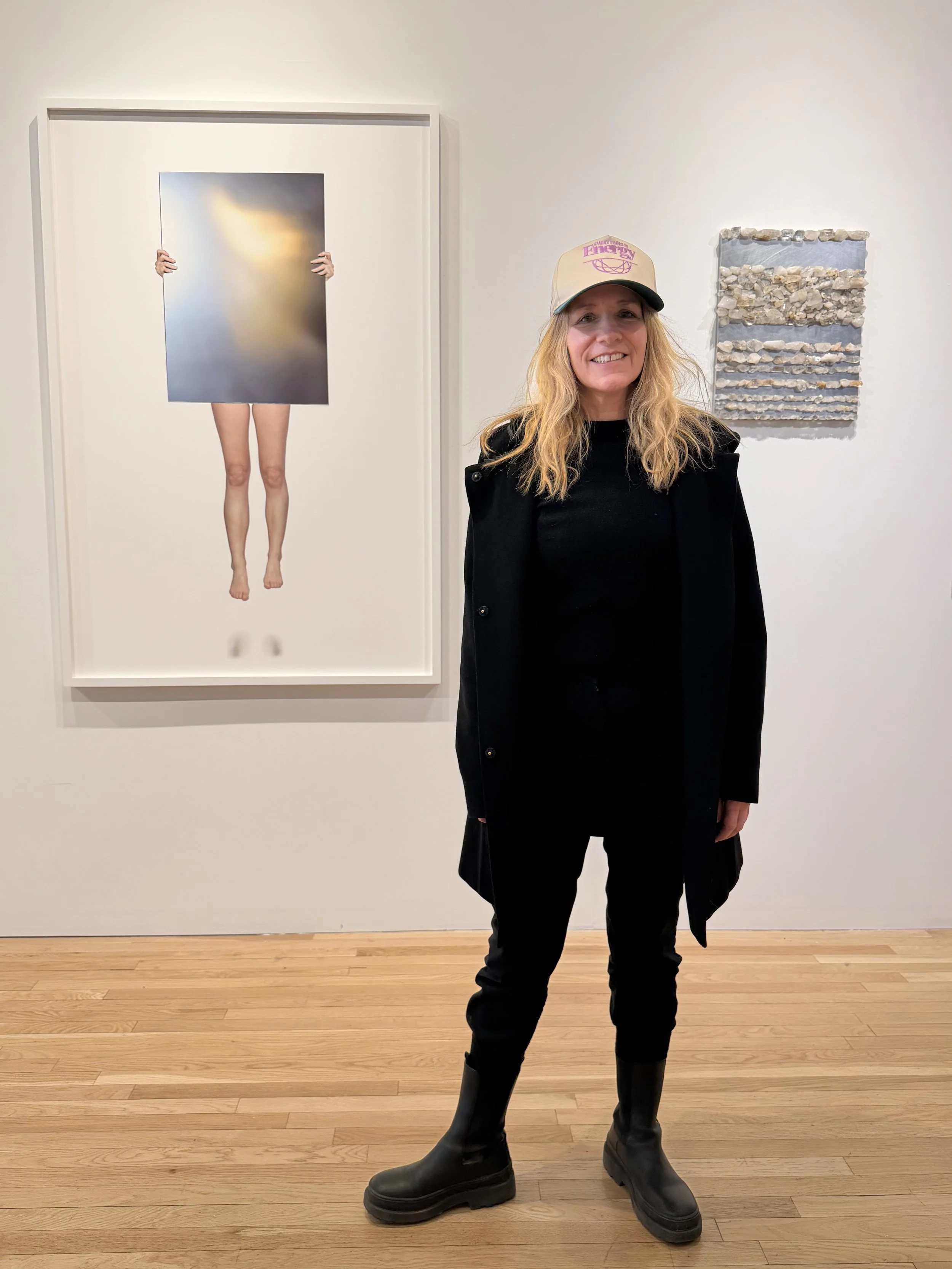
Jen DeNike with her works Mirror Levitation, Vision 3, 2022 and Crystal Mirror, 2026. Image courtesy of Maureen Sullivan and the artist.
NC: What was one single formative experience that started your career in the arts?
MS: I’m not sure there was a single defining moment, but during my first art-world job at Checkerboard Films, we made a documentary about Roy Lichtenstein. It was such a privilege to have this access to him and hear the ideas behind his art and life in his home in the Hamptons, the fabrication studio upstate, and sharing lunch at his daily spot, Florent. I’ll give Roy Lichtenstein credit for propelling me to a career working with contemporary artists. I don’t have much of a retirement account, but I’ve never been bored—and I’ve never looked back.
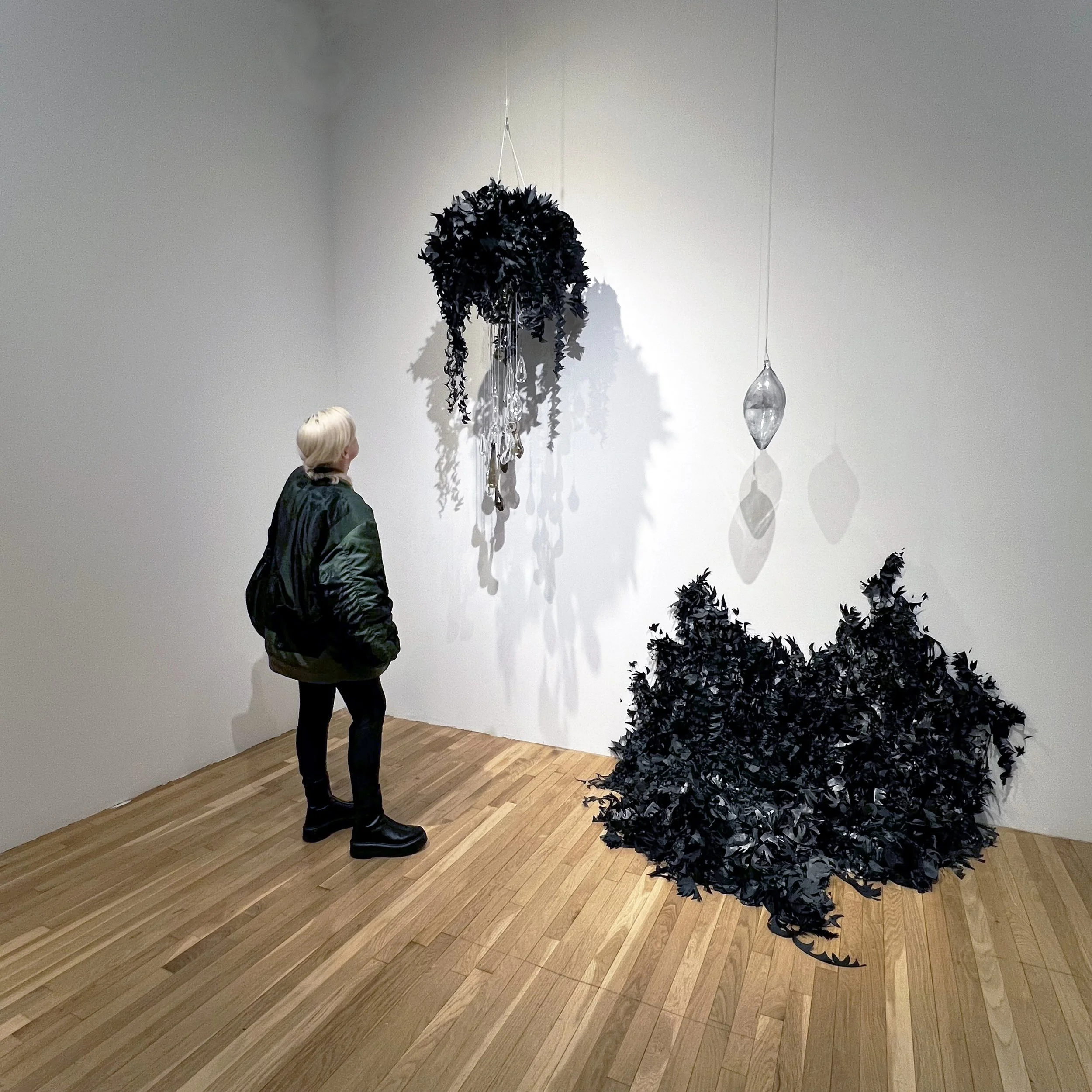
Jennifer Wen Ma, Night Which Contains the Sea, 2017. Hand-crafted glass, laser cut black paper, Size variable. Image courtesy of the artist.
NC: Your path brought you to institutions and organizations such as The New Museum and Creative Time, and then to the creation of your own advisory, Red Art Projects, where you curate and advise. How did this trajectory influence the way you look and work in the art system now? Do you agree that right now our ecosystem is undergoing a transformative shift? Do you feel that today, curators need to approach their roles differently?
MS: After Creative Time, I founded Red Art Projects, with the intent to continue working closely with artists on their dream projects, both large and small. Many of these projects exist outside the traditional gallery model and require a different kind of attention, advocacy, and support. I also embraced the opportunity to expand ways to collaborate with artists by curating exhibitions at galleries, participating in the launch of the Spring/Break Art Show, and writing reviews and interviews for art publications while traveling.
The art world is in a constant state of transformation, driven by resourcefulness during both economic booms and downturns. In recent years, influence over what gets exhibited has shifted, to some degree, from curators to collectors. As major galleries grow larger—absorbing estates and emerging artists originally launched by mid-size and smaller galleries—those smaller spaces increasingly struggle. Many artists find themselves in the middle, seeking agents and managers to help bridge that gap.
At the same time, artists, curators, and collectives continue to create their own opportunities and keep things adventurous, through initiatives like Zero Art Fair and the return of apartment pop-up exhibitions. Some work thrives in unconventional environments; some suffers. For the work in May We Dance in the Face of Our Fears to be presented with respect, I felt it required a proper gallery space and thoughtful lighting.
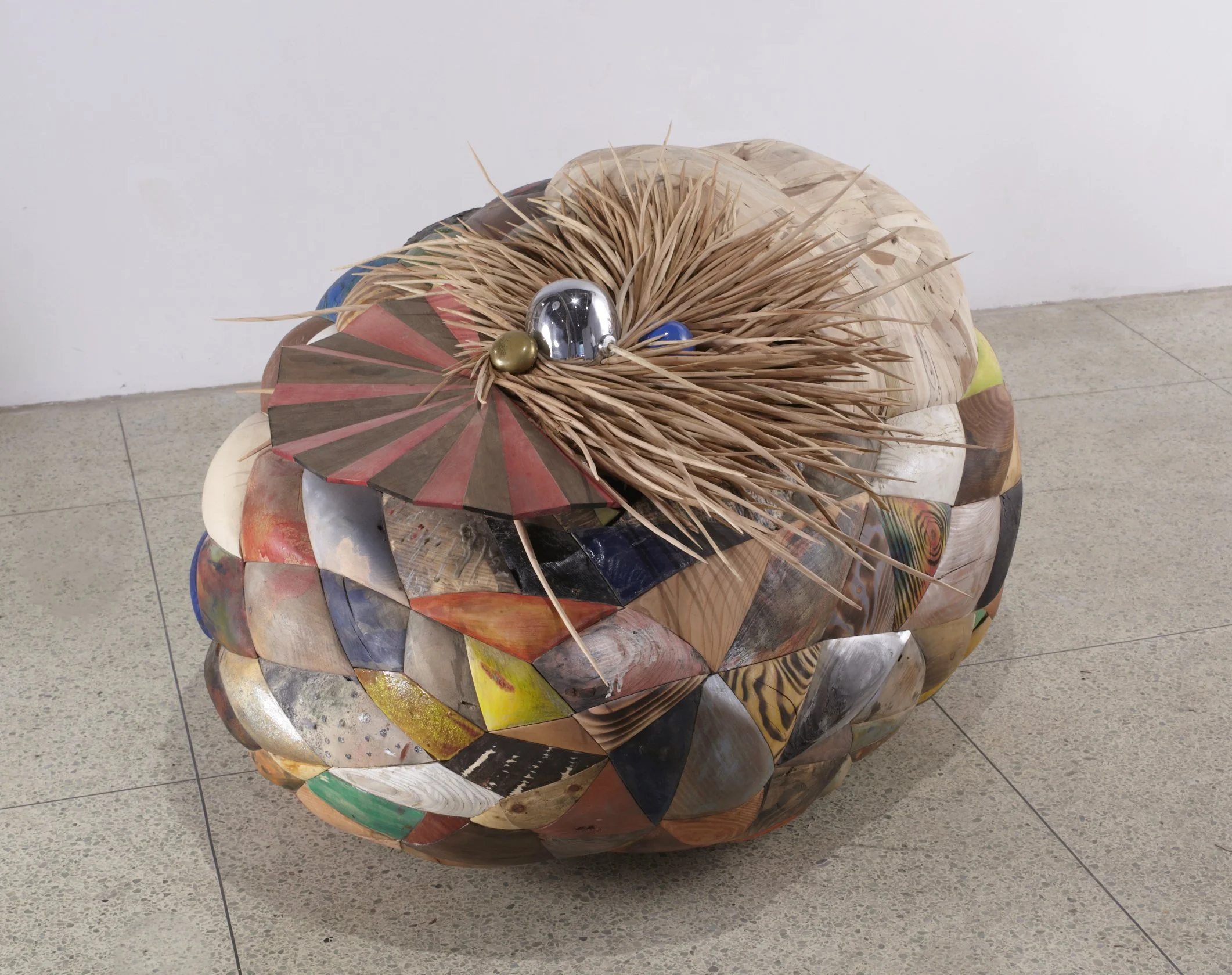
Thomas Beale, Tramp, 2012, Found wood, paint pigment, metal, glass, fabric, 45 x 32 x 30 in. Image courtesy of the artist.
Nina: You also write and contribute to publications regularly. Do you feel that when you write, your modality and approach to art and artists change? What is the writing project or article you are most excited about?
MS: For me, writing, strategizing, and curating are deeply interconnected. We rarely have the luxury of extended word counts, so writing today requires precision and editing to meet shortened attention spans and the countless things competing for time and focus. They’re all about storytelling, and sharing the interesting ideas and connections with history - visually through exhibitions and through language for publications. The pay for writing is pretty abysmal, so you can only write about things you’re passionate about. Leandro Erlich is my most recent interview, and that research required actually scuba diving to a new reef made of his cement cars submerged in the ocean in South Beach, Miami. There are perks to the job.
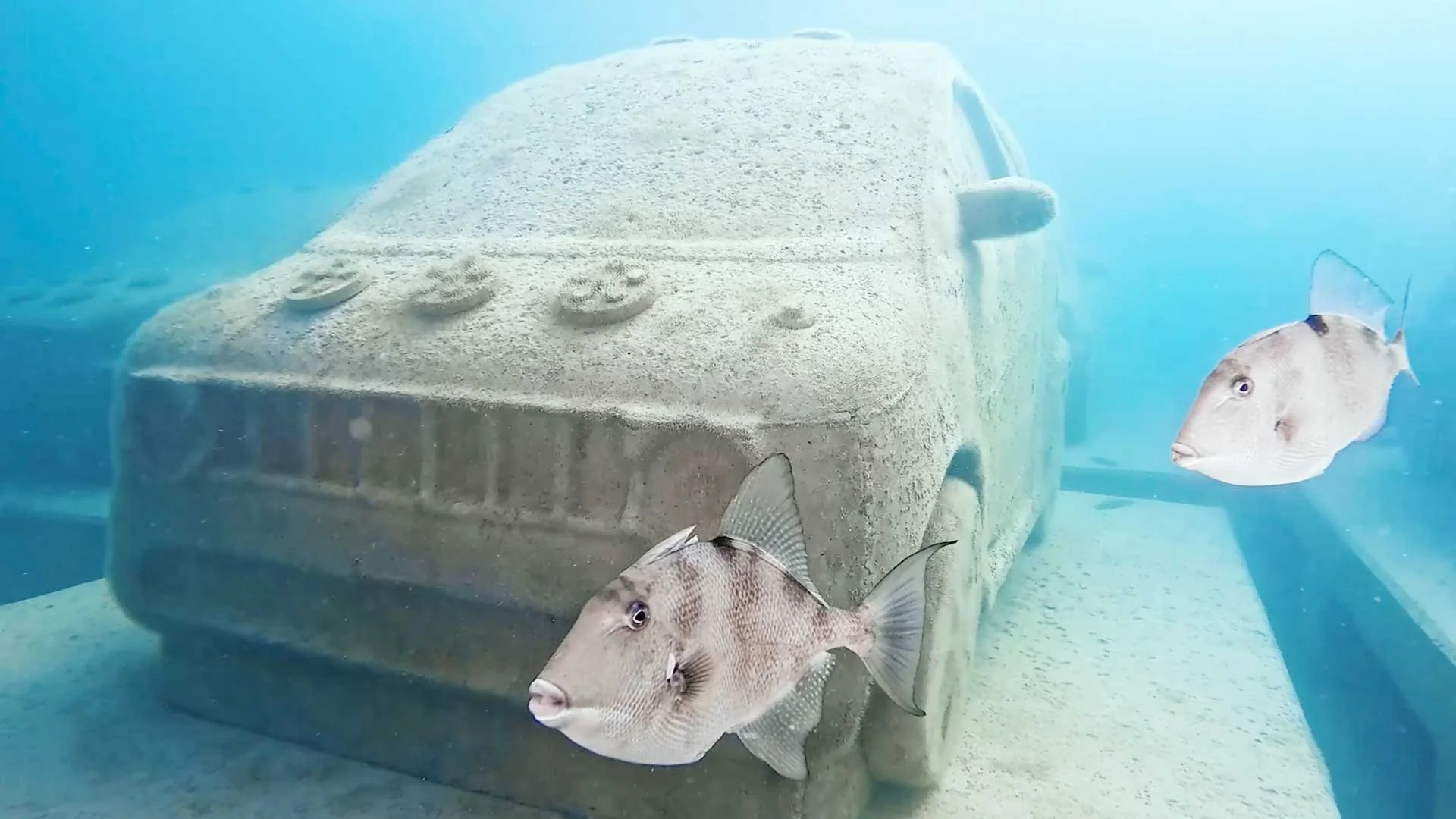
Leandro Erlich, Reefline. Photo by Nola Schoder.
NC: Which book has influenced you lately and why?
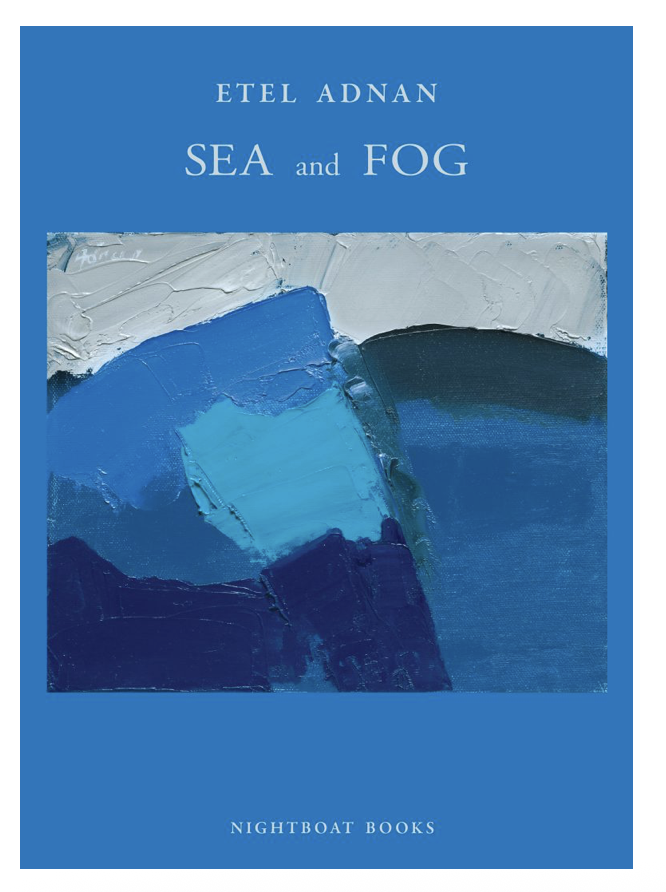
MS: I recently interviewed Sarah Crowner for her project in dialogue with Etel Adnan’s ceramic mural at The Bass Museum in Miami—a brilliant curatorial pairing by James Voorhies. While researching the project, I went looking for the source of a quote by Adnan and fell down a rabbit hole reading her poetry. I ultimately found the quote in her book Sea and Fog (2012), and I highly recommend it.
While much of Adnan’s writing is politically charged and reflects a world in turmoil, this prose mirrors her painting in its beauty and serenity, while remaining deeply personal. It resonated strongly with themes of self and consciousness, loss, and our interconnection with nature and the world—ideas I was simultaneously exploring while curating May We Dance in the Face of Our Fears.