GUEST Hot Coffee interview with artist Tamuna Chabashvili by curator Data Chigholashvili
Published Wednesday, June 17, 2026
Tamuna Chabashvili and Data Chigholashvili are both from Tbilisi – the city they love, in that complicated way one develops with this magical place, and that has often been central to their individual practices or collaborative projects. Data is now based in NYC, Tamuna is between Tbilisi and Amsterdam, and with some distance and closeness, they exchange about Tamuna’s practice. They discuss connections between art and anthropology, and how that emerges in Tamuna’s work that unravels complex issues, and where process, self-reflection, collective memories, traces, gathering of materials, and meaning-making intertwine. As usual, they cannot avoid talking about Tbilisi, where Tamuna has recently founded an artist-run residency program Tbilisi Air.
David (Data) Chigholashvi: Imagine you are in your favorite coffee or tea spot. Where is it? What are you drinking? What are the three things you see right now?
Tamuna Chabashvili: I imagine myself on my balcony in Tbilisi, looking over the city from a high place. It makes me feel like I'm looking at the space from the bird's point of view. I can see a mountain right in front, it feels very close, almost within reach. It's springtime, everything is full of colour, and the air feels full of life, growth, and possibility. There is a certain kind of excitement and positivity.
What I find most interesting is the tension between distance and closeness: I feel separated because of the way I see things, but at the same time, the landscape feels incredibly tangible. It feels like I can stretch out my hand and touch it. I find it really interesting how the experience of looking at the space and physically being within it becomes intertwined.
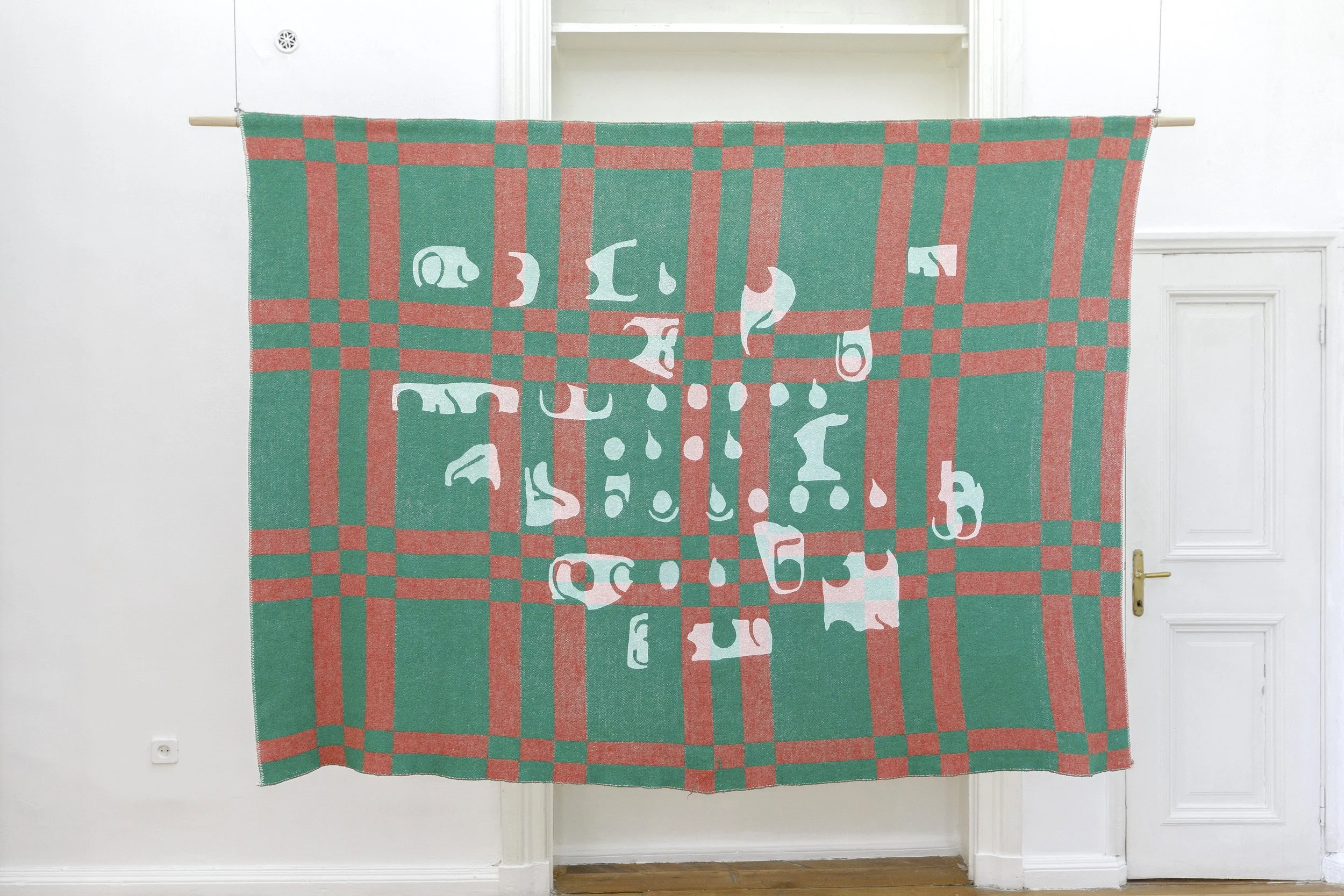
Tamuna Chabashvili, A Lullaby, 2021. Screen print on Soviet vintage cotton blanket, wood, rope, water-based ink, 133 × 182 cm. Courtesy of the artist.
DC: Distance and closeness – that’s an important place to start at! Currently, it seems like Georgia is experiencing a second big wave of emigration since the 1990s. You left during the first one, as we say it, studied and worked in the Netherlands, and developed “Public Space With A Roof (PSWAR)” – an artist-run project space. In a way, it laid a strong foundation for your practice, where process, discourse, and analysis of meaning-production play a significant role. I was always fascinated by how you combine the strong formal side of your work with self-reflection and/or various socio-cultural aspects around you. As you know, I am always interested in finding various connections between art and anthropology, which emerge in your recent works very interestingly. To what extent was that present in PSWAR?
TC: PSWAR started in 2003 in Amsterdam as an artist-run project space. After graduating from the Gerrit Rietveld Academy, we were looking for a way to extend artistic practice beyond the object itself, so exhibition, research, and discussion could exist in the same space, as a continuous process.
From the beginning, it wasn’t about presenting finished works. It was more about creating a platform where we could look at how meaning is produced through context, through conversation, through the conditions around the work. Over time, it developed into something that existed between art, theory, and social engagement. We often worked with installations as active environments rather than displays, so different works and ideas could exist together and generate relationships. We also used a lot of recontextualisation, bringing in works as citations or readymades, so the exhibition itself became a kind of thinking space, not just a presentation space.
The project was initiated by myself, Adi Hollander, and Vesna Madzoski, and it really came out of a shared position of working in a new context as migrant artists, trying to define a place for ourselves within an established art scene. And I wouldn’t frame it as an anthropological project, but I guess there is a crossover in how we worked, especially in terms of paying attention to context, being embedded in it, and looking at how meaning is produced within social and institutional structures.
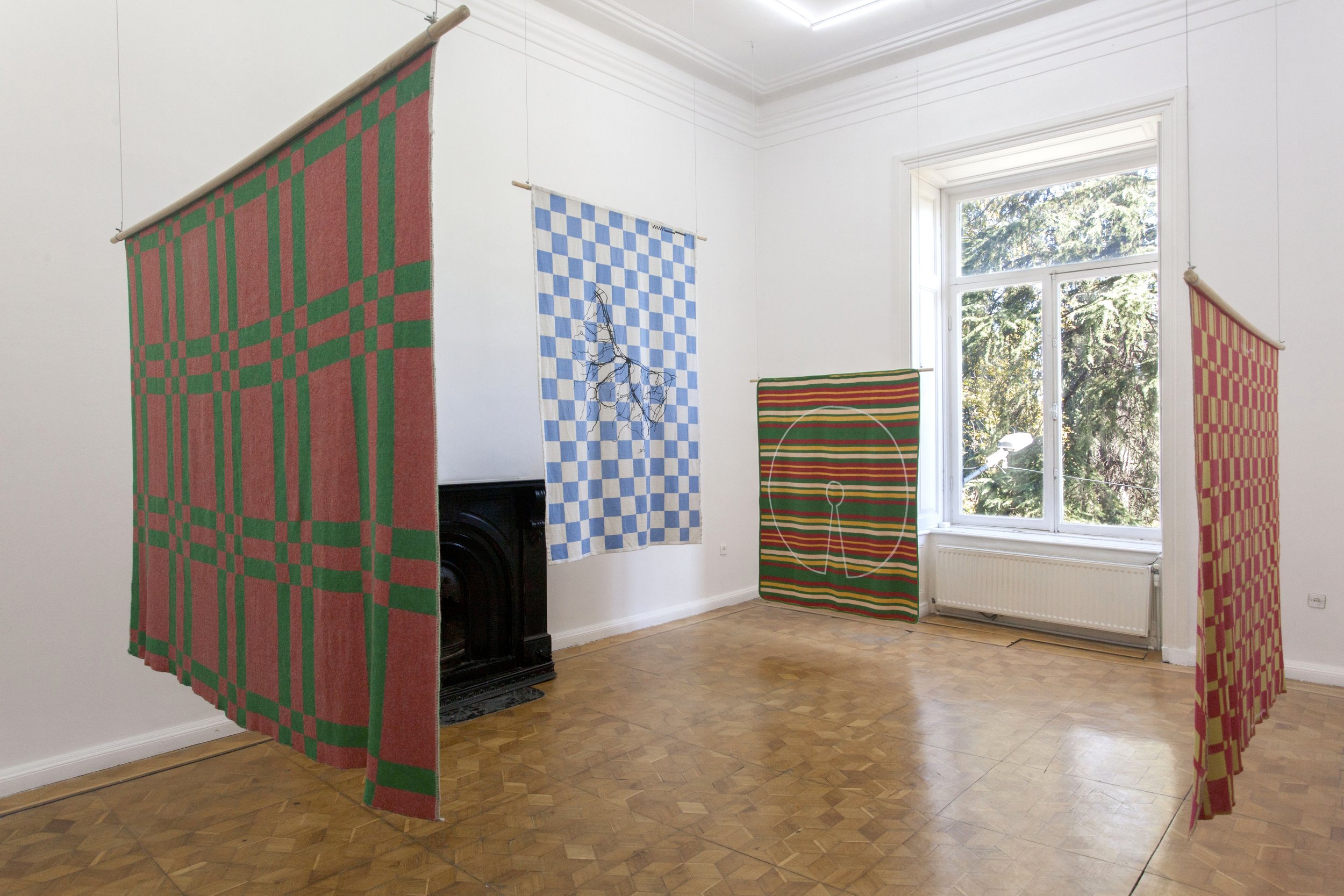
Tamuna Chabashvili, Guda-Nabadi, 2021. Installation view, Gallery Artbeat, Tbilisi. Screen print on Soviet vintage cotton blanket, wood, rope, water-based ink, dimensions variable. Courtesy of the artist.
DC: Then you returned to Tbilisi and have been working between Georgia and the Netherlands since. I think we met in 2012, around the time when we both came back to Tbilisi, and a lot was going on in the city, but in fairness, I feel like that’s always the case there in very different ways. Not only has Tbilisi been a big inspiration for both of us, but it has also been an important topic in our practices, separately and in some projects together. We were both invited to participate in Tbilisi InSights, when it was selected for the Georgian Pavilion for the 14th Architecture Biennale in Venice, which then sadly did not happen. But some of us then restructured and developed it as a collective, focusing on personal archives of the city. That’s when you developed A Bundle, a textile work where self-reflection is central. How did the interconnection of the city and the memories of growing up in it come together in a textile piece?
TC: So when I was invited to think about informal archives in relation to Tbilisi, I started from my own body and its embodied memory of that place. The body is not just an archive—it’s also a filter. It doesn’t hold experience in a fixed way, but continuously reshapes it, selects from it, and transforms it over time. I was drawn to textiles because of their inherent combination of structure and fragility. They hold both at the same time, which feels important for thinking about memory not as something stable, but as something constantly in process.
From there, A Bundle developed as a textile work. It takes the form of an embroidered map, but it is not a literal representation of a city. It is more a personal system of mapping, where numbers, drawings, and spatial references connect different fragments of memory and lived experience. The numbers in the drawings link to small abstracted fragments, almost like peripheral stories, that find shelter within the bundle, like different threads woven into its fabric. The idea of the bundle also opens up questions around territory, belonging, and rights, especially in relation to memory and inheritance, almost like a dowry. In that sense, it can also be read from a woman’s perspective, particularly in terms of how access, ownership, and visibility are negotiated within family structures and across generations.
The work is also connected to how I understand the body as a form of archive. But not a neutral one. It carries experience, but also filters and reshapes it. The city I come from no longer exists in the same physical way, but it continues to exist through memory, through the body, and through reconstruction. In that sense, A Bundle is not about telling a linear autobiographical story. It is about how memory is organised, fragmented, and reassembled into a material and spatial system. It becomes a way of holding together what is visible and what remains absent.
It’s a textile work conceived through reconstructing my own experience, reflecting on memory, place, and identity in the absence of physical traces.
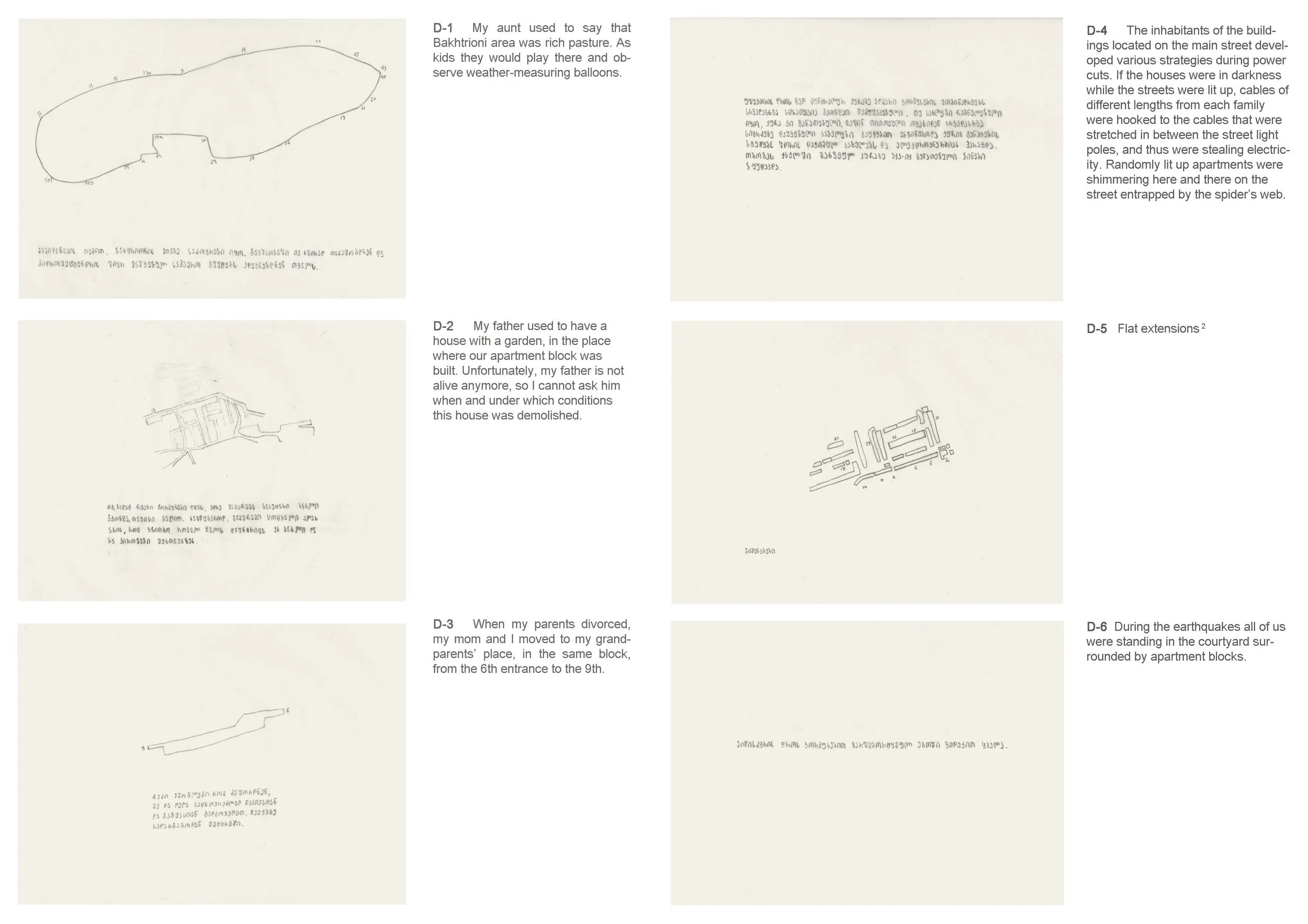
Tamuna Chabashvili, A Bundle (series of drawings), 2015. Paper, pencil, 21 × 29 cm. Courtesy of the artist.
DC: Since then, you have worked with textiles in your practice in many different ways, where collective memory, other people’s narratives, and topics of gender are strongly present. We have often discussed how many of them relate to anthropology in different ways. I’ve used some of them as examples when teaching or presenting about art and anthropology, too. A very direct reference to anthropology would be Supra of Her Own – an exhibition project you developed in collaboration with anthropologist Agnieszka Dudrak, addressing gender-based violence against women in Georgia. Supra (სუფრა in Georgian) is perhaps a charged term. Meaning both a tablecloth and a traditional feast, various social, political, and cultural topics can be discussed in relation to it. There is also the famous, traditional Georgian blue tablecloth, which has changed meaning over time, and you addressed that in The Book of Patterns. Why did you decide to critically approach this textile surface full of symbols, and reconsider it from a feminist perspective, and how did this become an artist book?
TC: My first memory of the Georgian blue tablecloth comes from my Soviet childhood. At home, we had a small square one, light blue with white patterns, already faded. It was likely a Soviet-era reproduction of the mid-20th century utilitarian design of a cultural symbol. Traditionally, the blue tablecloth was used in Georgia for festive rituals, but by then it had lost its sacred meaning and was used mostly in everyday, practical ways. I became interested in how one object can change so much depending on its context.
In Georgian tradition, the tablecloth isn’t just functional; it’s almost like a sacred space within social life. It’s connected to supra, also meaning the ritual of gathering, where very private emotions are expressed within a public, structured setting. And these tablecloths often stay in families for decades, so they also hold these invisible traces of everyday life, almost like quiet archives.
With The Book of Patterns, I started to break down the idea of the tablecloth as one unified, symbolic surface. Instead, I treated it more like a discursive field. This made me see the tablecloth as something always alive and changing, taking on new meaning, and placing it in today’s context.
I made a textile book using woodblock prints, where each page holds a pattern, and each pattern is like a fragment of a story. For me, patterns became a kind of language I used to create a non-linear narrative. So instead of one dominant story, you get multiple small voices existing together in the same space.
I was interested in how these patterns could also reflect social structures, hierarchies, roles, and systems that are already embedded in everyday life. Especially how those structures shape visibility, and how they define the female body within cultural and social patterns.
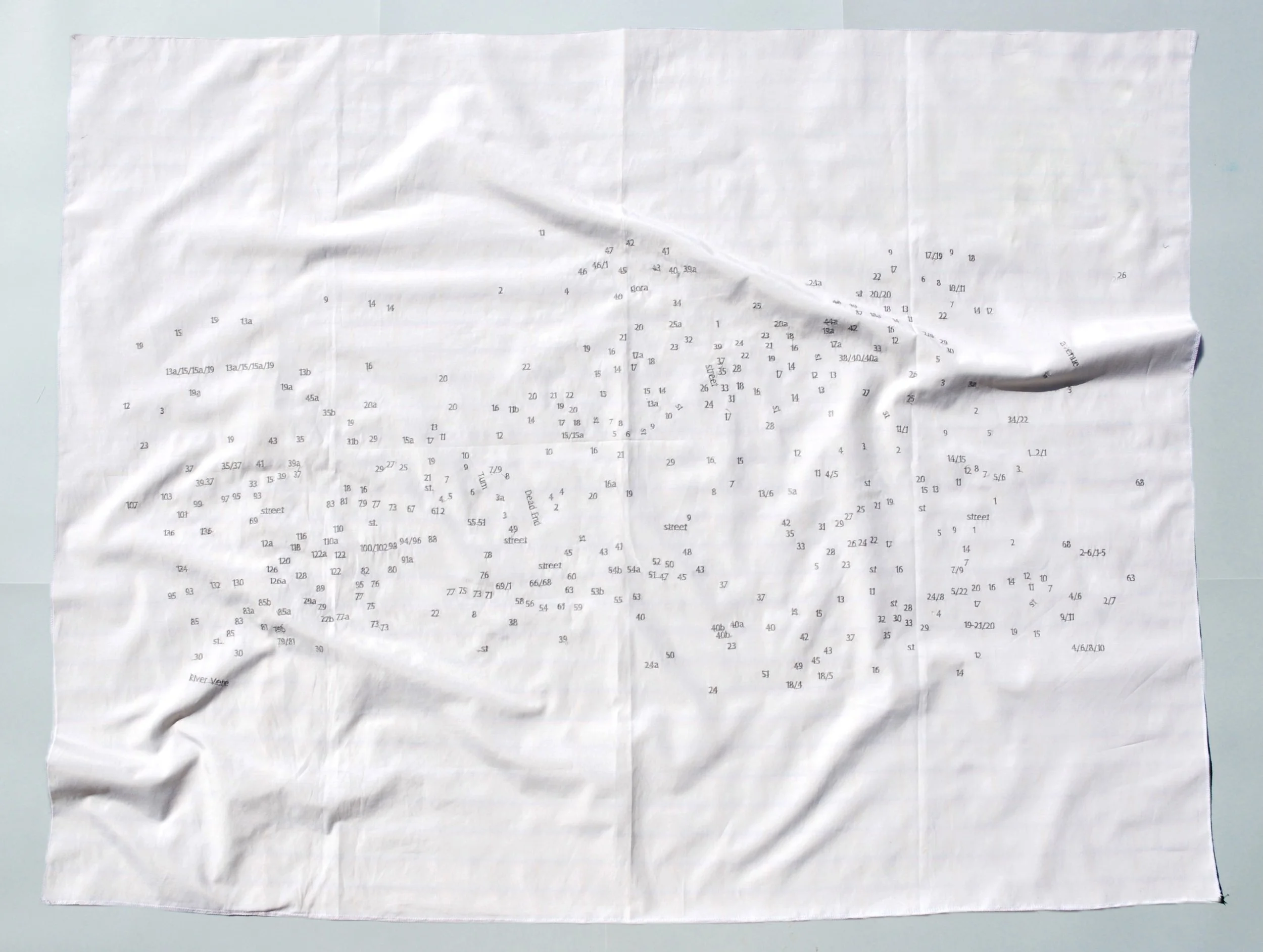
Tamuna Chabashvili, A Bundle, 2015. Embroidery on fabric, 85 × 100 cm. Courtesy of the artist.
DC: Over the years, I was fortunate enough to have many conversations with you and see part of your working process – how much you research, collect, organize, discuss, analyze, and then catalyze into your artworks. In a way, you make bundles of materials, and this word is very important for your later work too. To me, oftentimes, the material you gather and organize is like a narration that bridges personal and collective experiences, but also in a very affective way. You work on emotionally very hard topics, which are not always easy to face, but somehow you also offer space for protection and safety, where one can think about them. Why did you decide to deal with the themes of migration, disappearance, and traces?
TC: The notion of trace is central in my practice. For me, each project is about presence and absence at the same time. I’m interested in what is no longer fully visible, or what has been transformed, but still continues to exist in another form. I work with remnants, absences, and fragile forms of evidence, objects, images, and archival fragments, to explore how personal and collective histories leave imprints on memory and identity. Working with these materials also becomes a way of reflection, almost like a process where experience can be revisited and slowly transformed into understanding.
In the blanket series Guda-nabadi (2021), this becomes very direct. The starting point for this work was an invitation to contribute to a Georgian–Abkhazian archive display for the exhibition The Corridors of the Conflict - Abkhazia 1989-1995. In that context, I began thinking about how to approach archival material not only through documents or images, but through objects that already carry embodied history. That is where I started working with old, used blankets from that period as surfaces for holding information about war, displacement, and memory. After the Georgian–Abkhazian War in 1993, many IDPs (Internally Displaced Persons) crossed the Caucasus Mountains carrying their belongings wrapped in wool blankets. These blankets became both practical and symbolic versions of Guda-nabadi, offering warmth and protection, while also functioning as a way to transport personal objects and memory. I encountered these images through documentary photographs of displacement and migration.
In Guda-nabadi (2021), I use blankets from the same period, so they already carry historical and emotional weight. I am also interested in patterned blankets as semiotic fields from the Soviet period, how colour, repetition, and ornament already carry embedded systems of meaning. I intervene on these surfaces with silkscreen prints and embroidered drawings, adding outlined forms that relate to more functional ways of reading and using these objects in post-Soviet Georgia.
These drawings come from my own visual archive and include traced maps of disappeared towns, instructions for building a tent, patterns for a cloak, and fragments of Georgian lullabies. This way, the blankets become active surfaces where historical, social, and personal codes intersect, reflecting on displacement, notion of home, and how memory, safety, and belonging are materially carried and redefined.
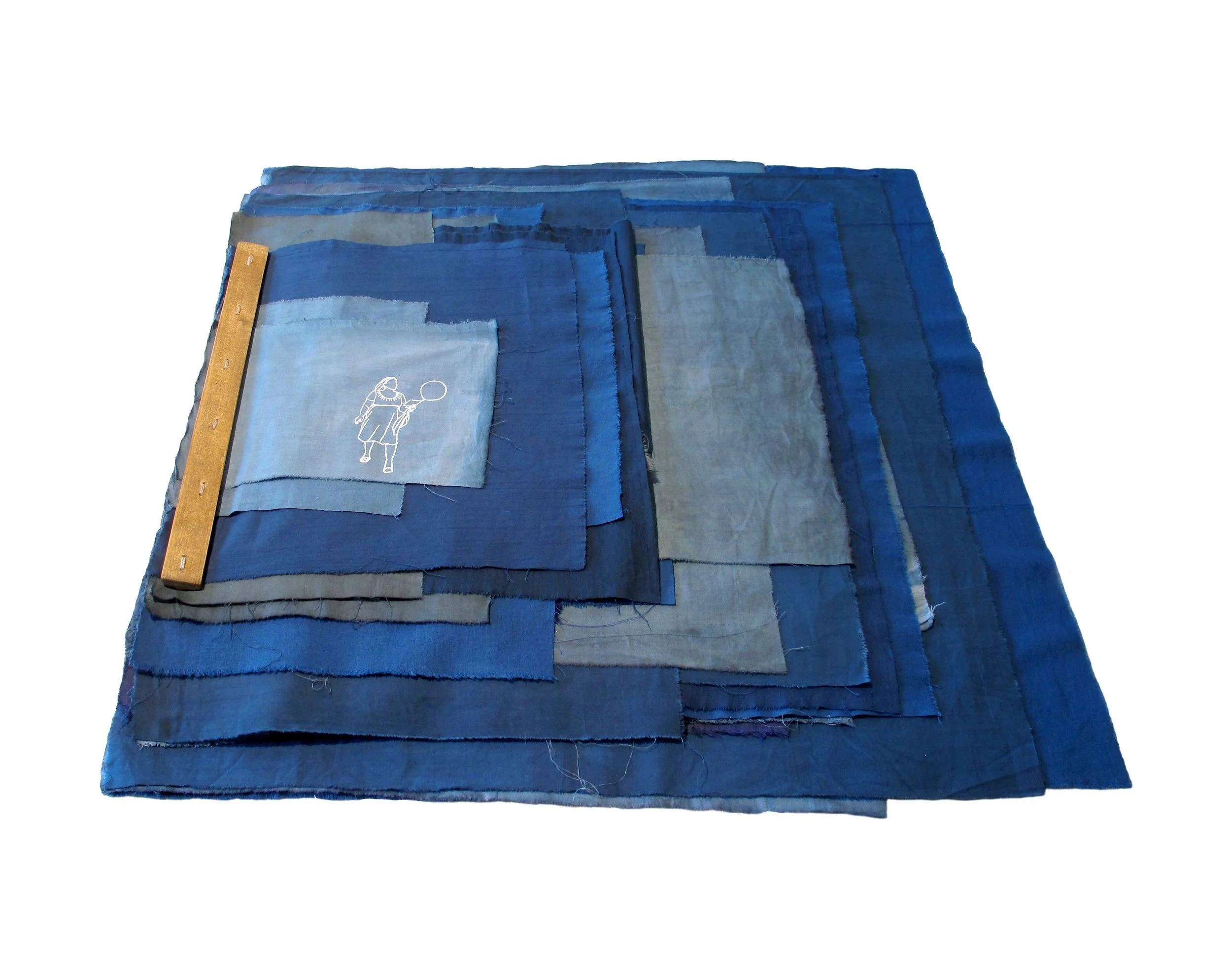
Tamuna Chabashvili, The Book of Patterns, 2016. Hand-dyed fabric, water-based ink, 90 × 70 cm. Courtesy of the artist. Private collection.
DC: In addition to your successful individual artistic practice, you have also been a part of collectives, teaching at VA[A]DS (School of Visual Art, Architecture and Design) at the Free University of Tbilisi in Georgia, working with and supporting young professionals, a few to mention. You are about to start Tbilisi Air – an artist-run residency immersed in the city’s context, where you plan to focus on experimental and interdisciplinary approaches. Why did you decide to start this now, and do you see this as somehow connected to your artistic practice as well?
TC: Tbilisi Air grew out of my artistic need to extend my way of thinking into a spatial environment, again, not as a production system, but as a kind of micro-world where research, encounter, and exchange can happen in an open and unpredictable way. It is also inspired by the context itself. Tbilisi is a city where institutional structures remain unstable and fragile, due to political shifts, but at the same time, there is a very strong layer of informal practices. I’m interested in how something meaningful can still emerge and grow in such conditions.
In that sense, I think of the residency almost like an expanded archive, not fixed, but constantly formed through relationships, conversations, and encounters. Things don’t end when the residency ends; they stay as traces, and they continue to circulate. And I don’t see Tbilisi as something to be explained or defined. It’s more like material you work with, layered, shifting, never fully readable. Very close to how I think about textile surfaces in my work: different histories and meanings existing at the same time, overlapping and transforming each other.
Practically, the idea is to bring people into contact with that complexity, through local networks, informal spaces, and everyday situations, so the city becomes part of the process, not just a background to it. And what I hope is that what happens here doesn’t stay contained within the residency. It continues afterwards. It becomes part of a longer accumulation of collaborations, ideas, and relations that remain active over time.
Tbilisi Air is very close to my own practice. It’s really about how meaning is formed through relation, through proximity, through experience, rather than something fixed in advance.
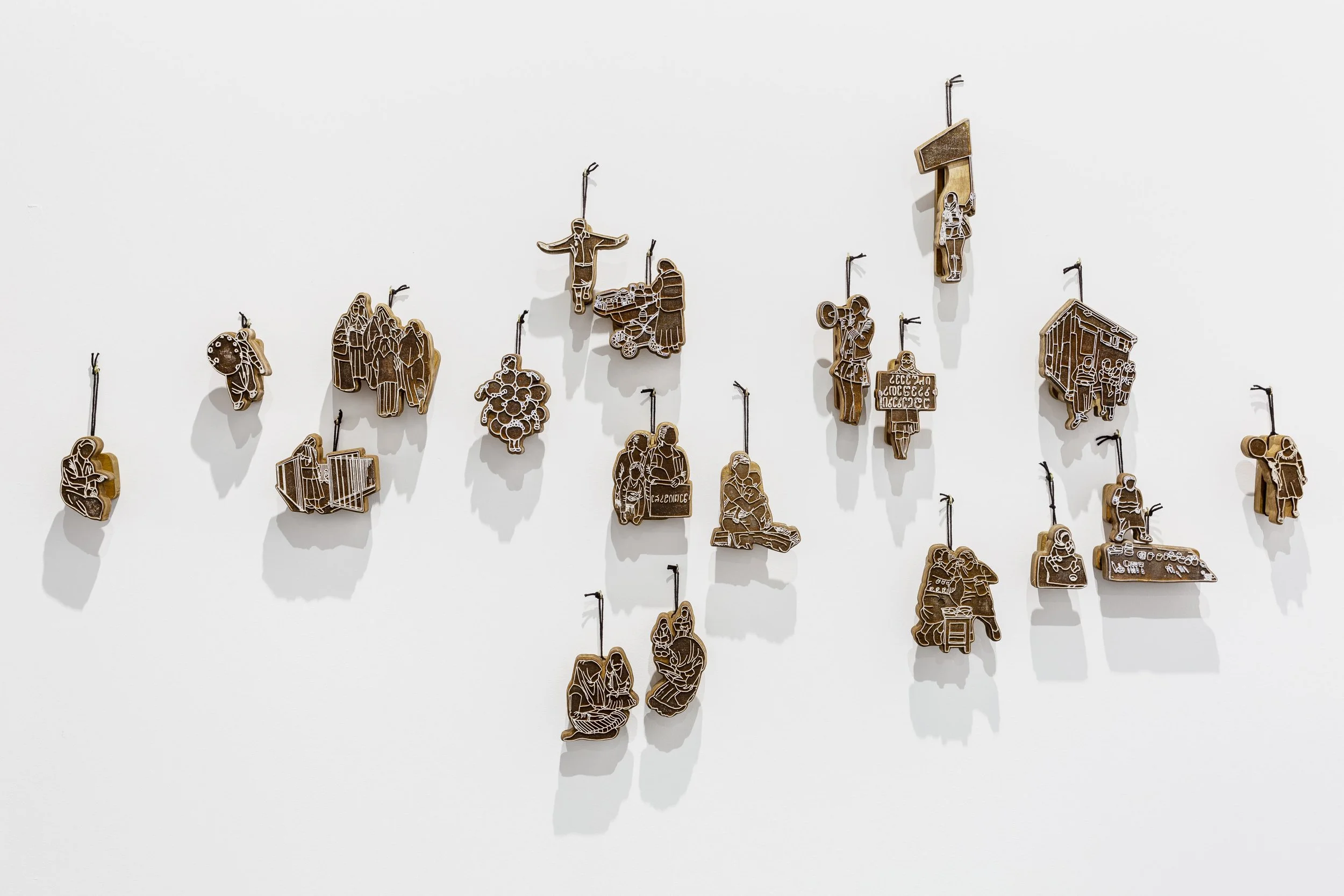
Tamuna Chabashvili, The Book of Patterns, 2016. Woodblocks, plywood, dimensions variable. Courtesy of the artist. Private collection.