In the Dolomites Biennale Gherdëina 10 is now open
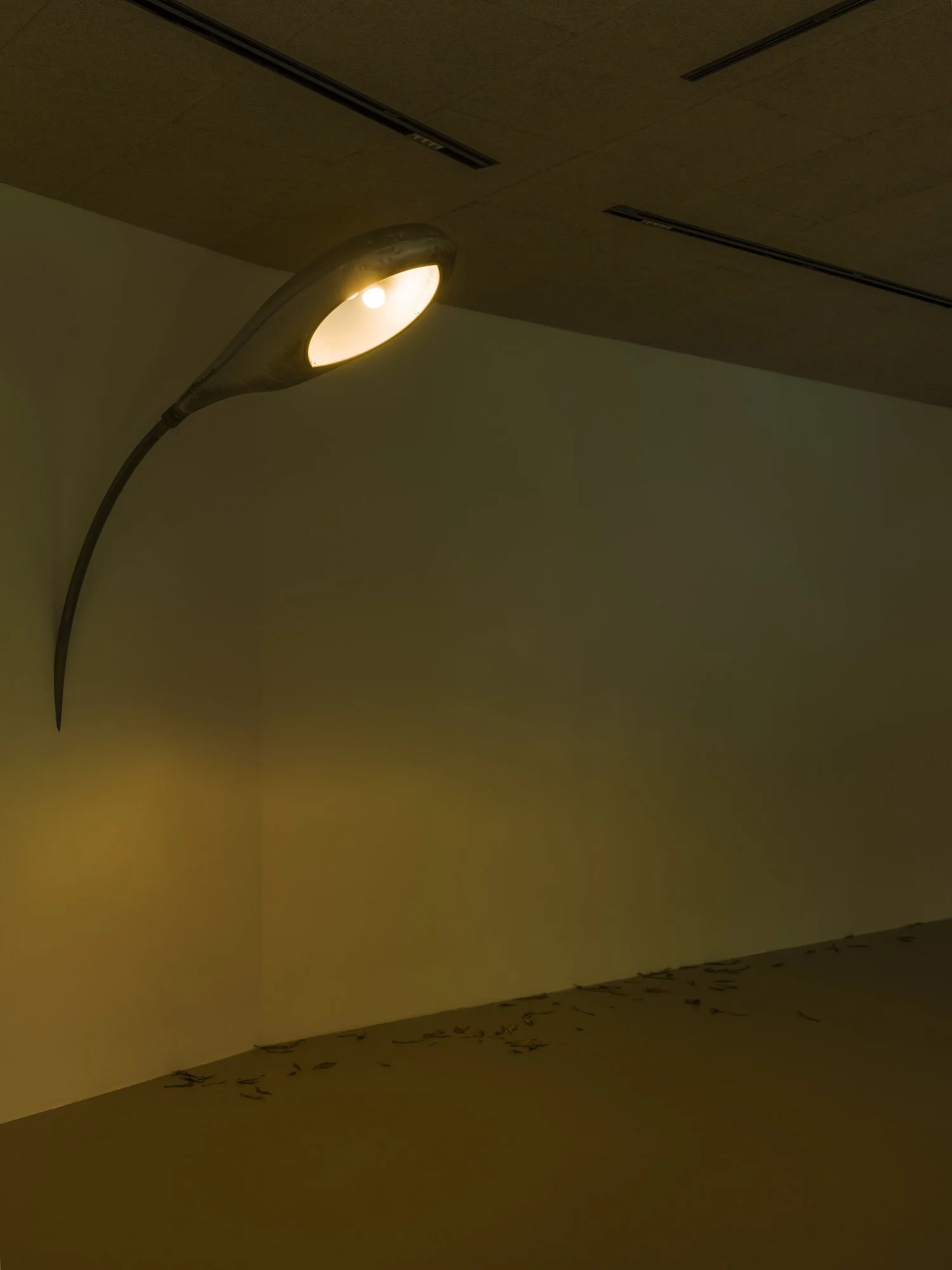
Álvaro Urbano, Zwischenzeit, 2025. Courtesy of Philipp Solf, with the support of Acción Cultural Española (AC/E). Thanks to Cherd Lüdde Gallery, Berlin. Credits: Tiberio Sorvillo.
Author: Carolin Kralapp
Published Saturday,June 13, 2026
Just a few weeks ago, the international art world gathered in Venice, as it does every two years, to open the Biennale. It is The Biennale that most people inevitably think of when they hear the term. But today’s focus is not on the Venice Biennale. We’re staying in Italy, mind you, but heading into the mountains, right into the heart of the Dolomites, where the Biennale Gherdëina has opened for the 10th time and invites visitors to an art experience of a different kind. Under the theme “(Future) Paradise Gardens”, Swiss curator Samuel Leuenberger has brought together 24 artistic projects by 28 artists across three locations in Val Gardena – Ortisei, Pilat, and Santa Cristina – for this anniversary edition.
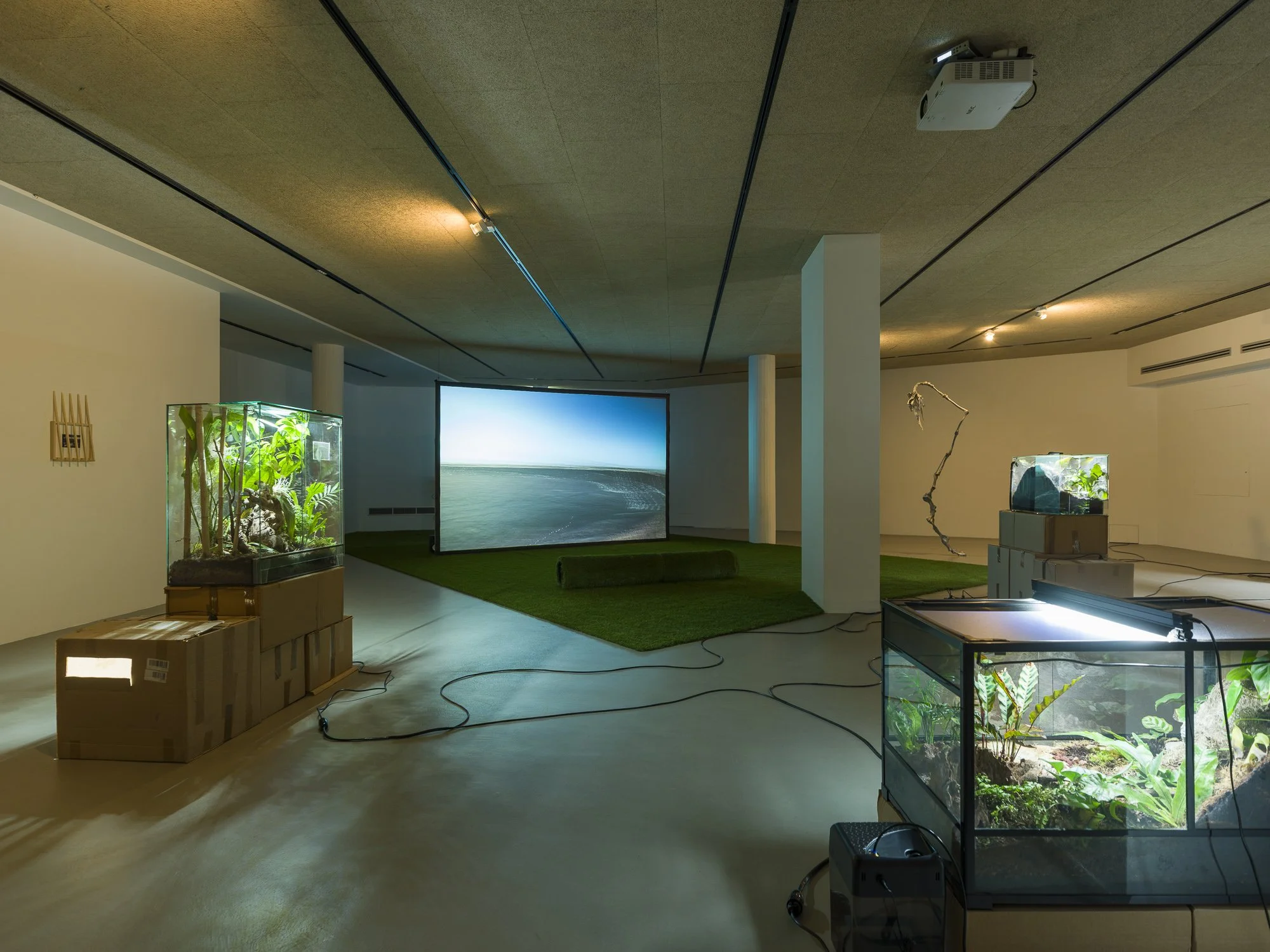
Exhibition view Biennale Gherdëina 10, Sala Trenker, Ortisei, 2026. Credits: Tiberio Sorvillo.
So what is Biennale Gherdëina actually about? At its core, the biennial has always used the dramatic Alpine landscape of Val Gardena not just as a backdrop, but as an active participant in the artistic dialogue. For this tenth edition, that dialogue centers on gardens – not merely as pretty patches of greenery, but as deeply charged spaces where nature and human intention meet. Leuenberger envisions these (future) paradise gardens as places of care, coexistence, and imagination: sanctuaries for flora and fauna, yes, but also mirrors of our collective hopes for a more just and equal world. In the shadow of the Dolomites, gardens become something radical – spaces of reconnection, refuge, renewal, and possibility for all. That sounds enormous, much like the mountains.
At Sala Trenker in Ortisei, Álvaro Urbano presents “Zwischenzeit”, a hypnotic installation built around a historic East German street lamp and hand-painted metal leaves scattered on the floor beneath it. The leaves cycle through all four seasons in color, while the lamp flickers in unpredictable rhythms, evoking the secret inner lives of objects. In dialogue with this, Leonardo Bürgi Tenorio shows a series of drawings and adapted terrariums, each a sealed micro-world of objects, organic materials, and locally gathered souvenirs from Val Gardena. Rounding out the space, Chinese artist Yuyan Wang's video installation “Green Grey Black Brown” immerses visitors in a synthetic landscape of flowing oil and plastic, assembled from industrial found footage and set to a slowed-down version of “Owner of a Lonely Heart”, blurring the line between the natural and the manufactured. Together, these works turn Sala Trenker into a space that holds time, memory, and materiality in uneasy and productive tension and is a well-curated starting point to experience the Biennale Gherdëina.
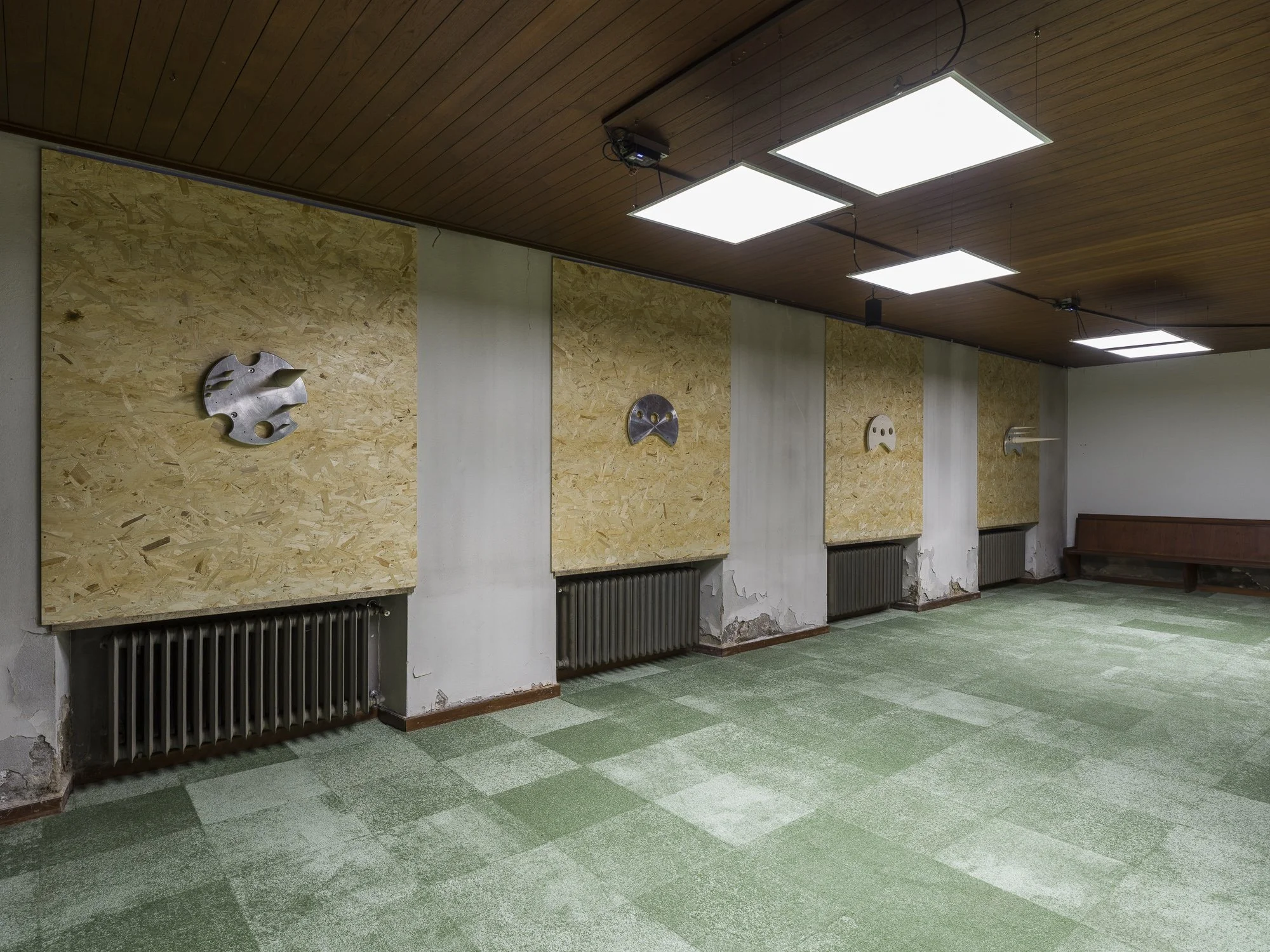
Dorota Gawęda & Eglė Kulbokaitė, exhibition view: Dead Ringer I-VI, 2023. Courtesy of the Artists. With the support of the Lithuanian Culture Institute and the Embassy of Lithuania in Italy. With the support of the Swiss Arts Council Pro Helvetia.
Also in Ortisei, in the abandoned Hotel and Café Ladinia – one of the highlight locations of this Biennale – The artist duo Dorota Gawęda and Eglė Kulbokaitė presents a site-specific installation that will stay with you long after you leave. The Basel-based artists, whose work blends Eastern European folklore, mythology, and sacred rituals with digital manipulation and industrial materials, have transformed the vacant hotel into an immersive sensory environment. Sculptures from their Dead Ringer series, made from found aluminum objects sourced from CERN and soap-treated wood, are arranged throughout the space. A choreographed lighting sequence activates the sculptures, shifting between exposure and concealment. This makes the works feel like incomplete doubles of themselves. Winding through it all is “Brood (Scene 5: And Her Hair Parted on the Left Side)”, a 30-minute sound loop created with the polyphonic singing group Isokratisses and musician OXHY. It layers lullabies, laments, and love songs rooted in the Epirus region's tradition. Circulated through a 360-degree sound system, the voices fill the abandoned rooms, and the light responds to their intensity. This produces an atmosphere of repetition, resonance, and quiet disorientation that feels entirely at home in the ghostly grandeur of the Dolomites.
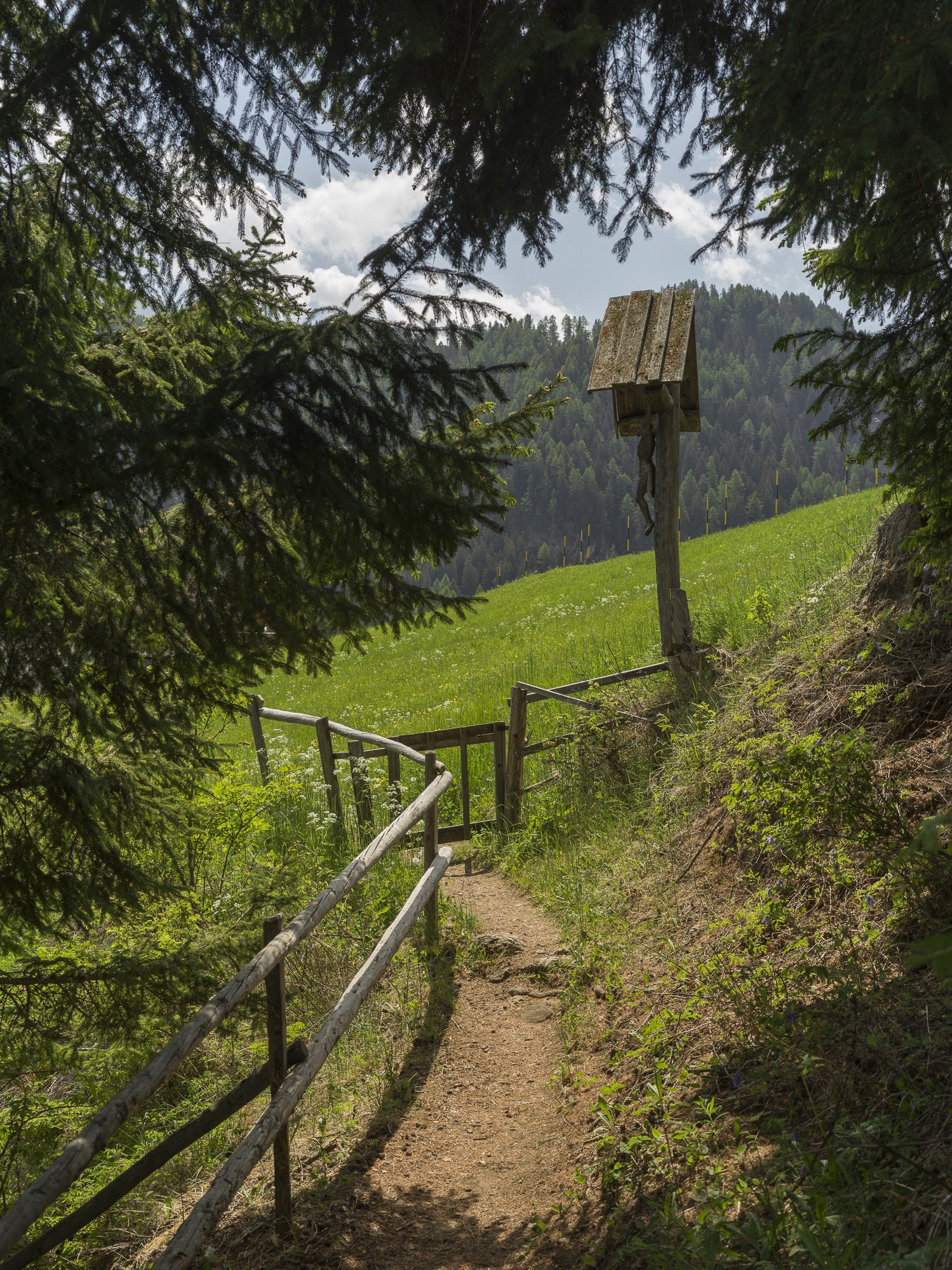
Exhibition view Constantin Thun. Courtesy of the artist, Galleria Fonti, Naples. The Modern Institute/ Toby Webster Ltd., Glasgow; Sweetwater, Berlin. Credits: Tiberio Sorvillo
A highlight of a different kind awaits those willing to earn it. At the Pilat location, reached only after a more demanding hike up into the mountains, the work of Constantin Thun is waiting as a reward at the top. In a conscious artistic decision, Thun chose not to release any information about the work in advance, and out of respect for that choice, I will follow suit. What I will say is: the climb is worth it. At Pilat, this sense of care becomes especially palpable. The artists here engage with the landscape so gently that the works don't announce themselves – you have to go looking for them, let your eyes adjust, and allow the surroundings to slowly reveal what is there. Bas Smets and Eliane Le Roux have placed three hundred snow depth stakes across the alpine meadow, each marking the last year snow was recorded at that altitude, turning the hillside into a quiet map of climate change. Along trail nr. 15, Judith Neunhäuserer has suspended over 200 glass fragments among the trees, scratched with texts and drawings that only become visible through their own absence. The work references Laura and Enrico Fermi, the Italian-American nuclear physicist who led the development of the first nuclear reactor, and his wife, a writer who documented their lives, who spent the summer of 1926 in Val Gardena. Their later entanglement with nuclear history transforms the forest from a place of refuge into what the artist calls a “violent garden”, where knowledge and consequence cannot be separated.
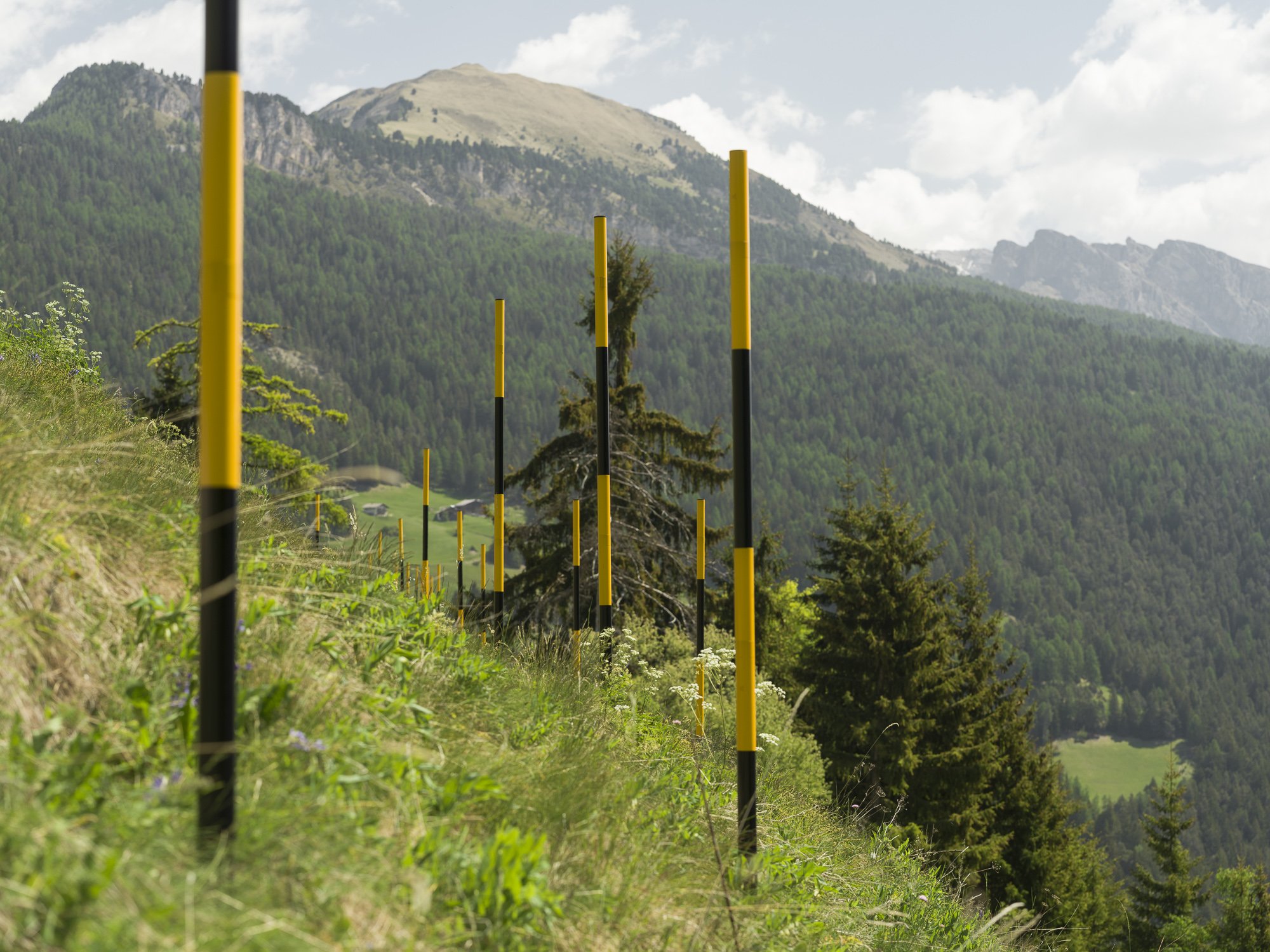
Bas Sets + Eliane Le Roux, Degrees of Elevation, 2026. Aluminum snow stakes, 250 cm by 5 cm of diameter each. Commissionedby Biennale Gherdëina 10, With the support of Nuovi Mecenati -Fondazione franco-italiana di sostegno alla creazione contemporane. Photo by Tiberio Sorvillo.
The final stop of my visit was also one of the most memorable: Cësa Bënsté, a former school building in Santa Cristina. Two very different artistic styles share the abandoned rooms in a quiet yet powerful dialogue. On the second floor, photographer Kelly Tissot has dispersed a selection of her black-and-white photographs, developed during a research stay in Val Gardena, where she took over a thousand pictures. The walls are populated with wooden toys, local sculptures, and glimpses of traditional workshops, but the human figure is never directly visible, only present through the traces it leaves behind. Tissot consciously plays with empty image spaces, letting absence speak as loudly as presence, while her metal frames set a deliberate contrast to the traditional woodcraft she documents, placing industrial coolness and vernacular warmth in quiet tension with each other. In the attic, artist Jacopo Belloni presents “Dormancy”, an installation that feels like a gentle funerary rite. Translucent glass vessels shaped like everyday bags and backpacks contain seeds native to Val Gardena. Copper distillation devices slowly extract calming essences from alpine plants and release fragrant droplets into the space. It is a work about suspension, loss, and the quiet persistence of life. Together, Tissot and Belloni transform this abandoned school into an unexpectedly moving place where memory, craft, and the cycles of nature converge and the past and future feel equally present.
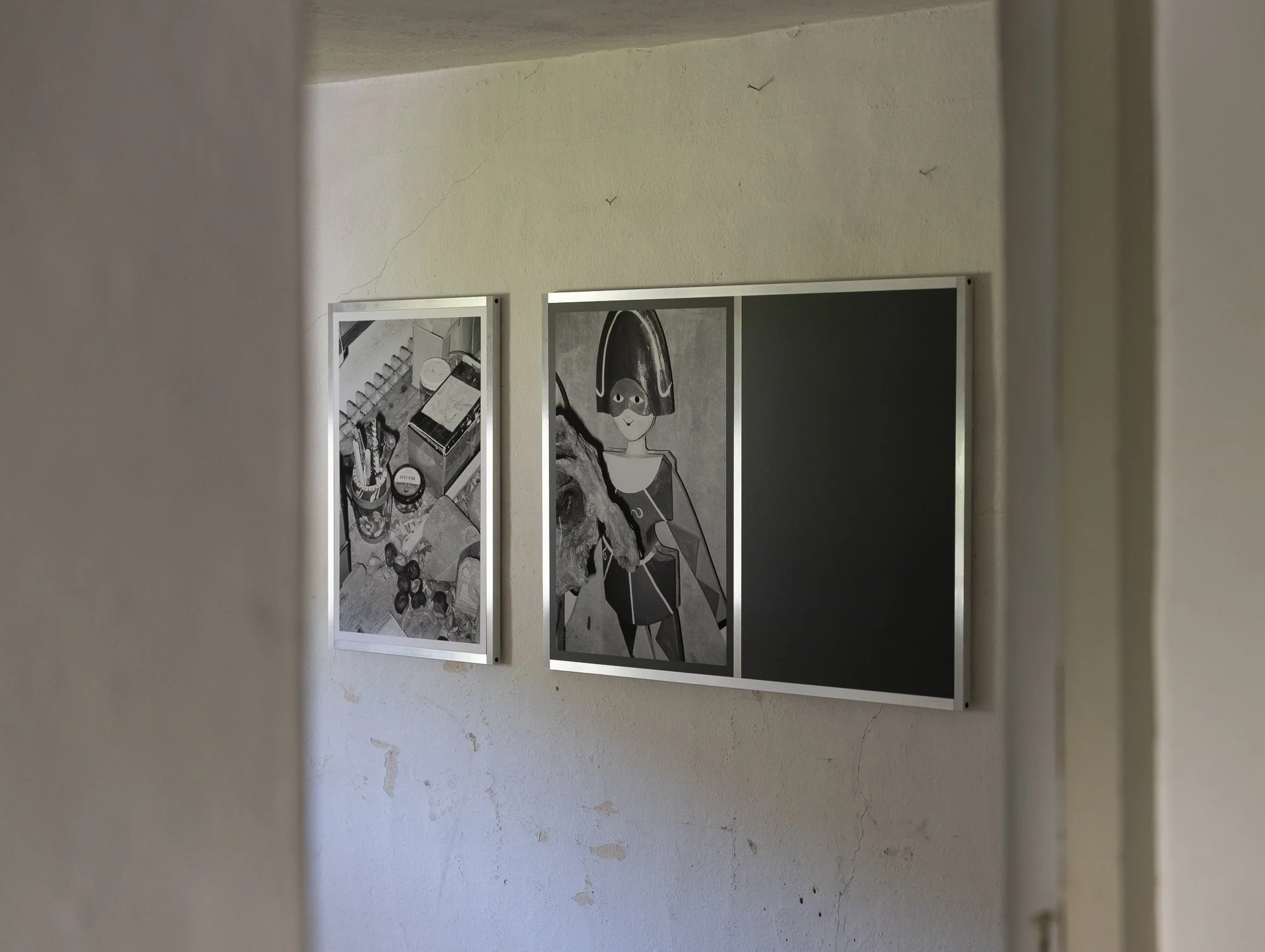
Kelly Tissot, Girl (The Workshop I-XII) 2026. 12 photographs, all fine art prints on paper, PVC, aluminium. Various dimensions. Commissioned by Biennale Gherdëina 10, with the support of the Swiss Arts Council Pro Helvetia. With the support of Nuovi Mecenati -Fondazione franco-italiana di sostegno alla creazione contemporanea. Photo by Tiberio Sorvillo.
At the end of the trip, I asked myself whether the goal of “Reconnecting” had truly been achieved, and my answer is a clear yes. While major art events like the Venice Biennale tend to leave me drained and overstimulated, still needing days to process and decompress, Biennale Gherdëina operates on an entirely different frequency. It is focused, convincingly curated, and above all, unhurried. The geography simply won't allow for rushing: three locations spread across the valley mean that walking, pausing, and reflecting are built into the experience. You find yourself surrounded by vast mountain landscapes, feeling small in the best possible way, reminded almost involuntarily of how powerful nature is and how brief our place in it. At Biennale Gherdëina, nature is not the backdrop. It is the main protagonist. The artworks don't compete with their surroundings but blend into them with great respect, many directly referencing the landscape and its histories. What emerges is a rare kind of exhibition space, one where art, nature, and people come together not to impress, but to think, and perhaps to imagine something better.
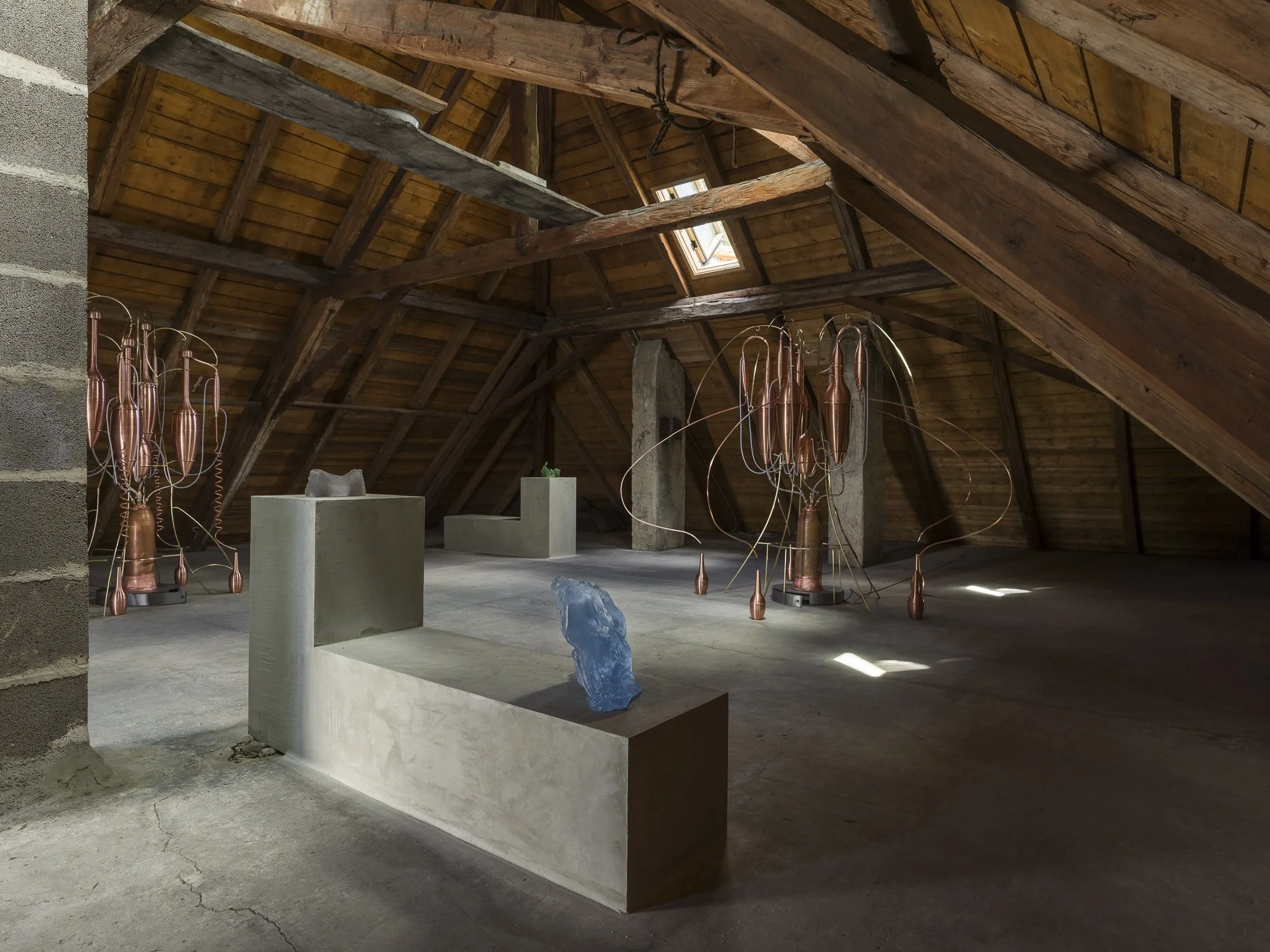
Jacopo Belloni, The Sleepers 5 works from the Sleepers series: Sesleria Caerulea, Gentiana Cruciata, Geum Rivale, Potentilla Crantzii, Campanula Scheuchzeri, 2026. All the works cast class, borosilicate glass, seeds of wildflowers from Val Gardena Various dimensions. Produced thanks to the support of Italian Council (2025). With the support of Swiss Arts Council Pro Helvetia. Photo by Tiberio Sorvillo.
Biennale Gherdëina runs through September 13, 2026.
Thank you very much for the press invitation and for covering the travel expenses.
About the author: Carolin Kralapp is a Berlin-based art historian and writer. She writes for magazines and online platforms, creating accessible and contemporary text formats that communicate complex ideas from the worlds of art and culture. Her work has appeared in publications such as Berlin Art Link and gallertalk.net, among others. Her particular interest lies in photography and conceptual art, focusing on themes of human relationships, social and societal issues, and personal experiences.