Whitney Biennial 2026
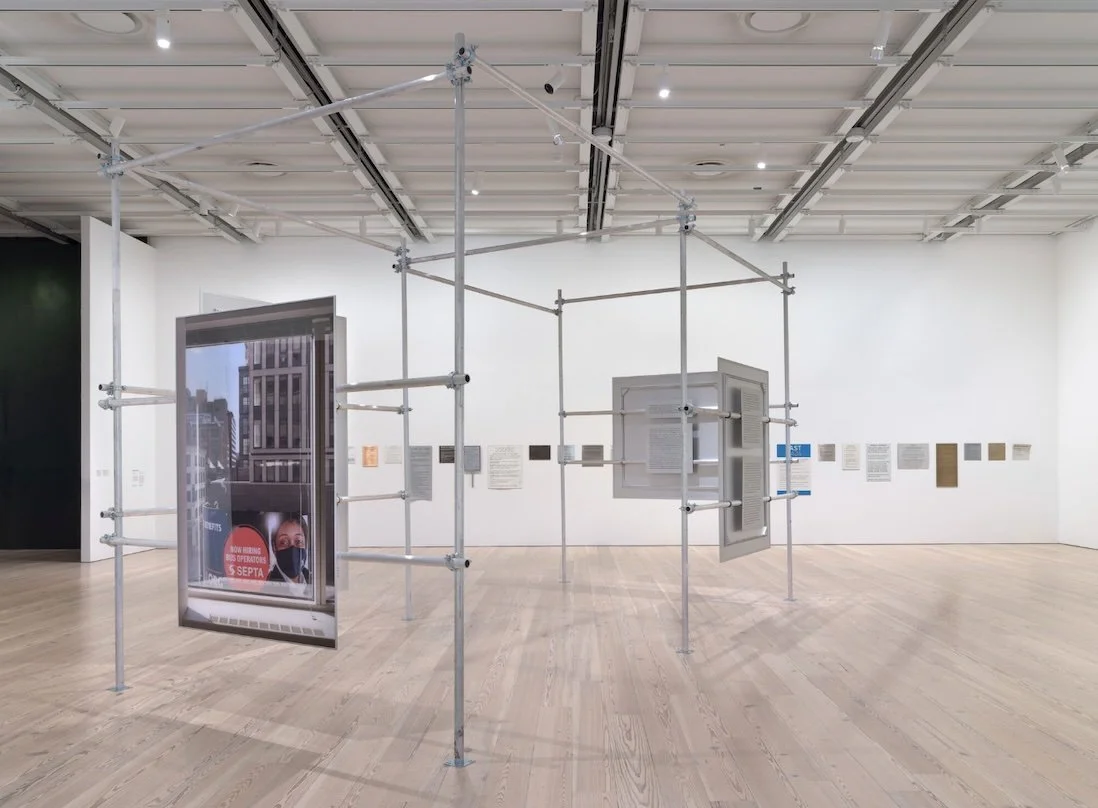
Installation view of Whitney Biennial 2026 (Whitney Museum of American Art, New York, March 8–August 23, 2026). Center: Emilio Martínez Poppe, Philadelphia Housing Authority, South, 2024; Emilio Martínez Poppe, Philadelphia Department of Sanitation, North, 2024; Emilio Martínez Poppe, Philadelphia Department of Public Property, West, 2024; Emilio Martínez Poppe, Philadelphia Water Department, South, 2022; Back wall: David L. Johnson, Rule, 2024-ongoing. Photograph by Ron Amstutz.
Author: Jonathan Goodman
Published Saturday, June 20, 2026
I am not sure why, but the current Whitney Biennial is problematic in many of the same ways the earlier versions were. There always seems to be a problem with technical achievement and divisive politics. As a result, even if we agree with the politics, and many of us do, we find ourselves distanced by art that is poorly made and ideas that are not fully realized. The big problem has to do with the nature of the show itself. It is supposed to represent the general state of visual culture in all of America. The task is so large that we cannot simply dismiss it for lack of range.
Instead, we must look at the artwork itself and see whether it transcends or does not transcend its origins (I’m referring to the geography, background of the artist, and kind of genre he or she works in ). Why is it that so much time and energy are spent on a show that may be inherently doomed by the size of the project? Recently, in the last ten years, the biennials have turned to a politics of vision that can feel rigid. Good artists like Jennifer Parker, who paints portraits of black women killed by the police, are a good example of someone whose social outlook matches the achievement of her work, but different artists in this Biennial and others can get lost in rhetoric. Of course, we need a social outlook in contemporary culture. But sometimes a lack of general ability can damage the effect of what we are seeing.
In the current Biennial, we face the art of many names we may not know at all. So we have only a small amount of space to review what we see and make a decision about its success. These days, art looks more and more alike, no matter where the artists come from. As a result, we find ourselves in a quandary- even though many younger artists making work today are justifiably determined to render a social vision of their experience, it turns out that they tend to resemble other artists with utterly different backgrounds and historical legacies. Intensity of feeling may be acceptable in a personal sense, but it does not necessarily bring together a coherent political view. We can not deny either the private or the public, but the merger of both in a single work of art is often very difficult. As a result, younger artists have taken to making work that is hopefully metaphorical in nature. The result should be a transformation from a literal problem into something more metaphysical and imaginative; sadly, this does not always happen. What can we say in the face of a show that covers a huge country like the United States?
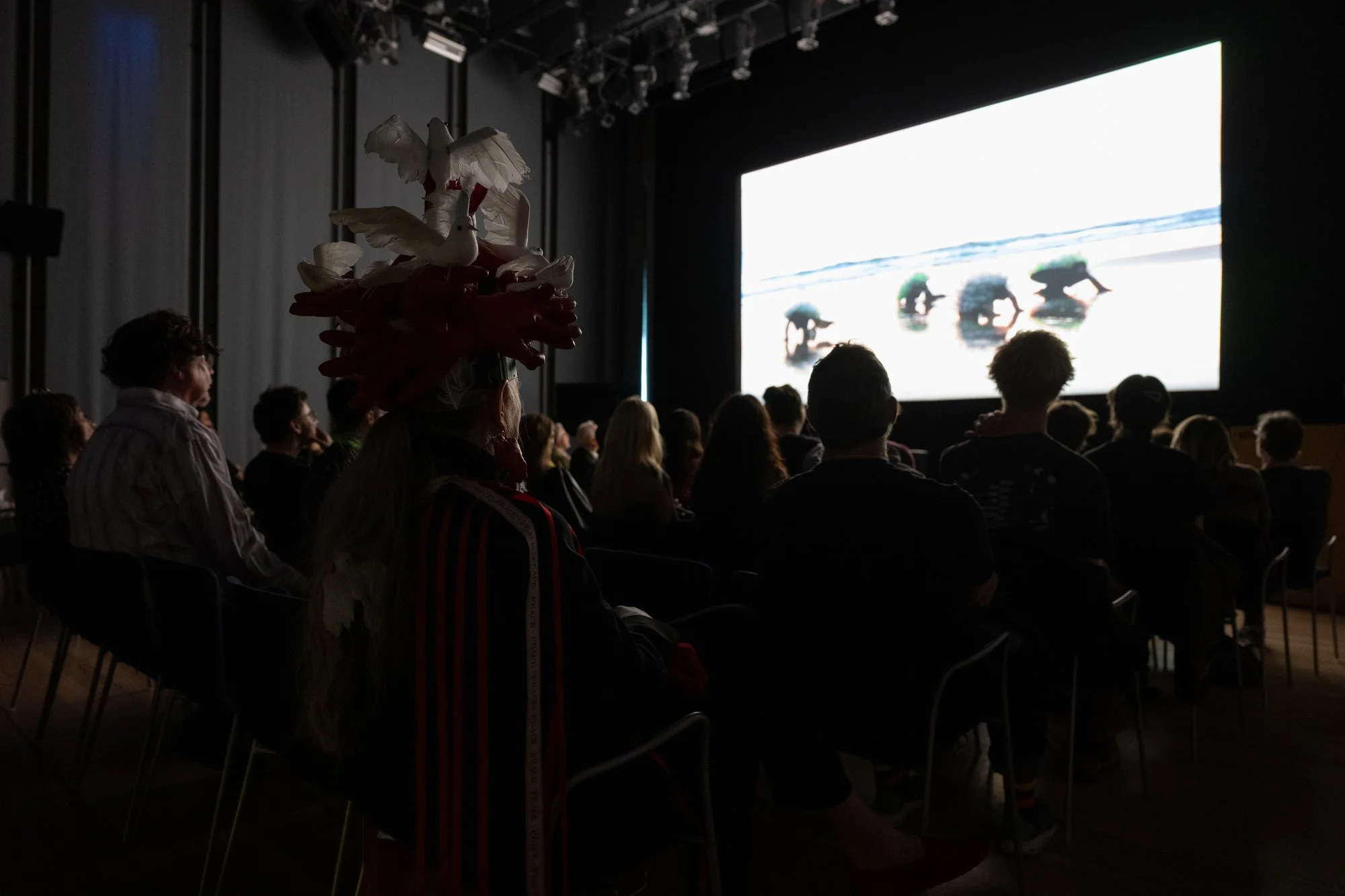
Pat Oleszko Ree Life Performantz. Photo by Filip Wolak.
Generalizations are terribly hard to make beyond the contention that the show may not live up to its goal of covering such a big space. This show, unfortunately, follows the same clichés biennials have been criticised for in years past. This writer found several interesting artworks, but it is also fair to say that a good number of the artists are really quite weak. The only thing we can do is to talk about individual artists in the show, which undermines its purpose of showing a cohesive whole. Even if such a goal is not what the curators were working towards, we tend to expect the Biennial to present a very broad view. Walking through the galleries, I found that the work could be fully appreciated only on an individual level; I saw very little that would lend itself to an overall point of view that could be written up. Some of the works were successful in joining politics to personal expression, and this was very exciting, but some of them seemed to be confused and disorderly, and, at the same time, we remember that the art also went into different focuses besides social assertion. There are good examples of abstract painting, of sculpture, of videos, and of electrically lit three-dimensional neon pieces. But one did not have a sense that an entire reading of the country was existent. Instead, individual artists from different geographies came from within the State and left us with the feeling that they were not so different from artists who work thousands of miles away.
To summarize, before looking at the actual work, we can say that to be original today means somehow to make work that does not fit into the same spot as one’s colleagues. To some extent, the Biennial did do this, but in another way, the work looked unfortunately familiar; the artists were not able to differentiate their pieces from the general language we are now accustomed to. We must remember how powerful a legacy Arte Povera maintains in the imagination of many artists today. This is not to say that the show has lost its reach. Indeed, the reach is there, but maybe not the cohesion. Only time will tell if the artists in the Biennial will live up to a bigger vision of things, since right now the artworks can seem depressingly similar.
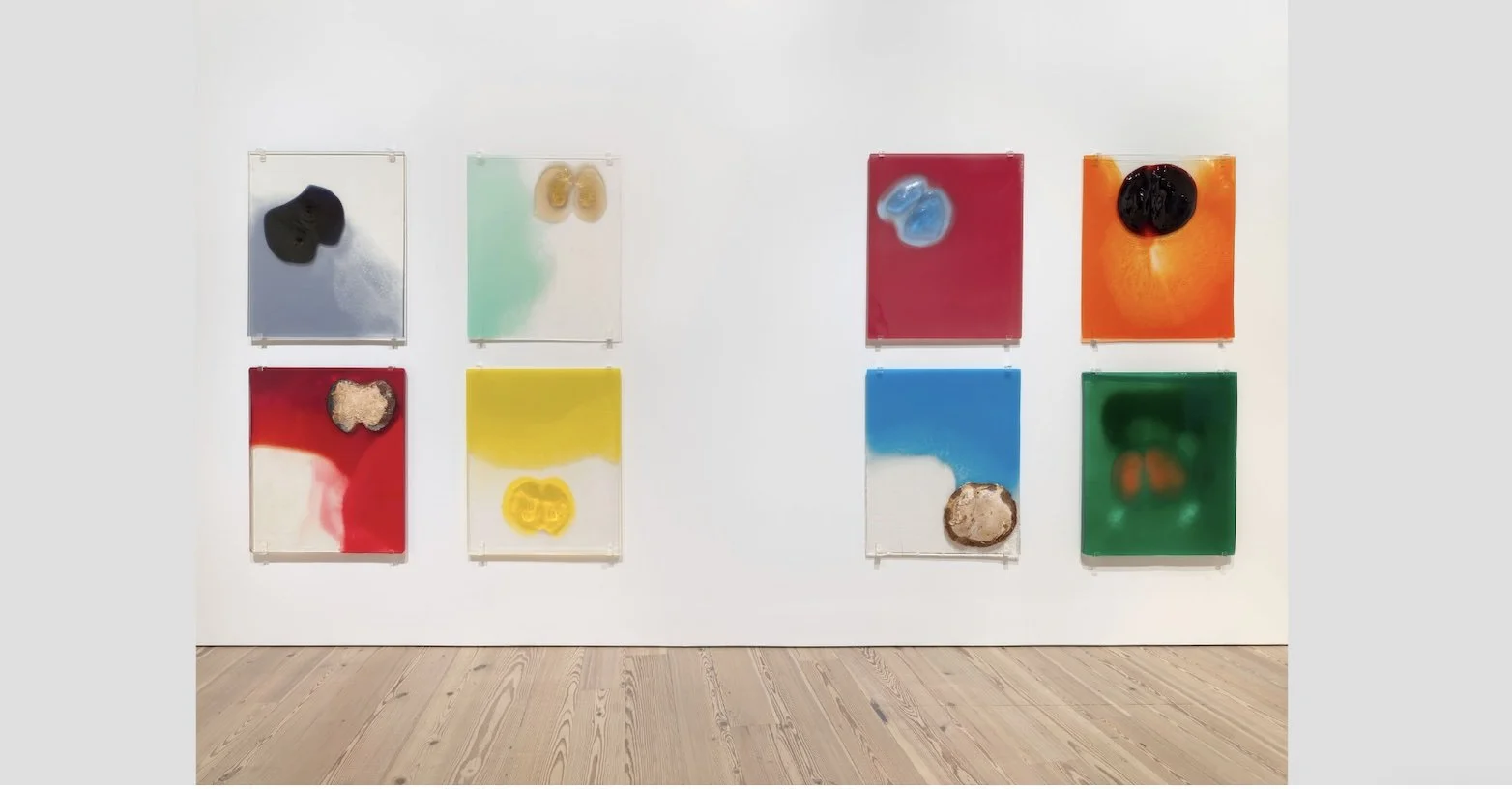
Installation view of Whitney Biennial 2026 (Whitney Museum of American Art, New York, March 8–August 23, 2026). Clockwise, from top left: Nour Mobarak, Recto Verso 3.1 (Purple Violet), 2024–25; Nour Mobarak, Recto Verso 2.3 (Brown Jade), 2024–25; Nour Mobarak, Recto Verso 1.5 (Blue Cherry), 2026; Nour Mobarak, Recto Verso 1.3 (Burgundy Orange), 2024–25; Nour Mobarak, Recto Verso 1.1 (Coral Green), 2024–25; Nour Mobarak, Recto Verso 1.4 (Mycelium Azure), 2024–25; Nour Mobarak, Recto Verso 2.5 (Yellow Yellow), 2026; Nour Mobarak, Recto Verso 3.4 (Mycelium Red), 2024–25. Photograph by Ron Amstutz.
A lot of this has to do with Arte Povera’s ongoing expression. By internalizing this remarkable movement, the artists are inevitably speaking towards a cultural and economic democracy. But the problem facing all artists, today, yesterday, and tomorrow, has to do with making something memorable. And if people are making things that are too rough in their outline, we can only hope that they will be intelligent enough to take that outline and make it permanent and beautiful art. Also, besides the challenge of technical skill, there is the problem of imaginative originality.
Precious Okoyomon’s installation, Everything wants to kill you, and you should be afraid (2026), features a wide variety of stuffed figures, animals, and people, stuffed with feathers, that take over the room. They hang from the ceiling and drop to different levels above the ground. Some are too high to look at closely, and some are close enough to eye level to be carefully studied. The bodies of these dolls come from the past. Each of the dolls is different, being colorful and moving toward a social discussion. This is made clear by the rope by which each of these figures is hung; it forms a noose to indicate both suffering and mortality. It is a visually exciting environment; the work also has a problem: the reasons why the artist depicts pain are not fully clear. We know this is true only from reading and discussion. Maybe it is fine for them simply to embody pain, but because the individual figures are so extraordinarily innocent in their presentation, they present an outlook that seems almost entirely free of aggression. At the same time, the genuine feathers indicate a metaphorical transformation of the figure, some of whom are birds; this detail offsets the violent image of the noose from which the figures hang.
By looking at the installation, Precious’ audience is able to see the transformation of a child's plaything into a much darker and more troubling world. It is strange to think of works that use innocent materials and themes to bring up much unhappier implications. Also in the large space, in which these figures are hung, the ebullience of the young people adds virtue to what is essentially a rendering of hardship. But the overall experience of the environment lingers as both a happy ending and a miserable one. This may be why the feathers, indications of flight, are given along with the nooses. The conflict generates the art.
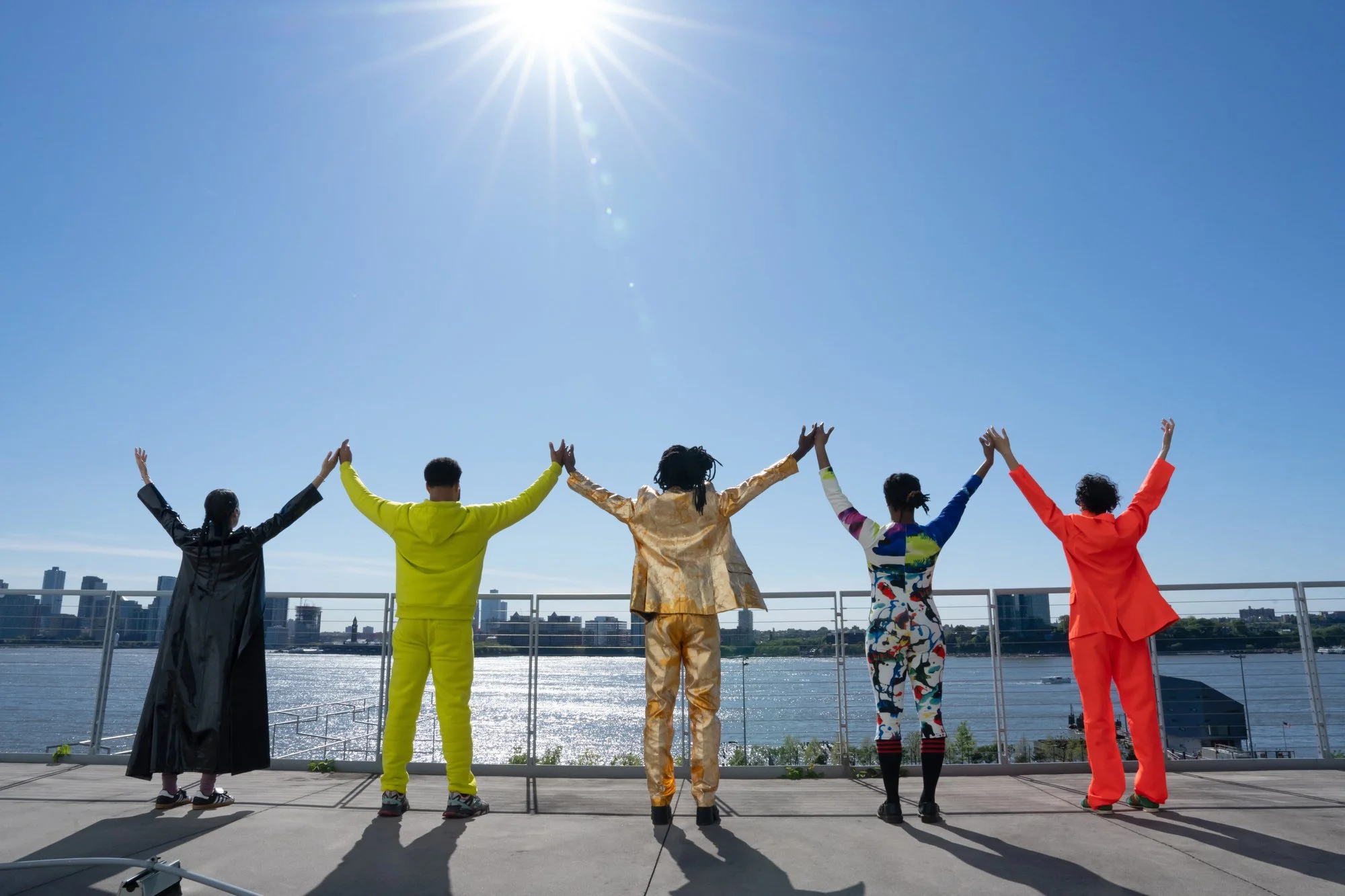
Jonathan Gonzalez performance. Photo by Filip Wolak.
Raven Halfmoon offers a niche, the striking sculpture, Suntwins (2023), a stoneware sculpture in which two women stand side by side. On the outer part of each body, the color is tan; in the middle, with a slight indentation separating the two, the color is much lighter. The faces are simple, and their hair reaches their shoulders. As happens with this type of work, one needs to know the story behind it. Drips of paint fall from the figures from the platform on which they stand. The Caddo people, the ancestors of the artist, are a middle American tribe located in the environs of Oklahoma. Behind their stories is a continuity of narrative that Raven’s sculpture portrays. One of the difficulties many artists have, and this is evident in the Biennial, is the inability of artists to connect with the past. Raven does so by creating an image whose materials and themes are deeply historical.
At the same time, the artist is demonstrating her connection to a tribal lineage, which goes back a very long time. She makes out of tribal history a vibrant and moving sculpture that is supported by the depths of her background. Only time can do this with artwork, and she makes it clear that her obligation is first to her people and secondly to a general audience interested in finding out more about indigenous tradition. We must accept this turn of the artist and read her sensibility as an imaginative quest for social integrity. It is not too much to say that the revival of deep-seated connectedness to archaic precedence can invest current artwork with unusual dignity, Halfmoon does this very well.
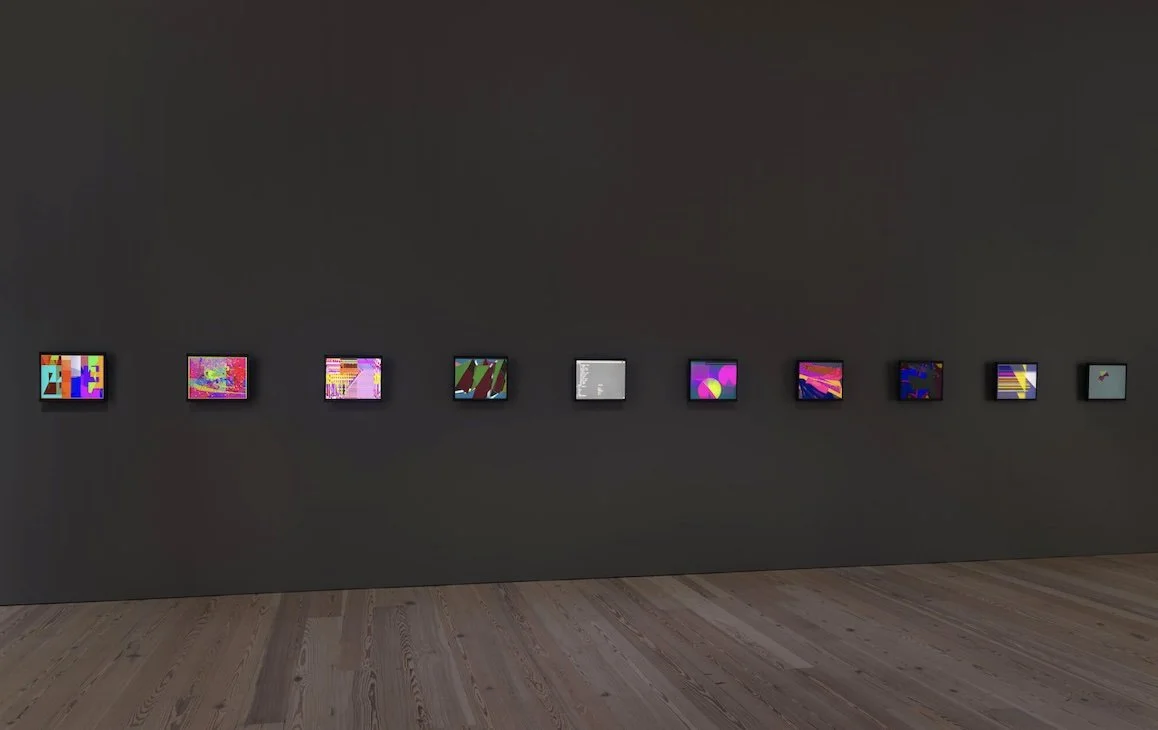
Installation view of Whitney Biennial 2026 (Whitney Museum of American Art, New York, March 8–August 23, 2026). From left to right: Samia Halaby, Lines 3, 1986; Samia Halaby, Central Park 8, 1986; Samia Halaby, Weavings, 1986; Samia Halaby, Land, 1988; Samia Halaby, Bread, 1988; Samia Halaby, Ebb Tide, 1987; Samia Halaby, Fold 2, 1988; Samia Halaby, For Olga Rozanova, 1988; Samia Halaby, Dark Weaver, 1989; Samia Halaby, Flower, 1988. Photograph by Ron Amstutz.
The Iranian American, Kamrooz Aram, is offering an Arabesque Composition (Archipelago) (2025); it is a beautiful work of art, albeit one that comes close to looking dated. It is so traditional in the rhythm of the past. In truth, Arabesque’s rhythm tells us a lot about formal construction; the work consists of black stems with leaf-like shapes at their end, as well as a white oval against a gray-green background. For those who love painting in all its historical achievements, this is a lovely work of art. It is interesting to see that it feels rather isolated compared to other works that are politicized or technologically involved. While the design is simple, it is magically decorative in the sense that Middle Eastern design can produce such results. We are mistaken to distance ourselves from such lyrical work. We do not necessarily need to be arraigned by socially driven efforts or by work whose interest lies mainly in its technological contemporaneity. A lot depends on taste in the Biennial, and I'm sure the problems we face here- the lack of continuity from one work to another- are inevitably a part of our vision of art. If the Biennial offers work by indigenous artists, and we work hard to understand its meaning, we are successfully addressing a social imagination.
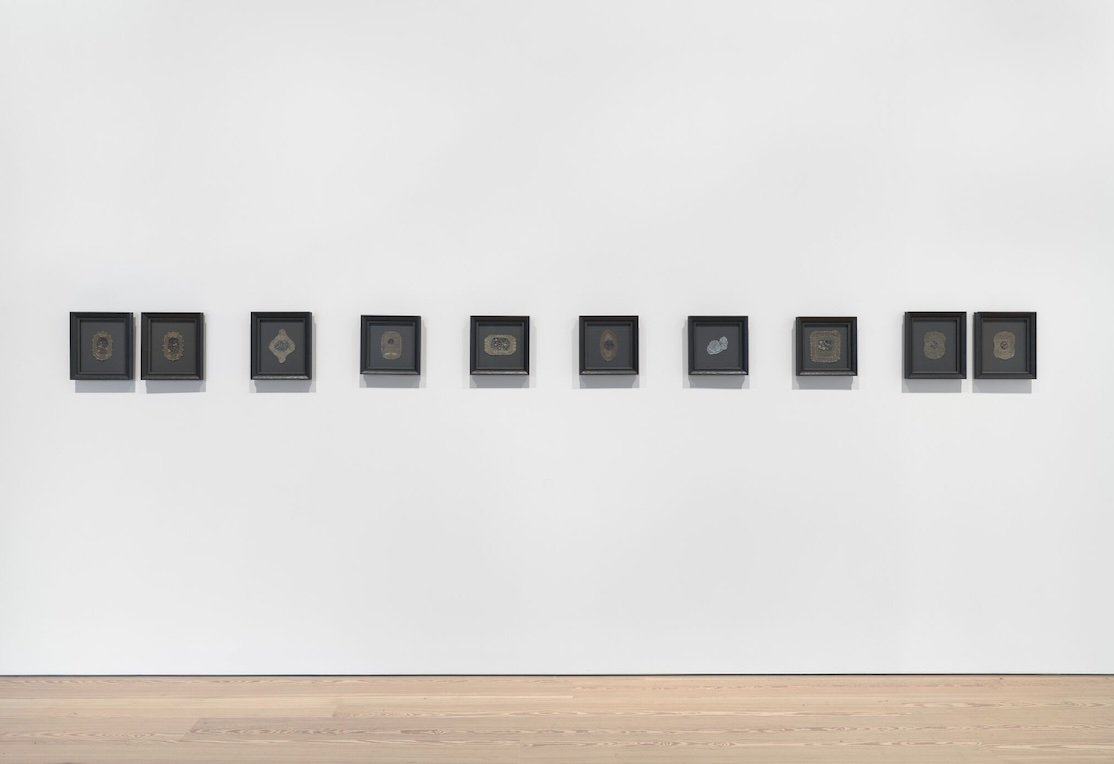
Installation view of Whitney Biennial 2026 (Whitney Museum of American Art, New York, March 8–August 23, 2026). From left to right: Jasmin Sian, if I had a little zoo: Fennel and busy bumblebee, 2015; Jasmin Sian, dovecote: Penny, Buddha and cardinals with wild texas sunflowers and weeds, 2024–25; Jasmin Sian, Spring dandelion and wild strawberries with Texas bayou ghost turtles, 2025; Jasmin Sian, dovecote: a tree-pee in Bugoy’s favorite spot with Mrs. Manok in mom’s garden, Philippines, 2025; Jasmin Sian, Venus, working horse, in a field of edible weeds in Central Park, 2025; Jasmin Sian, Mengmeng, most favorite cat in the world, 2026; Jasmin Sian, dovecote: Matsu and Hinoki at home foraging with broccolini, thyme, peonies, and a small gardenia bush, 2025; Jasmin Sian, dovecote: bantam chicken with hibiscus, iba and gardenia, mom’s garden, Philippines, 2024–25; Jasmin Sian, dovecote: Mrs. Manok and Bugoy with gardenia, mom’s garden, Philippines, 2024–25. Photograph by Ron Amstutz.
On the first floor lobby gallery, Zach Blas showed a striking work outlined in neon, CULTUS (2026). The floor supports a geometric pattern of neon lines in orange-red. A little higher up are circles whose colors are a light blue-gray. Traditionally, these shapes appear as sigils, symbols used in various occults. A central column moves upward to support a sphere that looks much like the real one world. It may be that Blas has intended this environment for a complicated construction having to do with alternative spirituality. The room itself is very dark; the walls were black. The brilliance of the neon colors depends on the room's darkness. One does not necessarily have to know the implications, both historical and devotional, that support this large construction. One can simply be taken with the combination of darkness and colored light. At the same time, a full realization of the piece would probably include its history.
There is not enough space to appreciate the complexity of this show, which is halfway accomplished and halfway less than professional. This seems to be the problem all the time with Whitney Biennials. Although we can not demand works coming from such a large geography as America's, we can ask that the works be original and well-made. Only as time goes on will we be able to see just to what extent fine art can be chosen as representative of the States. There is, today, a damaging sameness to the works we see in galleries, museums, and the Biennial (except for a few pieces). We need art that does not evade the problem of stylistic weakness or repetition. One hesitates to be harsh because the task is so large; who can make sense of such a complicated mosaic as the American art world? In the long run, we have only ourselves to climb out of an abyss that is perhaps more troubling than we might first imagine. Only across time will we have the wherewithal to make inspired work and survey it accurately.
Whitney Biennial is on view through August 23, 2026.
About the author: Jonathan Goodman is a New York City-based writer and poet.