Gabriele Münter: Contours of a World at Guggenheim Museum, New York
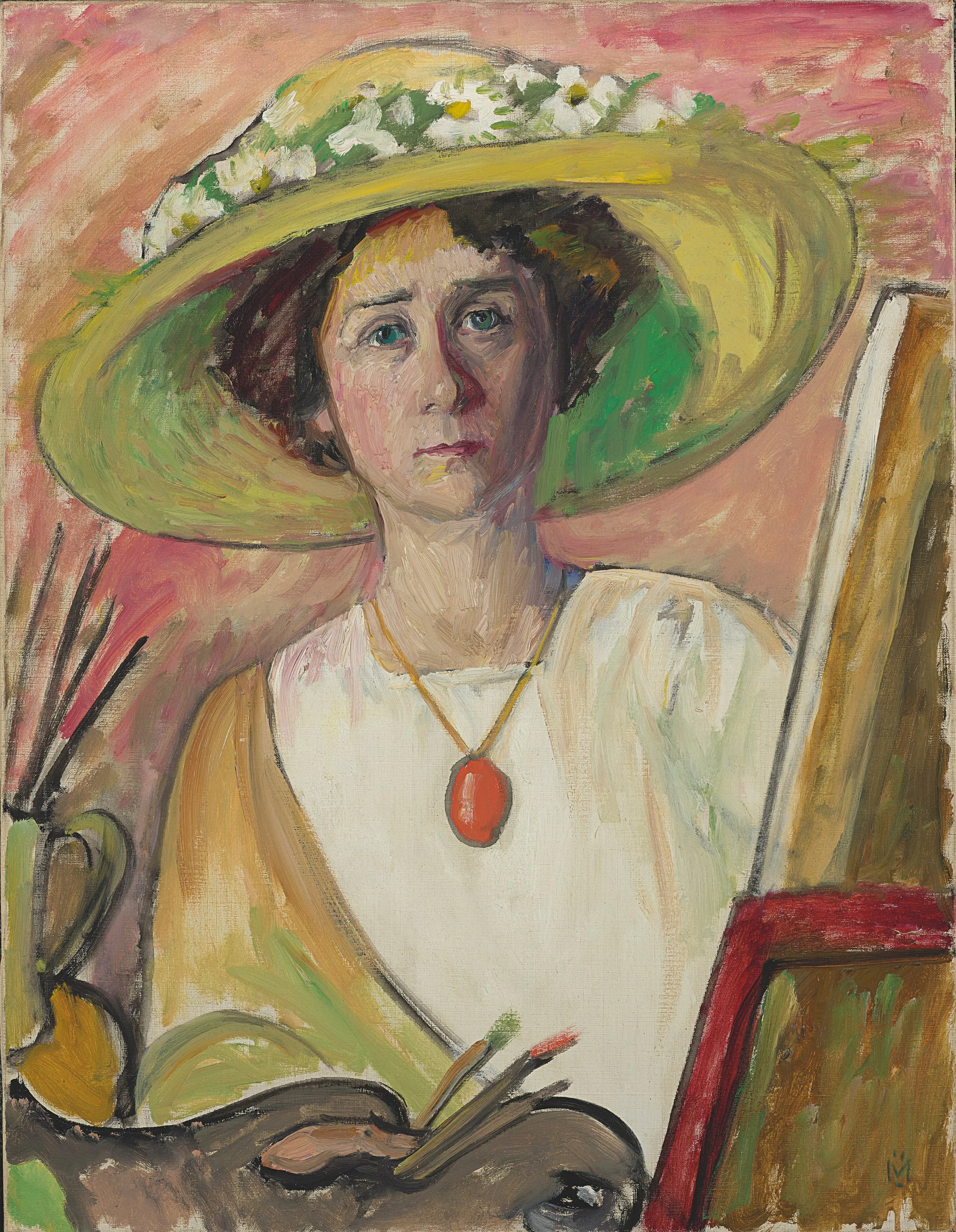
Gabriele Münter, Self-Portrait in Front of an Easel(Selbstbildnis vor der Staffelei), ca. 1908–09. Oil on canvas, 3011/16 × 2313/16 in. (78 × 60.5 cm). Princeton University Art Museum, Gift of Frank E. Taplin Jr., Class of 1937, and Mrs. Taplin. © 2025 Artists Rights Society (ARS), New York / VG Bild-Kunst, Bonn.Photo: Bruce M. White, Princeton University Art Museum / Art Resource, NY
Author: Jonathan Goodman
Published Wednesday, April 8, 2026.
Gabriele Münter, the remarkable early and mid-twentieth-century painter, is having an extensive show on the two flat exhibition floors that lie off the spiral of the main space. Münter was a superb painter of emotion, as evidenced mostly by portraits, interiors, and studies of landscapes. Her studies describe the life of an artist who is living among the upper classes; indeed, traveling was part of her vocation, especially to Scandinavia.
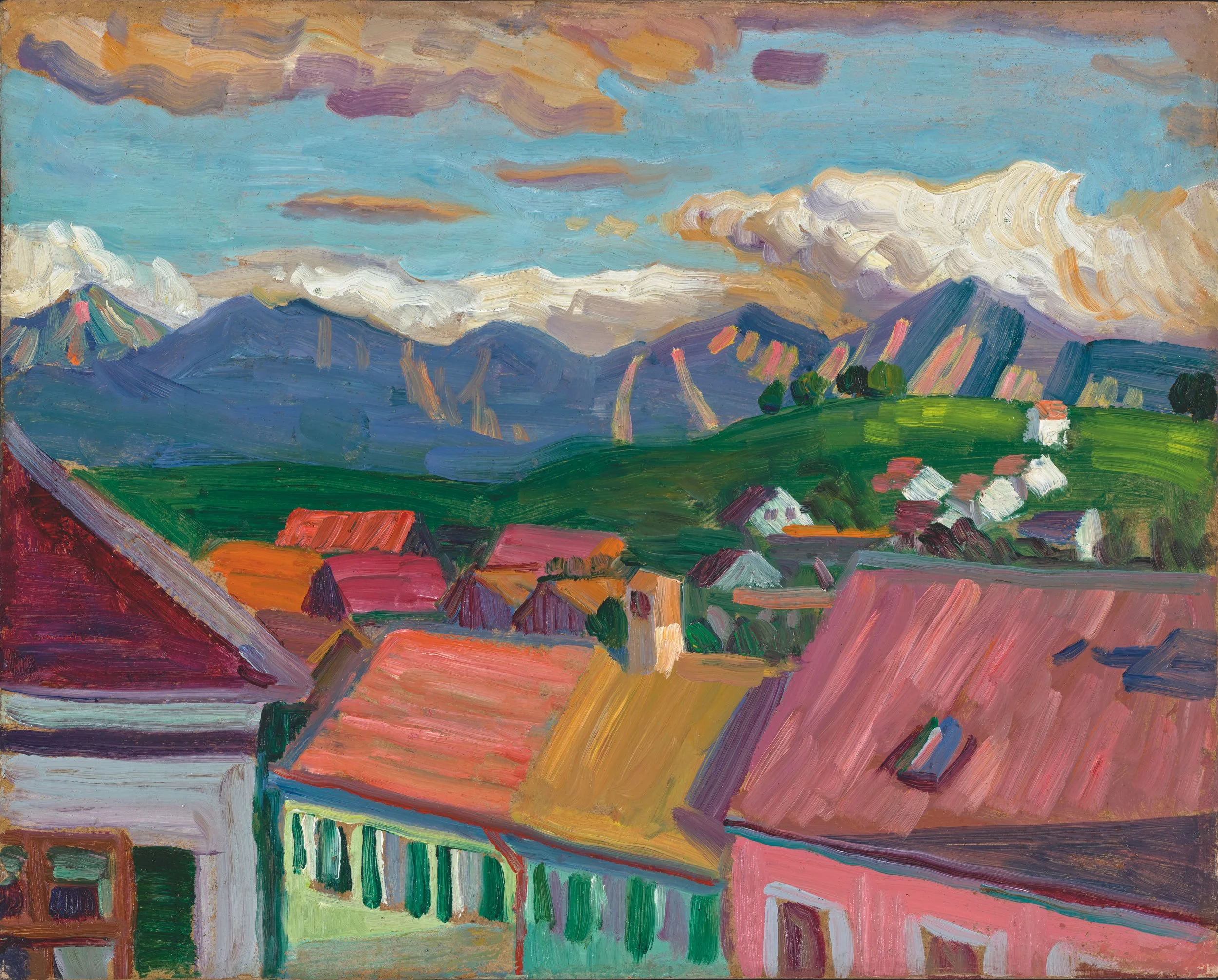
Gabriele Münter, From the Griesbräu Window (Vom Griesbräu Fenster), 1908. Painting on board, 13 × 15 13/16 in.(33×40.1 cm).Städtische Galerie im Lenbachhaus und Kunstbau München, On permanent loan from the Gabriele Münter and Johannes Eichner Foundation, Munich L142. © 2025 Artists Rights Society (ARS), New York / VG Bild-Kunst, Bonn.
She worked highly effectively with matte colors that tended to be dark. Münter conveyed deep feeling through keen studies of likeness that were realistic but painterly. She concentrated on perceptions that were both warm and objective; her differences in color from the actual object she describes invest the painting with true originality. She painted with a deep empathy.
We need to remember that Expressionism, whose best investigators were mostly German, except the extraordinary Norwegian Edward Münch took place at roughly the same time as Modernism. Although she worked figuratively, her approach can be thought of as experimental. Münter did many studies of people, concentrating on family life. She conveyed the pleasures of life among friends. In some ways, despite her innovation, she remained true to the traditions of western art, in addition to the innovations of the time.
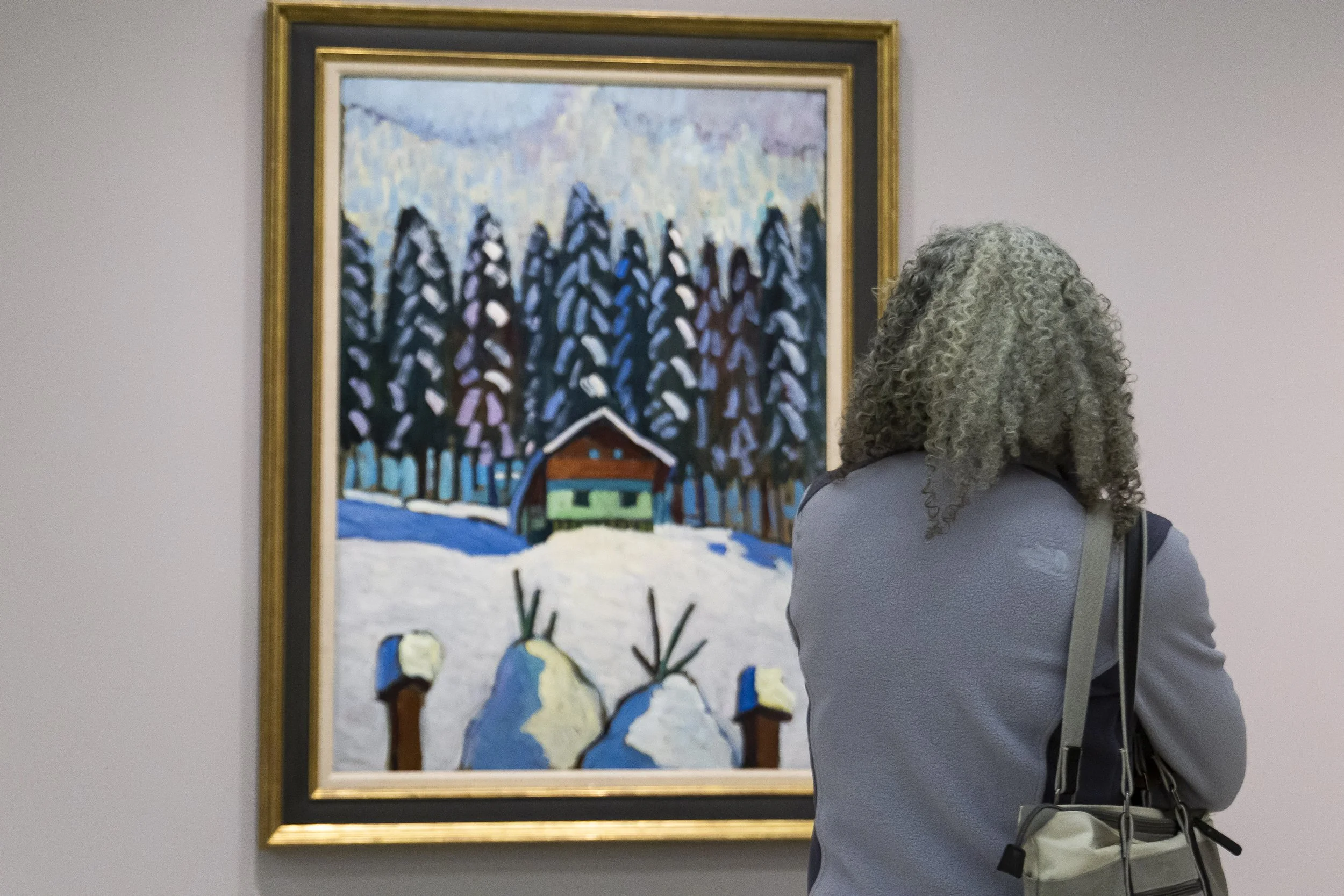
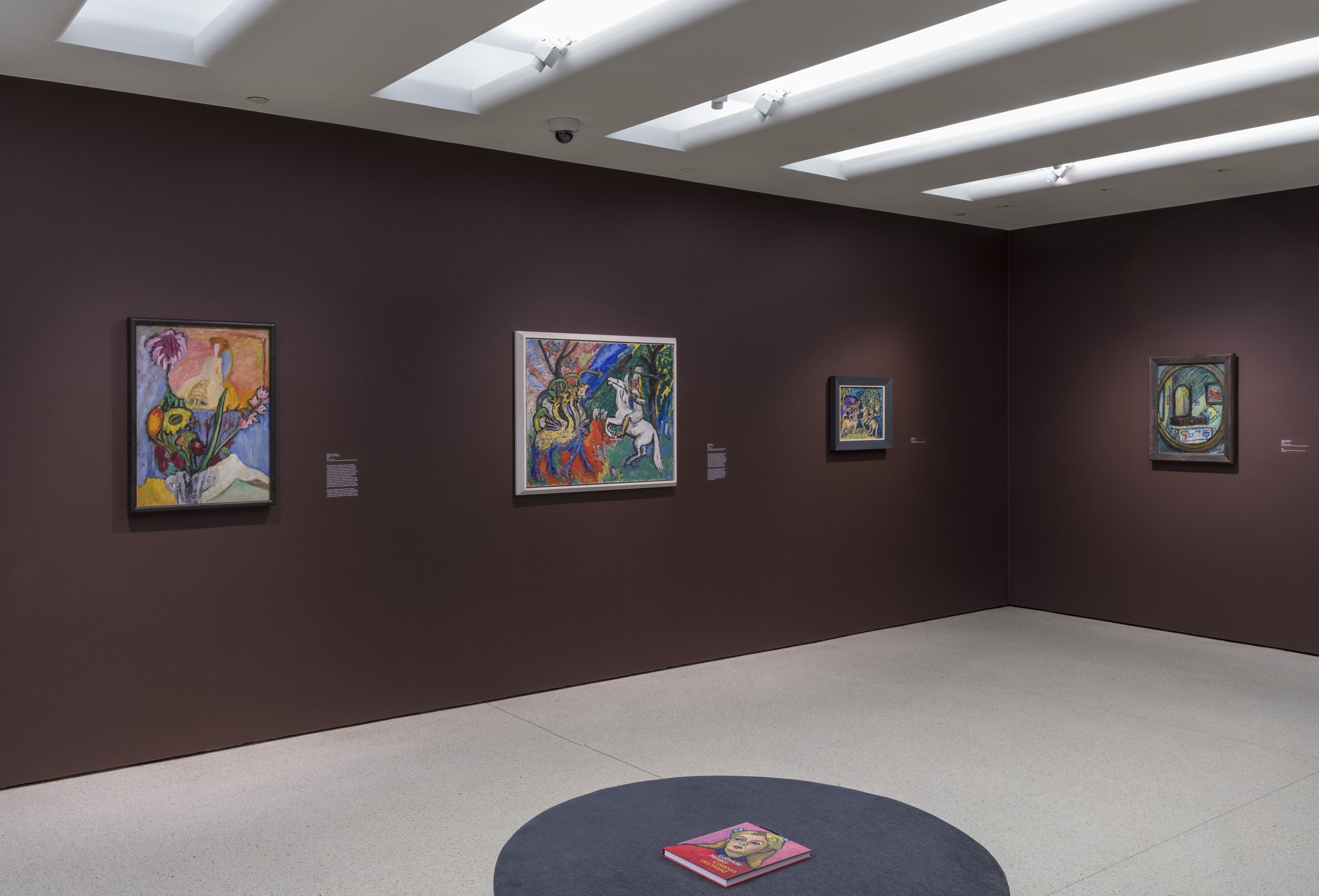
Installation view, Gabriele Münter: Contours of a World at Guggenheim Museum, New York. Image courtesy of The Solomon R Guggenheim Foundation.
The Expressionists were hardly a movement devoted to undermining tradition. Even so, they were current in their practice. We think of Paula Modersohn-Becker, a painter of extraordinary spiritual prowess —look at her portrait of the poet Rainer Maria Rilke. Münter, close to traditional painting, was in fact influenced by historical art. She did so by emphasizing the use of color, not accuracy.
We can see this in the painting Boating, 1910, which depicts four people on a large rowboat, with the landscape and sky. A man with a beard and a blue jacket stands at the head of the boat. Three women, two of them facing him, and one rowing with their back to the viewer, fill the rest of the boat. The mood, being slightly somber, seems a bit unusual for an outdoor holiday. This is something we regularly experience when seeing the work of Münter, who invests her efforts with a high degree of adept attention.
“Head of a Young Girl, 1908” is a striking portrait of a girl, a little over ten years old. She has full-bodied blonde hair with light blue ribbons and wears an orange-red sweater with a rounded blue collar. Although she is quite young, her demeanor is mature beyond her years. She also feels contemplative. The seriousness of the atmosphere gives the painting its depth. The intensity of the colors is such that they heighten the painting.
In a beautiful, visionary painting, “Sunset over Staffelsee, 1908”, Münter chooses striking colors for her portrait of islands of water and sky. In the lower left, there is a green meadow. In the water itself, there are two islands, one of which is dark brown and rises a bit above the sea. Finally, in the back behind these islands at the top of the painting, there are two large clouds; on the left, the cloud is red, and on the right, the cloud is yellow. At the work’s very top, there is a dark blue sky. Normally, we would not consider Münter’s use of colors accurate, but in fact, the hues register as genuine depictions of nature. When the visionary encompasses the realist impulse, as it happens here, we have a terrifically exciting work of art.
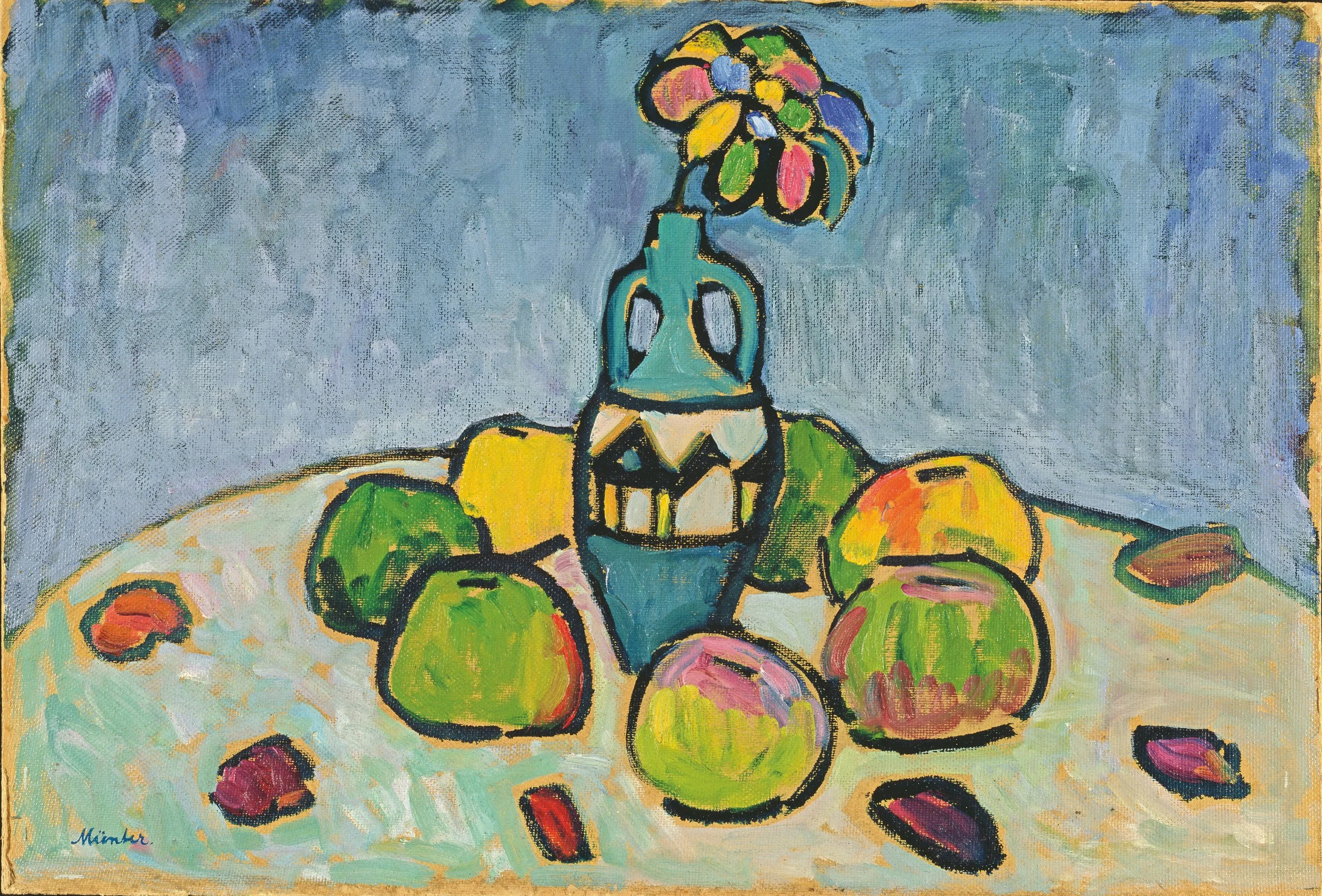
Gabriele Münter, Gray Still Life (Stillleben grau), 1909. Painting on board, 13 9/16 × 19 13/16 in.
(34.5 × 50.4 cm). Städtische Galerie im Lenbachhaus und Kunstbau München, Donation of Gabriele Münter, 1957. © 2025 Artists Rights Society (ARS), New York / VG Bild-Kunst, Bonn.
Stillleben mit Madonna, 1911, a dark, serious still life of flowers and a Madonna statue, once again underscores the devotional nature suggested by Münter’s efforts. The flowers, supported by a small wooden table, rise up on the left, brushing against the dark green wall. The Madonna to the right of the flowers, dressed in blue and light red clothing, holds the Christ infant on her left. Next to her is another vase, perhaps filled with Cat’s Paw. This painting stands as both a nearly academic study of flowers and a devotional recognition of Christian myth. It is exciting to see two major genres of imagery set together so well.
We need to remember that Münter painted these works at a time when Cubism was rising to great acclaim. Cubism was so original and innovatory that it may be hard to recognize the subtle advances of expressionism, but artists such as Münter herself, Kirchner, and Munch demonstrated how we can find an exciting newness in art that still follows traditional form. This was done primarily by depicting emotional intensity by means of brilliant color. As a result, even today, we have the tendency to be drawn more often to the revolutionary Cubist impulse. Cubism dominated the scene, and it is especially pleasing to view a show in which a major artist such as Münter can be understood, in her own way, as a prophet of her time.
In summation, we need to re-track the expressionist artists, perhaps the women especially, for their visionary gifts. In our current circumstances, in which eclecticism remains popular, it makes sense to see different art movements more equitably. We are now distant enough from Cubism to be more objective about its achievements. They are, of course, very great, but it is also true the expressionist have not only emotional depth but also technical skills that can be seen as inspired for their time. Münter’s exhibition, highly exciting, gives us the chance to make sense of a major artist who found new ways to paint through the remarkable use of color.
About the author: Jonathan Goodman is a New York City-based writer
Installation view, Gabriele Münter: Contours of a World at Guggenheim Museum, New York. Image courtesy of The Solomon R Guggenheim Foundation.