Self Attack: Hans Haacke’s showing of an old work at Maxwell Graham, New York
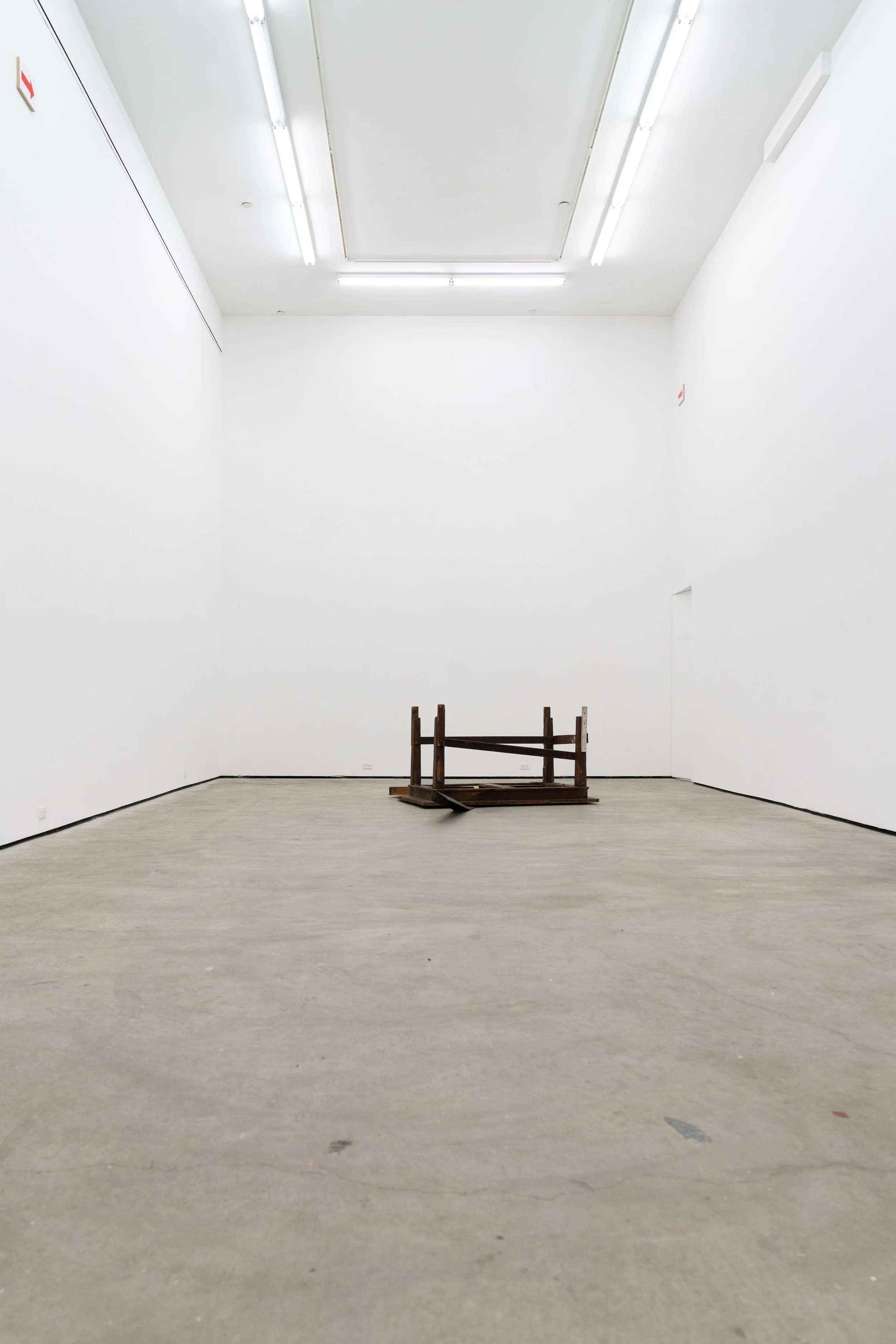
Installation view, the work of Hans Haacke and Louise Lawler, Maxwell Graham, 2026. Courtesy the artist, Maxwell Graham, New York, Paula Cooper, New York, and Sprüth Magers, New York.
Author: Phil Cai
Published Sunday, April 19, 2026
A thorough examination of a system is the prerequisite for launching an attack on what that system reveals. However, it is rarely recognized that the natural progression of analyze-then-critique comes at the cost of a cloudier vision in the analysis performed as soon as the role of an observer is transformed into that of an arbitrator. This is perhaps the ultimate Hans Haacke problem that he proposed for himself.
Haacke started his career examining physical systems, but progressed to reveal social systems later in his life. Naturally, during the process of commenting on social systems, some works that were more pinpoint in the attacks they performed tend to be more well-received and widely acclaimed. However, the clarity of the examination seems to always be in disagreement with the strength of the critique. If we divide Haacke’s lexicon into works that paused at elucidating the mechanisms of the system and those that proceeded with an attack based on these analyses of the system, on the one hand, there are pieces such as “News, 1969/2008,” which involved a machine continuously printing live news onto an endless paper roll. The chaotic accumulation of paper and news on the floor indicates the very nature of news broadcasting and how we perceive and consume information. In “Environment Transplant (proposal), 1969,” Haacke proposed to install a 360 live-streaming device onto a truck, which would be driven around the LA metropolitan area. The stream was to be projected live into a large white room in the shape of a vertical cylinder. Once again, the transformation between two systems was clearly introduced with the live broadcasting mechanism. Under these works, any impetus to provide further preferences on how the system should work was restrained, and it is this very restraint that rendered the depiction of the system fair and clear.
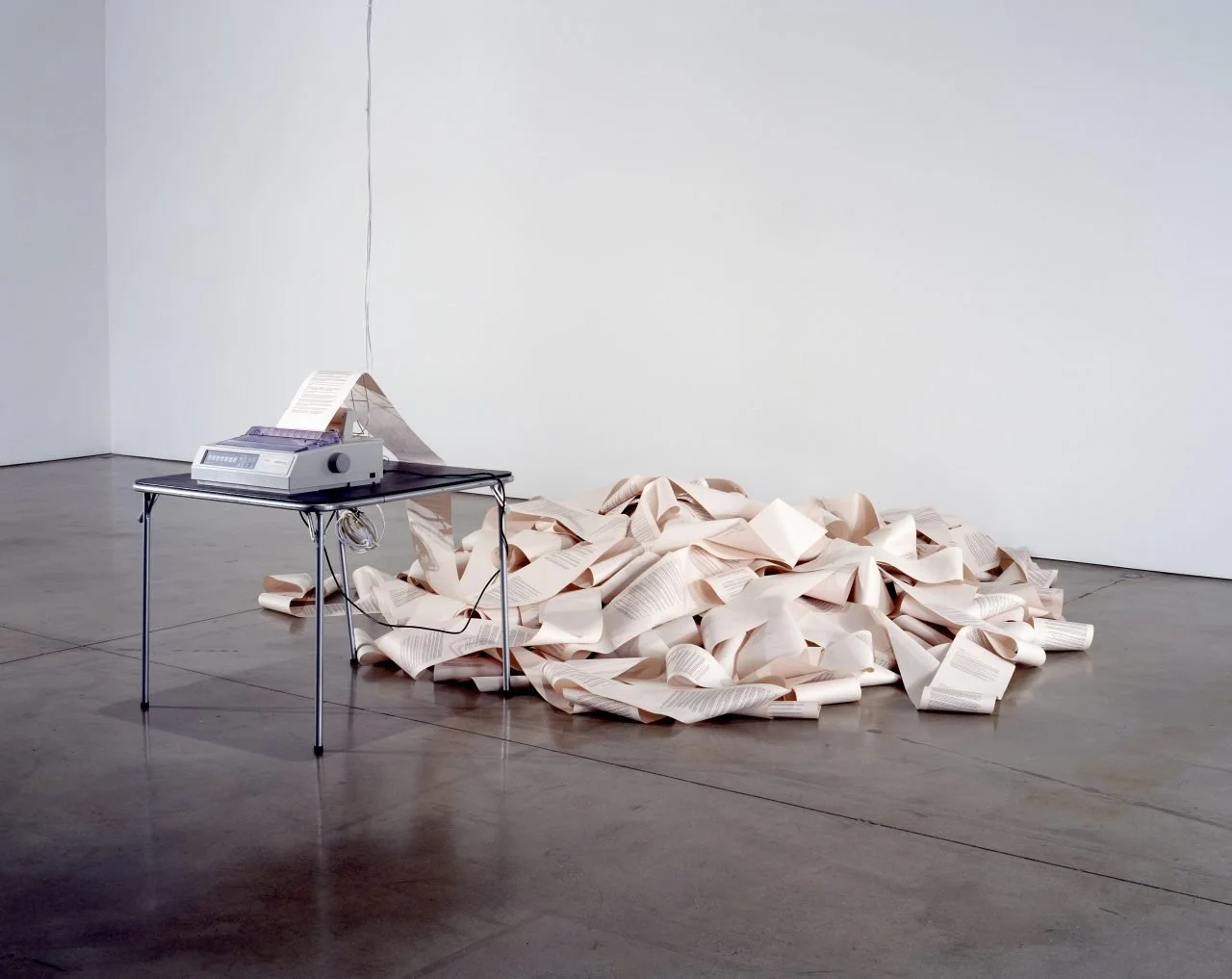
Hans Haacke, News, 1969. Dot matrix printer, paper rolls, information service of news agencies, dimensions variable, edition 2/3. Courtesy of the artist and Paula Cooper Gallery, New York, © Hans Haacke / VG Bild-Kunst, Bonn 2024, Photo: Ellen Wilson. Image from www.schirn.de.
Another group of Haacke's works, on the other hand, made the target of the artist’s assault very clear, at times with the intention included in the very title of the works. “Shapolsky et al. Manhattan Real Estate Holdings, a real-time social system as of May 1, 1971” directly pointed out the New York slum lord's insider trading. “Les must de Rembrandt, 1986” called out the luxury giant Cartier’s immoral business practices in Africa. “MetroMobiltan, 1985” epitomized the capital-based “conscious industry” with big corporation (Mobile)’s art museum sponsorships. Similar to the first group of works, what was provided and laid out in front of the audience was still factual. But the difference lies in the fact that now these facts were clearly selected and choreographed to perform the critique. The proposed process of analyze-then-critique is in fact analyze, critique, and then re-arrange the analysis in service of and to present together with the critique. Instead of simultaneously looking at the whole system and observing the movement of an individual throughout the system, focusing the examiner’s gaze on a mapped-out route of how this individual’s movement is chosen as the representative and the baseline of induction for the entire system is perhaps inevitable.
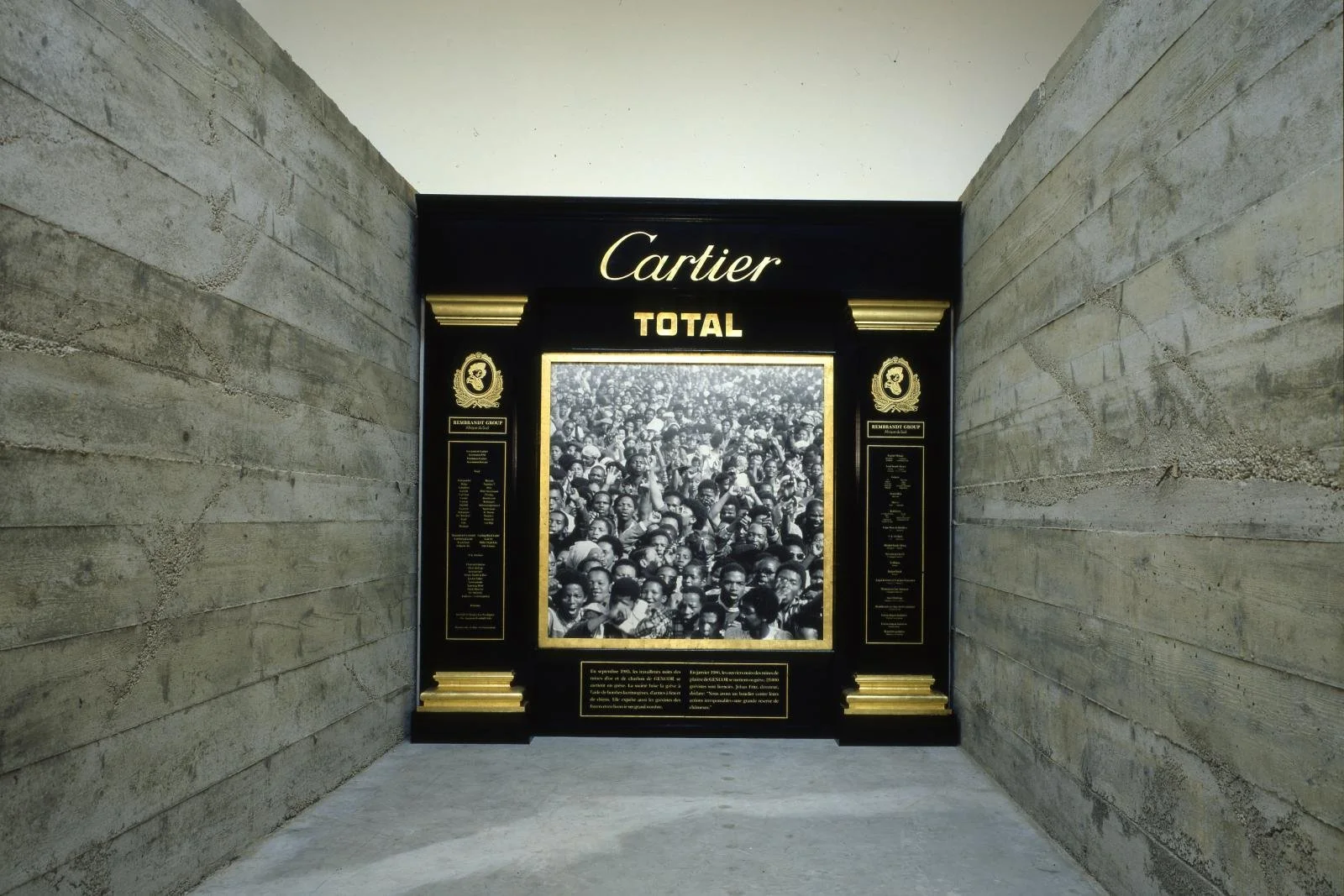
Hans Haacke, Les Must de Rembrandt, 1986. Mixed media installation (concrete, wood, photographs, text panels, corporate listings). Installation photo, Le Consortium, Dijon. Image from www.consortiummuseum.com.
Arguably, Haacke is aware of the flaw of his own system: the sharpness of the critique comes at a cost of the very integrity of how a system is subjectively examined. Regardless of how fair the analysis is proposed, the true intention of these inquisitions will always be judged against the results. Haacke has executed a number of works involving public polling. But he had a projected result in mind before the pieces were installed. Even in his proposal to map out the demographics of New York City museum goers using New York’s Park Avenue as the axis, he claimed to be working as a census enumerator, whilst actually performing as a cartographer with what he would be mapping out clearly predetermined.
The impossibility of maintaining clarity of the system while mobilizing to advocate for wrongdoings is eerily reminiscent of American politics of the past 10 years. The New York Times’ Fact Checking series has the premises of a make-shift Hans Haacke work. Take its March 5, 2025, social media post “Fact-Checking Trump’s Address to Congress” as an example, a manufactured fairness was put on display when two out of the five statements that were fact-checked were marked “misleading,” while another two were marked “needed context or evidence.” Interestingly, there was one claim that was marked “True,” seemingly legitimizing its examination of the system due to the fact that the results weren’t lopsided. It was evident that the “true” claim was the moral counterweight carefully planted to show a fairness that does not exist and could not exist once an aggression is initiated. Upon more careful examination, one would also realize that the New York Times oftentimes sprinkles in one or two “true” claims when fact-checking their opposition’s claims, and these “true claims” are always from topics that weren’t of their primary interest or concern. This is certainly a bi-partisan problem in contemporary America, and is perhaps why movements towards political extremism are difficult to reverse philosophically, and is arguably why Marxism ought to be examined by the dichotomy of theorization, which is deep and enlightening, and mobilization, which has not yet stood the test of history.
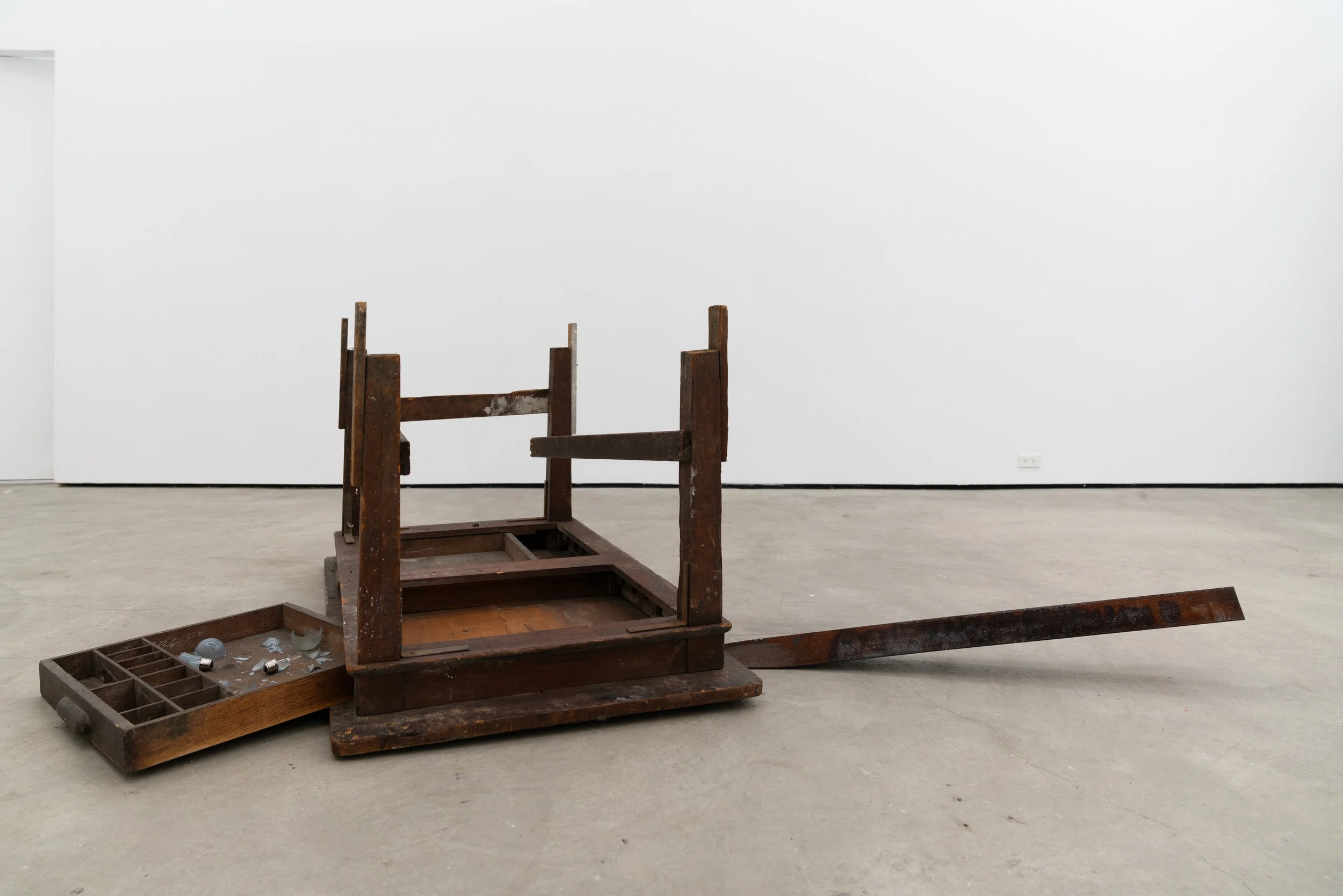
Hans Haacke, Untitled #1, 2005. Table, drawer, iron brace with welded text, broken lightbulb, pin 59 7⁄8 x 32 x 34 1⁄4 inches (152.1 x 81.3 x 87 cm). Unique. Courtesy the artist, Maxwell Graham, New York, and Paula Cooper, New York.
With his 2026 duo-show at Maxwell Graham Gallery in New York, Hans Haacke decided to exhibit “Untitled #1, 2005,” a work made in response to 9/11. The piece depicts an overturned table with its four legs pressing against the sky, and a metal plate welded with the words “first name last name” emerged from underneath. Broken glasses and an American flag pin were spit out of a drawer that was curiously still in its upright position. The obvious read is that some things are physically subverted while others are corrupted, whilst seemingly stable on the outside. The welded name tag reminded those from 2001 that American patriotism usually predated the actual individual sacrifices.
The gallery's press release wrote: “The times when an artwork is made and the times when it is exhibited are important.” It is an unsatisfying statement, as Yonatan Eshban-Laderman pointed out on Impulse Magazine, when she called out the mere gesture of re-presenting an old piece in a new era as an ignorance of pretending nothing has happened to justify a reevaluation of the piece. I’m not in disagreement with this read when treating this as a one-off exhibition. But if we cross-reference this gesture more as a response to the conditions of the afore-discussed problem, the arbitrary insertion of an old piece at this moment might be interpreted as a deliberate disclosure of the core issue: the mobilization of the critique of a system sabotages the legitimacy of the inspection of the system on both a clarity and objectivity level.
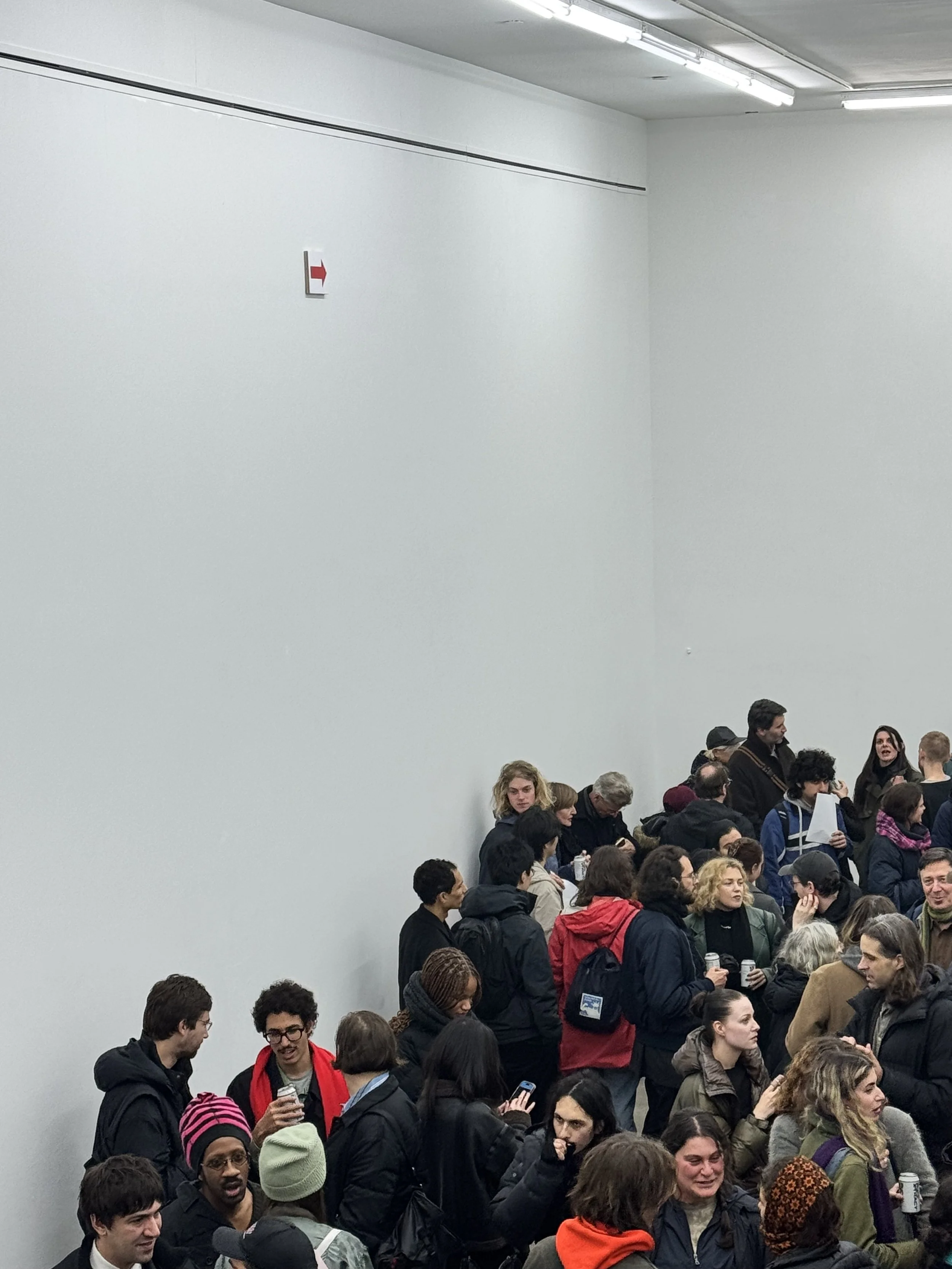
Installation view, Louise Lawler, Alizarin (Terrorists are made, not born), 2023. Dye sublimation print on plywood, installed in any direction. 9 x 7 inches (22.9 × 17.8 cm), Edition of 30 + 10 AP. Courtesy the artist, and Phil Zheng Cai, New York.
If the first time “Untitled #1” appeared in 2005 in response to 9/11 was a “true” Hans Haacke piece, then its second appearance in New York in 2026 is perhaps a “gestural” Hans Haacke. When reading in correspondence to the entire context of what has happened to the piece (shown in a time when it’s made, and now reinstated with slight lack of context), it is more in line with the pieces that he had done which provides objective clarity on the system, except for that this time he pointed out with a gesture that the clarity comes at the cost of misrepresenting a previous work—a political statement of its own right.
The reason why I am somewhat confident in this interpretation over the Eshban-Laderman/Impulse Magazine read is because of the other artist’s work in the show: Louise Lawler’s “Alizarin (Terrorists are made, not born), 2023”, which posted a number of red arrows across the gallery space. At one moment two arrows were pointing towards one another, leaving minimal space in between, while at other occasions the arrows seem to be directing traffic in the more vertical than horizontal gallery space, leading the way outside of the gallery at times and within at others. If Lawler’s flat works depict a conceptual and mediational space in between the viewer and the works exhibited at specific sites, the red arrow works warn us about the intricacy of this very space as they fail to completely identify its parameters. When we are instructed to intrude into a space (physical into a site or conceptual into a piece of art), we ought to be aware of the sacrifices of this move—going forward for a subjective read on the details is strictly exclusive of stepping back to see the full picture.
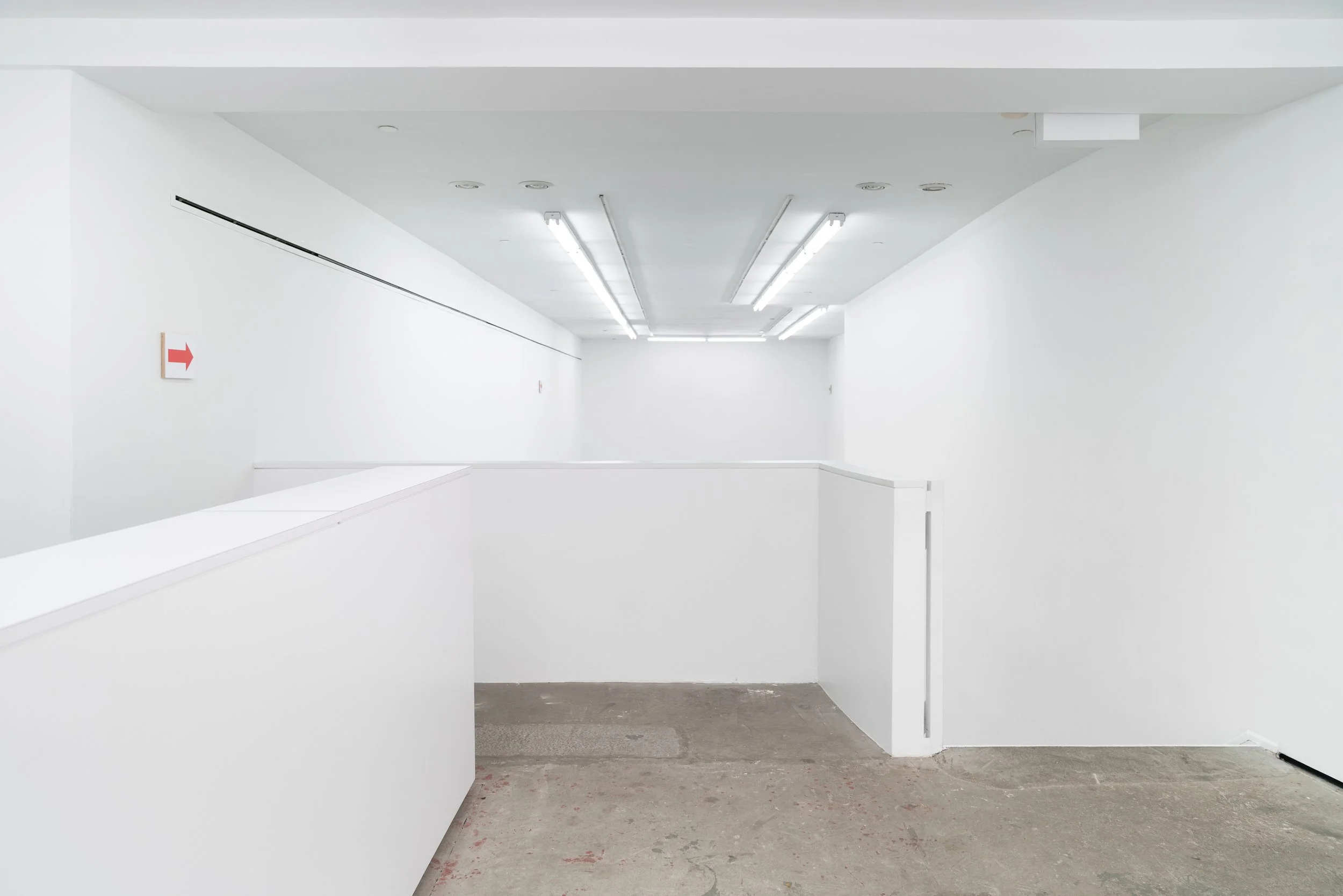
Installation view, Louise Lawler, Alizarin (Terrorists are made, not born), 2023. Dye sublimation print on plywood, Installed in any direction. 9 x 7 inches (22.9 × 17.8 cm), Edition of 30 + 10 AP. Courtesy the artist, Maxwell Graham, New York, and Sprüth Magers, New York.
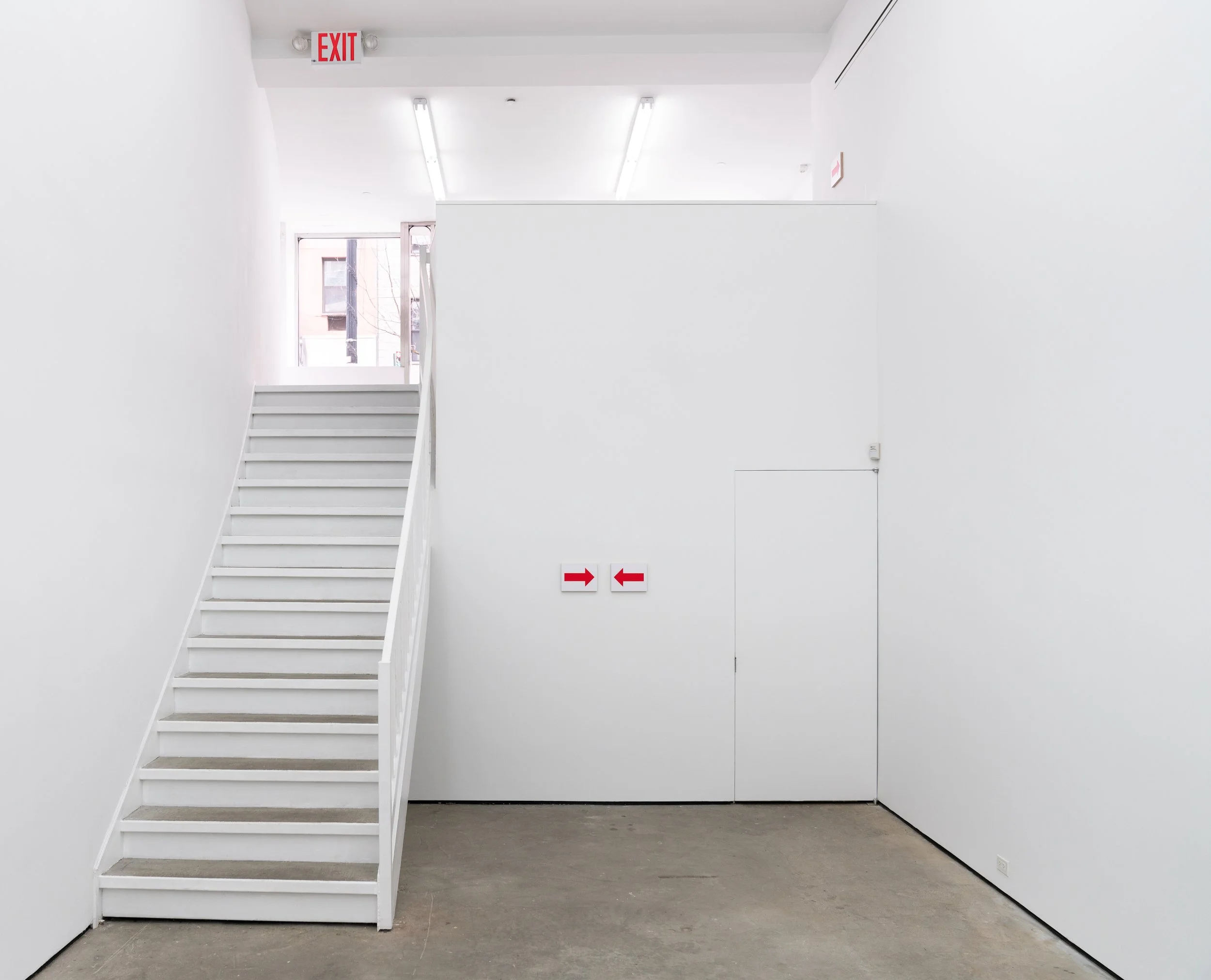
Installation view, Louise Lawler, Alizarin (Terrorists are made, not born), 2023. Dye sublimation print on plywood, installed in any direction. 9 x 7 inches (22.9 × 17.8 cm), Edition of 30 + 10 AP. Courtesy the artist, Maxwell Graham, New York, and Sprüth Magers, New York.
These red arrows are spatially zooming into the in-between space between what’s inside a work and what's outside it, and philosophically zooming out of the aforementioned system taken as a whole. The positioning of Haacke’s “Untitled #1” in the exhibition calls for an identical gesture: a philosophical zoom-out disguised by a factual zoom-in. In this sense, the 89-year-old master remains unique to his media—the only way this procedure can be performed is by installing an old work in a new show, alongside and within the framework of Lawler’s arrow works. Via this recursive self-attack, Haacke writes the endgame of systematic critique in brutal clarity. Assumably, by placing the old work questioning the own system it created in juxtaposition with the Lawler arrows, which seem to offer more clarity to the nature of the system, Haacke hinted at his preference for critique over clarity. Even though flawed, the critique goes on.
Dual exhibition Hans Haacke Louise Lawler was on view at Maxwell Graham, New York, March 5 - April 18, 2026
About the author: Phil Zheng Cai (American, b. Shanghai) is a curator and writer based in New York. His recent writings include catalog essays such as “Nomad Photography” (Parsons MFA Photography Thesis Catalog, 2024), as well as exhibition reviews and critical texts published in IMPULSE Magazine, T Magazine China, WhiteHot Magazine, and Widewalls, among others. His research focuses on systematic critique, a continuation of institutional critique emphasizing recontextualization and the inseparability of framework and context.