Rebellion in Big Girl Panties “Roses Rising – The Movement” by Leila Hekmat at Gropius Bau, Berlin
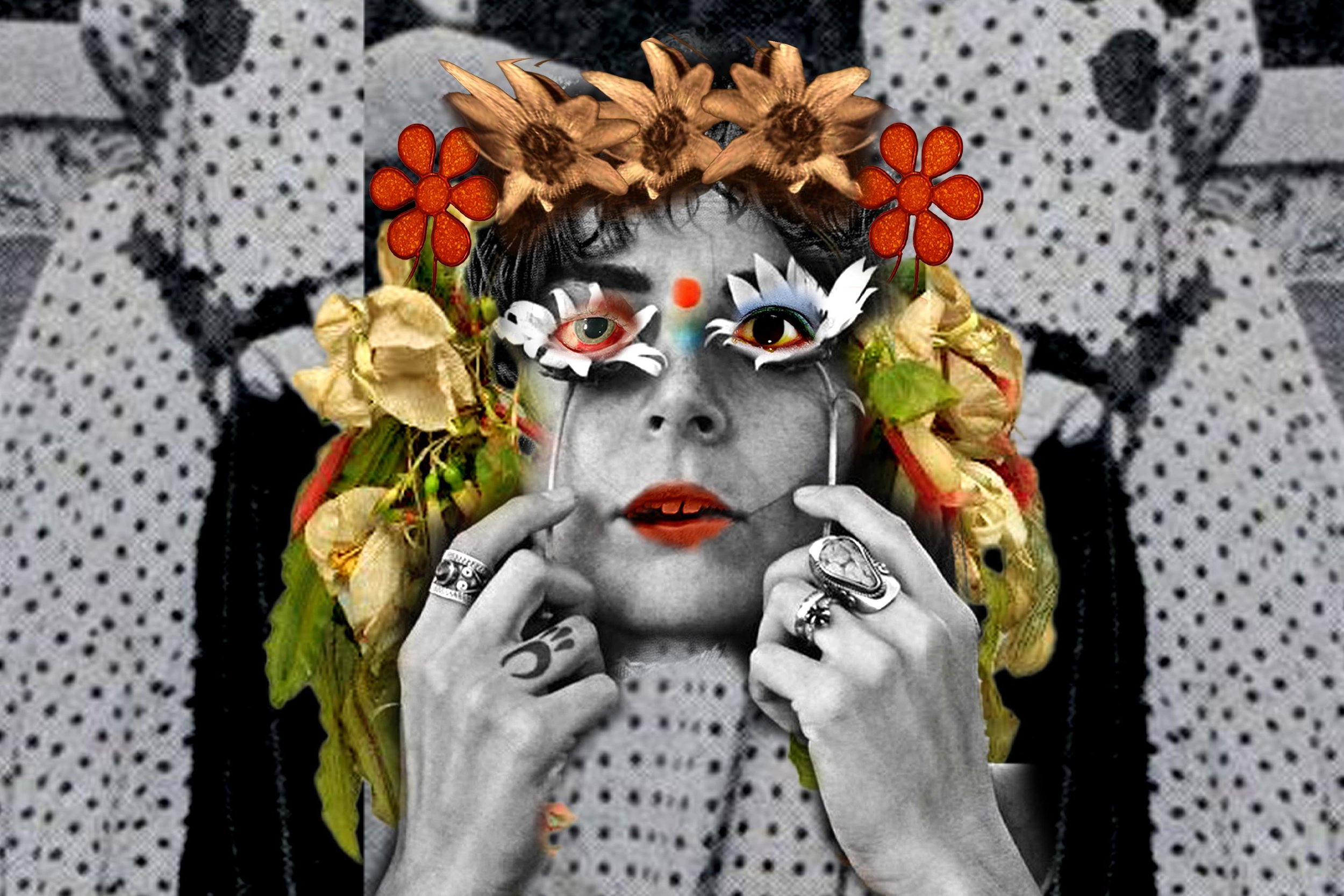
Leila Hekmat, Roses Rising, 2025, Courtesy of Leila Hekmat and Galerie Isabella Bortolozzi.
Author: Carolin Kralapp
Published Friday, March 13, 2026
Over two days in March, Berlin-based American artist Leila Hekmat presented a wild spectacle in the style of the Theatre of the Absurd in the atrium of Gropius Bau. Her new performance, “Roses Rising – The Movement”, is a multi-layered collage about an uprising, combining songs, ballet, concert, and happening to create a frenzied experience that lies somewhere between a fever dream, an exorcism, and collective ecstasy. What you saw there takes a while to sink in.
Upon entering the atrium, one's gaze is immediately drawn to a huge banner with various patterns hanging from the ceiling to the floor. In large letters, the audience can read: “Thou hast turned for me my mourning into dancing” – “Thou” is an old form of “You” from the King James Bible, Psalm 30:11, a direct religious reference. These references are repeated throughout the performance in numerous religious exclamations and repetitive chants, conveying a sense of devotion and prayer, as if one were in the middle of a sacred space. To the right, the words “Who will our saviour be?” are clearly visible.
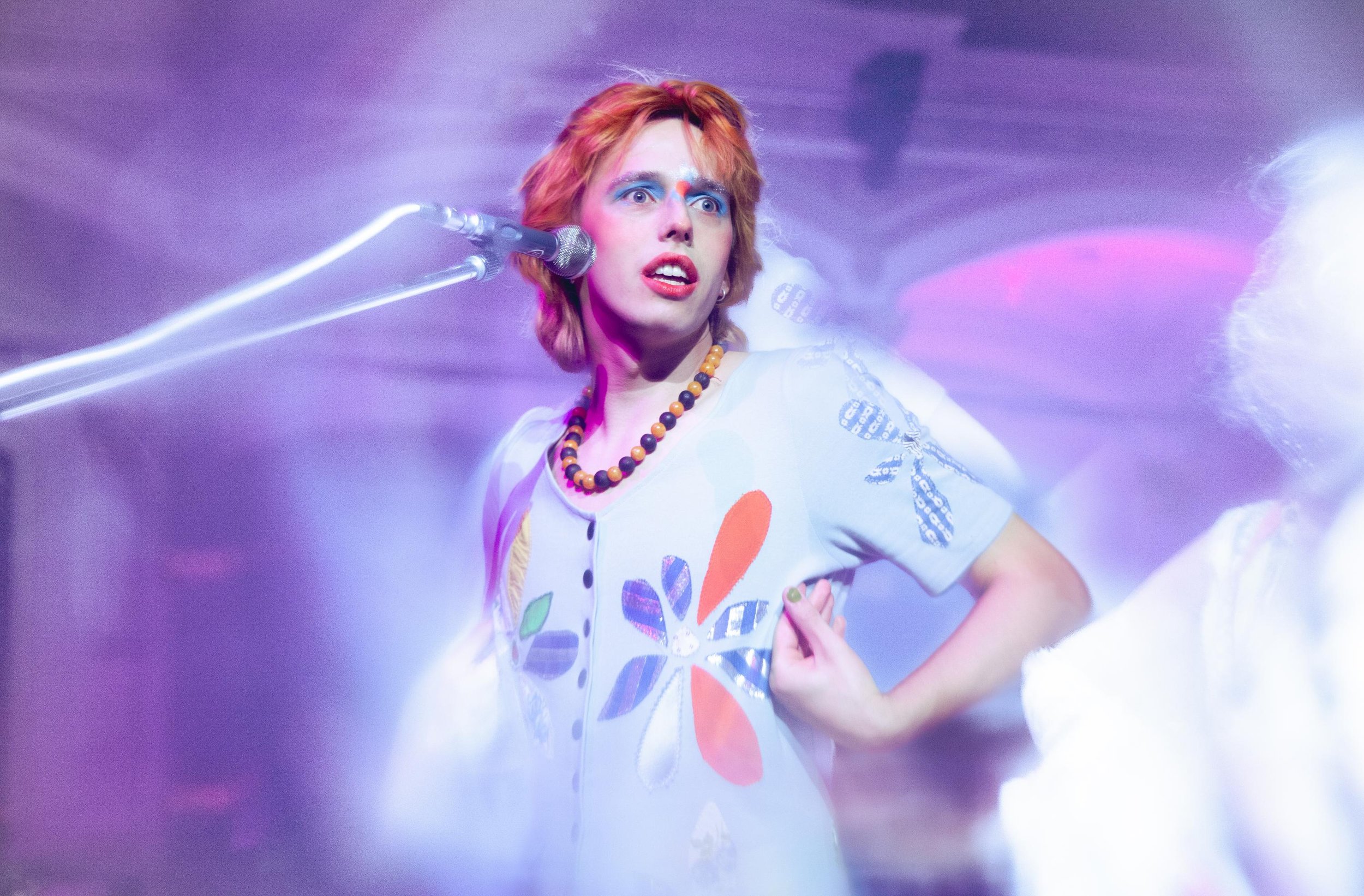
Leila Hekmat, Roses Rising – The Movement, Performance, Gropius Bau, 2026 © Gropius Bau, Photo: Amely Sommer
With its dollhouse-like staging, the stage itself is reminiscent of a grotesque dollhouse, a playroom for adults. Two round stage platforms surrounded by flowers and plants, and a flower-shaped dinner table, form the centre of attention. The latter serves as the starting point for a decadent dinner party that gradually escalates into a frenzied spectacle, spreading to the other areas of the room. Fairy-like figures float down from the gallery, emerging from another state of consciousness. A rock band creates a grungy bar atmosphere, and the scene transforms into something reminiscent of the new film “The Bride” where Frankenstein's wife comes back to life and celebrates her own imperfection with torn robes, eccentric sensuality and rebellious pride. The audience is drawn directly into the spectacle, some looking astonished.
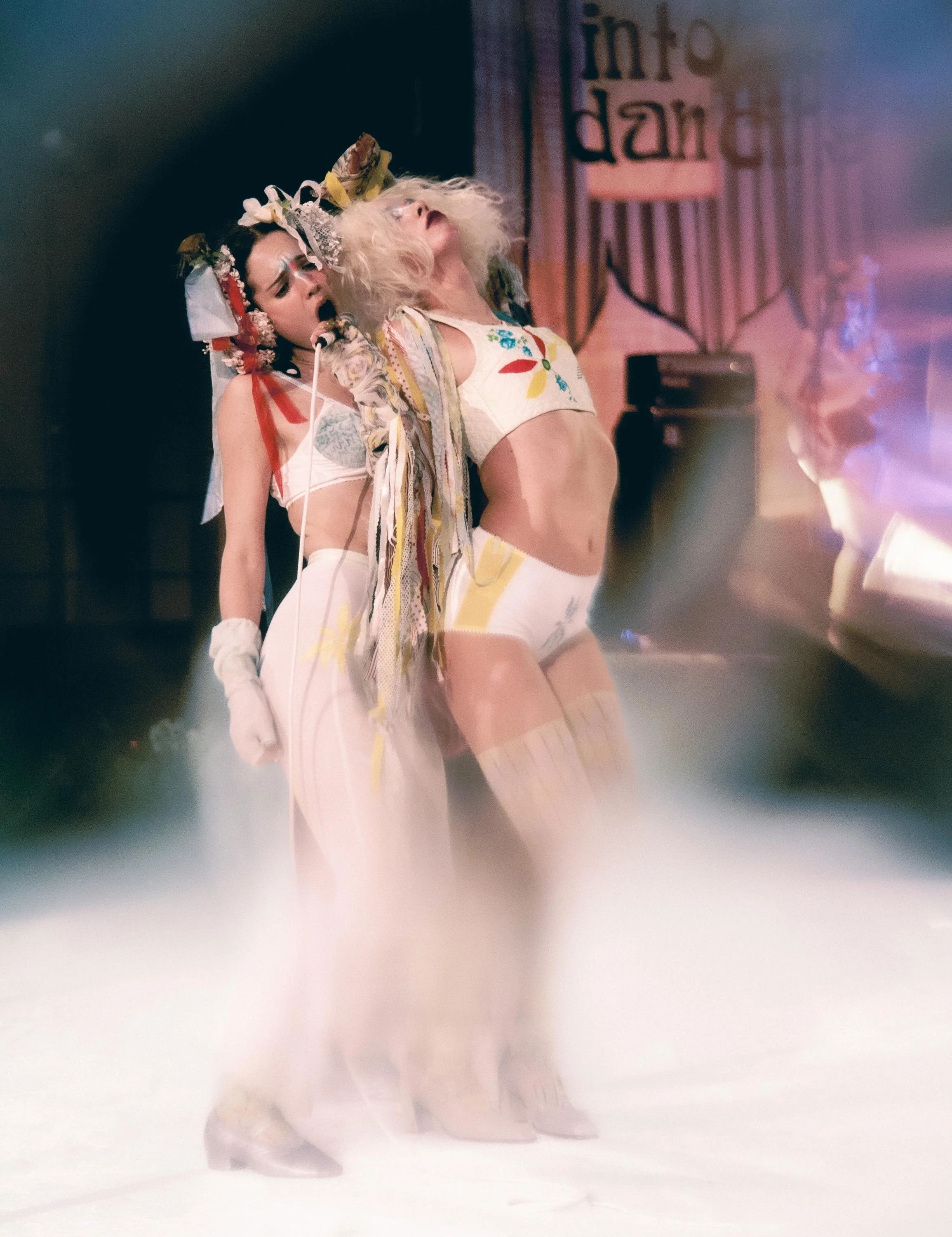
Leila Hekmat, Roses Rising – The Movement, Performance, Gropius Bau, 2026 © Gropius Bau, Photo: Amely Sommer.
The performative collage is based on in-depth research and collected material on the protest cultures of the 1970s. Rather than following a clear narrative thread, it combines different strategies and reactions that people employed to cope with times of crisis. “Fuck phones. Fuck experimental theatre. Fuck the news.” Trying to follow along is enough to make you feel like you're on the verge of madness. “Nobody is innocent, nobody is free.” A variety of different forms of expression blend together to create a vibrant overall picture, including multilingualism, dance and ballet, and a mix of drums, organ, and rock music.
Leila Hekmat, who has her studio at Gropius Bau, is known for her eccentric costumes and room installations, in which she collages historical references. Her humorous, excessive, and detailed works address social issues such as feminism, power, morality, protest cultures, sexuality, and gender. The protagonists in her works always wear her handmade costumes. This is also the case in “Roses Rising – The Movement”. The range of costumes includes a dress printed with one of Hekmat's striking female figures, as well as lace, cuffs, and knee-high socks in various shapes and colours, and underpants bearing the words “Big Girl Panties”. Added to this is loud, backcombed hair that sticks out. The motto seems to be: the more, the better. The eye cannot get enough. The women who take the stage here are loud and full of energy that needs to be released. On stage, singers and dancers perform in ever-changing ensembles and styles, incorporating elements of queer ballroom culture, such as extravagant costumes and ritualistic performances, to create an atmosphere of a chosen family where the boundaries of gender and identity are blurred. This is a celebration of rebellion against norms.
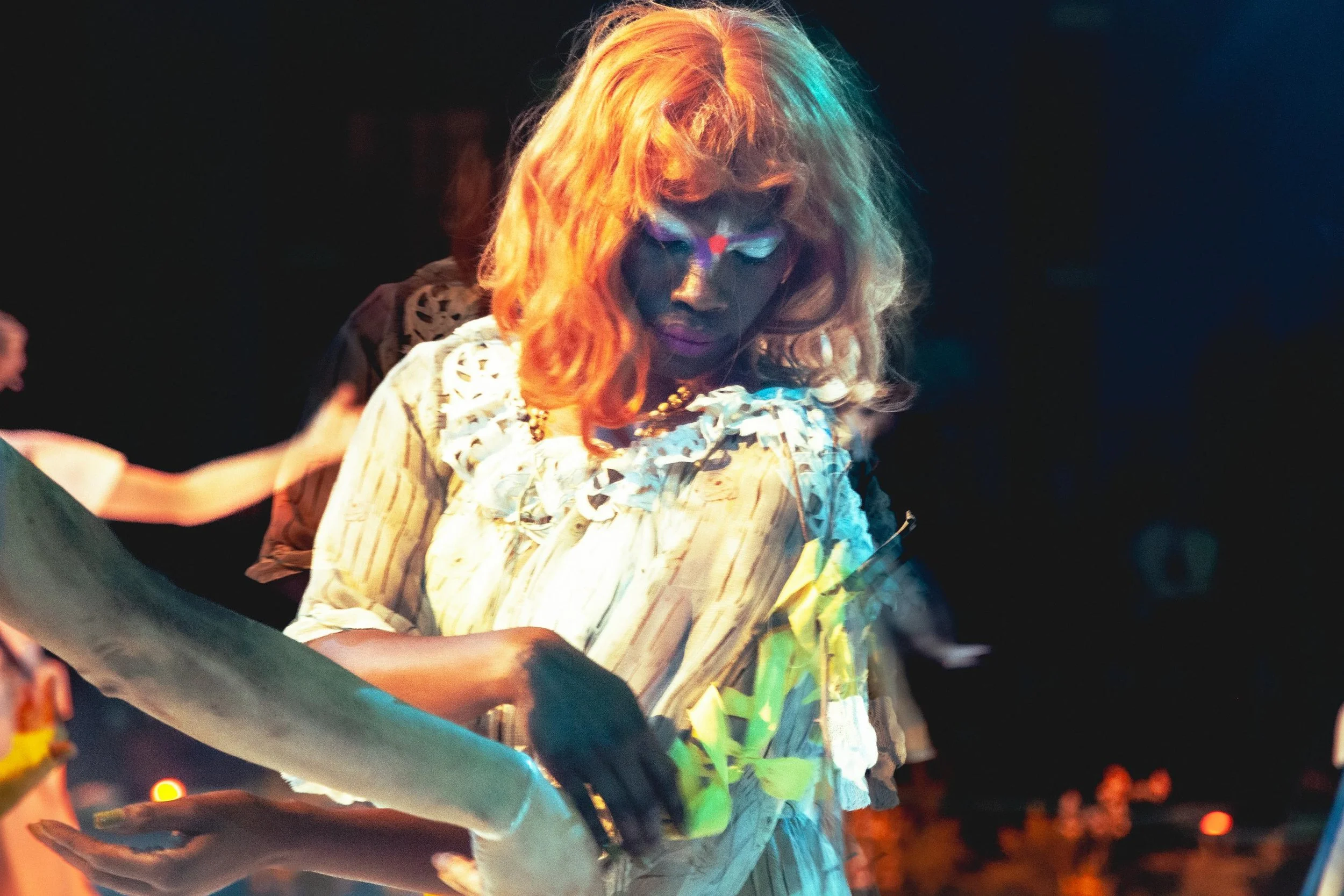
ekmat, Roses Rising – The Movement, Performance, Gropius Bau, 2026 © Gropius Bau, Photo: Amely Sommer.
“Roses Rising – The Movement” is full of references that open up different levels and allow for various interpretations. It is a performative collage that does not convey a clear message, but instead provokes an abundance of impressions. Consequently, it is not necessarily understandable at first glance and not easy to follow. Rather than conveying just one message, hundreds rain down on the audience. However, one thing that is clearly conveyed is the multi-layered complexity of emotions, the sense of urgency, and the call to stand up, take action, and start a revolution together – right after dinner in a small group. “Let's go! What are you still doing here? GO! You should be protesting. You should be spreading the revolution. Tomorrow morning. I'll see you all there!”
“Roses Rising” is not only a fever dream and a rollercoaster ride of emotions, but also a challenge to our sensory perceptions. But, most importantly, it conveys the hope of collective action, which is something we, especially as women in this society, urgently need in 2026.
Roses Rising is presented as a two-part performance in collaboration with HAU Hebbel am Ufer. The performances at Gropius Bau will be followed by the premiere of the stage production The Dinner at HAU1 on 15 April 2026.
The performance “Roses Rising – The Movement” was shown at Gropius Bau in Berlin on 6 and 7 March 2026. Further information: Berliner Festspiele.
About the author: Carolin Kralapp is a Berlin-based art historian and writer. She writes for magazines and online platforms, creating accessible and contemporary text formats that communicate complex ideas from the worlds of art and culture. Her work has appeared in publications such as Berlin Art Link and gallertalk.net, among others. Her particular interest lies in photography and conceptual art, focusing on themes of human relationships, social and societal issues, and personal experiences.