Where Difficulty Moves: Marcel Duchamp at MoMA
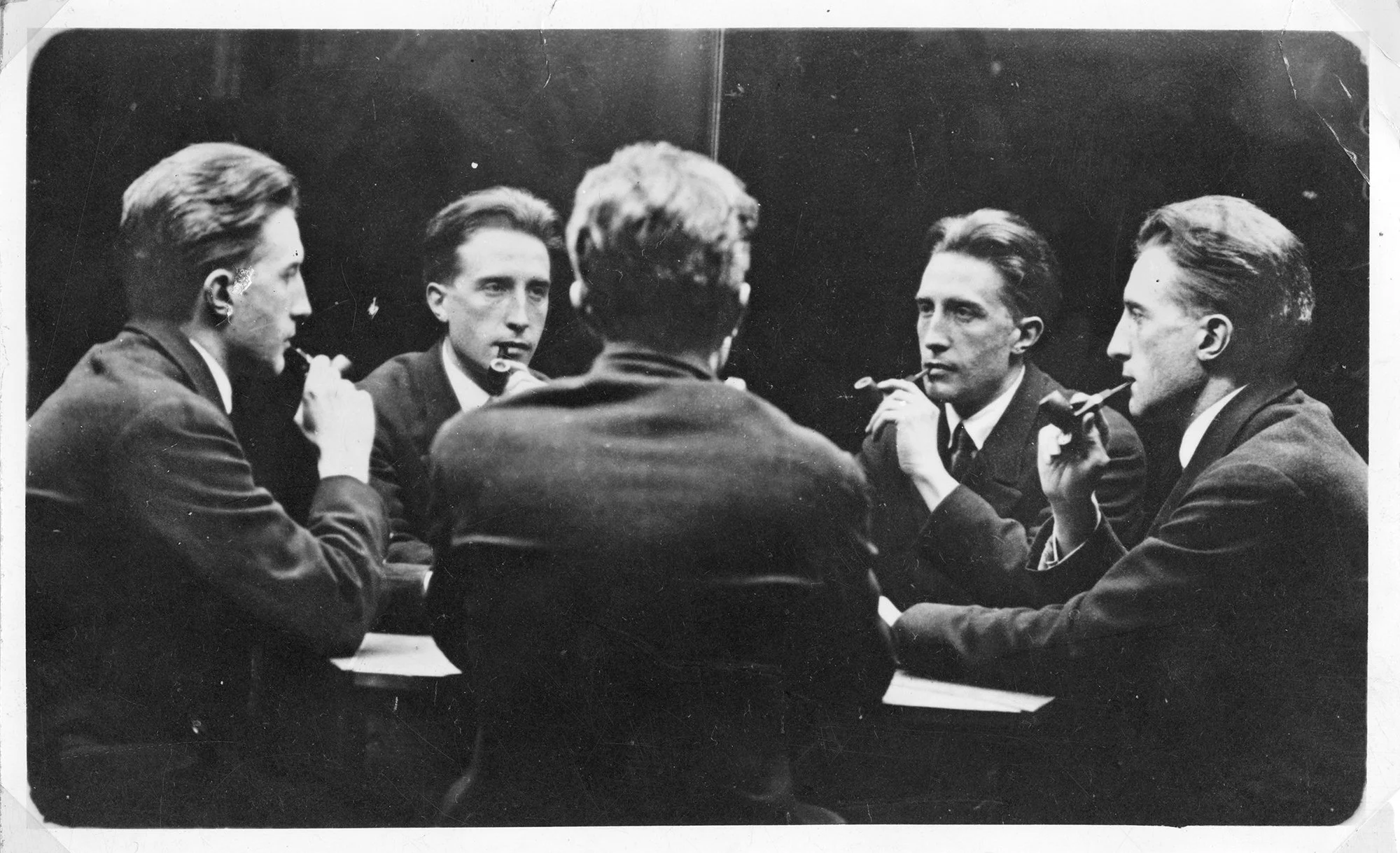
Multiple Portrait of Marcel Duchamp. Broadway Photo Shop, New York, 1917. Gelatin silver print, 3 7/16 × 5 1/2 in. (8.7 × 14 cm). Private Collection, France. © 2026 Artists Rights Society (ARS), New York/ADAGP, Paris/Estate of Marcel Duchamp.
Author: Kun Sok
Published Tuesday, July 28, 2026
Marcel Duchamp is difficult to see freshly because he has already become a lesson. He is the artist who placed a urinal in the history of art, turned a bicycle wheel into a question, and made choosing as important as making. His name arrives before the work. We enter the gallery already knowing that he changed the definition of art. The risk of this knowledge is that even the shock becomes familiar.
MoMA’s retrospective presents Duchamp with impressive order. Paintings, drawings, optical experiments, readymades, replicas, films, notes, and other materials unfold with scholarly calm. At first, this order is helpful. It lets us see Duchamp not as one scandalous moment, but as an artist who moved through many forms before arriving at the readymade. Still, the order feels strange. A figure who once disturbed the category of art now appears almost neatly seated inside it. The rebel who once stood outside the classroom now seems to have been brought inside, seated at a desk, and given a label.
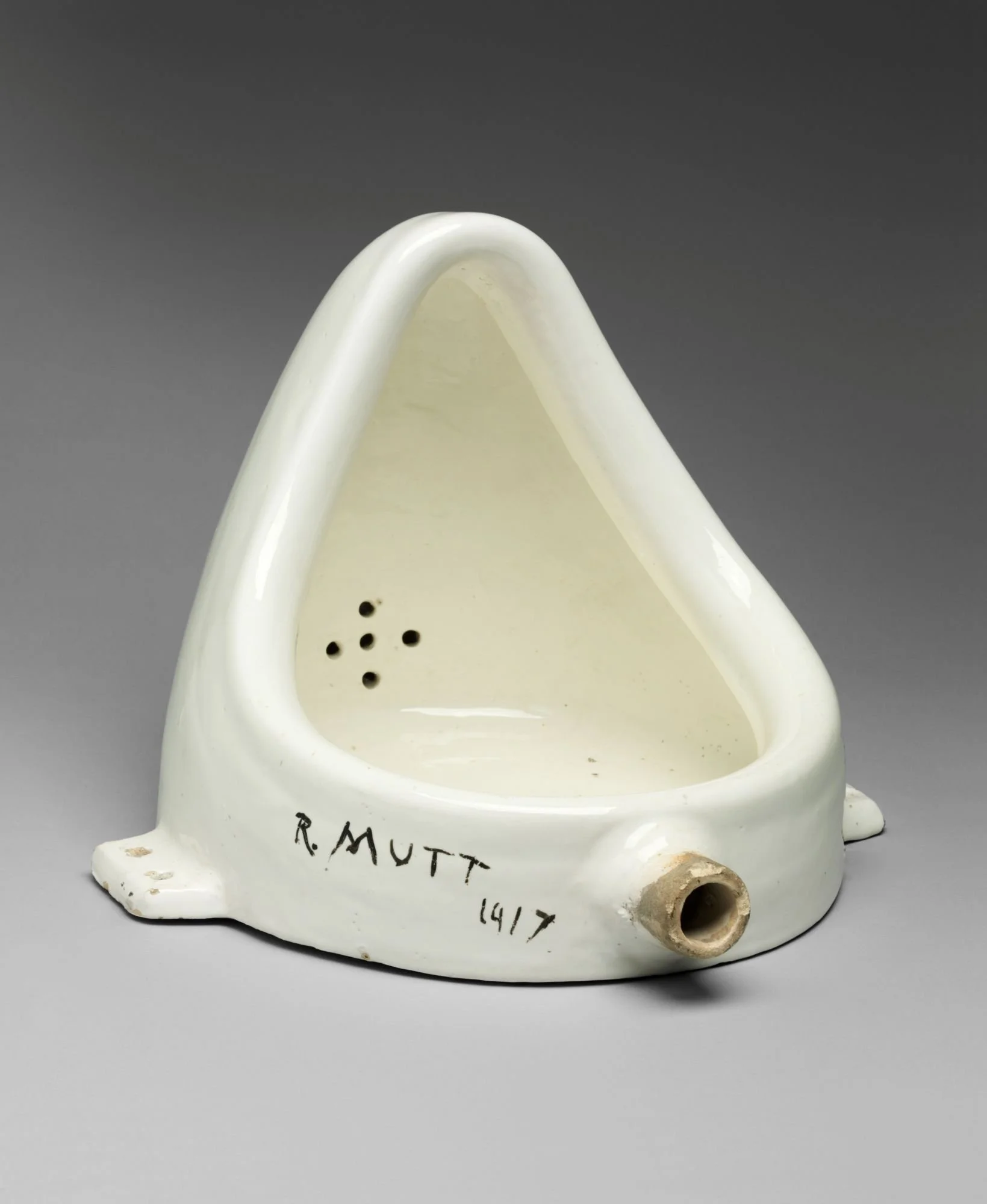
Marcel Duchamp. Fountain, 1950 (replica of 1917 original). Porcelain urinal, 12 x 15 x 18 in (30.5 x 38.1 x 45.7 cm). Philadelphia Museum of Art, 125th Anniversary Acquisition. Gift (by exchange) of Mrs. Herbert Cameron Morris. © Artists Rights Society (ARS), New York / ADAGP, Paris / Association Marcel Duchamp.
This is not only a problem of the exhibition. It is part of what the exhibition reveals. With time, even a gesture that once unsettled art can become part of art’s official language. Duchamp’s provocation no longer provokes in the same way. We do not stand before Fountain as if we are seeing a scandal. We recognize it, look for it, photograph it, and teach it. What once attacked artistic convention has become one of modern art’s most recognizable monuments.
For this reason, the question is not only whether Duchamp still matters. That question almost answers itself. The more difficult question is where the difficulty of art has gone after him. In the older model of art that Duchamp helped unsettle, difficulty was often expected to appear inside the finished object: in skill, touch, composition, material control, beauty, and the visible evidence of time. Duchamp did not erase those forms of difficulty. But he showed that art could become difficult somewhere else.
The readymade did not make art easier. It moved the hard part out of obvious view. The decision to choose, the act of naming, the frame of presentation, the situation of display, and the viewer’s judgment all became part of the work’s pressure. A work of art was no longer only something well made. It could also be something difficult to place, difficult to justify, difficult to dismiss, and difficult to finish thinking about.
This is where MoMA’s calm arrangement becomes useful. The exhibition does not need to make Duchamp shocking again. Instead, it shows how long and deliberate this movement was. The readymades are not isolated jokes placed against a background of serious art. They appear after paintings, studies, optical experiments, notes, and repeated tests of perception. A wheel and a urinal do not need to be explained again as famous provocations. Here, they mark a change in where artistic pressure can gather: not only inside the object, but around it.
That change matters because our own moment is also moving the difficulty of art. Today images can be produced quickly, abundantly, and with astonishing polish. Many images look finished before we can see what kind of human labor, choice, or attention stands behind them. Making, at least on the surface, has become easier to simulate. But the problem of art has not become easier. It has only moved again.
Where is that difficulty moving now? Not simply back to the hand, and not simply into new technology. It moves toward attention, judgment, responsibility, and context. It moves toward the question of why one image should be made when so many images already exist. It moves toward the problem of how an image can hold attention without becoming only more visual noise. It moves toward the artist’s responsibility to create a situation in which an image or object can matter.
This is different from saying that art must become more conceptual, more technological, or more shocking. Those answers are too simple. Duchamp does not give us a style to repeat. He helps us notice when the old location of difficulty no longer holds. In his time, the pressure moved from making to choosing, framing, and naming. In ours, it may be moving toward the conditions that allow meaning to survive in a flood of images.
This does not make the MoMA exhibition emotionally overwhelming. Its strongest effect is more intellectual than sensual. But perhaps that is appropriate. Duchamp does not return here only as an artist of scandal. He returns as an artist who reminds us that art’s difficulty is not fixed. A crisis in the definition of art can also be the moment when art discovers where its next difficulty lies. In our time, that difficulty may no longer be simply how to make an image. It may be how to make an image matter.
Marcel Duchamp is on view at MoMA New York through August 23.
About the author: Kun Sok is a Brooklyn-based visual artist and writer interested in relationships and collaboration. She creates rule-based participatory projects that invite non-artists to participate in making through small, direct encounters. Her writing has appeared in Two Coats of Paint and Tussle Magazine.
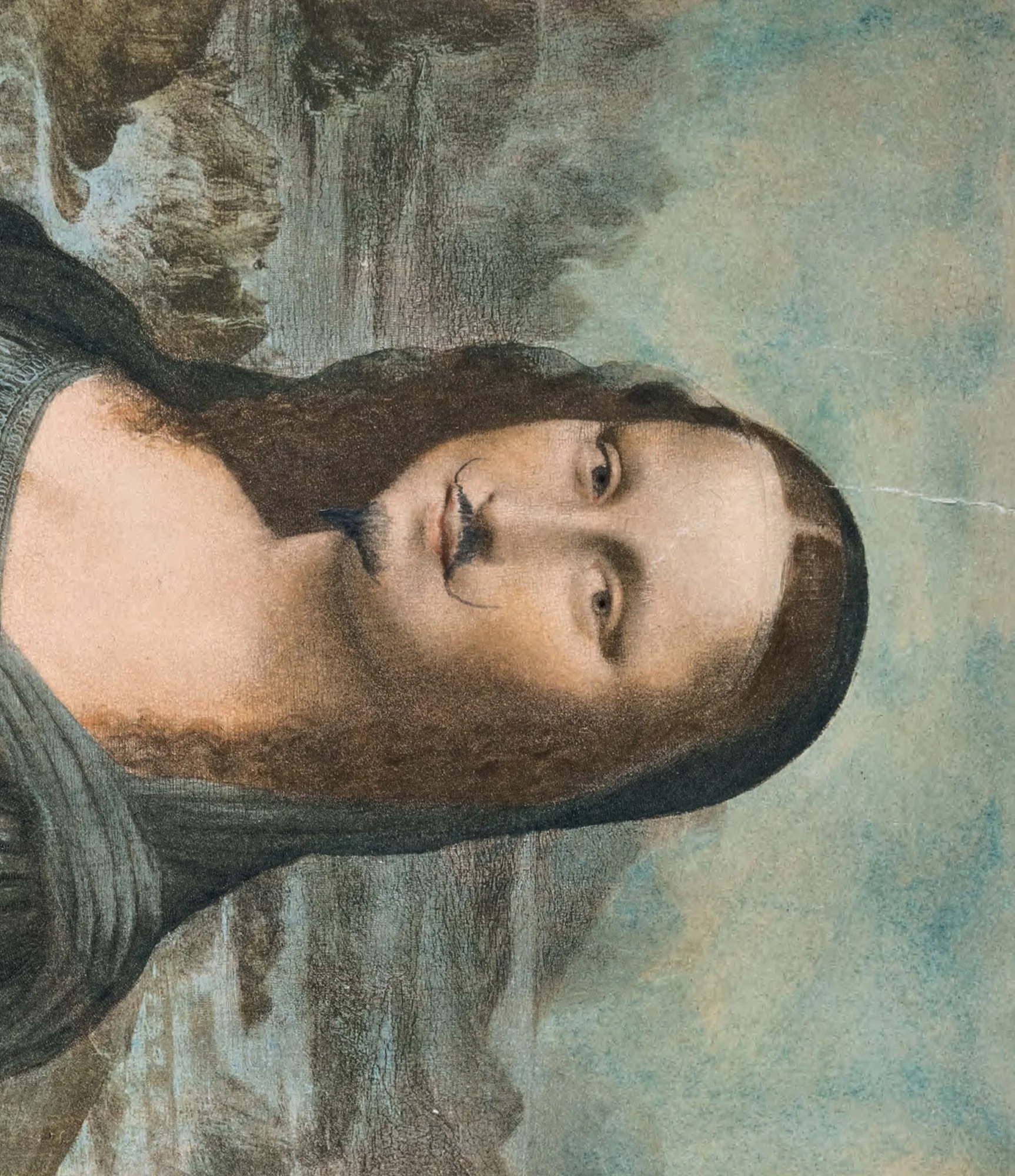
Cover of Marcel Duchamp, published by The Museum of Modern Art, New York, 2026.
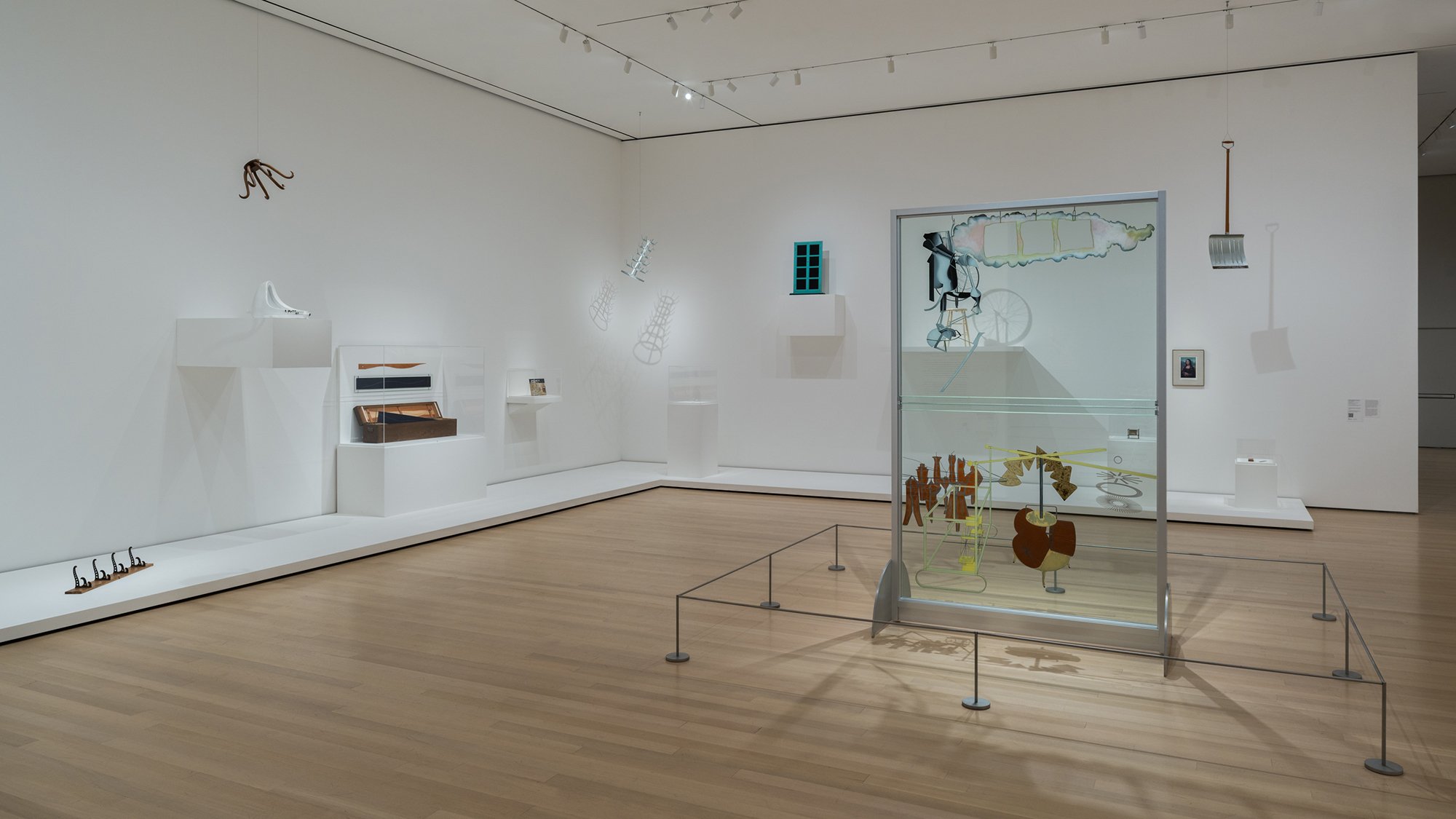
Installation view of Marcel Duchamp on view at The Museum of Modern Art, New York, from April 12 through August 22, 2026. Photo by Jonathan Dorado © The Museum of Modern Art, New York.