Rirkrit Tiravanija “The House That Jack Built” at Pirelli HangarBicocca, Milan
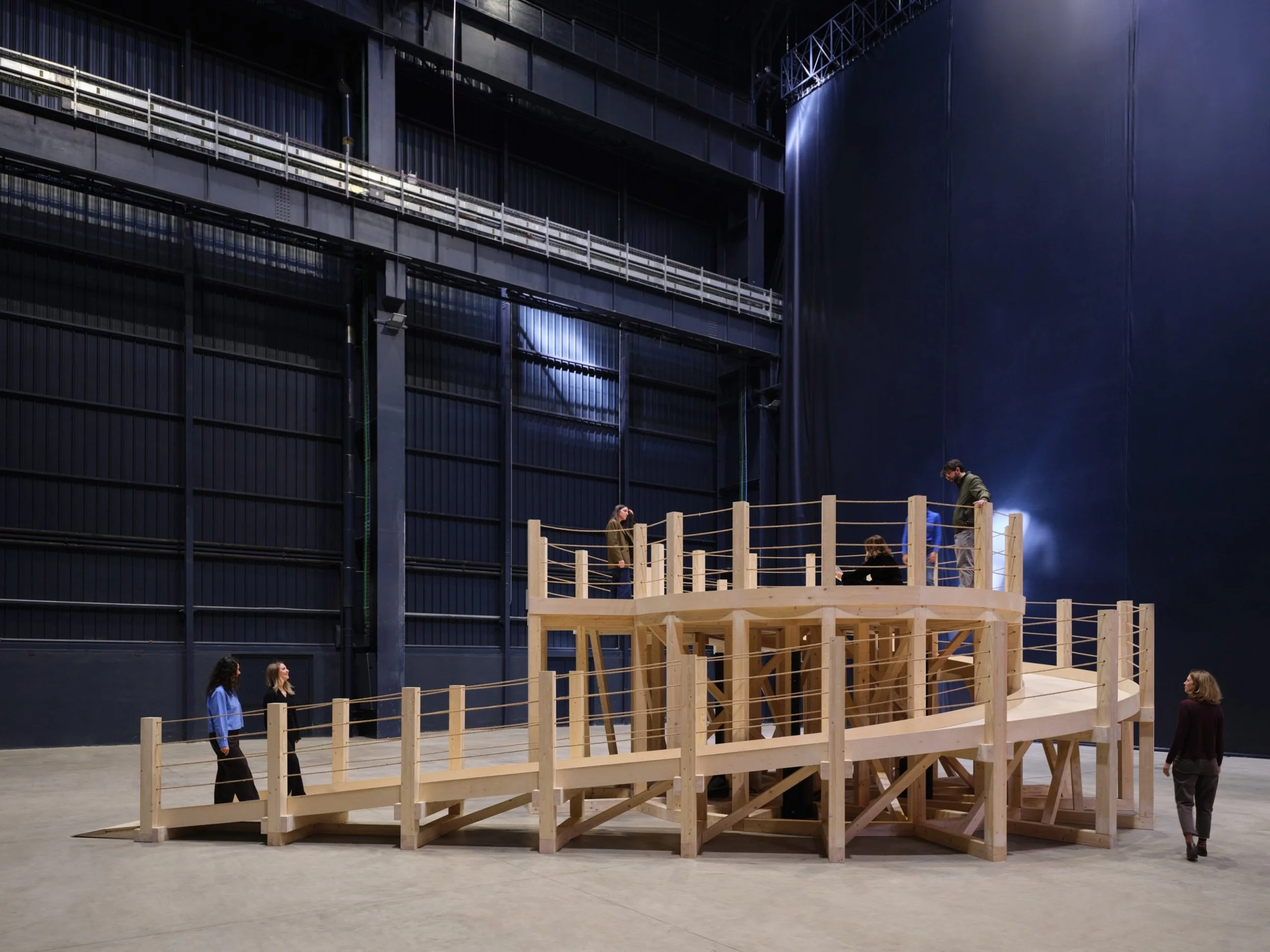
Installation view Rirkrit Tiravanija “The House That Jack Built,” courtesy of Pirelli HangarBicocca, Milan.
Author: Michela Ceruti
Published Thursday, July 30, 2026
The eighteenth-century nursery rhyme The House That Jack Built is, despite its title, not really about building a house. It is about accumulation. The house itself remains a frame held together by the succession of characters that inhabit it: the malt, the rat, the cat, the dog, the cow with the crumpled horn. Each verse expands on the previous one until the house becomes less of an architectural structure than a social one, a place assembled via encounters rather than through construction. It is a fitting title for Rirkrit Tiravanija’s exhibition at Pirelli HangarBicocca, Milan, whose practice has, for more than three decades, insisted that art is made not by objects but by the people who gather around them.
The exhibition itself unfolds like a sequence of situations. Upon entering the space, visitors are welcomed by untitled 2026 (demo station no. 9) (2026), a large spiral wooden structure that Tiravanija has developed through several previous iterations, most recently at Berlin’s Gropius Bau. Neither a sculpture nor a stage, it operates as an open framework in which no particular action is prescribed. It is simply occupied. When I visited, two young women were asking an older woman questions about her life while, a few meters away, children were making drawings. Participation is made possible here; it is not directed.
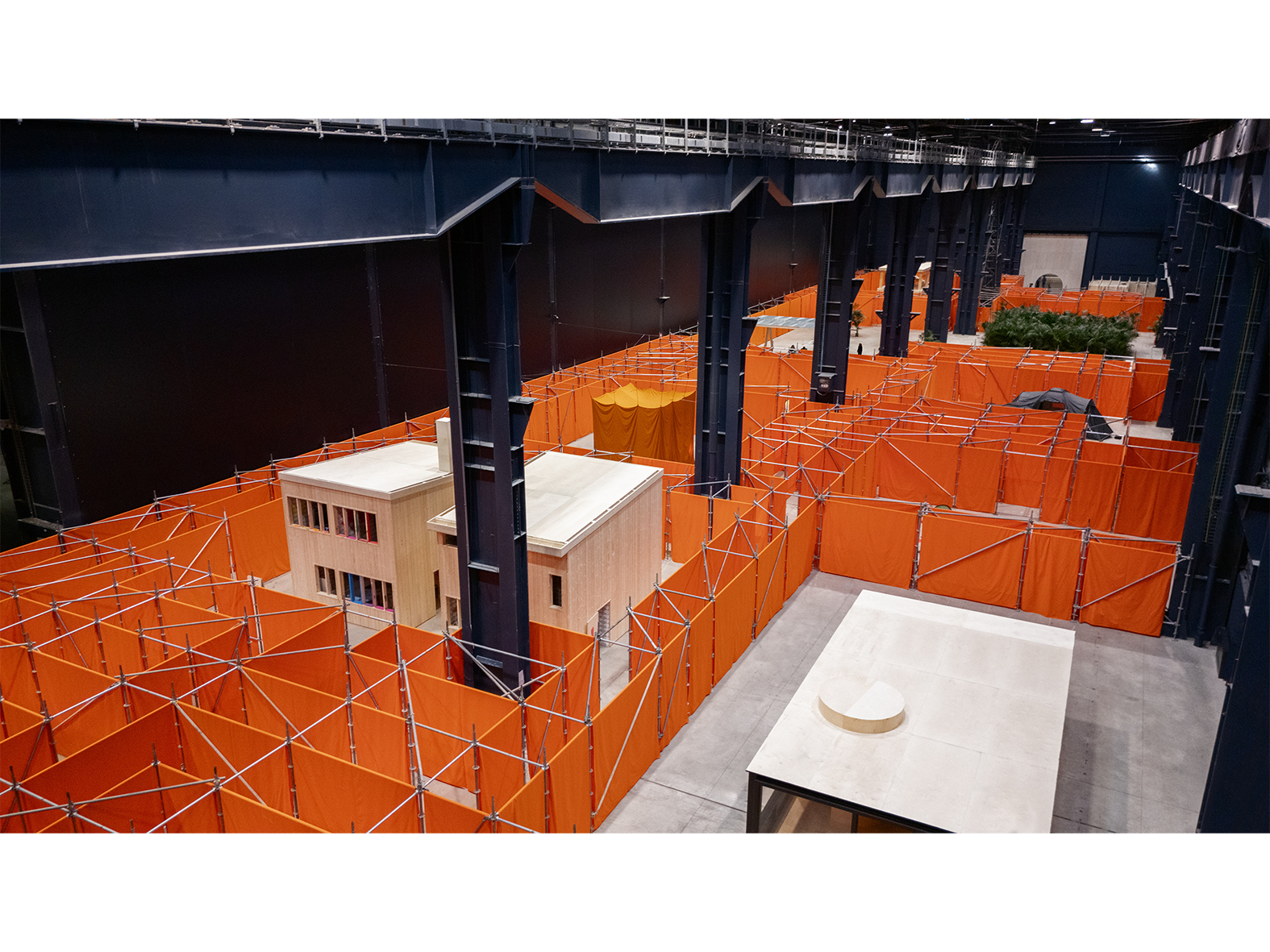
Installation view Rirkrit Tiravanija “The House That Jack Built,” courtesy of Pirelli HangarBicocca, Milan.
From there, a metal and fabric labyrinth stretches across much of the exhibition, periodically opening onto works altering the rhythm at least for a moment. One of these works, Untitled, 2026 (half-scale single-family home no. 47 with interior decoration by children of Scuola Bambini Bicocca and “ABC del quartiere,” ages 4 to 6) (2026), is accessible only to children, transforming the domestic interior into a space reserved for those who perhaps inhabit it most instinctively. Elsewhere, a tent-like structure invites visitors to pause and watch films before the maze dissolves into a series of communal environments: a space displaying archival materials, a room activated by live music performances, and another where visitors are encouraged to assemble a jigsaw puzzle.
Throughout, the emphasis is accentuated on the conditions that the individual works establish for spending time with other people. The idea of “a lot of people” has long been central to Tiravanija’s work. It was also the title of the retrospective that travelled between MoMA PS1, New York, and LUMA Arles only a few years ago. There, the exhibition felt alive: its dispersed installations, kitchens, communal spaces, and participatory works seemed to form an open-ended portrait of an artistic practice that has resisted becoming historical. At HangarBicocca, however, “The House That Jack Built” produces almost the opposite effect. Rather than reaffirming the continuing urgency of relation aesthetics, it exposes its age. This is not because participation has somehow ceased to matter. On the contrary, our present seems saturated with the language of community, sharing, and the collective experience. Yet these works no longer carry the same political or emotional weight they did in the early 1990s when Nicolas Bourriaud famously described relational aesthetics as a response to increasing social fragmentation. Thirty years later, fragmentation has changed shape. Digital life, algorithmic publics, loneliness, economic precarity, and ecological anxiety have transformed what togetherness means, and perhaps what it asks of art. It is precisely against this changed social landscape that Tiravanija’s exhibition starts to feel more historically situated than presently urgent.
This is perhaps most visible at HangarBicocca itself, where the audience differs significantly from the people who attend other contemporary art institutions in Milan. Free admission enabled it to become the city’s most genuinely public space. On a weekend, the vast industrial hall fills with families, children, and visitors who might not otherwise enter a museum. When I visited, a six-year-old’s birthday party was taking place between the installations, almost perfectly embodying Tiravanija’s long-standing desire to dissolve the distinction between art and everyday life. And yet, the scene also suggests, in my opinion, a subtle contradiction. The exhibition certainly accommodates these forms of sociality, but does it produce them? Or has HangarBicocca already become the communal space that Tiravanija once imagined art could create? If the institution itself now functions as an open civic environment, the artist’s intervention risks feeling less like a proposition than a confirmation of something that already took shape.
This may explain why “The House That Jack Built” feels strangely nostalgic. Not nostalgic in appearance, but in the assumption that proximity alone can generate meaningful relations. The optimism that animated relational aesthetics had not disappeared so much as lost its ability to surprise. The question is no longer whether people can be brought together. They already are: in museums, online, in public squares, in temporary communities constantly forming and dissolving. The more urgent question is what kinds of relations these encounters actually produce, and whether art can still shape them in ways that vastly differ from everyday social life.
It is difficult not to think here of the recent resurgence of interest in relational art itself, evident for instance in “1+1. L’arte relazionale” (2025–26), the exhibition dedicated to the movement at MAXXI in Rome. Such historical returns inevitably invite –– or should invite –– reassessment. Rather than confirming the continued vitality of relation art, they reveal how firmly it belongs to a specific historical moment; assumptions about participation and collectivity can no longer simply be repeated.
Perhaps this is what “The House That Jack Built” ultimately reveals. Like the nursery rhyme from which it borrows its title, the exhibition patiently assembles its inhabitants, trusting that accumulation will eventually become community. But today the sequence feels incomplete. The house remains open, welcoming and inhabited, yet something fundamental has changed outside its walls. The conditions of being together have altered, and art must find new ways of acknowledging that transformation. It is no longer enough to invite people in.
About the author: Michela Ceruti is a writer based in Milan. She is the managing editor of Flash Art Magazine.
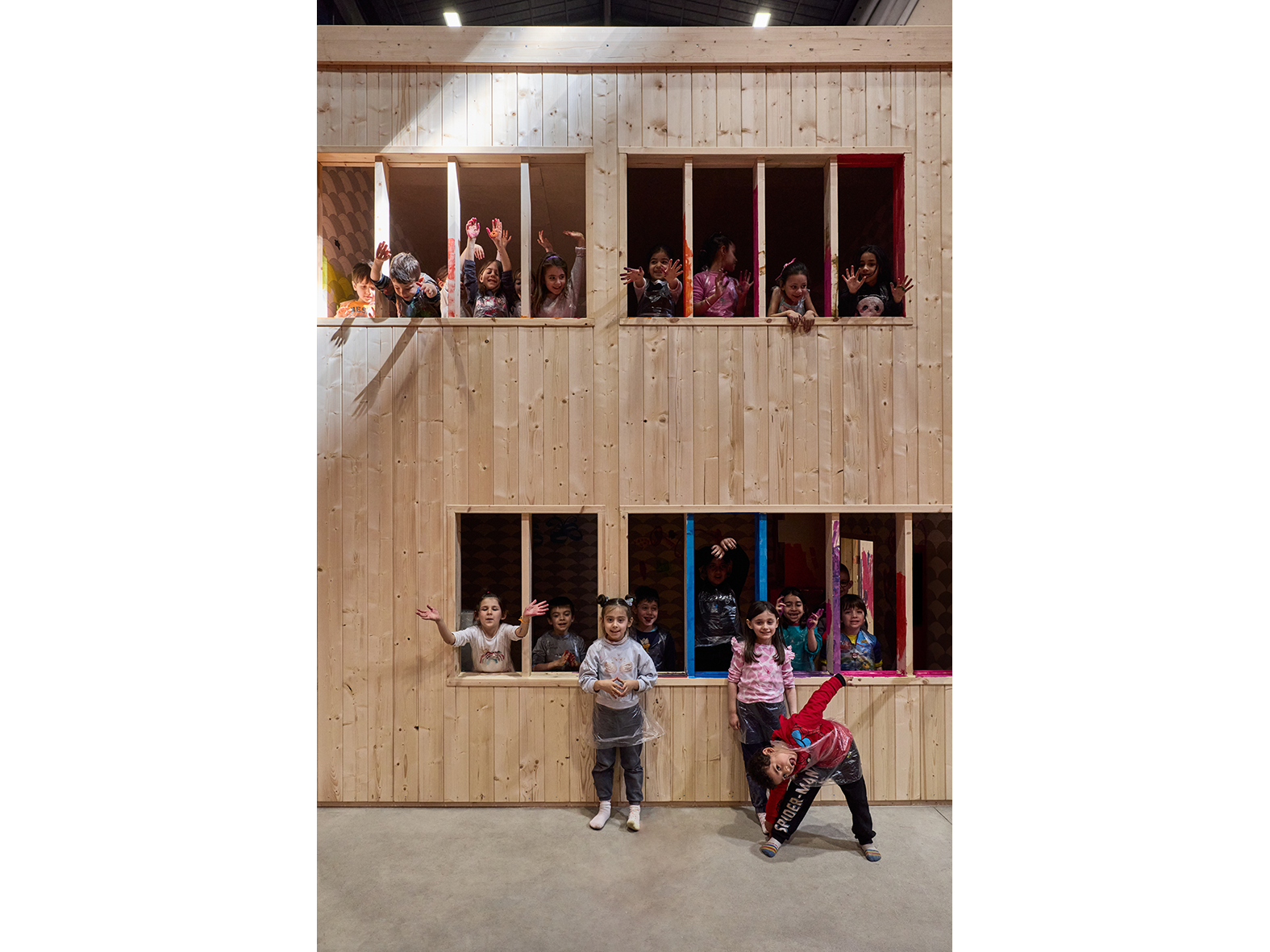
Installation view Rirkrit Tiravanija “The House That Jack Built,” courtesy of Pirelli HangarBicocca, Milan.